A Campaign Shaped from Washington: Administrative Decisions and the Early Peninsula Campaign
ECW welcomes guest author Cory Pfarr.
When the Army of the Potomac began its movement down the Chesapeake in the spring of 1862, it did so amid enormous expectation. The largest Union army yet assembled was finally on the offensive against Richmond. Yet even before a shot was fired, the campaign had already been constrained and redirected—quietly but significantly—by decisions made far from the muddy roads and swollen rivers that would shape its progress.
Histories of the Peninsula Campaign often emphasize battlefield events: the siege lines at Yorktown, the flooded Chickahominy crossings, and the battles before Richmond. But the campaign unfolded within an environment of administrative uncertainty marked by shifting command arrangements, evolving strategic priorities, and Washington-directed involvement in operations. Understanding its development requires looking beyond battlefield movements to the administrative framework shaping it from Washington.
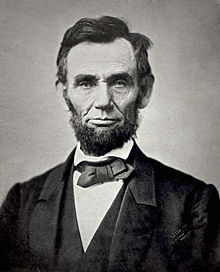
On March 11, 1862—just days before the army began its movement toward the Peninsula—Abraham Lincoln issued President’s War Order No. 3, redefining the campaign’s command structure. George B. McClellan was relieved of his duties as general-in-chief and retained command solely of the Department of the Potomac. Lincoln presented the decision as a practical measure so McClellan might concentrate on operations against Richmond, but the order redistributed responsibility for coordinating Union armies at a moment when cooperation among eastern departments would soon prove critical.
Three days earlier, President’s General War Order No. 2 directed that the Army of the Potomac be organized into corps. McClellan had delayed formal corps organization, preferring to elevate senior commanders gradually as experience and cohesion developed. The new structure formalized four corps under senior division commanders named in the order and inserted an additional layer between army headquarters and the divisions. Although corps organization soon became standard, its abrupt implementation on the eve of operations altered command relationships as the army began to move.[1]
McClellan’s removal as general-in-chief reflected a broader administrative climate of outward cooperation and private misgivings. Lincoln and Secretary of War Edwin M. Stanton continued to work through him as army commander, yet doubts about his judgment persisted. Stanton, viewing McClellan’s caution through both military and political lenses, sought additional counsel before the campaign began, including consultation with Ethan Allen Hitchcock. The result was not rupture, but closer scrutiny that influenced how the campaign was monitored and adjusted.[2]
At the same time, overlooking the physical environment risks mistaking constraint for hesitation. The spring of 1862 brought sustained rainfall that saturated the Peninsula’s clay-heavy soil. Roads deteriorated, slowing infantry, hindering artillery, and straining supply columns along the York and James Rivers. The Chickahominy River—ordinarily modest—swelled after heavy rains, threatening bridges and complicating coordination between forces on opposite banks.[3]
Such constraints made operational design especially important, and McClellan’s original concept reflected that reality. Central to his plan was employing Irvin McDowell’s corps as a maneuver element on the Union right. Initially intended to move by water with the army, McDowell—once retained north of the Rappahannock—was expected to cooperate from the Fredericksburg line, reinforcing a right-flank thrust toward West Point under naval cover and threatening the Confederate flank and rear without a direct assault on prepared lines. The design promised to shorten the campaign, reduce reliance on siege operations, and lessen the need to operate astride flood-prone waterways near Richmond.[4]
When McDowell’s corps did not join the campaign, the operational design shifted. The Union advance proceeded more directly up the Peninsula along narrower avenues where weather, prepared defenses, and limited infrastructure imposed caution. What later critics characterized as excessive deliberation may also reflect force allocations changed in Washington.
The decision to withhold McDowell rested primarily on concern for Washington’s security. Lincoln and his advisers feared that a Confederate movement northward might expose the capital if too many troops were committed to the Peninsula. Although retreating Confederate forces had damaged bridges and rail lines in northern Virginia—limiting the prospect of rapid northward movement—and although Johnston was unlikely to abandon Richmond with McClellan operating on the Peninsula, uncertainty—particularly in the Shenandoah Valley—sustained anxiety in Washington. Lincoln and Stanton therefore hesitated to release McDowell fully, viewing his corps as a safeguard for the capital’s approaches.[5]
This caution carried operational consequences. It denied the Peninsula army the maneuver element envisioned for its right and encouraged a more direct advance against prepared defenses. The larger concentration of force anticipated in the original design never materialized.
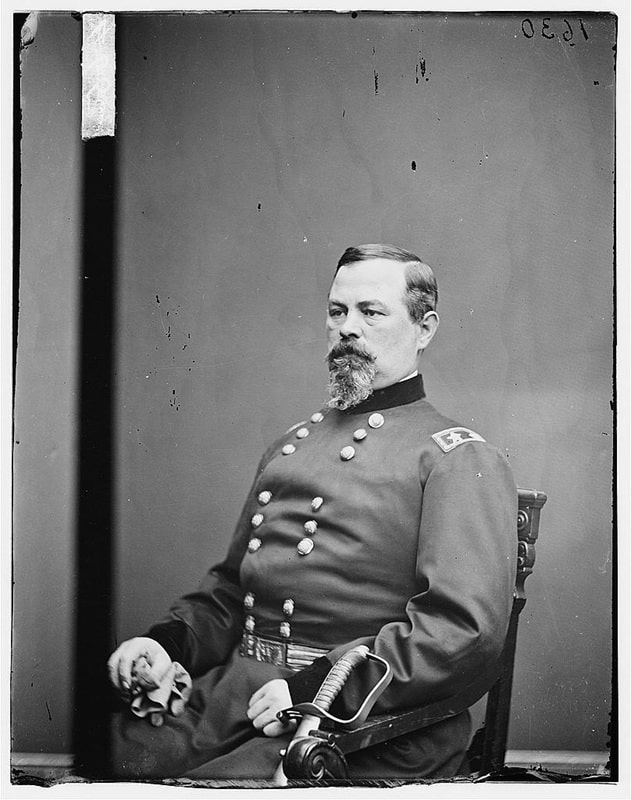
Following the battle of Williamsburg in early May, an opportunity appeared to restore elements of the original design. Washington indicated that McDowell would move south to support the advance. Yet he was to continue commanding the independent Department of the Rappahannock rather than operate under McClellan’s authority. The commitment was soon reconsidered. In the Shenandoah Valley, Thomas J. Jackson’s operations placed Nathaniel P. Banks under pressure, renewing fears for northern security. On May 24, Lincoln directed McDowell to halt his projected movement toward Richmond and send 20,000 men toward the Valley. The reversal marked not a tactical adjustment but a decisive alteration of the campaign’s intended operational geometry.
Union strength was thus divided at a moment when the original design had anticipated concentration near Richmond. By late May, the effects were evident along the Chickahominy. Although McDowell’s projected movement toward Richmond had been halted, Washington correspondence continued to emphasize coordination between forces north of Richmond and the Peninsula army, contributing to deployments that extended across the flood-prone river.
The army operated on both sides of a waterway whose bridges were vulnerable to high water and enemy action. When heavy rains swelled the Chickahominy, coordination between its wings became more difficult. Joseph E. Johnston attacked Union forces south of the river at Seven Pines. The divided deployment—often attributed solely to McClellan’s judgment—also reflected Washington’s continued expectation that cooperation with forces north of Richmond remained operationally possible.[6]
The early Peninsula Campaign thus offers a case study not simply in battlefield decision-making, but in how wars are shaped by administrative structure. During the spring of 1862, Union operations unfolded amid shifting priorities, evolving command arrangements, and repeated revisions to force allocation. The campaign’s design was altered during execution by decisions made in Washington rather than developments on the battlefield alone.
The contrast with 1864 is instructive. When Ulysses S. Grant directed Union operations during the Overland Campaign, he exercised broad authority over multiple armies and retained control of supporting forces. Civilian leaders set strategic objectives, but mid-campaign diversion of major forces from the principal theater was far less characteristic of 1864 than of 1862.[7]
The Peninsula Campaign’s difficulties were shaped not only by battlefield decisions but by the interaction between military execution and administrative direction. Divided authority and shifting commitments proved as consequential as battlefield events.
Cory M. Pfarr works for the U.S. Government and is the author of Longstreet at Gettysburg: A Critical Reassessment (2019) and Righting the Longstreet Record at Gettysburg (2023). His essays have appeared in Gettysburg Magazine, North & South, Studies in Intelligence, and The Massachusetts Historical Review, and he has presented his research at the U.S. Army War College. His forthcoming book, The Federal Signal Service at Antietam, is scheduled for release in 2026.
Endnotes.
[1] Abraham Lincoln, General War Orders No. 2 (March 8, 1862) and No. 3 (March 11, 1862), in Roy P. Basler, ed., Collected Works of Abraham Lincoln, 5 (New Brunswick, NJ: Rutgers University Press, 1953), 149–51, 155.
[2] Ethan Allen Hitchcock, Fifty Years in Camp and Field: Diary of Major-General Ethan Allen Hitchcock, U.S.A., ed. W. A. Croffut (New York: G. P. Putnam’s Sons, 1909), 437–43; The War of the Rebellion: A Compilation of the Official Records of the Union and Confederate Armies, ser. 1, 11, pt. 3, 100; Warren W. Hassler Jr., General George B. McClellan: Shield of the Union (Baton Rouge: Louisiana State University Press, 1957), 74, 92; Theodore Calvin Pease and James G. Randall, eds., Diary of Orville Hickman Browning (Springfield: Illinois State Historical Library, 1925), 537–39.
[3] OR, ser. 1, 11, pt. 3, 39, 115–16, 124, 139, 175–76, 184, 187–88, 193, 195; pt. 1, 873; Stephen W. Sears, To the Gates of Richmond: The Peninsula Campaign (New York: Ticknor & Fields, 1992), 108–10, 112–13, 120.
[4] Hassler, General George B. McClellan, 70–71, 75, 84–85, 92; Ethan S. Rafuse, McClellan’s War: The Failure of Moderation in the Struggle for the Union (Chapel Hill: University of North Carolina Press, 2005), 203–7.
[5] OR, ser. 1, 11, pt. 3, 64–68.
[6] Abraham Lincoln to George B. McClellan, May 21, 1862, and to Irvin McDowell, May 24, 1862, in Basler, ed., Collected Works, 5:226, 232–33; OR, ser. 1, 11, pt. 1, 27–33, 37; pt. 3, 184, 186.
[7] Ulysses S. Grant, Personal Memoirs of U.S. Grant, 2 vols. (New York: Charles L. Webster, 1885–86), 2:122–33; Gordon C. Rhea, The Battle of the Wilderness, May 5–6, 1864 (Baton Rouge: Louisiana State University Press, 1994), 42–46; Thomas J. Rowland, George B. McClellan and Civil War History: In the Shadow of Grant and Lee (Kent, OH: Kent State University Press, 1998), 124–29.


I wonder if things would have gone better if McClellan was given more latitude to pursue the campaign with the organization as he envisioned it? Or do you think the outcome would have been worse?
Nice presentation and analysis.
As for the difference in the administration’s treatment of McClellan and Grant, including the level of discretion given each, I suppose it involved the different levels of trust Lincoln & Stanton had in each general.