Command and Contempt: The Origins of the Bragg – Polk Rift
ECW welcomes back guest author Leigh S. Goggin.
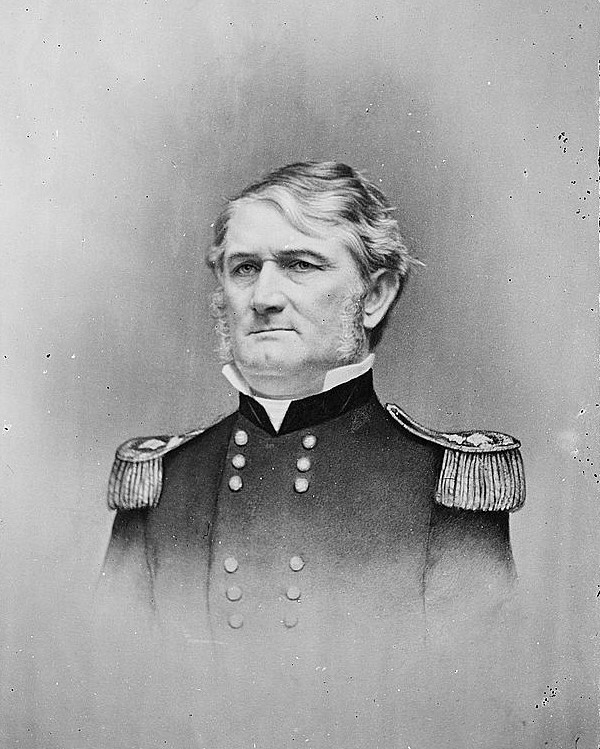
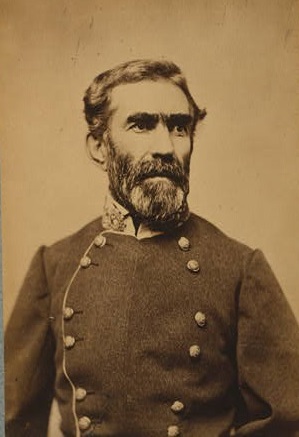
One of the defining characteristics of Gen. Braxton Bragg’s tenure as commander of the Army of Tennessee was his dysfunctional relationship with many of his subordinates. The principal object of his hatred and contempt was Maj. Gen. Leonidas Polk, the army’s senior corps commander. As the war progressed, the enmity between the two men deepened, drawing their fellow officers into their bitter feud and destroying the army’s effectiveness. How did this situation arise?
January 1861
Bragg and Polk were both prominent individuals living in Louisiana prior to the Civil War. Bragg was a former soldier, hero of the Mexican War, sugar planter, and public officeholder, whereas Polk was the Episcopal bishop of Louisiana. The two men were acquainted and on amicable terms. Polk even visited Bragg on New Year’s Day, a “cordial holiday social call” as deemed by one Polk biographer.[1]
February 1861
Bragg, like many officers of his era, was sensitive to matters of rank. He was appointed commander of Louisiana’s state forces after secession in preference to Pierre G.T. Beauregard. This was mainly due to a personal relationship with the governor and stronger secessionist beliefs. However, Bragg was then upset when Jefferson Davis named Beauregard as a brigadier general in the new Confederate army, feeling that he should have been selected first. Beauregard had spent time with Davis and had impressed the new President. Bragg’s friend at the time, future Union general William T. Sherman, recalled that “he seemed jealous, because in the old army Bragg was the senior.”[2]
July 1861
An even worse snub was to follow. Although Bragg had been appointed as a brigadier general in the Confederate army that March and assigned to the command of troops in Pensacola, Davis named Polk as one of the first major generals in the Confederate army, thus outranking Bragg. The bishop was tasked with defending the Mississippi Valley until Albert Sidney Johnston arrived from California.
Polk did have a West Point education and was familiar with the geography and people of the region, but his 34-year absence from the military and vocation as a bishop was a tough pill for Bragg to swallow. Bragg’s wife, Elise, wrote to her husband, “Think of the scandal to our church. A minister’s duty is to preach ‘peace and good will to men.’ He can bless [and] encourage them but not fight with them.”[3]
March 1862
After the fall of Fort Henry in February, Bragg’s troops were dispatched to Corinth to reinforce Johnston’s outnumbered forces in the West. Bragg was now a major general, but Elise reminded him of his lowly status: “I have lost the little confidence I ever had in the President’s favorite [Sidney] Johnston, and he ranks you. Beauregard is an egotist – Polk a wild enthusiast and both rank you. Could you have had command, I might hope – but as it is, we almost despair.”
Elise then lamented, “How I wish dear husband that you could be [commander of Confederate forces in the West] … not for the gratification of any personal vanity, but because I truly feel, and the President knows, and has acknowledged, you are the only one capable of managing volunteers.”[4]
Bragg was a notorious disciplinarian and expected his volunteer soldiers to behave like army regulars regardless of circumstance. However, the western theater had long been neglected by Richmond, and the lack of transportation, logistics, and supplies was a crippling problem. Hungry soldiers frequently stole food and animals belonging to civilians. Bragg wrote to a subordinate at Corinth, “Let me urge you, general, to try and preserve the best discipline possible with our men, preventing the plundering of our own people, which is now too common.”[5]
Unfortunately, some soldiers from one of Polk’s divisions at Bethel Station transgressed. Bragg was outraged and issued a stern response. “With a degree of mortification and humiliation he has never before felt, the major-general commanding has to denounce acts of pillage, plunder, and destruction of the private property of our own citizens by a portion of the troops of this command, which bring disgrace upon our arms… Commanders of all grades will be held responsible for the suppression of this great crime… The general will not hesitate to order the death penalty where it may be necessary…”[6]
Bragg blamed Polk for the actions of these men, but he would have been surprised to learn that the bishop was in fact trying to rectify the problem. A few days earlier, Polk had written to Davis requesting additional officers. “I am desirous of having the aid of certain parties in certain offices for the more efficient administration of the army under my command… I hope I may be pardoned for saying that the chiefest difficulty we have in the field is the difficulty of getting the support indispensable to the efficiency of our commands, and too frequently, when it comes, if it comes at all, it comes too late.”[7]
Bragg next received word that New Madrid had been abandoned to Union forces. He considered taking his troops west to retrieve the situation, but sullenly informed Elise, “[that] point I could not urge… as General Polk, who commands, is my superior.”[8] Polk’s date of appointment to the rank of major general predated that of Bragg’s. Elise stoked her husband’s resentment regarding his lack of seniority. She asked, “Can you not… urge upon our President, either to come himself, or appoint you or Beauregard to the sole command, giving one head to our important movements in the West? … I have a great mind to go to him myself and tell him the plain unvarnished truth.”[9]
Bragg criticized Polk’s performance as commander in a letter to his wife. “Every [dispatch from] Polk stresses [the sickly Beauregard] back a week. But for my arrival here to aid him, I do not believe he would now be living.”[10] Polk and Beauregard had previously disagreed about the propriety of abandoning the fortress at Columbus to the enemy, and Beauregard’s annoyance with the bishop may have led Bragg to believe that he had found an ally.
Then there was another incident of poor discipline at Corinth. Famished soldiers went on a rampage. Bragg related to his wife: “Everything was in disorder and confusion here… the hotel was a perfect pandemonium – thousands of hungry men standing against the barred doors ready to rush in and sweep the tables – regardless of sentinels or officers. Even the kitchen was not safe – meats were removed from the fire, and the life of the hotel keeper threatened for expostulating.”[11]
Bragg again blamed his superior officers. “Polk and Johnston do nothing to correct this. Indeed, the good Bishop sets the example, by taking whatever he wishes.”[12] Bragg’s accusation against Polk cannot be substantiated, and no other reports exist of the bishop’s alleged personal thievery. This statement was intended only for Elise and reflects Bragg’s seething disdain for his fellow major general.
April 1862
All this time Polk was oblivious to Bragg’s hostility, but matters came to a head during the delayed deployment of the Confederate army prior to the battle of Shiloh. A frustrated Beauregard complained that “the maladroit manner in which our troops have been handled on the march and the blunder of the noisy, offensive reconnaissance… satisfy me that the purpose for which we had left Corinth had been essentially frustrated and should be abandoned as no longer feasible.” Bragg accused Polk of blocking the road with his troops and preventing the passage of Bragg’s own soldiers.[13]
Polk joined the conference soon after Bragg’s diatribe and was shocked to be berated by Beauregard for the delay. However, the adjutant general of the army, Col. Thomas Jordan, later defended Polk, stating that “Polk’s corps… seems to have been moved with as little delay as might be expected, and not to have been at all responsible for the delay of Bragg’s troops, as I heard General Bragg sharply complain to General Beauregard in the afternoon of the 5th of April.”[14]
Bragg’s antagonism toward the bishop was now openly displayed for all to see. What had once simmered beneath the surface now burst into the open. In that moment began the feud that would plague the Army of Tennessee until the autumn of 1863, breeding dysfunctional command, squandered opportunities on the battlefield, and growing demoralization among its officers and soldiers, a vendetta born of the bitter contempt and resentment that Braxton and Elise Bragg harbored toward the unsuspecting Leonidas Polk.
Leigh S. Goggin, PhD (Psychiatry and Clinical Neuroscience) is the author of Reckless in their Statements: Challenging History’s Harshest Criticisms of Albert Sidney Johnston in the Civil War and multiple scientific articles published in leading academic journals such as Emerging Infectious Diseases, Eurosurveillance, and The American Surgeon. He has been interested in military history, particularly the American Civil War, for over thirty years.
Endnotes:
[1] Huston Horn, Leonidas Polk: Warrior Bishop of the Confederacy (Lawrence, KS: University Press of Kansas, 2019), 147; Amanda L. Warren, Southern Cross: A New View of Leonidas Polk and his Clashes with Braxton Bragg (Jefferson, NC: McFarland and Company, 2025), 51.
[2] William T. Sherman, Memoirs of General William T. Sherman, (New York: Appleton and Company, 1875), Vol. 1, 162.
[3] Samuel J. Martin, General Braxton Bragg, C.S.A. (Jefferson, NC: McFarland & Company, 2011), 117.
[4] Grady McWhiney, Braxton Bragg and Confederate Defeat, (Tuscaloosa, AL: The University of Alabama Press, 1991), Vol. 1, 207.
[5] The War of the Rebellion: The Official Records of the Union and Confederate Armies, Series 1, Vol. 10, 328.
[6] OR, Series 1, Vol. 10, 338.
[7] OR, Series 1, Vol. 10, 311.
[8] Martin, General Braxton Bragg, 116.
[9] McWhiney, Braxton Bragg and Confederate Defeat, 207.
[10] Martin, General Braxton Bragg, 113.
[11] McWhiney, Braxton Bragg and Confederate Defeat, 211.
[12] McWhiney, Braxton Bragg and Confederate Defeat, 216.
[13] Leigh S. Goggin, Reckless in their Statements: Challenging History’s Harshest Criticisms of Albert Sidney Johnston in the Civil War. (Fremantle: Fontaine Press, 2025), 318.
[14] Goggin, Reckless in their Statements, 318-319.


“A quarrelsome wife is like a constant dripping.” Proverbs 19:13
Leigh Goggin, Well Done on providing a concise explanation of the origin of the destructive Bragg-Polk rift during the Civil War. As you alluded, “someone” believed Jefferson Davis erred when he promoted Braxton Bragg to Major General: Elise Bragg believed she was fully entitled to that promotion (but had to content herself with her role as MRS General Bragg.)
And as you mention, the Battle of Shiloh was NOT supposed to take place on 6 April 1862. It was supposed to be launched “as a surprise by Confederate forces commanded by General Albert Sidney Johnston” against the Camp of Assembly at Pittsburg Landing Tennessee. The delay of at least one day in executing that attack against the forces of General Ulysses S. Grant was seen by many as “the cause” for Southern failure at the Battle of Shiloh.
“WHO caused that delay?” Torrential rain that turned narrow roads to mud was overlooked, in favor of “Polk blocked a road” or “Bragg was late getting his troops moving.”
I do wish we had letters like these from the long suffering Ellen McClellan. But they are so typical of military spouses, whose husbands waited decades for promotions and the…WHAM! …a Civil War with all new opportunities to rise in rank! No wonder some became unhinged!