Framing History: Thornberry Through Time
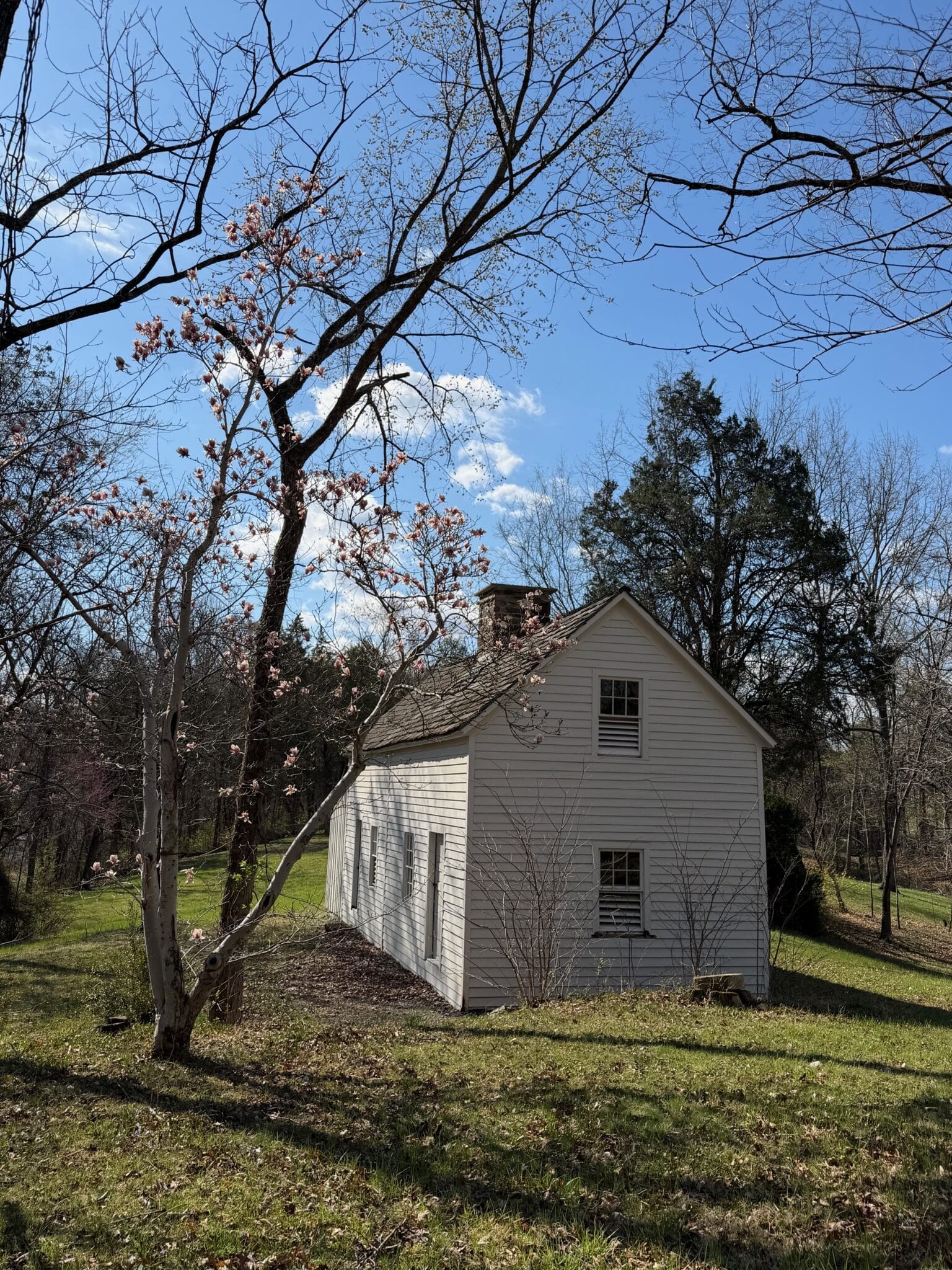
Tucked within the landscape of Manassas National Battlefield Park, the Thornberry House stands as one of only three surviving Civil War-era structures. Built in the 1840s, it was home to John and Martha Thornberry and their five children. Before the war, the family lived a modest but stable life. John worked in many professions to earn income to support his family, including as a blacksmith, carpenter, undertaker, and a wheelwright near Sudley Mill, repairing wagons that traveled the nearby roads.
That stability was shattered in July 1861.
At the outbreak of the Civil War, John joined the Confederate Army, serving in the 49th Virginia Infantry. He was wounded in the First Battle of Manassas July 21, 1861, the very battle that raged near his home. Martha fled with her children to safety just before the battle erupted. Though the house escaped direct combat, it did not escape the war. Union soldiers occupied the home, transforming it into a makeshift hospital for the wounded and dying.
When the family returned, they found devastation. Years later, their daughter Laura recalled the scene with haunting clarity:
“There was not an article of anything left in it. Ten men had bled to death in mother’s bedroom the night before. Carpets and all furniture were out and gone. We never saw any of it again, or anything else. The old farm well in the back yard was almost full of everything that would go in it. Such as China ware, cooking utensils, flat irons, and everything you can imagine used in a family was thrown in it. Of course everything was broken. How we all cried over it; and no prospects of replacing any of it.”
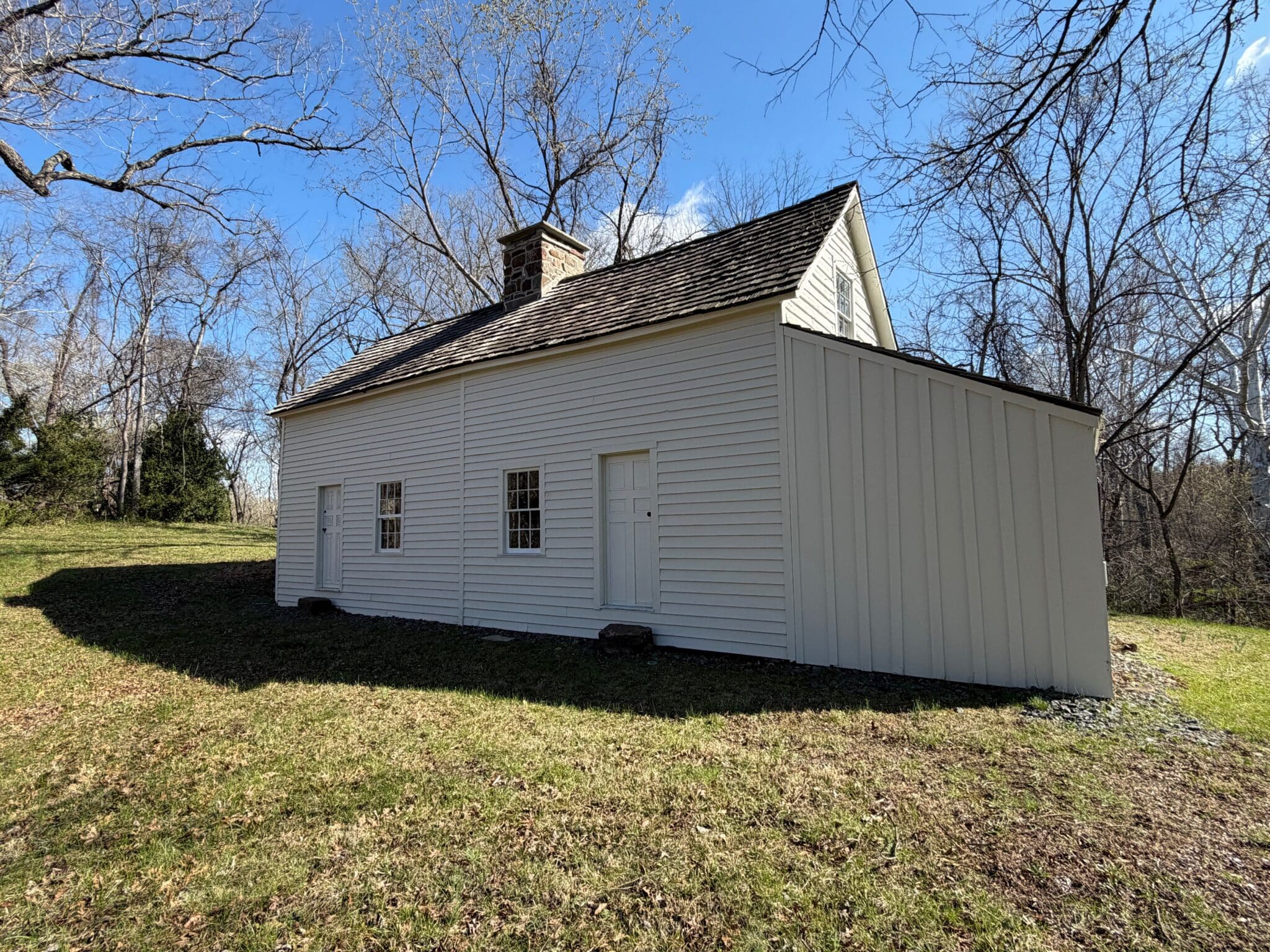
John’s workshop, essential to the family’s livelihood, was also lost. The cumulative damage made it nearly impossible for the Thornberrys to rebuild their prewar life.
The house also played a role in one of the war’s most poignant stories. It was here that Major Sullivan Ballou, mortally wounded in the battle on Matthews Hill and known for his famous farewell letter, was brought for treatment and later died.
The next spring, in March of 1862, the Union Army moved into Manassas Junction, several miles to the south of the Thornberry’s house. At that time, the photographer George Barnard visited the battlefield and took a series of photographs that included several now well-known images of the Sudley Springs Ford and Sudley Church area, including the Thornberry home.
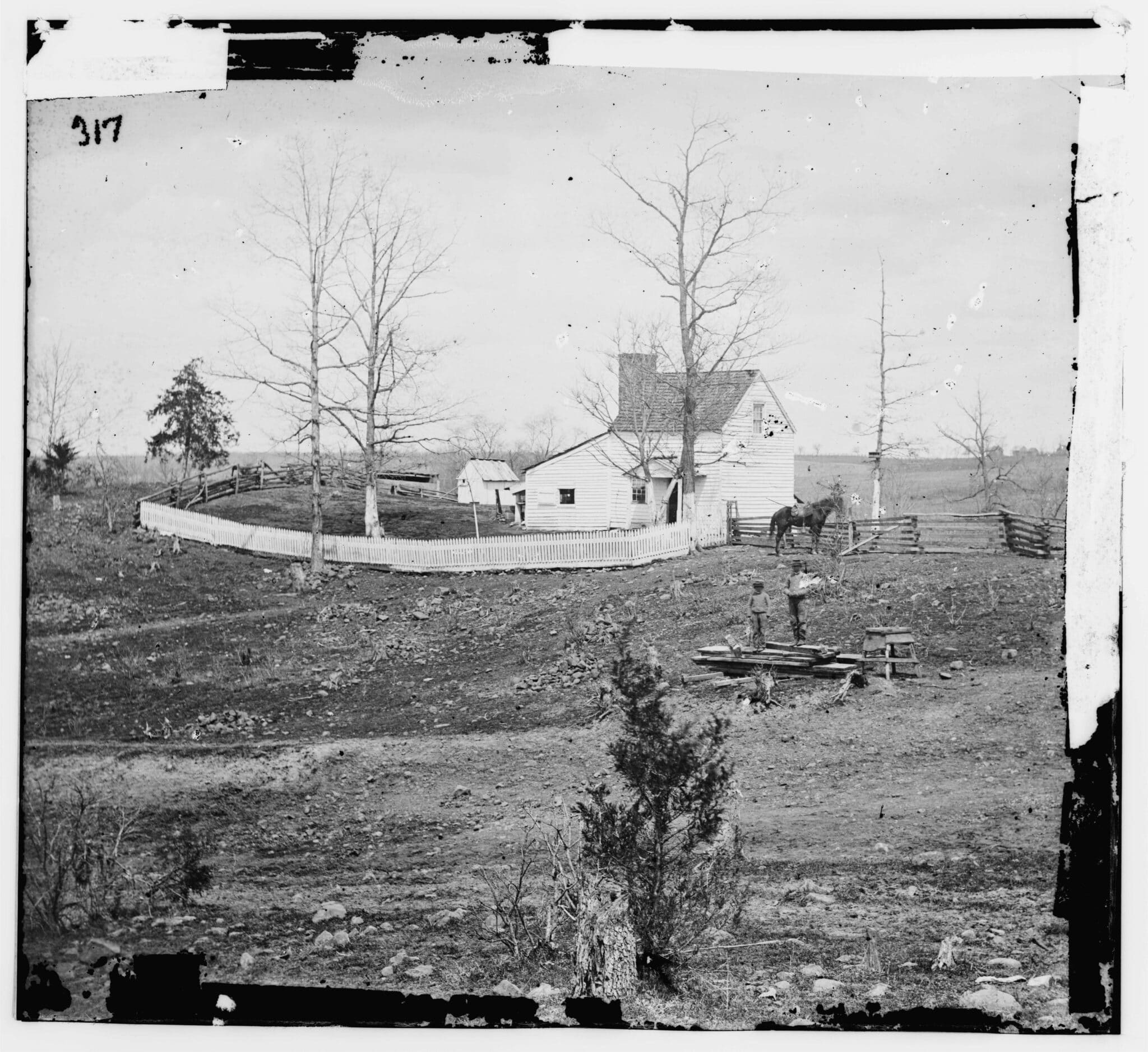
Four of the Thornberry’s children, Samuel, Joseph, Laura, and Annetta, are memorably pictured in several of the photographs. The four appear in an image of the ford at Sudley Springs on Catharpin Run and the boys appear in several other images, both of them very neatly attired in miniature Confederate uniforms.
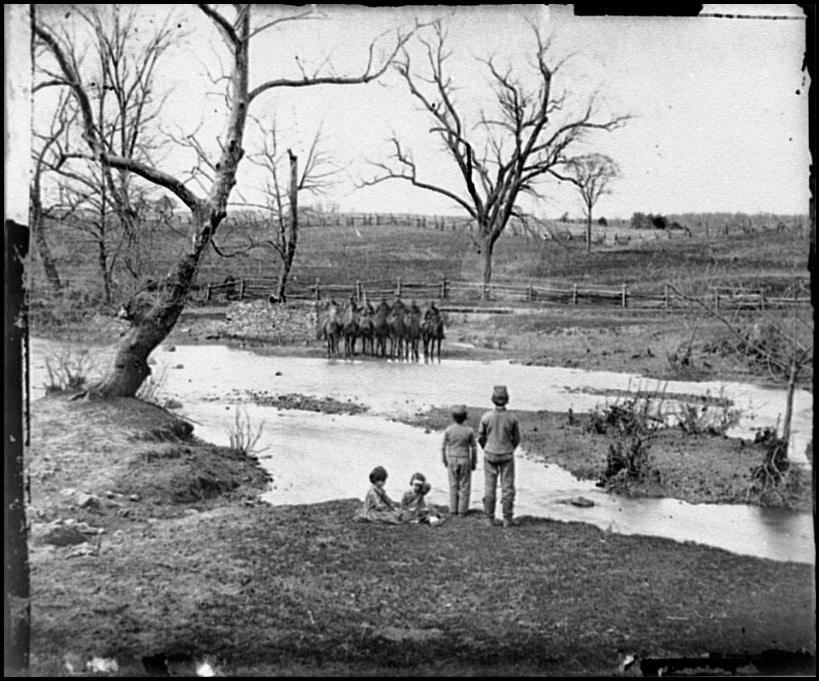
(Courtesy of the Library of Congress)
The Thornberry house is open to the public during special events, offering a rare, tangible connection to the human cost of the Civil War.
Sources:
“Views of a Changing Landscape: An Archeological and Historical Investigation of Sudley Post Office.” Manassas National Battlefield Park. http://www.heritage.umd.edu/chrsweb/nps/manassas/sudleypostoffice/Chapter%207.htm
“Thornberry House.” Bull Runnings. https://bullrunnings.wordpress.com/tag/thornberry-house/
“The Traveling Thornberrys: Images at Sudley.” Fredericksburg History. July 29, 2011. (Hat tip to John Hennessy for the inspired headline of this post!) https://fredericksburghistory.wordpress.com/2011/07/29/the-traveling-thornberrys-images-at-sudley/
“A Famous Image and a Metaphor for the War.” Fredericksburg History. July 18, 2011. https://fredericksburghistory.wordpress.com/2011/07/18/a-famous-image-and-a-metaphor-for-the-war/
Adelman, Garry E. Manassas Battlefields Then and Now: Historic Photography at Bull Run. The Center for Civil War Photography, 2011
Library of Congress


Interesting story. Did the father survive the war?
Thanks, Kevin! John Thornberry did survive the war and worked as a blacksmith later in life. The Thornberrys sold the house in 1871 and moved to Buckhall, Va. Martha died in 1884 and John lived until 1888.
Great post, Melissa. I must have seen that image hundreds of times and never knew it was where Sullivan Ballou died. Thanks.
Wonderful photo. I too am wondering if the father survived.Every time I look at photos like these I realize that at that time these people were alive and vibrant, just like perhaps those looking at historical photos of us might be thinking in the future. It evokes a feeling of melancholy of a time that has come and gone (like it will for all of us). It is the beauty of photography that allows us to experience a snapshot of a moment in history and reflect the passage of time, those who came before us, and the events of the times. Coupled with personal recollections it becomes priceless. Thanks!
Thanks, Dale! Exactly why I love the photographs, too! Love that frozen moment of time and the history it reveals. John Thornberry did survive the war. The Thornberrys sold the house in 1871 and moved to Buckhall, Va. Martha died in 1884 and John lived until 1888.