From Presidential Assassin to Papal Zouave: The Escape, Capture, Escape and Fate of John Surratt
He was the assassin who got away. He fled while his mother was hanged. He later was discovered on a new continent, serving as a Papal bodyguard. He was captured. But he escaped again. He finally was caught again on a third continent. A U.S. warship dragged him back home to face justice. What would be his fate?
“He” was John Surratt (1844-1916). He had a $25,000 bounty on his head, as befitting a man whom the U.S. Government alleged was part of the conspiracy to assassinate President Abraham Lincoln.[1] Surratt’s mother, Mary, had hanged for her alleged part in the plot. Yet John Surratt had managed to escape the federal dragnet and make his way across the Atlantic to find a place within the Papal Zouaves, the defenders of Pope Pius IX in Rome. Betrayed to local U.S. authorities by a former friend, Surratt managed another daring escape, dashing to yet another continent to begin another new life. Surratt’s story is a fascinating combination of drama, remarkable “small world” coincidence, desperate daring and dogged U.S. government persistence in seeking to bring the last Lincoln assassination conspirator to justice.
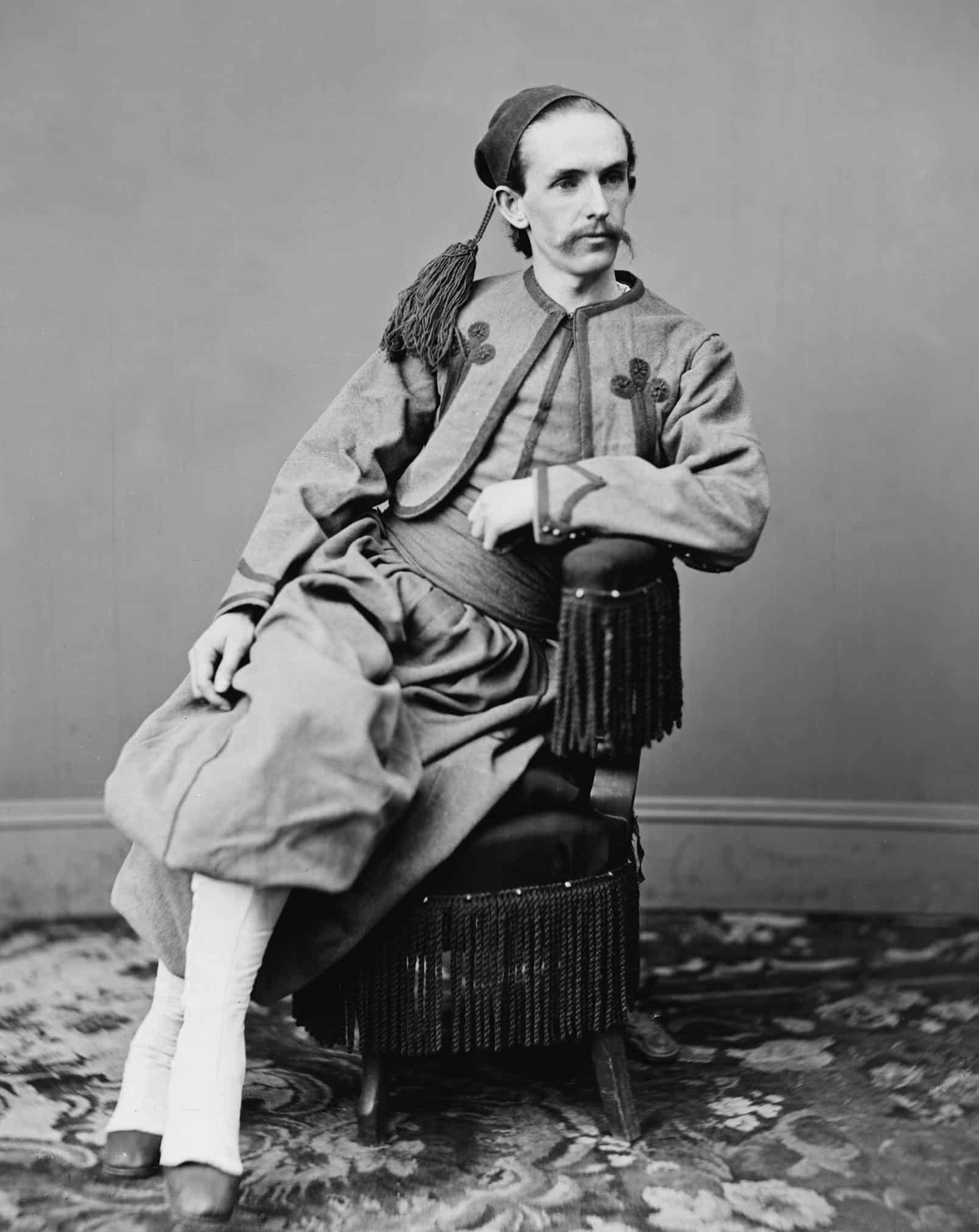
Surratt was born in Washington, D.C. In 1859, at the age of 15, he enrolled in St. Charles College in Maryland, studying to become a Catholic priest, but returned home in 1861 with the outbreak of the Civil War to contribute to the Confederate cause. Not yet 18, Surratt became a courier for the Confederate secret service. Surratt’s position as postmaster in his hometown facilitated his operations.[2]
After being introduced to John Wilkes Booth (purportedly by Dr. Samuel Mudd) in the fall of 1864, Surratt agreed to participate in Booth’s plan to kidnap Lincoln and hold him ransom for the release of Confederate POWs. Their attempt, launched in mid-March 1865, failed when Lincoln failed to appear as expected for a certain event. Surratt then cut ties with Booth.[3]
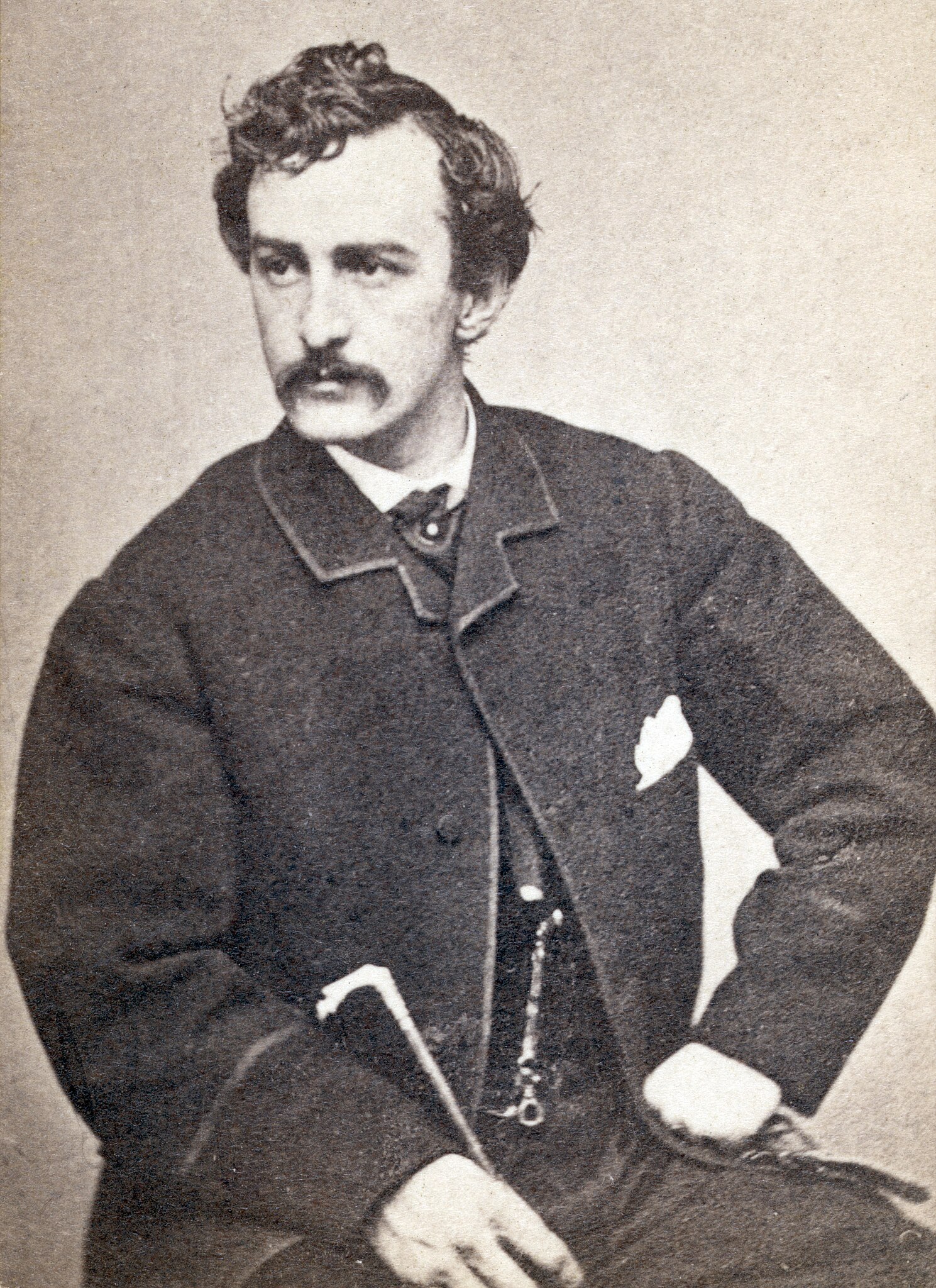
At the time of Lincoln’s assassination, Surratt was in Elmira, New York in connection with a plan to free Confederate POWs held there. After learning that he had been identified as the man who had tried to murder Secretary of State William Seward, Surratt fled to Canada. Reportedly aided by Catholic clergy, the former seminarian made his way to Rome, where he enlisted in the recently created Papal Zouaves battalion.[4] Surratt had made his escape. Or so he thought.
On April 21, 1866 Rufus King, the U.S. Minister to the Papal States, received a visit from Henri Beaumont de Sainte-Marie, a Canadian by birth serving in the Zouaves. Sainte-Marie told King that he had known Surratt in the U.S. and had just recognized him as a fellow Zouave serving under the name “John Watson.” Surratt had not only admitted his real identity, but “acknowledged his participation in the plot against Mr. Lincoln’s life; and declared that Jefferson Davis had incited, or was privy to it.” Sainte-Marie was anxious that his role as informant not be revealed. King asked the State Department for instructions.[5]
In a follow up dispatch, King included two letters from Sainte-Marie in which the informant confirmed his story. He also expressed concern for his personal safety and urged prompt action.[6]
Despite Saint-Marie’s bombshell revelations, matters proceeded slowly. The government wanted proof before it acted.[7]Saint-Marie provided further written statements, including a claim that Surratt was under the protection of Catholic clergy.[8]
On August 7, King finally informed the Vatican of Surratt’s presence in the Zouaves. The powerful Vatican Secretary of State, Cardinal Giacomo Antonelli, assured King of his cooperation.[9]
Meanwhile, Saint-Marie became frustrated at the lack of action. He threatened to give his story to U.S. newspapers to force government action.[10] In response, King had Antonelli confirm that the Vatican would surrender Surratt even without an extradition treaty. Meanwhile, an agent carrying a photograph of Surratt personally confirmed it was him.[11]King asked that a U.S. warship be sent to transport both Surratt and Saint-Marie to America. [12]
Matters then took an unexpected turn. On November 9, Antonelli informed King that, first, Surratt had been arrested on Antonelli’s own initiative, but then had escaped and probably already was in the jurisdiction of the Kingdom of Italy. King no doubt was surprised at both events and apparently suspected Vatican bad faith. King told Seward that he had immediately sent word to the U.S. consul in Florence to be on the lookout for Surratt. King revealed that he used a private messenger rather than a telegram or the mail because he feared those would not “escape the surveillance, or possible interruption of the Papal authorities.”[13]
The subsequent report of how Surratt escaped was the stuff of a Hollywood movie. Surratt was on morning exercise along a narrow promenade bordering the fort in which he was secured. Astride the path was a 35-foot drop into an abyss of jagged rocks.[14] While escorted by seven guards, and despite the near certainty of death or at least serious injury, Surratt leaped into the abyss and scampered away uninjured.[15]
King swung into action. He followed up on rumors and actual leads as to Surratt’s whereabouts. Staying hot on Surratt’s heels, King learned that on November 17, Surratt had boarded a steamer at Naples bound for Alexandria, having evaded capture in Naples by only hours. There Surratt, still in his Zouave uniform, had passed himself off as a Canadian citizen who had deserted the Papal guard and thereby obtained the assistance of the British consul in booking passage out of Naples. Failing to intercept him on a coaling stop at Malta, King alerted U.S. authorities in Alexandria.[16]
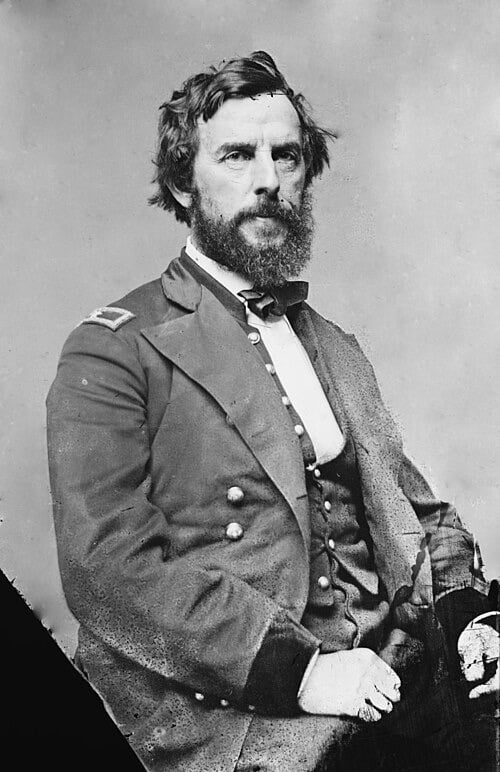
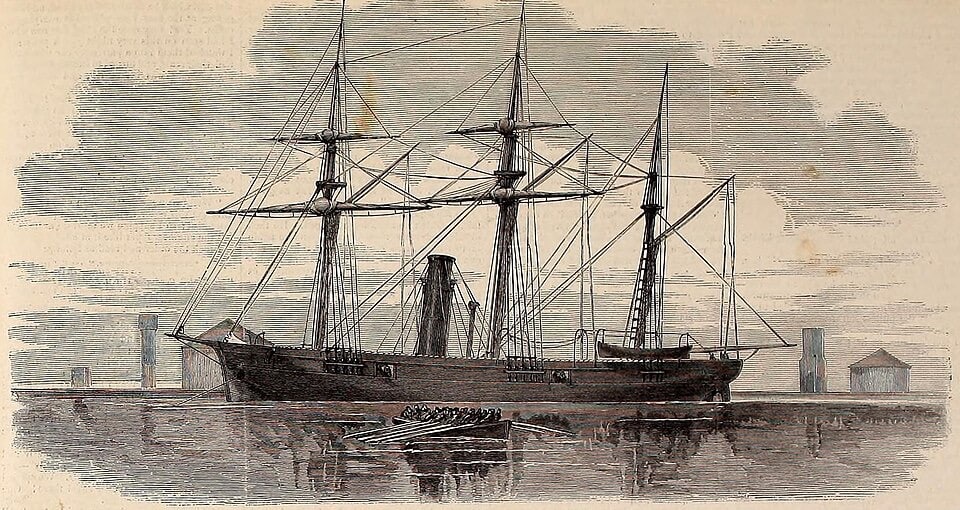
It all paid off. On November 27, Surratt reached Alexandria and what he must have expected was a new land of freedom. Instead, he walked into the waiting arms of the U.S. Consul. Surratt was arrested and placed aboard the USS Swatara, bound for home in irons and overdue justice. This time, there would be no escape. The Swatara’s captain instructed his crew: “It is to be carefully borne in mind that the prisoner is put on board for safe-keeping and transportation to the United States, and that his death is preferable to his escape.” King also arranged for Saint-Marie’s discharge from the Zouaves and embarkation on the same ship, so that he could provide testimony against Surratt. [17] King could feel justly proud of his part in bringing the last Lincoln assassination conspirator to account for his part in that infamous deed.
It was all for naught. While Surratt’s mother had been tried and condemned by a military commission that one might assume was pre-disposed to bring in a guilty verdict, the U.S. Supreme Court had since held that regular civilian courts had to be employed, even for an alleged war time assassin such as Surratt.[18] A “hung” civil jury failed to convict Surratt, who was not retried.[19]
As for Saint-Marie, he was not satisfied with the $10,000 he was paid for his information. He demanded the full $25,000 advertised reward. Unfortunately for Saint-Marie, that reward offer had been revoked in late 1865. Saint-Marie and later, his estate, pressed the issue, but lost in an 1875 U.S. Supreme Court case. [20]
Surratt, who publicly admitted his role in the failed Lincoln kidnapping scheme, but always denied any part in Lincoln’s assassination, lived a quiet life as a teacher and later academy principal in Maryland. The last member of Booth’s infamous gang, whether an assassination conspirator or not, died in 1916. [21]
[1] U.S. War Department, The War of the Rebellion: A Compilation of the Official Records of the Union and Confederate Armies, ser. 1, vol. XLVI, pt. 3 (Washington, D.C., Government Printing Office, 1880-1901), 847, https://babel.hathitrust.org/cgi/pt?id=uc1.31210010132882&seq=853.
[2] “The Text Of John Surratt’s 1870 Lecture At Rockville, Maryland,” Abraham Lincoln’s Assassination, https://www.rogerjnorton.com/Lincoln55.html; “How A Lincoln Conspirator Came To Call Emmitsburg Home,” Emmitsburg News-Journal (December 6, 2007), https://www.emmitsburg.net/archive_list/articles/ce/misc/2007/lincoln.htm; William DeLong, “John Surratt: John Wilkes Booth’s Co-Conspirator Who Escaped Justice.” AllThatsInteresting.com, March 10, 2019, https://allthatsinteresting.com/john-surratt.
[3] Benjamin Perley Poole, The Conspiracy Trial For The Murder Of The President and The Attempt To Overthrow The Government By The Assassination Of Its Principal Officers (J.E. Tilton and Co., Boston, MA, 1865), 70, https://archive.org/details/conspiracytrialf01poor/page/70/mode/2up; Rebecca Beatrice Brooks, “John Surratt: The Lincoln Conspirator Who Got Away,” Civil War Saga, December 19, 2011, https://civilwarsaga.com/john-surratt-the-lincoln-conspirator-who-got-away/. Surratt’s 1870 Lecture. Surratt said that Treasury Secretary Salmon P. Chase was probably at the same event, but Chase was not considered important enough to kidnap.
[4] Barry Husk, ‘The Vatican’s early “Rat Line”: Quebec Clergy’s Role in Lincoln Conspirator’s Escape,’ Sherbrooke Record, 18 Oct 2024, https://www.pressreader.com/canada/sherbrooke-record/20241018/281573771159097; Thomas M. Martin, “The United State Government Versus John Harrison Surratt: A Study in Attitudes” (1996). Master of Arts (MA), Thesis, History, Old Dominion University, DOI: 10.25777/05vq-eb49, 37, 40-41, 43-44, 48-50,
https://digitalcommons.odu.edu/cgi/viewcontent.cgi?article=1019&context=history_etds; John Carr, The Pope’s Army: The Papacy in Diplomacy and War (Pen and Sword Military, Yorkshire, UK, 2019), 237-238.
[5] King to Seward, April 23, 1866, in Leo F. Stock (Editor), United States Ministers to the Papal States: Instructions and Despatches [sic], 1848-1868 (Washington, 1933), 359-360 (hereafter Despatches; all dispatches 1866 unless noted), https://babel.hathitrust.org/cgi/pt?id=mdp.39015074697114&seq=1.
[6] King to Seward, May 11, Despatches, 360-362.
[7] F.W. Seward to King, May 21 & 24, King to Seward, June 19, Despatches, 363, 365.
[8] Saint-Marie to King, June 21 & July 10, King to Seward, June 23 & July 14, Despatches, 366-368, 370-372.
[9] King to Seward, August 8 & 9, Despatches, 377-378.
[10] King to Seward, September 23, Despatches, 381-382.
[11] Seward to King, October 16, King to Seward, November 2, Despatches, 383, 385-387.
[12] King to Seward, November 3, Despatches, 387-388.
[13] King to Seward, November 10, Despatches, 388-391.
[14] Another report put the drop at “only” 23 feet. By comparison, John Wilkes Booth’s leap from the box to the stage at Ford’s Theatre was about 12 feet. Booth still broke his leg. Despatches, 392 (report of Zouave Commander); Glenda C. Booth, “History Buffs Can Follow the Path That John Wilkes Booth Fled,” Ashburn Magazine (April 28, 2022), https://www.ashburnmagazine.com/features/history-buffs-can-follow-the-path-that-john-wilkes-booth-fled/.
[15] Despatches, 393.
[16] Despatches, 391-400 (multiple dispatches).
[17] King to Seward, December 2, Seward to King, December 4, King to Seward, December 17 & 24, January 7, 1867, Despatches, 400-401, 406-407, 408, 409; Andrew C. A. Jampoler, “Returning the Last Conspirator,” U.S. Naval Institute(October 2009) (emphasis supplied), https://www.usni.org/magazines/naval-history-magazine/2009/october/returning-last-conspirator.
[18] Ex Parte Mulligan, 71 U.S. 2 (1866).
[19] “Returning the Last Conspirator;” “How A Lincoln Conspirator Came To Call Emmitsburg Home.”
[20] Shuey, Executor, v. United States, 92 U.S. 73 (1875).
[21] “How A Lincoln Conspirator Came To Call Emmitsburg Home.”


Wow. I’d say this is “movie material”!
Doug, you have got that right. What was that rather recent movie about the trial that condemned Surratt’s mother (and others)? The Conspirators? This could make a worthy sequel.