Behind the Pen: Writing This Great Contest Afloat
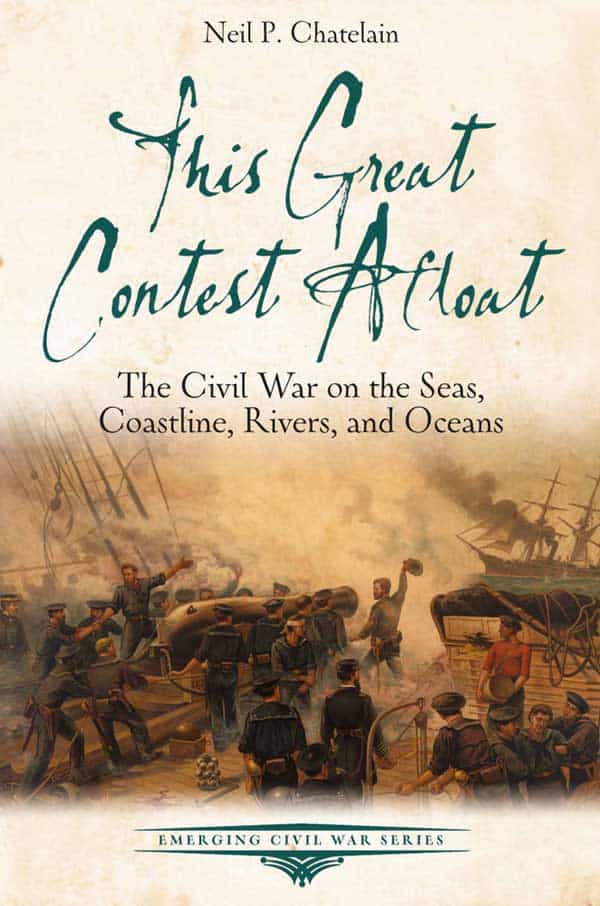 My latest book, and my first with the Emerging Civil War Series, is This Great Contest Afloat: The Civil War on the Seas, Coastline, Rivers, and Oceans. The title seems self-explanatory that this is a book about naval activity of the U.S. Civil War – and it is! However, the story behind the book’s planning, organization, and writing makes it clear that, as compared to other overall naval histories of the war, This Great Contest Afloat is a bit different in approach.
My involvement with this book goes back to February 19, 2022. I was a new member of Emerging Civil War, and the previous night I had flown from Houston to Baltimore, then made the drive to Gettysburg to attend that year’s Emerging Civil War retreat. It was my first time getting the chance to meet up with a large concentration of ECW members. One of the people I was looking forward to meeting most was Dwight S. Hughes.
Despite delayed flights and practically no sleep, I dove into the retreat that Saturday morning. There were info sessions about the organization, trainings about mapmaking, and lots of introductions to people I had not yet met in person. I had been emailing Dwight back and forth for months by then working on what eventually became chapters in The Civil War on the Water in the ECW 10th Anniversary Series, but we had not yet met face to face.
My involvement in what became This Great Contest Afloat began that weekend. Dwight approached me and said he wanted there to be more ECW Series books about naval topics, and I, of course, agreed wholeheartedly. We spent a few hours talking that February 19, trying to organize thoughts on different books we wanted to write.
One topic that kept coming back was an overview book on all wartime naval activity to put everything together. I could tell this was a topic Dwight had been thinking on for some time (and indeed I later learned from others that Dwight had been speaking with them about it before I was an ECW member), so I wanted to devote some time to helping him get things figured out. That night, sitting in my hotel room, I wrote up a three-page proposal outlining thoughts and ideas. I called it “The Navy at 10,000 feet: Overall introduction to naval warfare in the Civil War, its scope, impact, and importance on the overall war efforts of both sides.” We both liked the ideas, but with the ECW 10th Anniversary Series in editing and production, our time was focused on that.
Fast forward a couple of years, into 2024, and Dwight and I both began talking about that Navy at 10,000 feet idea again. Dwight got the green light to start organizing, researching, and writing the book, and he quickly approached me to co-write it. We divided the book in half and assigned work. In my spare time I worked on a few chapters.
It was Dwight’s idea, but one that I quickly agreed with, that the book needed a different organization. Other short histories of the naval side of the Civil War have been written, including books by Craig Symonds and James McPherson. Those books generally followed a chronological narrative. We knew ours needed to be different, both to stand out and to help readers better understand the war’s naval elements.
We agreed that the best course of action was to divide our book into each theater of war. That way, instead of an overall chronology, readers could look at each theater in turn to truly understand pertinent areas and missions. The problem is that the naval side of the war is not divided into the theaters that most think of. People who study the U.S. Civil War generally divide the conflict onto three primary theaters of conflict: Easter, Western, and Trans-Mississippi. That is a very army-centric understanding, however, and does not truly represent the missions, objectives, and organization of naval forces.
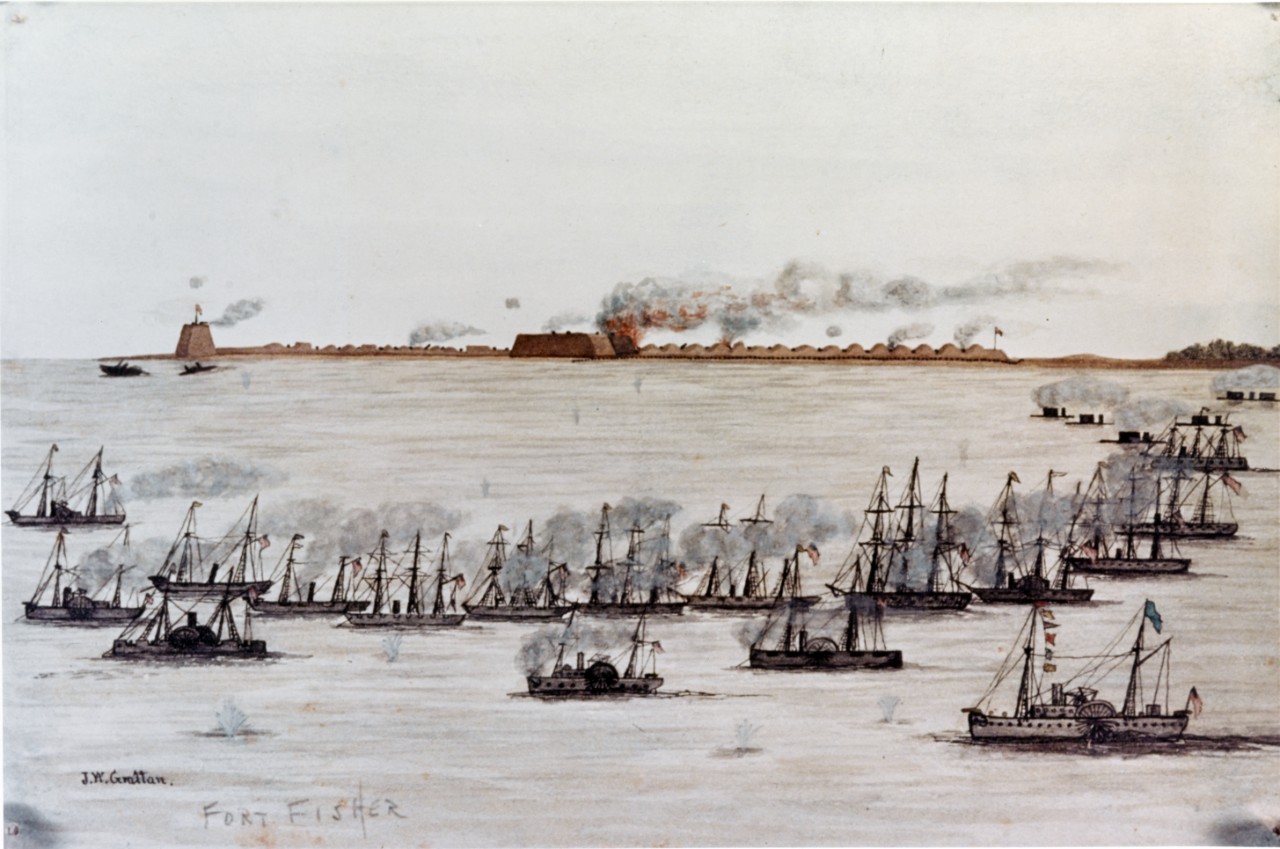
Instead, we agreed to divide the book into four main elements, each subdivided into four chapters each. Each of the four primary sections would explore one of the four primary naval theaters of the conflict: the offshore blockade, littoral coastline, the heartland rivers, and the open ocean. These theaters represent the primary areas of conflict naval forces encountered in the Civil War.
The blockade featured blockaders versus runners in a fight over keeping the Confederacy supplied. The littoral coastline was where blockading squadrons worked with the army to seize ports and open new fronts inland. The heartland rivers were the Mississippi River Valley where ships worked with armies to either split the Confederacy or attempt to keep it linked. The open oceans were the economic war on U.S. commerce that spanned the globe. By dividing the book like this, it allowed us to unpack major themes and events in a way that others previously had not.
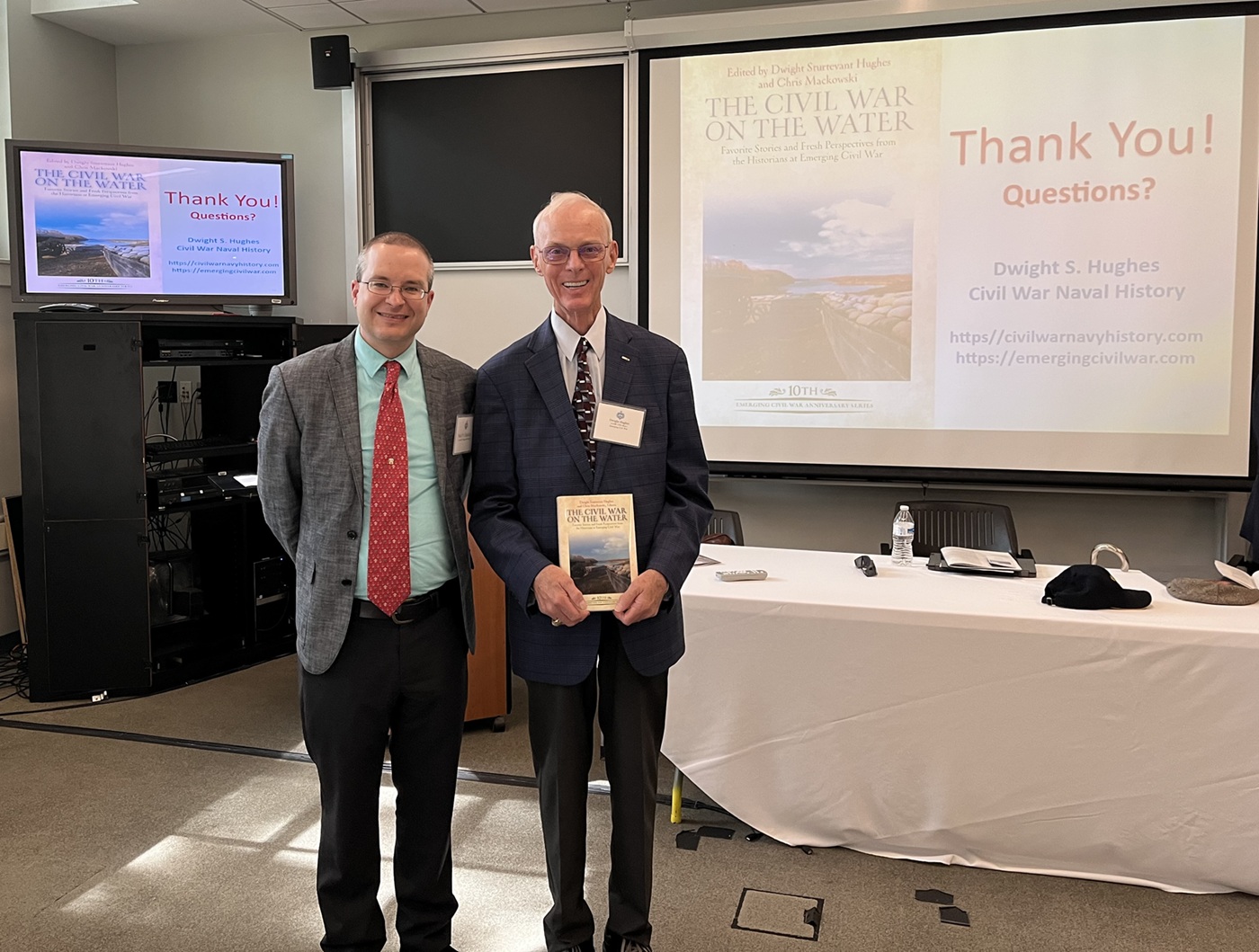
As our outline and shared folder was populated with work, Dwight suffered health problems. After about a year, Dwight let me know that he did not think he could continue the project and offered to let me finish it on my own. I agreed and began writing, but the first thing I did was get Dwight’s permission to use what he intended to be the introduction to the book. Dwight happily agreed, and that intro became my book’s foreword. Dwight passed away shortly after.
As I continued writing, I realized that This Great Contest Afloat was a little different than other ECW Series books. Others generally follow one battle or campaign, while mine covered the whole conflict. While others often struggle to fill their ECW books with imagery, I found myself cutting some 100 or so out from the draft (which still has over 170 images in the final book). I also ended up having to cut several maps from the book as well for space, though the final book still includes 17 maps!
The biggest challenge was text. There is only so much space to fill. When drafting each chapter, I generally wrote what I felt was necessary, and in virtually every chapter that meant I ended up with a draft document that was double the word count limit for that section. There were significant rewrites as I struggled to fit as much information as I could into a well-flowing narrative that does not strictly follow a chronological telling of events. As I say in the book’s introduction, there are single paragraphs here that warrant their own books.
This Great Contest Afloat: The Civil War on the Seas, Coastlines, Rivers, and Oceans is a long title, but one that showcases those four major naval theaters the book is subdivided into. The book was imagined by Dwight S. Hughes, and I am honored to include some of his words in its foreword to honor the memory of my colleague and shipmate. Hopefully readers will gain a better appreciation of the war’s naval aspects, how sailors think differently from soldiers, and a better understanding of the conflict’s four naval theaters.
You can order copies of This Great contest Afloat at the Savas Beatie website here.
You can check out the footnotes and bibliography for This Great Contest Afloat here.


What a wonderful and fascinating backstory to your book, as well as a tribute to Dwight Hughes. Hopefully ECW can give space to other authors of new ECW books to do something similar.