We’ll See You on the Battlefield: Introduction
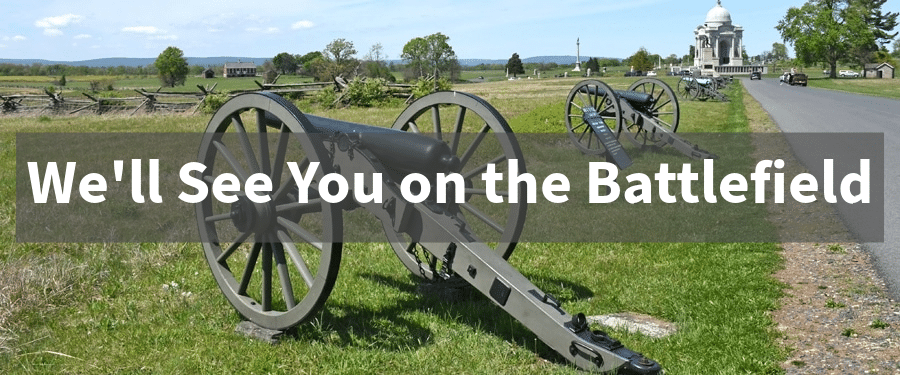 A common refrain among students of the Civil War is that you can’t really understand a battle until you’ve walked the ground that it was fought on. For many of us, our interest in the Civil War – what Chris Mackowski likes to call our Civil War origin story – was sparked by a visit to a battlefield.
It’s such an intrinsic part of studying the war’s history that it inspired half of Emerging Civil War’s tagline: “We’ll see you online…and on the battlefield.”
A remarkable amount of effort and money has gone into (and continues to go into) preserving these sites, so that we can honor the lives of those who fought there, and better understand the events that took place.
With the weather warming up, visits to battlefields will be ramping up, and we’re kicking off a series here on the blog: “We’ll See You on the Battlefield.” We’ve asked Emerging Civil War’s writers to share their tips and secrets for how to make the most of your trip to a battlefield, and we’ll be sharing those posts daily this week and next. Enjoy!


I’m really looking forward to this series!
When I visit a battlefield (especially Gettysburg) with friends and relatives, I always make it a point to emphasize the locations where soldiers that originated from the area where they live, and give them a hands-on experience with the actual tools of war available on the battlefield. During my 50th class reunion of the high school class that came from central Pennsylania, I pointed out the flank markers of a regiment raised in the same area where my classmates came from when I took all those interested in having their classmate history nerd to tour thve battlefield. I had my classmates stand between the flank markers and pointed out that their ancestors and their friends, neighbors and acquaintances stood in formation as they were in awaiting the command to go into battle. When I urged them to continue on to the next stop, they just stood there, transfixed in being on the same ground where those who they may have descended from over 150 years ago. After several moments of silence, we broke for lunch at the Dobbins House. That afternoon I assigned each member a number for the artillery gun crew member and had them pantomime the movements in loading and firing two pieces of Cushing’s battery on Cemetery Hill including resupplying ammunition from the limber behind the piece. I had enough takers to supply two guns with seven-person crew each (with me as the commander of the two gun section and providing the “BOOM” after than lanyards were pulled). I segregated the genders of the crews, and the female gun crew resupplied and refired their piece in less time than the male crew. I did the same later with relatives from Tennessee but with only enough for a crew to serve on gun, but preceding the artillery experience I had them walk along the trail just south of the Chambersburg Road in the footsteps of the 7th Tennessee on the morning of July 1st, past the spot where their brigade commander General James Archer was captured. I finished that segment with the legendary exchange between General Archer and General Abner Doubleday (Union I Corps commander of the capturing troops). Doubleday’s greeting of his pre-war friend, “Good Morning Archer! How are you? I am glad to see you!” Archer’s response was less friendly, “Well, I am not glad to see you by as damn sight!” That exchange is lacking in historical corroboration, but why ruin a good story with the facts?