We’ll See You On the Battlefield: You and Mother Nature
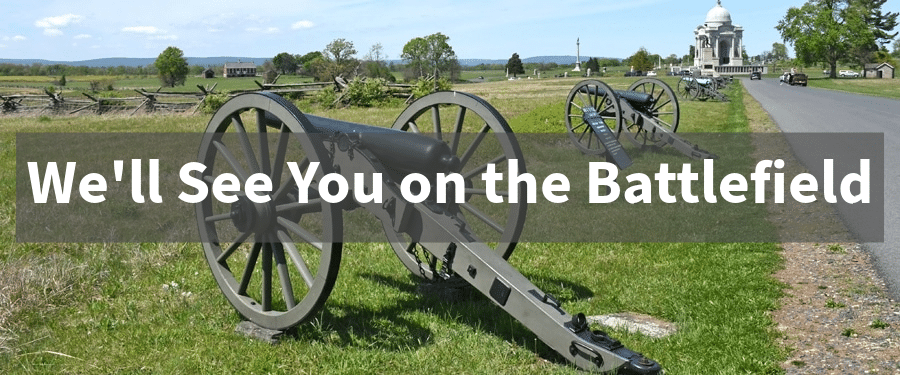

The recent “beaver controversy” at Gettysburg National Military Park brought into focus an important dynamic that we, as history people, often forget: battlefields are not just historical and cultural landscapes, they are also natural landscapes. Mother Nature went about her business long before armies ever showed up, and she has been about it ever since. We’re just passing through.
In areas where residential and commercial development have put enormous pressure on local ecosystems, battlefields have become vitally important habitats. The Wilderness, for examples, has tens of thousands of homes in it. As I like to point out, the Wilderness is not so “wild” any more. And yet its very wildness was its defining feature.
Fortunately, history and nature don’t have to be mutually exclusive, as I’ve written about here. It’s not a zero-sum game.
In fact, I like to think of them as two sides of the same coin because, for everyone who expresses concern that “people don’t appreciate history,” there’s someone concerned that “people don’t appreciate nature.” Or framed another way, if you complain about beavers, you are no different than someone who complains about battlefield preservationists or history nerds.
Bird-watching groups and wildflower enthusiasts, in particular, find battlefields to be great havens for their hobbies. Everyone’s got their “thing,” but that doesn’t make any one’s thing better than anyone else’s, and if those two “things” happen to share a landscape, it’s better if everyone does their best to just get along. Remember, we’re all just passing through.
You can actually get more out of a battlefield if you open your eyes to the natural world. What animals do you see? Can you identify any of the birds? Is that an insect you hear trilling or an amphibian? What’s in the water? Check out that racoon’s little handprints in the mud by the creekside! How many funky kinds of mushrooms can you see and how does that change over the course of the season?
What sorts of trees grow on the battlefield and how does that compare to historical treelines? What sort of shade might have been available to wounded men? Any witness trees—and do any primary sources exist that can help you “see” what the tree witnessed?
I happen to believe that closer attention to the world lets a person experience daily life in a richer way and cultivates a deeper appreciation of things. But there are also some practical reasons for paying attention to the natural world when you’re on a battlefield. Here are some handy reminders:
Bring bug spray. This is useful for mosquitoes and midges and blackflies, but it’s especially important for warding off ticks and chiggers. If you’ve never experienced the curse of a chigger infestation, count yourself lucky. It can be like having an outbreak of the apocalypse on your skin. Ticks, of course, are carriers of several nasty ailments, most notably Lyme’s disease.
Wear a hat. This helps with shade, but it also helps keep ticks out of your hair, particularly in wooded areas.
Pants are better than shorts. Pants are not as cool or comfy as shorts, but they’ll reduce your risk of sunburn and they’re much better at keeping the ticks off you. (Are you noticing a pattern here?)
Boots are better than sneakers. Sneakers are more comfy, sure, but they aren’t much protection against snake bites.
Snakes are not bad. Not even the venomous ones. They only strike when threatened or spooked, so if you see one, keep your eye on it and carefully back away. Chances are, it’ll slither away as soon as it can. Don’t tempt fate by getting too close—but you don’t need to freak out or try to kill it if you see one, either. Along those lines, a snake stick can be useful for any trail hiking or off-path bushwhacking you end up doing.
Fire ants ARE bad. Every single one of them. In the South, their nests dot the landscapes of many battlefields. (I swear, parts of Vicksburg National Military Park’s earthworks are nothing but fire ant nests with monuments on top of them.)
Be mindful of where you’re stepping. All sorts of things live under those leaves and in those tall grasses. Don’t step on something that will bite you, and don’t step on something you might kill. Don’t step on fire ant nests ever.
Don’t feed the animals. We’ve all seen those YouTube videos of people who think they can pet the bison and then end up getting tossed thirty feet into the air. Don’t be the person who ends up on someone else’s YouTube page. Let wildlife be wild.
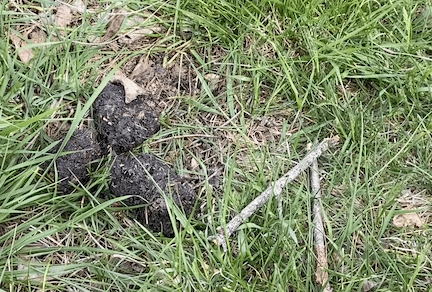
Like people, animals prefer the cool of the evening, so if you want to spot something, that crepuscular hour before sunset is the best time. As you walk around, keep as quiet as you can. Deer spook easily and will run away before you ever see them. Conversely, you don’t want to spook a bear, so a little noise now and then, just to let the critters know you’re around, can be useful. (I was on Sitlington Hill at McDowell recently, and although I didn’t see any bears, I saw bear poop everywhere, so I know bears were around!)
If you see an animal during the middle of the day that’s typically nocturnal, like a skunk or raccoon, give it a wide berth. The critter isn’t necessarily sick, but it might be. There’s a higher likelihood that something is wrong with it if it’s behaving in an atypical way.
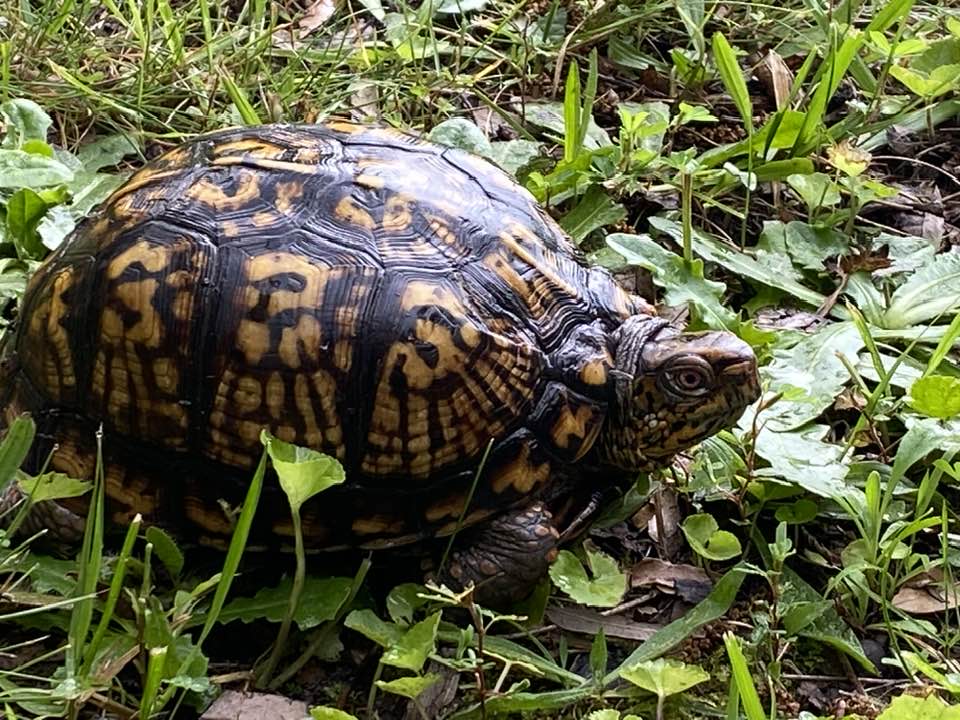
I always feel lucky when I see an animal of any sort when I’m out on a battlefield. I’ve seen armadillos, bats, black bears, coyotes, deer, groundhogs, muskrats, possums, raccoons, skinks, skunks, and snakes (black rat snakes, copperheads, garter snakes, and northern rough greensnakes). I’ve seen more species of birds than I know how to identify, but I know I’ve seen bald eagles, geese, great blue herons, hawks, ospreys, owls, and pileated woodpeckers. I especially love finding turtles. Turtles require you to slow down and really look.
And yes, I’ve seen beavers on battlefields, too. Oddly enough, not a one of them did a dam thing to me.
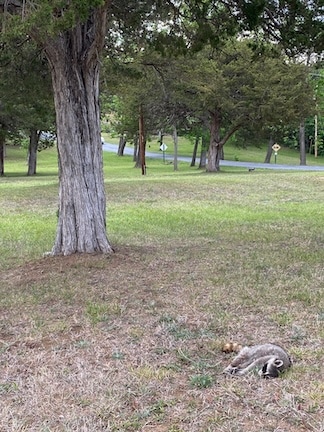
No sooner did I write this post than I came across a dead raccoon on a battlefield in the Valley. Technically, “being dead” is a normal behavior of a sort (we’ll all get there, after all), but I would still put this in the “give it a wide berth” category. You don’t know why it died, so you don’t want to risk catching anything. In general, it’s best to stay away from dead things.


Unfortunately, I learned the jeans instead of shorts lesson one summer at Gettysburg. Chiggers don’t play! As for seeing wildlife on a battlefield, I’ve never been anywhere quite like Antietam. I always see critters there–including plenty of deer and rabbits. While I share your take on this mostly, the beavers damming up Plum Run and creating a pond in The Valley of Death is a bit too far for me. With NPS doing everything it can to restore the field to its 1863 appearance, that’s not good. See you next weekend!
I was in Gettysburg recently with several family members. Well aware of the tick problem there, I told them we would stay on paved areas throughout our tour. Only once did we leave the pavement – we walked through low grass down to the John Reynolds monument and spent a few minutes there. On our return to the car, we found 3 ticks on us. On my next visit, I’ll spray shoes and trousers with Permethrin.
I agree with Glen concerning the beaver damming up Plum Run. To coin a phrase, “ it’s a bridge too far”. I heard that this matter has been resolved by the NPS removing the critter. Is this so? If not, to preserve the integrity of this very hallowed ground, the beavers must be removed.
Feathers – I recommend to not pick up such as a battlefield souvenir or otherwise. They can carry tiny mites and parasites, and believe it or not, possessing some types of feathers can be against the law. A word to the wise should be unnecessary, right? Which, off on a tangent here, reminds me of a comment made by Joshua Chamberlain when he spoke of a Confederate general he encountered at Appomattox: “He was the opposite of his name.”
Thank you for this article Chris!! Plants, animals, historians, naturalists – we can all coexist and enjoy our battlefields.
A world without wildlife would be very sad. Have seen much wildlife while visiting Civil War sites and always appreciate it. Trees, flowers, animals – the living world is a beautiful marvel. I like beavers and agree that to maintain the battlefield integrity perhaps relocating it is not being particularly harsh or detrimental to its existence. A winning approach for all.
So nice pic 👌