Desertion and Deliverance
ECW welcomes guest author Gary E. Parker.
One man, a sandlapper, from South Carolina, the other a Tar Heel from North Carolina. One man deserted and received a sentence of death by firing squad for his offense. The other risked his life in a desperate effort to save the condemned man.
The deserter’s name was James Booth, a Palmetto state native who had enlisted in Manigault’s Battalion in the Confederate Army in 1863. Originally organized in 1862, this unit fought at Fort Sumter and later defended James Island and John’s Island, among other locales near Charleston.[1] According to his great-grandson Enoch Booth, James specifically participated in action on James Island, and it was during this service that he made the ill-fated choice to abandon his unit and return to his home.[2]
Booth, of course, wasn’t the only man to desert during the Civil War. While it’s impossible to know exactly how many men forsook the front lines at one point or another, estimates suggest the Confederate Army lost up to 33 percent of its fighting force, and the Union side suffered up to 20 percent gone missing.[3] The reasons for the high rates of desertion vary, but certain causes occurred with great frequency.
Particularly in the Southern states, soldiers deserted because their families were starving, threatened, or displaced as the Union Army pushed deeper into Confederate states.[4] William Honeycutt, a Southern soldier, wrote to Governor Zebulon Vance of North Carolina in 1863, “I am no coward nor traitor, but a poor man with a starving wife. I ask only that I may not be shot like a dog.”[5] Other deserters quit due to “poor equipment, food and leadership.”[6] Many took what soldiers called “French leave,” absenting themselves for a few days to bring in crops at harvest or simply to visit distressed family or friends. These typically returned to their units after their AWOL periods.[7]
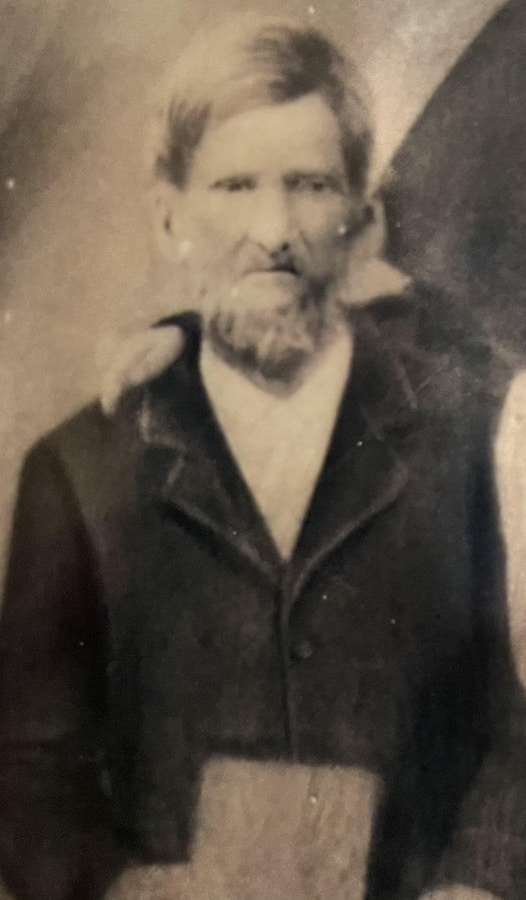
Booth, like so many of his fellow combatants, deserted for a heart-rending reason. While stationed near Charleston in 1864, he received a letter informing him that his wife Clarky had fallen gravely ill. Most urgently, the letter concluded that if he ever wanted to see Clarky alive again, he had to come home immediately. Driven by his love for Clarky and concern for his three young children, he made the hard decision to leave the front and return to his farm in Baker’s Chapel, South Carolina, near present-day Aynor.
The mists of time cloud the details of what happened next, but this we know: Soldiers from Booth’s unit soon learned of his location, tracked him to his home, and captured him. Booth’s military records report him absent from his battalion as of September 20, 1864, and the muster roll from November subsequently shows him “under arrest awaiting sentence of the General Court Martial.”[8] That sentence arrived swiftly and with deadly intent. The court martial decided that Booth would stand before a firing squad and die for his decision to desert.
Death by firing squad served as the standard sentence on both sides of the lines for desertion in the Civil War. But, obviously, neither side practiced it as a matter of course. If they had, given the numbers of deserters previously noted, the ranks of fighting men would have been reduced so greatly the armies wouldn’t have been able to sustain the fight.
The political leadership of both armies understood that if deserters were shot by the thousands, public sentiment would have quickly turned against the war. President Abraham Lincoln wrote, “You can’t order men shot by dozens or twenties. People won’t stand for it.”[9] Yet, even with this aversion to mass executions, men on both sides were occasionally singled out for the severest of punishments. History doesn’t fully explain what made one man deserving of death and thousands of others not. Perhaps the choices were as random as the reasons for deserting.
But records indicate approximately 330 deserters (a total including the North and South) died by execution for their crime.[10] And James Booth would have become number three hundred and thirty-one except for the almost-miraculous intervention of a young man named Elisha Jackson Tyler.
Neither the historical record nor any family lore establishes exactly when the two men met or if they were mere acquaintances or best friends. But we do know that Tyler enlisted in the Confederate Army on July 11, 1862 at Charleston, in Manigault’s Battalion, the same as Booth. A bugler for Company A of that battalion, Tyler was wounded in action in August 1863, but recovered and returned to his company in September.[11] And sometime in the fall of 1864 he became the instrument of Booth’s salvation.
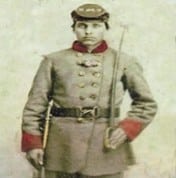
An article in the Sun News of Myrtle Beach described the events that followed. “Booth was in a wagon with the pine box he was to be buried in facing a firing squad when Tyler intervened.”[12] Dropping to his knees, Tyler (who was present for reasons undisclosed) begged the captain in charge not to hang Booth. He swore that Booth was a good man with a wife and three children at home.[13]
We do not know the name of the captain or the motivations for what happened next. But the captain made a clear declaration. He would write a pardon for Booth. But Tyler had to venture into the dangers of the war to find a commanding officer to sign it, thus allowing Booth to go free.
Quickly accepting the terms, Tyler mounted a horse provided by the same captain and rode it “to death” in the quest to save Booth’s life.[14] To the joy of Booth and his family, Tyler somehow managed to find that commanding officer and, on January 12, 1865, Booth received a suspension of his death sentence, was allowed to rejoin his unit, and then eventually returned home to Clarky at the war’s conclusion.[15]
Thankfully, Tyler also lived to see the war’s end, and both men lived in Horry County, South Carolina for the duration of their lives. What relationship did they have after the war? Neither the historical record nor any surviving family legend tells us. But one thing we know: Booth and the ten other children he fathered after the war (and their descendants) owed their lives to Tyler, a man who risked his own life so another might live.
————
Gary E. Parker received his Ph.D. from Baylor University and has written 20 novels.
Endnotes:
[1] “South Carolina in the American Civil War,” Carolana, https://www.carolana.com/SC/Civil_War/sc_civil_war.html, accessed April 19, 2026.
[2] Enoch Booth, first-person account, Booth Family Papers, private collection of the descendants of James Booth.
[3] “Deserters in the Civil War,” TeachingHistory.org, National History Education Clearinghouse, https://teachinghistory.org, accessed April 19, 2026.
[4] “Deserters in the Civil War,” TeachingHistory.org.
[5] William Honeycutt to Zebulon B. Vance, 1863, Zebulon Baird Vance Papers, North Carolina State Archives, Raleigh; quoted in Judkin Browning, ed., Deserter Declarations: Letters from North Carolinians Who Abandoned Their Confederate Units (Chapel Hill: University of North Carolina Press, 2019), 85.
[6] “Desertion (Confederate) in the Civil War,” Encyclopedia Virginia, https://encyclopediavirginia.org/entries/desertion-confederate-in-the-civil-war/, accessed April 19, 2026
[7] Aaron Sheehan-Dean, “Desertion (Confederate) in the Civil War,” Encyclopedia Virginia, https://encyclopediavirginia.org/entries/desertion-confederate-in-the-civil-war/, accessed April 19, 2026.
[8] Cheri Todd Molter and Kobe M. Brown (eds.), “Private Elisha Jackson Tyler: A North Carolina Native Whose Act of Compassion Has Been Remembered for Generations,” NC History Center on the Civil War, Emancipation & Reconstruction, July 26, 2024.
[9] “Military Executions during the Civil War,” Encyclopedia Virginia, https://encyclopediavirginia.org/entries/military-executions-during-the-civil-war/, accessed April 19, 2026
[10] “Military Executions during the Civil War,” Encyclopedia Virginia.
[11] Cheri Todd Molter and Kobe M. Brown, (eds.), “Private Elisha Jackson Tyler: A North Carolina Native Whose Act of Compassion Has Been Remembered for Generations,” NC History Center on the Civil War, Emancipation & Reconstruction, July 26, 2024.
[12] Peggy Mishoe, “Notebook,” The Sun News (Myrtle Beach, SC), June 24, 1999. This newspaper article is, in part, corroborated by oral tradition from both the Booth and Jackson families.
[13] Mishoe, “Notebook.”
[14] Mishoe, “Notebook.”
[15] Mishoe, “Notebook.”


Very interesting story and a fine piece of nonfiction for a novelist! I enjoyed it very much, I hope you continue contributing. Personal stories like this are a great way to discuss larger issues like desertion.
The bugler became the instrument of Booth’s salvation. But very interesting to know there were so few official killings of deserters, Thanks
What a satisfying story!
Was it a firing squad or a hanging that Private Booth was facing? In the paragraph below the color picture of Tyler, Booth was awaiting both before his salvation.