George Pickett and the Massacre at Kinston
ECW welcomes back guest author Riley Sullivan.
When many think of Maj. Gen. George Pickett, immediately the infamous charge which bears his name springs to mind. Thanks to novels like Michael Shaara’s The Killer Angels and its 1993 film adaptation, Gettysburg, Pickett is often viewed as a vibrant subordinate met by tragedy. As author Philip Gerard has noted, Pickett was never the same following the debacle as he was “haunted by monumental failure” and became “both timid at command and bitter, even cruel, towards his enemies.”[1] However tragic Gettysburg was for Pickett, the destruction of his division there did not spell the end to his service in the Confederate army.
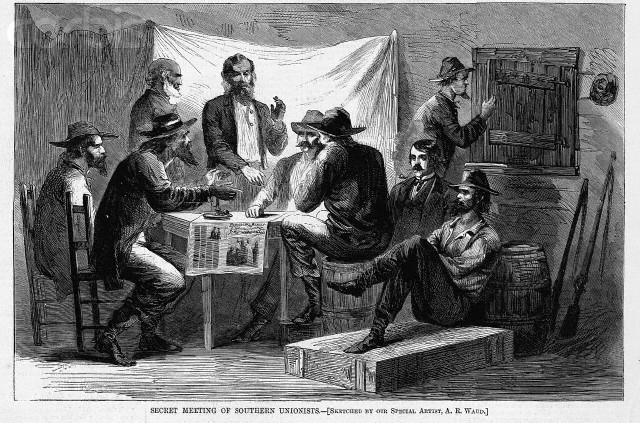
Following the Gettysburg campaign, Pickett was placed in command of the Department of North Carolina to assume his own independent command. Plagued by frequent Union raids in his department and the setbacks during engagements at New Bern, Pickett’s tenure was short lived. His involvement in the execution of twenty-two Union soldiers of the 2nd North Carolina Infantry following an engagement outside of New Bern, North Carolina ultimately proved controversial. The troops of the 2nd North Carolina occupied a unique space as they were Southern Loyalists whose loyalty lay not with their state, but rather with the Union. Therefore, the episode that unfolded in the opening weeks of February 1864 demonstrates the cruelty that many Southern Loyalists faced if captured during combat operations.

When Union troops under Maj. Gen. Ambrose Burnside arrived off the North Carolina coast in February 1862, many officers remarked that those who occupied the coast were strong unionists. In informing Secretary of War Edwin Stanton of the conditions he faced on this front, Burnside wrote that he was in need of reinforcements to ensure that the Union maintained a foothold on the North Carolina coast. While initiating this request, Burnside also informed Stanton that he had authorized the formation of the 1st North Carolina Infantry Regiment with “the movement [being] initiated by the Union men in and about Washington [county].” By June 27, the unit formally organized.
However, continuing into the following year, enough Union men of the region looked to enlist in the Union army, and the 2nd North Carolina was eventually organized. In November 1863. The regiment consisted of loyalist soldiers who had enlisted in the Union army during the federal occupation of coastal North Carolina. Given that much of the rich farm-land resided in the Piedmont region (central North Carolina), many of those who lived in the Coastal Plains were of middling backgrounds. Having looser ties to the institution of slavery led many residents who remained in this portion of the state to have closer ties to preserving the Union; or at least be reluctant Confederates.
Upon entering service–like many Southern Loyalist troops–the 2nd North Carolina took up garrison duty in their home state. Being close to home brought many soldiers a sense of security as they could be near their families.[2] Additionally, with Confederate authorities tightening conscription laws, many North Carolinians opted to avoid conscription–or escaped the Confederate service–in favor of remaining a federal unit close to home.
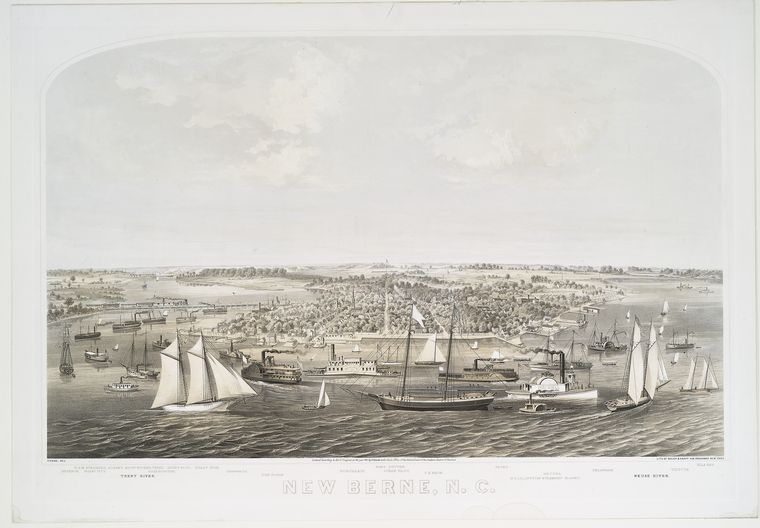
As they hoped to be away from much of the action, this proved to be the opposite. On February 1, 1864, in an attempt to force Union troops out of New Bern, the Confederates under Pickett’s command launched an assault against the town. Given the sandy and swampy topography of the area, the assault ultimately failed, and the Confederates were forced to retreat days later. By February 4, Pickett’s forces retreated to Kinston with a significant number of prisoners; including fifty-three soldiers of the 2nd North Carolina.
Once word had reached the Union commander of the District of North Carolina, Maj. Gen. John J. Peck opened communications with Pickett. After having challenged Pickett on his soldiers’ atrocities committed towards black troops, Peck then sought to ensure that any loyalist prisoners also received fair treatment. Peck argued that “they are loyal and true North Carolina and duly enlisted in the Second North Carolina Infantry” and that they should receive “the same treatment in all respects as you will mete out to other prisoners of war.”[3]
Replying from his headquarters in Petersburg, Virginia, Pickett was unimpressed. Pickett sarcastically thanked Peck for the list of prisoners’ names that he provided, as it “enabled me to bring to justice many who have up to this time escaped their just deserts,”[4] further stating that the “letter and list will, of course, prevent any mercy being shown to any of the remaining number” who might have deserted the Confederate army.[5] For Pickett these “Galvanized Yankees” were traitors to their state, people, and communities and thus deserved no mercy. Therefore, as historian Lesley J. Gordon noted about the massacre, “the public nature of the executions was a determined attempt by the Southern army to stifle Unionism and deter desertion.”[6] While morale was shaken for the time, this did not have a lasting impact on the outcome of the conflict in this theater of the war.
Following the conclusion of the conflict, Secretary of War Edwin Stanton published a report on the episode in May 1866 that was the result of a months-long investigation that had been submitted for inquiry to Congress. Throughout the 89-page report, a myriad of evidence was collected to see if the claims by Pickett of those executed had indeed deserted from the Confederate service and the responsibility that Pickett held in authorizing the executions.
From examining correspondence between Peck and Pickett during February and March 1865, as well as collaborating with over two dozen witnesses, the court came to the conclusion that while Pickett was headquartered in Virginia, “he gave the orders for their execution, and that no other officer in the rebel department of Eastern North Carolina had authority to order an execution but him.”[7] As per the so-called “deserters” charge that led to the executions, the board also determined that only two of the twenty-two Union soldiers had served in the Confederate service, while the rest had served in local home guard units that did not fall under the banner of the Confederate armed forces. Following the extensive investigation, Judge Advocate Joseph Holt recommended that war crimes be charged against Pickett; however, with the intervention of Grant, these charges were not pursued. Nonetheless, fearing possible prosecution, Pickett fled the country to Canada, not to return until the following year after Ulysses S. Grant intervened on his behalf.
Pickett received a full pardon in 1874 and died the following year in Virginia. Remembered as a Southern hero, the executions at New Bern were ignored through the Lost Cause narrative that came to associate his name exclusively with his service in the Army of Northern Virginia. As this episode has been reexamined by historians like Richard Nelson Current, Lesley Gordon, and Philip Gerard, it demonstrates the hatred that many Confederate had towards Southerners who supported the Union cause and their efforts to stamp out Southern dissent.
The question that therefore is proposed is how is George Pickett to be remembered? Is he the energetic figure that met tragedy that is all too familiar to us? Should he be considered cruel and merciless towards his treatment of both black and white Southern Union soldiers? Is there some in between where both are true to some extent? Or does his story reveal the contradictions and the complexities of historical memory?
Riley Sullivan earned his MA in History at Sam Houston State University and is a Professor of History at San Jacinto College in Pasadena, TX. He has published works on Civil War Memory that have appeared in the Tennessee Historical Quarterly. He is also a doctoral student in the Department of History at the University of Houston.
Endnotes:
[1] Philip Gerard, The Last Battleground: The Civil War Comes to North Carolina, (Chapel Hill, NC: University of North Carolina Press, 2019), 235.
[2] Historian Richard Nelson Current argued that for many Southern Loyalists across the Confederate states, the security of one’s family was paramount for enlisting in the federal service. Richard Nelson Current, Lincoln’s Loyalists: Union Soldiers from the Confederacy, (New York, NY: Oxford University Press, 1992).
[3] OR, I, Vol. XXXIII, 867.
[4] Ibid, 868.
[5] Ibid, 868.
[6] Lesley F. Gordon, “‘In Time of War’: Unionists Hanged in Kinston, North Carolina, February 1864,” in Guerrillas, Unionists, and Violence on the Confederate Home Front, ed. Daniel E. Sutherland, (Fayetteville, AR: University of Arkansas Press, 1999), 50.
[7] Murder of Union Soldiers in North Carolina: Letter from the Secretary of War, (Washington: War Department, 1866), 58.


Thanks for a well-researched piece documenting a largely forgotten episode and its aftermath.
I have never heard of George Pickett being referred to as a Southern hero or a victim, by anyone, even Jubal Early. Southerner’s eyes glaze over, not just because his name is associated with the Charge – perhaps intentionally so, to spare Amistead – but also because of the Kinston episode inflicted on innocent North Carolinians who should have been POWs, not dead, and because he was having a shad and brandy lunch with Fitzhugh Lee and Rosser two miles north of Five Forks when the Union Army arrived, plus he graduated last from his class at West Point and was thought to be rather a dandy. A friend of Longstreet’s from the Mexican War, he may have also been tainted in Southern minds with that relationship. All in all, perhaps a 3 or a lukewarm 4 out of 10, but he is not the only Southern General to have received low marks from Southerners. It’s also difficult to imagine that receiving support from Grant against prosecution for the Kinston event endeared him to anyone in the South. All in all, it’s hard to find a hero or even a worthy victim anywhere in that resume.
thanks Riley, great piece … the defeat at New Bern, the crime at Kinston and the total collapse at Five Forks reveal the true measure of George Pickett—a subpar commander who executed U.S. soldiers without due process and then fled the country to avoid the consequences. Sallie Pickett spent fifty years ghostwriting a romantic myth, but the cold historical reality remains a case study in failed leadership and evaded accountability.
Lee didn’t seem to think very highly of him, asking during the retreat to Appomattox, “Is that man still with the army?” Not even using his name – just “that man”. I think Stephen Lang’s portrayal really elevated Pickett in people’s minds far beyond what he deserved.
I agree completely … in addition to Pickett’s lackluster performance post-Gettysburg, one inevitably wonders what he was actually doing during the famous assault itself … while North Carolina division commanders Pettigrew and Trimble were in the thick of the things — both suffering severe wounds alongside every other brigade commander on the field — Pickett remained well back, surviving completely unscathed, and leaving North Carolina (and other states) veterans to question why an assault that cost them their top leaders was named after the one general who remained safely out of the fight.
Although a different command arena, did Pickett notify RE Lee, or any of his superiors, of his plans to execute unloyal captured combatants?
We know General US Grant ordered the hanging of partisan raiders without trial, which had predictable results from Confederate Col. Mosby – the similar treatment of captured Union soldiers. We know Sherman ordered execution of a captured Confederate, in response to his men being murdered. It may be that Warren’s men, in the Applejack Raid, avenged the murder of a couple defenseless drunk Yankees by locals with a scorched earth policy and possibly multiple drunken sexual assaults, and who knows what else. Fort Pillow featured the murder of captured Yankee soldiers, and similarly, captured Union soldiers were executed at The Battle of the Crater, as well as Fort Wagner USCT prisoners being either murdered or enslaved. These are off the top of my head. Google also reports of Palmitto Ranch executions, Saltville, and Palmyra. After the black flag was raised at Fort Pillow, some Union units never reported any captured prisoners. So considering his contemporaries respect for the Lieber Code, how far out of line was General Pickett.
For the record, Union soldiers at Fort Pillow are said to have refused surrender, and Forrest was not at the immediate site; he was directing artillery placement on the top of the ridge/embankment. He is reported to have told his troops that Union soldiers should “surrender or die”. This may have been interpreted less favorably by his troops, but there was forensic evidence that Union troops were still holding their rifles. I don’t think Confederate troops would have shot surrendered soldiers because the forensic evidence of unarmed dead would have been damning. Whatever the truth of the situation, there was an official investigation that resulted in no charges against Forrest, and Sherman absolved him. Here’s an overview, partially from Wikipedia’s entry, which will have multiple sources:
Did Sherman confirm that Forrest wasn’t guilty of a war crime at Fort Pillow
Yes, Union Major General William T. Sherman effectively cleared Confederate General Nathan Bedford Forrest of direct personal guilt for the war crimes committed at the Battle of Fort Pillow, though he did not exonerate Forrest’s troops.
Wikipedia
+1
In a letter discussing the April 1864 event, Sherman wrote that while Forrest’s men acted like “barbarians” by shooting helpless, surrendering Black soldiers, he acknowledged Forrest personally disclaimed participation in the assault and acted to stop the firing as soon as he could. You can read Sherman’s full correspondence and analysis on the matter through Webroot Classification: greenWikipedia’s Battle of Fort Pillow coverage.
Encyclopedia Britannica
+2
However, despite Sherman’s dismissal of personal culpability, modern historians generally hold Forrest ultimately responsible as the commanding officer for creating an environment that led to the slaughter. For a deeper look at the lasting historical controversy and primary source accounts, explore the Webroot Classification: greenAmerican Battlefield Trust or Webroot Classification: greenHISTORY’s overview of the massacre.
Encyclopedia Britannica
+1