From Crown to Sole: Laura Jackson Arnold
The name Jackson, in connection to the Civil War, will almost exclusively bring thoughts of the famous Confederate General, Thomas “Stonewall” Jackson. Given his loyalty to the south, it is hard to imagine that the idea of brother against brother plagued the Jackson family. However, in this instance, it would be more appropriate to say brother against sister.
The youngest of the Jackson siblings, Laura Ann Jackson, was born on March 27, 1826, in
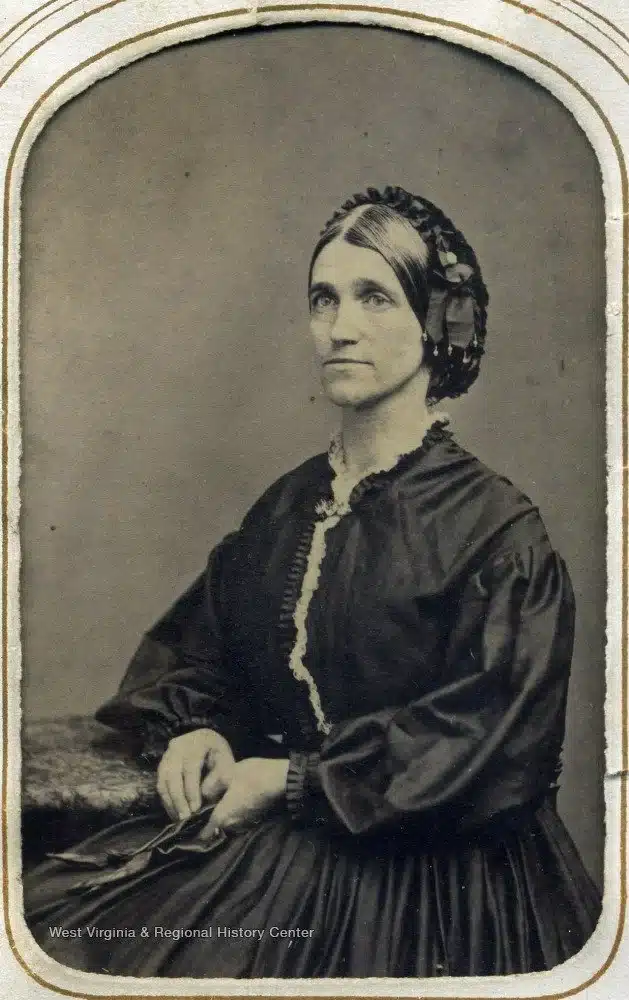
Clarksburg, West Virginia. (At the time of her birth, Clarksburg was in Virginia). Thomas was born two years earlier in January 1824. At just 5 years old Laura and her older brother were orphaned and sent to live with their family near Jackson’s Mill in Lewis County, about 30 miles south of Clarksburg. Four years later, tragedy struck again with the death of their grandmother. Laura was then sent to live with her aunt and uncle on her mother’s side near Parkersburg along the Ohio River. Thomas, however, remained with his family at Jackson’s Mill.
Despite being separated the two siblings remained close, corresponding often through letters and visiting whenever possible. By age 16, Laura had moved once more, this time to the town of Beverly in Randolph County. At the same time, her brother headed to West Point to start his military education and career.
In 1844 at age 18, Laura married Jonathan Arnold, a 42 year-old prominent land owner in Beverly. Laura gave birth to the first of four children, Thomas Jackson Arnold, named after his uncle, in 1845.
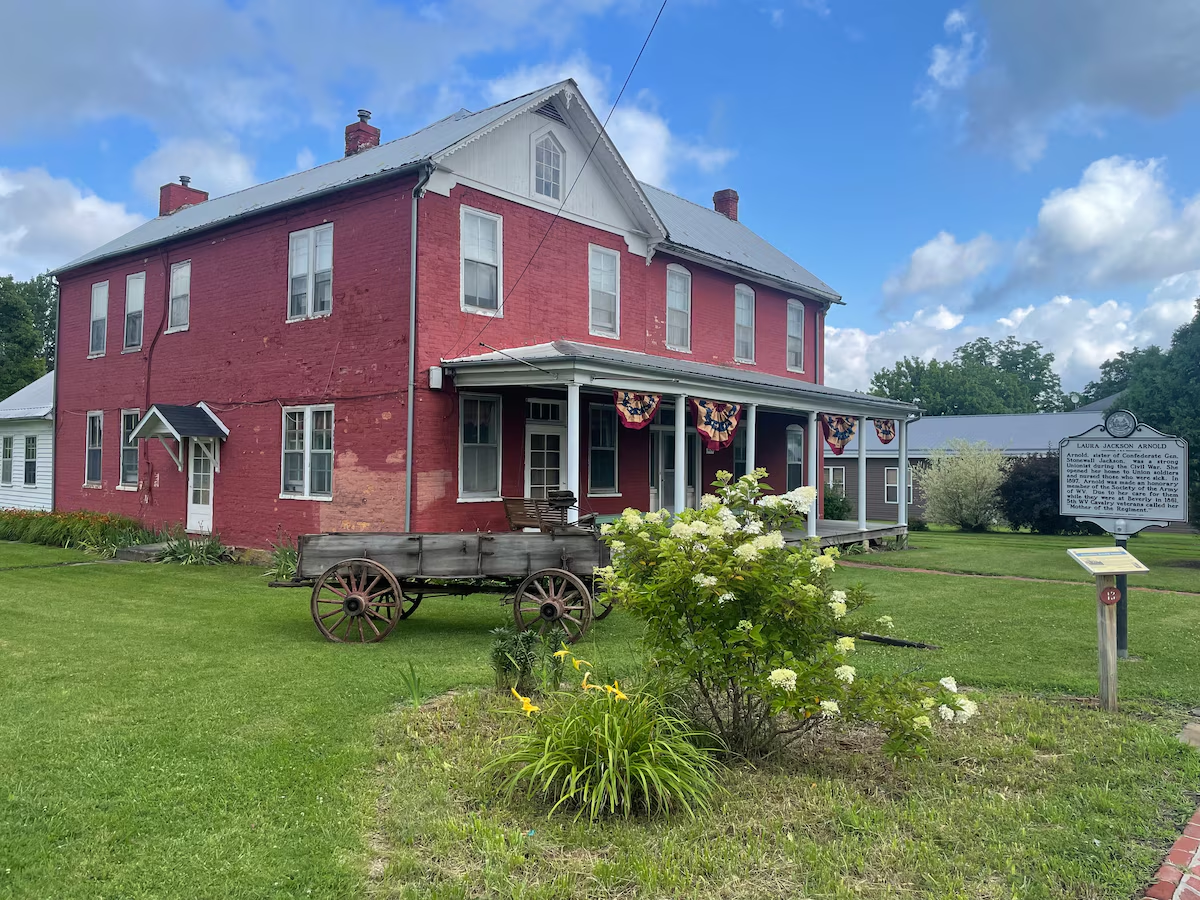
In the years leading up to the Civil War, Laura and her brother remained close, even sending her son to spend school term with his uncle in Lexington, Virginia, in 1858. Prior to this, had gone to visit his sister in Beverly and purchased carpet for the stairs in her home. In 1859, Laura traveled to Lexington to pick up her son and to visit with her brother. By all accounts, this may have been the last time the two siblings saw each other.
At the start of the Civil War, Laura’s brother joined the Confederacy while she became a staunch unionist. Following the battle of Rich Mountain, Union troops marched into Beverly, passing by the Arnold home with the young Thomas Arnold under guard having been picked up by the soldiers along the road, but freed soon thereafter. Union Gen. George B. McClellan leading the Union troops stopped at the Arnolds’ home. He had attended West Point with the older Jackson and wanted to pay his respects to the family.
From that point forward, it was common for Federal troops to be in Beverly. Oftentimes, soldiers boarded in private homes throughout the town, including the Arnold House. Whenever fighting occurred and wounded were brought to town, Laura Arnold always provided assistance to both Union and at times Confederates. One Federal surgeon wrote of Mrs. Arnold: “Almost alone, amidst a disloyal community, she unflinchingly declared her devotion to the flag, not only by word but by act.” Another, a local attorney in Beverly, wrote: “Mrs. J. Arnold- sister of Gen. Jackson – went off with the Yankees. Arnold stayed at home, says he is a good southern man, that his wife is crazy, but Hell he says, could not govern a Jackson.” Despite their differing political views, Laura Jackson Arnold and Thomas Jackson shared the same sense of devotion to their respective causes.
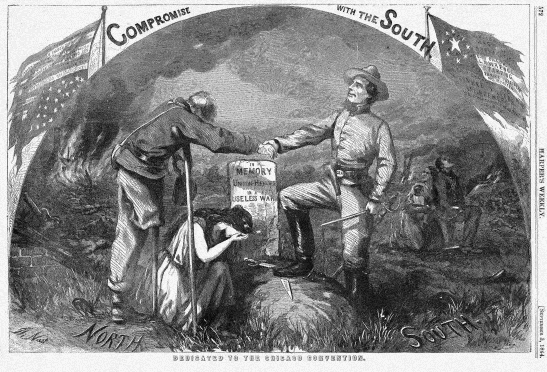
In the early 1860s, Laura and Jonathan owned at least four slaves. While this doesn’t directly contradict her unionist views in 1861, it is foreshadowing of the domestic division brewing between her and her husband. Jonathan Arnold, while a reluctant unionist at the start of the war became a copperhead after President Lincoln announced the Emancipation Proclamation. Copperhead was the name given to the anti-war Democrats, also known as ‘Peace Democrats’ in the North, who greatly opposed the war and were highly critical of Lincoln and his wartime policies.
Despite the differing views between husband and wife, Laura continued to welcome Union troops into her home. Oftentimes, officers would visit, simply out of curiosity, wanting to meet the Unionist sister of the famous “Stonewall”. These visits infuriated her husband, leading to explosive arguments. In one instance, the argument became violent, and Jonathan physically assaulted his wife. Shortly after, he was arrested and accused of being a Confederate spy. Some believe he was arrested in an attempt by Union officers to protect Laura.
Neighbors and visitors to the Arnold house noted that after learning of her brother’s death at the Battle of Chancellorsville, Laura was saddened but her steadfast loyalty to the Union was not swayed.
After the war, she filed for divorce from her husband, who in return accused her of infidelity. These claims were unsubstantiated with neighbors coming to her defense. Laura and her sister-in-law Anna Jackson had remained in contact, but these allegations against Laura ended any relationship between the two women. In August 1870, a local judge ruled on the divorce in favor of Laura, awarding her the legal separation and ordering Arnold to pay her $400 a year.
Laura unfortunately was not left unscathed. The war and the subsequent attention she received, along with the breakdown of her marriage, all took a major toll on her health. She spent a few years at a sanitarium in Columbus, Ohio. However, she always tried to remain active in organizations dedicated to the Union and its war veterans. She was named an
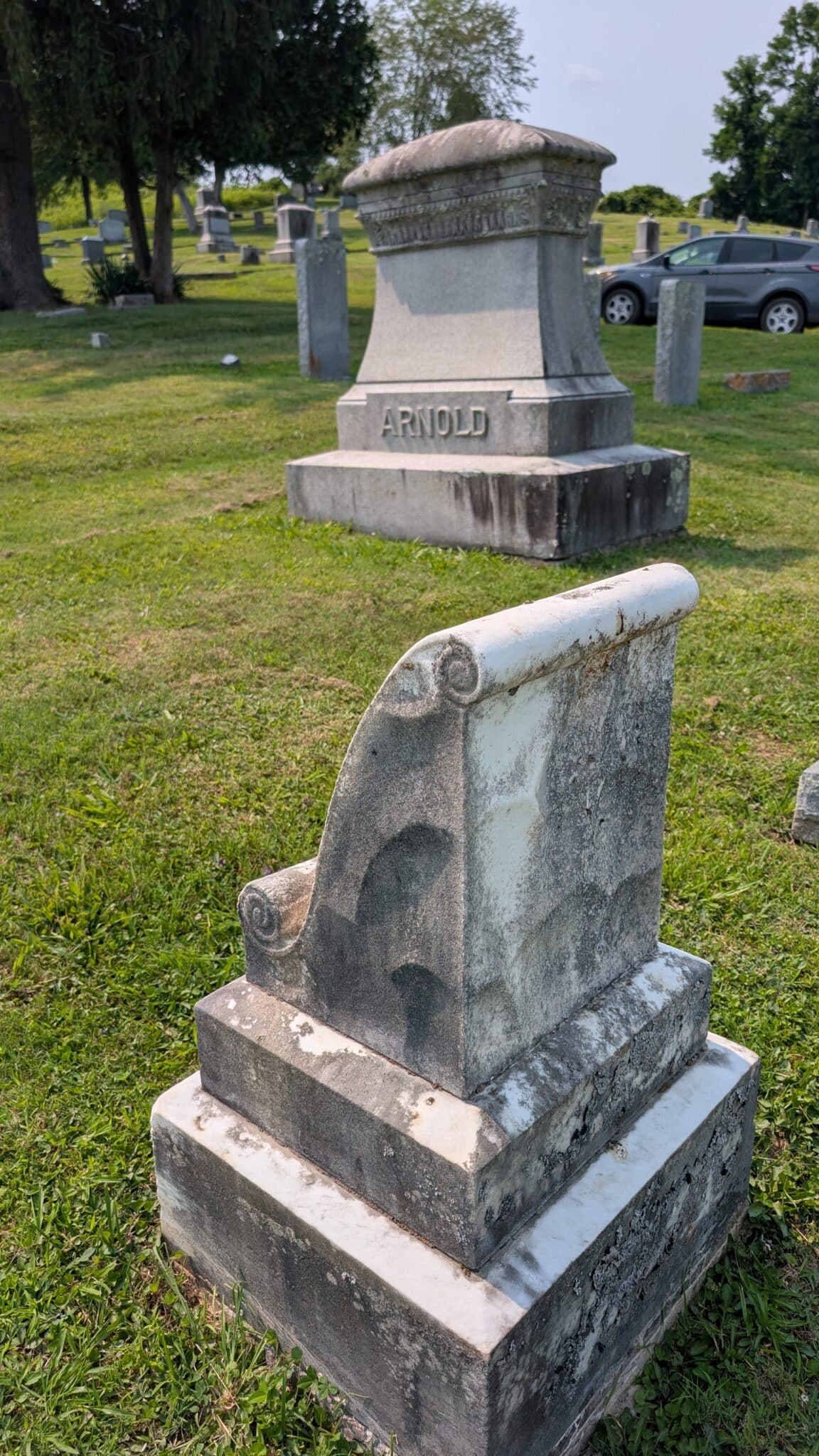
honorary member of the Society of the Army of West Virginia in 1897. In 1905, at a reunion of the 5th West Virginia Cavalry, she was given the title “Mother of the Regiment.” Perhaps Laura herself summed it up best in later interviews, saying, “I was a Union Woman from the crown of my head to the soles of my feet.” Laura returned to West Virginia to live with her youngest son, Stark’s family in Buckhannon in 1910. Her son had passed away years prior in 1898, however, his wife and children still lived in the area. She passed away on September 27, 1911, and is buried in Heavner Cemetery in the Arnold family plot between two of her children.


Interesting piece- thank you.
You are very welcome! I am glad you enjoyed it!
Nice. Thanks
Thank you for reading it! I am glad you enjoyed it!