Meet the Chief Historian
It’s my honor to be named as the Chief Historian at Emerging Civil War, and I wanted to introduce myself beyond what appears on my biography page. My interest in the Civil War began in 8th grade. It started, as I imagine it did for many, by fascination with a major battle: Gettysburg. A descendant of President McKinley visited my class, shared the wartime experiences of the 23rd Ohio Volunteer Infantry, and spoke of his own interest in Gettysburg. From that point, I was hooked. Family vacations expanded from regular trips to Colonial Williamsburg to visits to Gettysburg, Antietam, Manassas, Ball’s Bluff, Chickamauga, and sites that were part of General William T. Sherman’s Atlanta Campaign, including Kennesaw Mountain and the overshadowed May 27, 1864 Battle of Pickett’s Mill, on which I wrote my undergraduate thesis at the College of Wooster. As a lifelong Metallica fan and avid runner, I ran the battlefields, with “One” and “For Whom the Bell Tolls” as my soundtrack. As some may know, those songs are, respectively, based on the 1939 WWI novel Johnny Got His Gun by Dalton Trumbo and Ernest Hemingway’s 1940 book of the same name on the Spanish Civil War, but they can set the mood on any battlefield, serving as a reminder of soldiers who felt trapped by circumstance and of the horrors that once gripped places now so serene. As I ran, I pondered what the experience of soldiers was like, not only for those who fought in major campaigns that became seared in public memory, but for those in lesser-known settings on and off the battlefield.
A visit to the Camp Chase Cemetery while working on my MA at the University of Akron sparked my interest in military prisons and prisoners of war. I’ve since published much on the men and women held in Union and Confederate prisons, fulfilling curiosity about what wartime experiences were like for civilians detained on suspicion after the suspension of habeas corpus, and for soldiers whose chance at earning laurels on the battlefield were stripped, perhaps permanently. Both groups endured periods of confinement that had no certain end, and I was interested in how prisons operated, how prisoners experienced captivity, how they thought about themselves as captives, and how they maintained relationships with family despite censored letters and uncertain mail service. Soldiers-turned-prisoners continued to fight the war through their will to survive, despite the shame they felt due to captivity. Several attempted escape to rejoin the ranks or to return home to safeguard their loved ones. Their stories mattered, and I was struck by prisoners’ dread-filled comments as they feared that nobody would write the history of whatever prison that held them, whether that be Camp Chase, Johnson’s Island, Old Capitol Prison, Castle Thunder, or Andersonville, all of which were part of my first book.
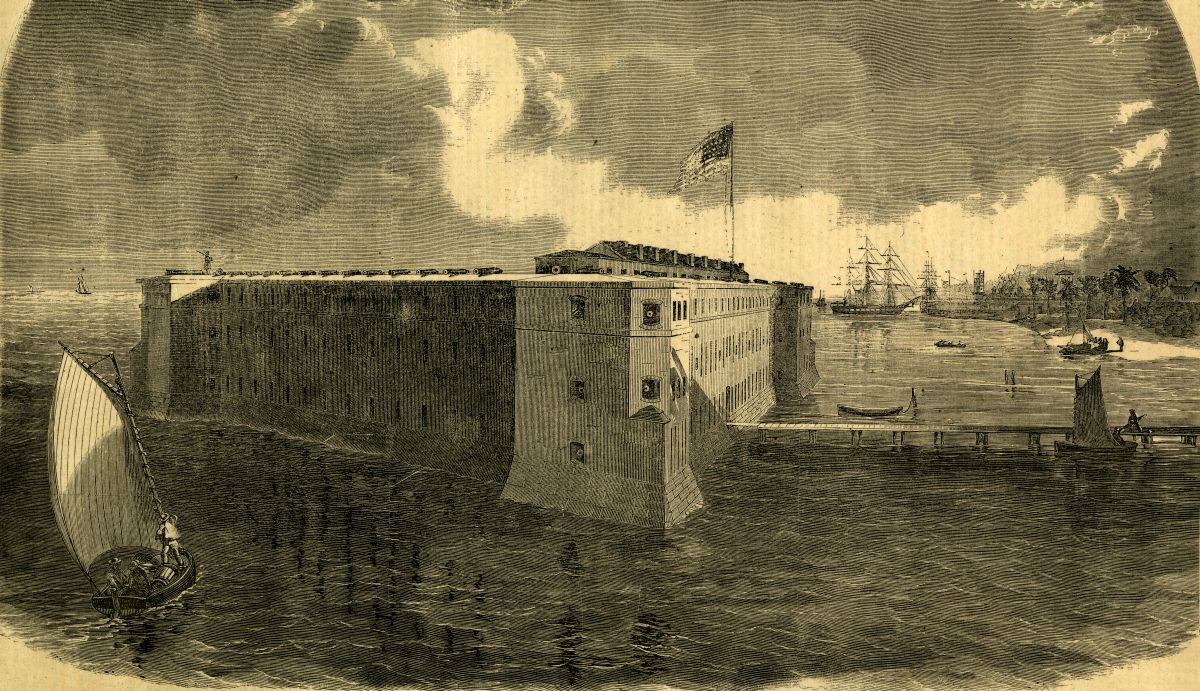
After earning my PhD at the University of Florida, I taught at St. Petersburg College in Clearwater, Florida and, while there, became interested in other understudied aspects of the war: Florida generally, and Key West, specifically. Studying the Civil War in Florida reflects the war’s widespread impact. What’s now one of the most populous states in the U.S. was, in the Civil War Era, a sparsely populated tropical frontier with the region between Tampa and Key West being one of the most isolated in the country. Steamships visited Key West with varying degrees of regularity, but settlers and garrison soldiers sent to the island were isolated by the sea, miles from the mainland. Just as many volunteer soldiers had their first taste of war at Bull Run, so too did Union volunteers have their first taste of war enforcing martial law Key West, an island that was critical to U.S. trade before the war, and to the Union blockade during it. Regular U.S. soldiers and Union volunteers took pride in garrisoning Fort Taylor since it projected U.S. military strength to European powers in the Western Hemisphere, and to domestic enemies whom its architects never anticipated having to defend it against. When men in the 47th Pennsylvania, 90th New York, and 91st New York sailed to garrison Key West and Fort Taylor in early 1862, enforcing martial law on the island and garrisoning the fort was the war for them. They could hardly think otherwise since coastal fortifications had served as the nation’s defense since the 1790s and had rendered a large standing army unnecessary. The volunteers knew that Fort Taylor was critical to defending the nation’s military and commercial interests. Anyone who read newspapers understood that its position overseeing the Florida Straits safeguarded one of the world’s most significant trade routes, and that Key West’s deep-water harbor would afford the U.S. navy advantages in making inroads into the Gulf South during the Civil War.
The Civil War’s outbreak changed the constitution of the army as volunteers flooded the ranks, and the purpose of Florida’s coastal fortifications took on greater significance. This was especially the case for Fort Taylor since Key West served as a headquarters of the East Gulf Blockade Squadron. Volunteers who were assigned to garrison duty and enforced martial law in the midst of rather salty Confederate sympathizers at Key West believed that their mission was critical to the Union victory. These men withstood doldrums similar to those experienced by volunteers in the field as they learned the ropes of soldiering – an occupation that most would have never undertaken had it not been for the Civil War’s outbreak. They waited for pay that was often late, suffered disease, complained of boredom, and feared dying miles from home. Some volunteers died particularly gruesome accidental deaths while on duty at Key West. Other volunteers occasionally pined for active combat but professed renewed appreciation of occupation duty at Key West after fighting in battle and returning to the island. All volunteers wanted a return to normalcy and to resume life at home, but they appreciated the privileges available to them at Key West, which included fishing, turtling, regular religious worship, and going into town. Given this assignment, and despite the hardships of military life, many soldiers shared the sentiments Sergeant Henry Crydenwise of the 90th New York who proclaimed in May 1862 that he had “never seen the hour in with I regretted having enlisted” while “those who remained at home in glorious idleness have great reason for regret.”[1]
My book, Stronghold of the Union: Key West Under Martial Law, is anticipated in print in the fall of 2027. In the meantime, I’ll be embarking on a third book-length project that combines my interest in imprisonment and garrison duty as I’ll examine the experiences and motivation of garrison troops to do their duty, and prisoners’ efforts to withstand and survive imprisonment, at Florida’s coastal fortifications. Good work has been done on wartime imprisonment and Civil War Era Florida, but there’s room for much more. This is true of the war generally, so if you or someone you know has done some research and has a Civil War Era project in the works, remember that ECW invites submissions from guest contributors for its peer-reviewed blog. I’d love to have more voices join the ever-growing conversation.
[1] Henry Crydenwise to Parents and All, May 14, 1862. Henry M. Crydenwise Letters, 1861-1866 Rose Library Emory University Special Collections, box 1, folder 3.


Welcome Aboard!
Thank you!
Howdy and Willkommen from Texas via Louisiana!
Confederate cabinet member Stephen Mallory grew up and lawyered some in antebellum Key West. Born on Trinidad though, which speaks to the Caribbean’s importance and trade connections to the south Atlantic and Gulf states. Kind similar to Judah P. Benjamin who was born in the Virgin Islands and ended up in Louisiana.
Yes! Mallory is in the early chapters of my Key West book. And who doesn’t love the sunset from Mallory Square?
As a classic Metallica fan myself, welcome aboard!
Always glad to meet a fellow Metallica & Civil War enthusiast!