“Information is wanted of”: Freed People Advertise to Find Family Members
The ratification of the 13th Amendment in December 1865, and the emerging era of Reconstruction was a time when previously known worlds got turned upside down. For all Southerners, Black and White, it meant the legal end of an institution and way of life that they had always known and that shaped a large part of their laws, society, economy, and culture. For that portion of the population who had enslaved men, women, and children, they could no longer lawfully coerce the unpaid labor of others. For the formerly enslaved, it was a time to test what freedom meant. It was a real opportunity to leave their old homes, if they so chose. Now, if they wanted to go, they no longer need beg for a pass or seek permission from someone else to do so.
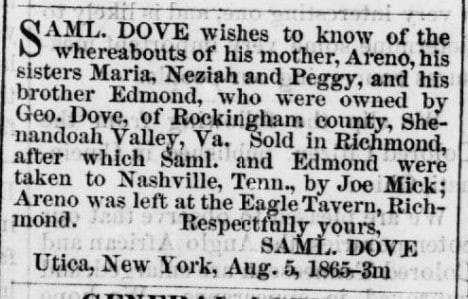
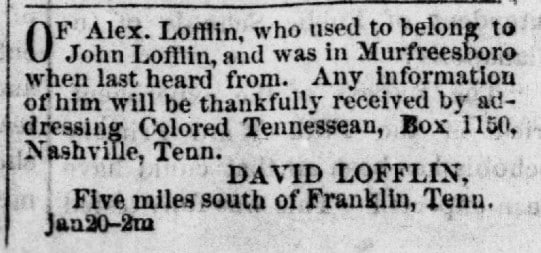
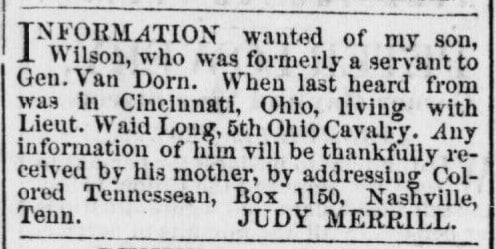
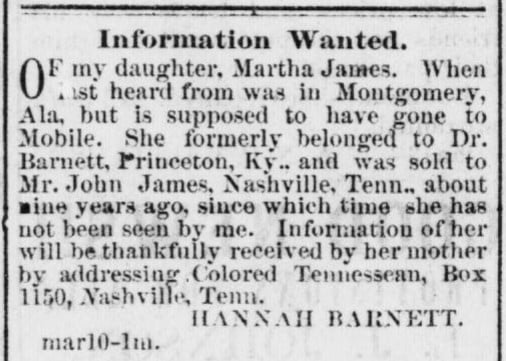
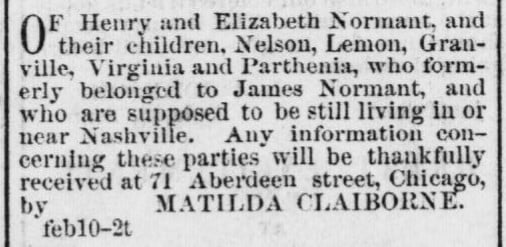
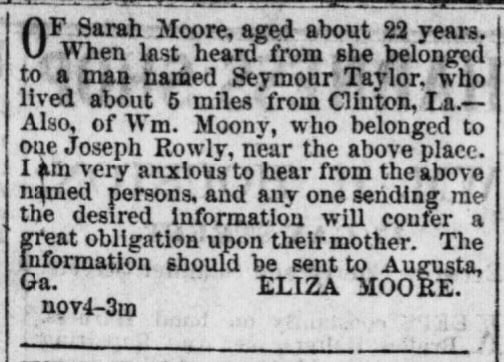
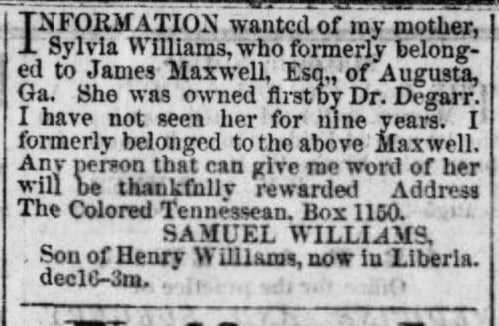
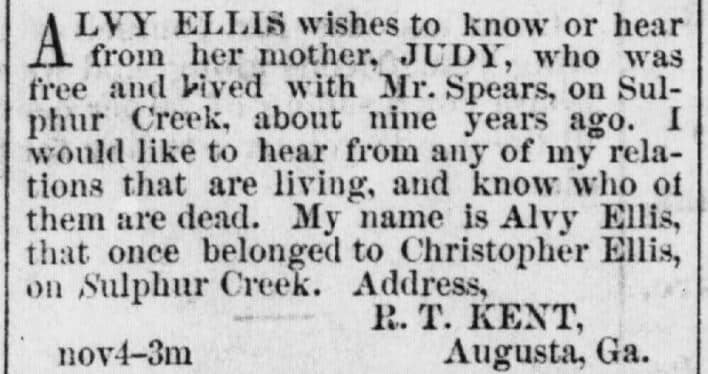
Freed people who had been separated from family (sometimes more than once) over the years of their enslavement longed to know what had happened to husbands, wives, brothers, sisters, fathers, mothers, and other relatives. Some chased any lead they had and went off searching, walking the roads seeking lost loved ones. Others used newspapers, the best and widest reaching communication technology of the day, in attempt to locate estranged family members. By placing information wanted ads in newspapers, they could cast a much wider net. Of course, ads cost money, something that most newly freed people had little of.
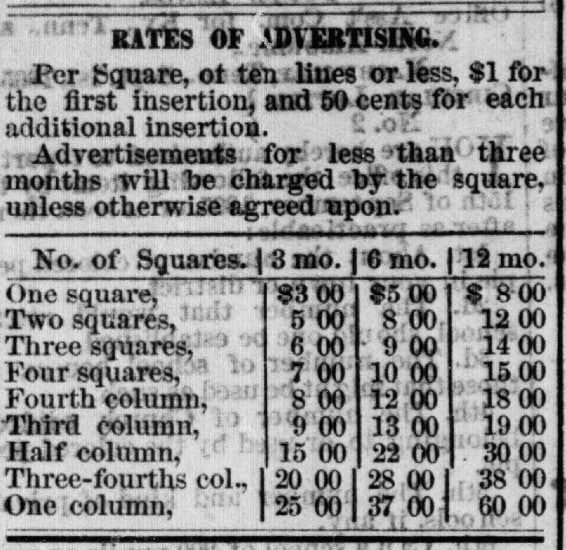
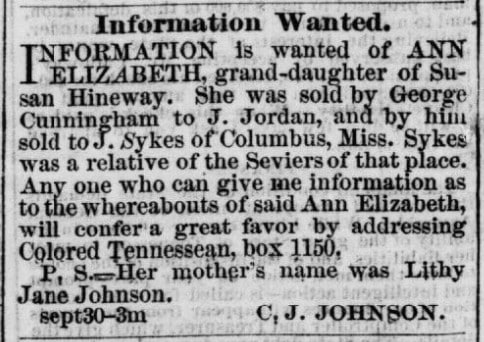
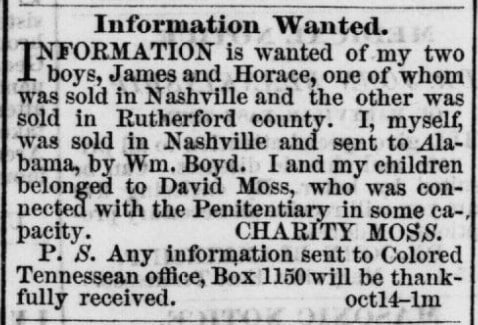
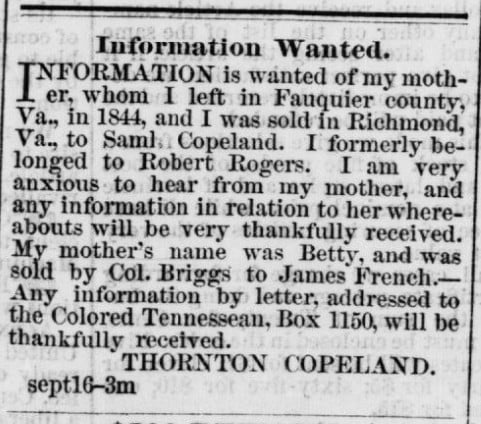
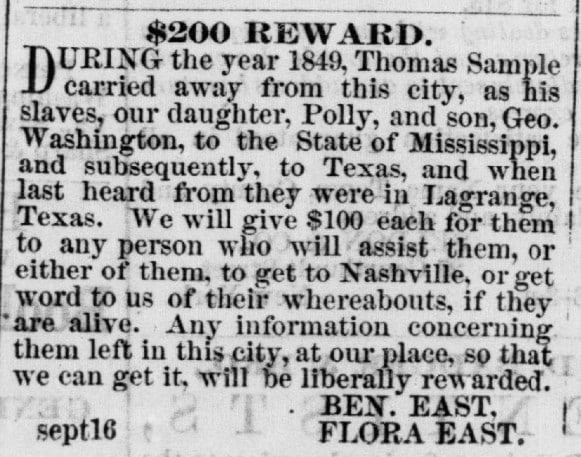
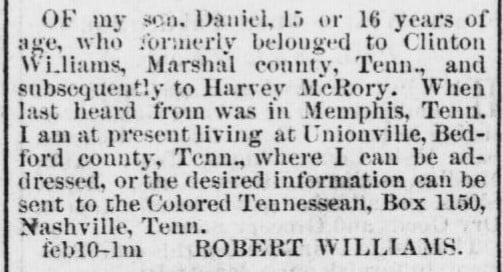
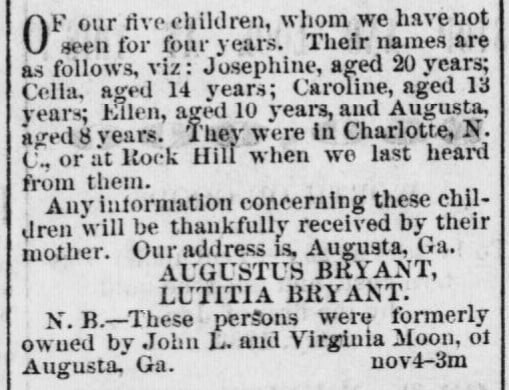
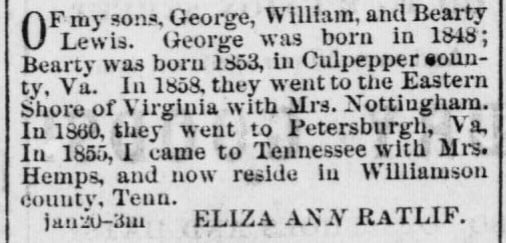
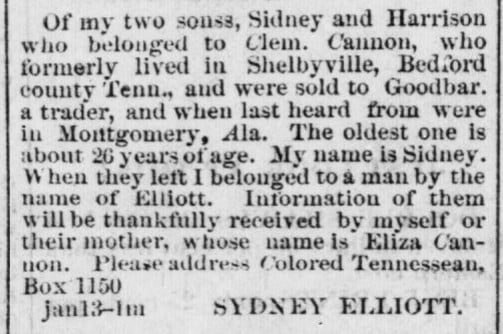
Black newspapers, both North and South, were turned into vital tools to reunite families. Papers such as The Colored Tennessean, which was published in Nashville, Tennessee, for two years starting in early 1865, ran small, classified advertisements seeking any available information on relatives that had been separated by slavery and the war. The Colored Tennessean was a rarity this early in Reconstruction. It was a black newspaper published in the South. But its readership spread over several states, and it was not unheard of for community organizations such as churches to read these ads out loud to their audiences. It is impossible to know how many family members were reunited due to the advertisements placed in newspapers during Reconstruction, but regardless of their success rate, they show the effort put forth and the financial sacrifices some freed people made to find family.
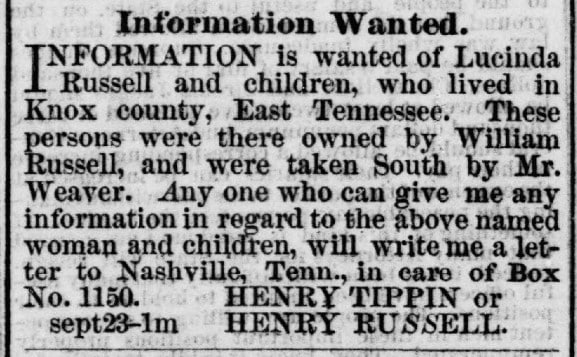
To modern readers, these ads also provide valuable evidence to debunk some of most persistent myths associated with slavery and the Lost Cause. Defenders of slavery—those before, during, and after the Civil War—who claimed the it was a positive good, a civilizing and benevolent institution, where rare was the occasion when enslaved families were separated and that when it did happen it was briefly felt by those who endured it; these advertisements strongly say otherwise.
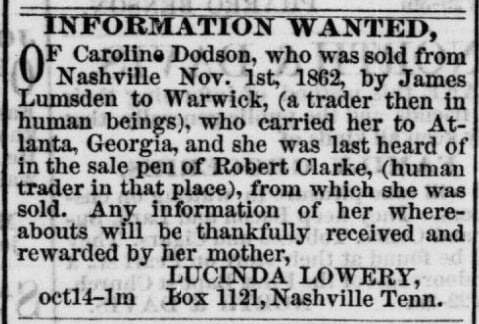
Unfortunately, I was only able to find four digitized issues of The Colored Tennessean; two from 1865 and two from 1866. However, the sheer number of information wanted ads contained in these four lone issues is astounding and speaks volumes of freed people’s desire to find lost family.
To learn more about this subject, I highly recommend Last Seen: The Enduring Search by Formerly Enslaved People to Find Their Lost Families by Judith Giesberg, and published by Simon and Schuster in 2025.


Help Me Find My People is another book on this topic I found very moving
Heartbreaking. To see this and then hear modern defenders of the slave culture of the south, just deepens the resolve to prove their beliefs wrong.
It’s true that it was a way of life for the rich white class.
Yes, they built their economy and laws to keep slaves Locke in generational abuse and degradation.
But that makes the likes of John Brown, Frederick Douglas and a William Lloyd Garrison look even more courageous.
Thanks for this reminder of the centuries of pain and heartache suffered by Africans, who couldn’t even be Americans until they and their champions fought for the right to be.
I have a happy ending to one of your ads: Lucinda Lowery’s ad in search of her daughter Caroline Dodson. Lucinda was, I believe, enslaved by the Dodson family in Williamson County, TN, before her husband, the Rev. Peter Lowery, purchased her out of slavery by 1850 (https://ww2.tnstate.edu/library/digital/lowery.htm). The couple lived as free people of color in Nashville, where Lucinda worked as a nurse in a U.S. hospital during the Civil War.
Following her 1866 ad, Lucinda appears to have found her daughter — by the 1870 Census, Caroline was living with her mother and stepfather in Nashville, working as a seamstress. She died in 1891.
As a footnote, Lucinda’s stepson, Samuel Lowery, went on to become the first Black man admitted to practice before the U.S. Supreme Court, in 1880.
Thanks so much for bringing attention to these ads — they’re a rich source of information, as you noted. I’ve had some success piecing families back together, but this one was a real treasure.
Thank you for sharing this additional information and the good news that Caroline was reunited with her family.
I’m happy to share – I’m not sure why my previous comment came through anonymously. This is Tina Jones from the Slaves To Soldiers project in Williamson County, TN. Here’s a blog post I wrote about another woman in Williamson County, TN who was searching for her family. She does not appear to have been able to find them, sadly. https://usctwillcotn.blogspot.com/2018/08/the-young-family-of-franklin.html