Through the Storm: A Western Virginia Family’s Escape
ECW welcomes back guest author Christy Perry Tuohey.
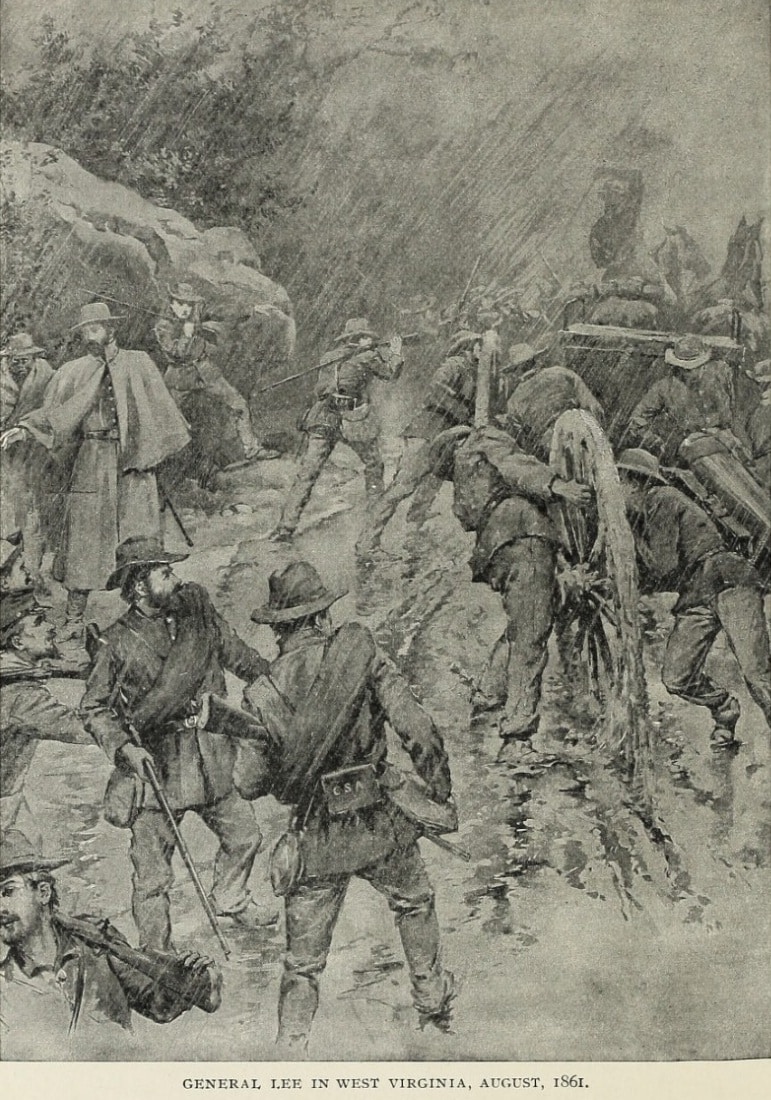
Much has been written about the difficulties of fighting the Civil War in the rugged Eastern mountains. Add to that the harsh weather that pounded Virginia during the earliest days of the conflict. An unprecedented meteorological event doused much of the Eastern seaboard and Ohio River Valley in 1861, hampering soldiers and civilians alike. My own western Virginia ancestors found themselves dodging both raindrops and conscription as Confederate forces bore down on Appalachians loyal to the Union.
The summer of 1861 was unusually wet and muddy in Virginia. A Confederate soldier wrote from the Greenbrier River on August 6: “It was indeed a fearful summer. We were camped on Valley Mountain 43 days, and it rained 37 days out of that number.”[1]
In early August the 7th Ohio Volunteer Infantry, which had been training at Camp Dennison near Cincinnati under Colonel Erastus B. Tyler’s command, shipped off to the damp, often treacherous mountains of western Virginia. The regiment was part of the Union pushback against Confederate Generals John B. Floyd and Henry A. Wise in the Kanawha Valley and southeast to Gauley Bridge.[2]
My second and third great-grandparents, aunts, uncles and cousins lived on Panther Mountain in Nicholas County, Virginia, the scene of two early engagements: the battles at Kessler’s Cross Lanes and Carnifex Ferry. Many Panther Mountain residents, my family included, were Methodist Episcopalian by faith, pro-Union and anti-slavery in their beliefs.
Political heat spiked when the Confederate Congress enacted the Alien Enemies Act on a “very warm, sultry” day in Richmond, Virginia, August 8, 1861.[3] The legislation ordered that all males 14 years old and older living within the Confederate States be arrested, imprisoned or worse unless they enlisted in the Confederate army. As Virginia delegates had voted in April to break away from the United States, Union-supporting western Virginia men had no choice but to fight or flee.
Three of my second great-grand-uncles—James Renick, Covington Grose and Andrew Jackson Grose—perhaps took the Alien Enemies Act as their cue to leave Virginia that August. Late summer storms put them on a wet and dangerous path. Starting out from Nicholas County, they would have traveled through soggy, often drenching weather along the James River & Kanawha Turnpike (modern day WV Route 60/Midland Trail) to Charleston, Virginia and on to Point Pleasant where they crossed the Ohio River.
The Renick and Grose wives and children stayed behind on Panther Mountain, planning to follow the men once they had staked out southeastern Ohio homes. Heavy rains swelled nearby creeks and rivers. Soldiers from the 7th Ohio Volunteer Infantry deployed to that section of Virginia recorded their mountain slogs. On August 21, 1861, Pvt. Daniel S. Judson wrote: “Daylight this morning still found us on the road with feet wet and weary. On we went until noon through mud and water. Slosh, splash, blistered feet and heavy eyelids. Seasoned with a few showers when we arrived within five or six miles of Gauley [River].”[4]
Three days later, the 7th was ordered to march 18 miles over seven hours from their camp at Kessler’s Cross Lanes to Twenty Mile Creek, only to be ordered back. Judson wrote: “Saturday, Aug. 24th: After I had gotten breakfast, orders came to prepare for a march or a counter march up the river to Cross Lanes. There came some of the tallest marching we have made. Waded Laurel Creek eighteen times besides other numberless and nameless little riverlets.”[5]
On Monday morning, August 26, Confederate Gen. John B. Floyd’s troops attacked the 7th Ohio at Camp Tyler while they were eating breakfast. “The bullets whistled all around us,” wrote Private Leroy Warren, “They fell like thickest hail. We were very much scattered and running with all our might.”[6]
Captain Giles Shurtleff and at least 30 Ohioans were taken prisoner, but others escaped up Panther Mountain and hid in thick brush, under cliffs and even in tree trunks. “Wearily pulling ourselves up the side of mountains, sometimes crossing deep ravines, always keeping within hearing of the roaring Gauley, we continued our wanderings until almost nightfall.”[7]
One Ohio soldier who scaled the mountain, Pvt. Edgar M Condit, hid in a cave on my 2nd great-grand aunt Margaret Renick’s property, and her daughter Lydia brought food to him and two other soldiers. “Often she [Lydia] came to us soaking wet to her shoulders from the dripping laurel brush, for it still rained much of the time.”[8] Others from the 7th found shelter with my great-great-grandparents and other family members.
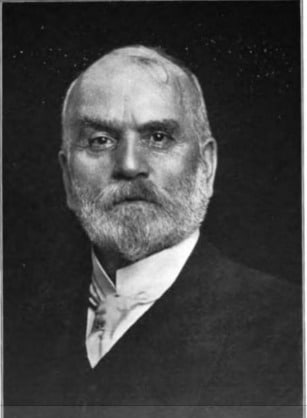
The three Ohio soldiers lived in that cave for two weeks before rejoining their regiment in Gauley Bridge. Judson journaled about Condit’s return on September 12, 1861, two days after the battle of Carnifex Ferry: “Since I have been writing another of our boys’ has come in from the brush where he has been fed by Union women.”[9]
About a week later, constant rain was still hampering troop movements. Then-Lt. Col. Rutherford B. Hayes wrote to his wife Lucy from the 23rd Ohio’s camp at Kessler’s Cross Lanes on September 22: “Dearest—It is a cold, drizzly, suicidal morning. The equinoctial seems to be a severe storm.”
There was a widely held belief at that time that violent winds and heavy rain were physically associated with the sun’s passing across the equator in both spring and fall. It’s easy to see how the unusual amount of precipitation in the fall of 1861 may have supported the equinoctial storm theory, but it was declared a myth by not only the British Meteorological Office, but also by Brig. Gen. William B. Hazen, chief officer of the United States Signal Service, who reported in 1889 that “the conclusion is inevitable that the observations do not show a preponderance of storm action during the equinoxes.”[10]
Heavy rains continued to inundate western Virginia from north to south in October, washing away autumnal crops around Wheeling and causing epic flooding in Charleston. The Wheeling Daily Intelligencer dubbed it ‘the pumpkin flood.’ “The backwater from the recent flood destroyed all the corn fields in the valley of Wheeling Creek, for three or four miles west of Bridgeport. Thousands of pumpkins were carried away and taken down the river and thousands are lying in the mud and driftwood along the banks of the creek.”[11]
Debris piled up in the Ohio River to such an extent that one reporter suggested that a traveler could walk across it at Gallipolis and never get a foot wet. “Houses, barns, mills, bridges, fences, hay and wheat stacks, tobacco warehouses, &c, without number, rushed by us borne onward by the resistless flood.”[12]
Flooding devastated Charleston, Virginia. Nearly all Kanawha River salt works, which had produced almost all salt in the United States just years before, were wiped out. “Out of several hundred establishments, I am told only four remain unscathed by the flood,” one reporter wrote.[13]
As the floodwaters receded, the Panther Mountain families began their trek to Ohio. The three wives—Margaret Renick, Sarah Jane Grose, and Nancy Grose, who was seven months pregnant— and their combined 12 children traveled the James River & Kanawha Turnpike in a wagon train. Unbeknownst to all concerned, many of the same Ohio soldiers whom they had helped just weeks before were repairing the roads they traveled. “Had to stop on the road and fix one place where the river had done a job of ruining,” Pvt. Judson wrote from Gauley Bridge.
Judson’s diary documented the Panther Mountain families’ journey through flood-ravaged Charleston. On October 23rd he wrote: “Yesterday we had the honor of entertaining the women who fed us on our retreat from Cross Lanes. They are going to Ohio. I fear they did not receive as much good from what they got from us as we did from their warm bread and apples. I hope I may meet them again at some future time.”[14]
Despite the harrowing weather and destruction, not to mention the dangers of traveling during wartime, the Nicholas Countians made it safely to Gallia County, Ohio. Two children were born there during the war, and by 1865 most of the Virginia natives had returned home to their new state, West Virginia.
There were postwar reunions between the Renicks and 7th Ohio soldier Edgar Condit. He returned to Panther Mountain 17 years after the family had hidden and fed him and visited the cave where he had carved his initials, “E.C.M.,” into the rock in 1861. Margaret and Lydia later took a train to visit the Condits in Chicago, where they were treated to a visit to the 1893 World’s Columbian Exposition.
That those connections endured, despite everything nature threw at Civil War Virginia/West Virginia, affirms that even the devastating bloodshed could not erase the bonds of kindness.
Christy Perry Tuohey is an author, journalist, and a seventh-generation Virginian/West Virginian. Her book Panther Mountain: Lydia’s Story gives the full account of this episode of the Civil War, and is available through Amazon, Barnes & Noble, and other online booksellers.
Endnotes:
[1] Robert K. Krick, Civil War Weather in Virginia (Tuscaloosa: University of Alabama Press, 2007), 31.
[2] Richard Donegan, “7th Ohio Volunteers at Kessler’s Cross Lanes,” Oberlin Heritage Center blog, https://oberlinheritagecenter.org/kesslers-cross-lanes/
[3]New York Times, August 15, 1861.
[4] The Private Civil War Journal of Daniel S. Judson, Co. C. 7th Regt. Ohio, August 21, 1861, Oberlin Heritage Center, Oberlin, OH.
[5] Judson diary, August 24, 1861.
[6] Diary of Leroy Warren, Company C, 7th Regiment, Ohio Infantry, Oberlin Heritage Center
[7] Edgar M. Condit, “An Episode of the Battle of Cross Lanes,” Itinerary of the Seventh Ohio Volunteer Infantry, 1861-1864 (New York: The Neale Publishing Company, 1907), 347-358.
[8] Condit, Itinerary, 350.
[9] Judson diary, September 12, 1861.
[10] New York Times, September 30, 1928.
[11] Wheeling Daily Intelligencer, Oct. 1, 1861.
[12] Gallipolis Journal, Oct. 10, 1861.
[13] Homes County Republican, Millersburg, OH, Oct. 24, 1861.
[14] Judson diary, October 23, 1861.


I’ve been to Kessler’s Cross Lanes and Carnifex Ferry battlefields – beautiful country. Thank you for sharing this well-researched personal story that sheds light on this often overlooked chapter.