“You get out before I kick you out”: Morgan’s Raiders July 15, 1863
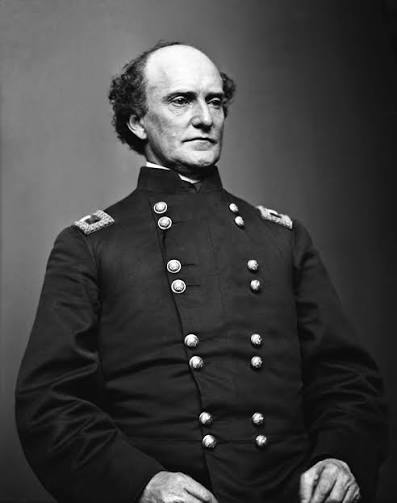
On July 14, 1863, General Ambrose Burnside sent the following telegram Brigadier General Julius White stationed near Catlettsburg, Kentucky, along the
Ohio River:
“Morgan is making for the Ohio River, near Ripley. He may be kept from crossing by the gunboats, and he may go above to cross. General Hobson is but 10 miles in his rear with a large cavalry force. They both camped in Clermont County, Ohio, last night. We hope to catch him.”
It had been a long and difficult journey tracking General John Hunt Morgan and his men through Ohio. Burnside hoped it would end soon. However, Morgan and his men still had some tricks up their sleeves in an attempt to out-ride their pursuers.
After passing through Williamsburg, Ohio, Morgan split his forces into two
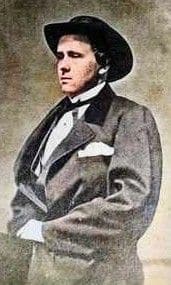
columns. Colonel Richard Morgan, the general’s brother, led the 14th Kentucky regiment to the south. In the mid-morning hours of July 15, Col. Morgan and his men passed through Bethel and Georgetown, making their way to the town of Ripley located on the Ohio River, just as Burnside had warned the day prior. In Georgetown, they met hardly any opposition since most of the men of fighting age there had headed south to Ripley to prevent the rebels from crossing the river. However, Mr. Brunner, the local cobbler, remained. Many of the raiders stopped and asked him to repair their boots and shoes. He agreed to do so as long as his supplies lasted. Mrs. Brunner fed as many of the raiders as possible. To show their appreciation to the Brunner’s for their hospitality, the rebels allowed them to keep their two horses. Unfortunately, many of the other residents were not shown the same kindness, as the raiders stole money, horses, and what food they could find in the homes they passed.
In one case, though, it is unclear who the thief actually was. Banker F.J. Phillips’s privately owned institution was uninsured. When word came that the rebel raiders were heading toward town, he placed nearly $60,000 worth of gold coins in bags and instructed his servant to take the money into the nearby woods and bury the money. The Confederate troops picked up a Black man claiming to be an escaped slave but it is not confirmed if this was the Phillips family servant. Despite continuous curiosity from the townspeople, the money and the servant were never seen again. A few years after the war, a Black couple arrived in Georgetown, with the same name as the missing servant; they stayed only for a few days. It was noted that when they left, they purchased a team of horses and a surrey, which they paid for in gold coins.
Colonel Morgan and his men left Georgetown almost as quickly as they arrived,
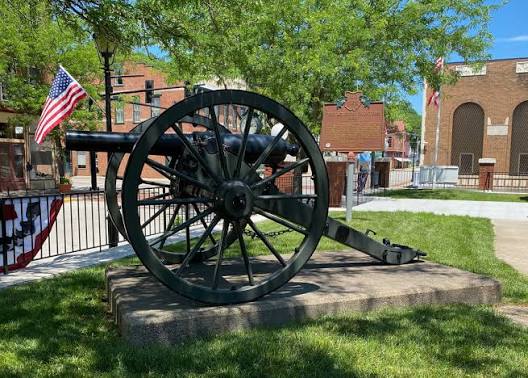
swiftly heading south toward the small town of Ripley and hoping to scout the area as a possible river crossing for the raiders. However, upon arrival they found a concentration of Union troops in the river town, forcing the rebels to abandon their plan. Thus, they trudged on towards West Union, Ohio, reaching the town after dark and camping there for the night.
One young lady living in West Union wrote to her mother on July 15, 1863: “The Rebels are upon us, they say!” She went on to say that all the men had gathered their guns and headed out to block the roads but with notes of despair wrote: “There are thousands of Rebels, what can 100 men do against them?” She also relayed in the letter the efforts townsfolk have taken to secure their horses and prized possessions. Later on, she pleaded to her mother the need to catch Morgan stating:
Morgan must be caught now— Burnside’s Army have followed him from Tennessee and it will be a hard thing for him to escape; a line of gunboats moves along the Ohio, with thousands of soldiers to keep the Rebel horde from crossing the River, and couriers are constantly passing from our Army to them [the gunboats] with orders which way to move.
While Col. Morgan kept south, General Morgan believed his best chance at crossing the Ohio would be at Buffington Island. It had been reported to him that the river in that vicinity stood at only two feet deep, too shallow for Union gunboats. Taking the northern passage, this column of raiders marched through
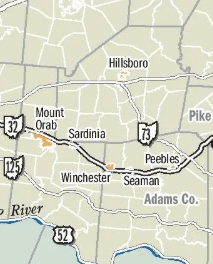
the towns of Mount Orab, Sardinia, and Winchester. To slow Hobson’s men who were still hot on his trail, Morgan ordered every bridge to be burned after crossing. Heading almost due east, the raiders followed the Appalachian Highway. (Today State Route 32 closely follows the same route.)
In Sardinia, one resident, trying to hide his cash, stowed it away in the rafters of a nearby covered bridge. Though the cash was well hidden in the darkness of the rafters, upon crossing the bridge the Confederates set flame to it, destroying the bridge and the money.
The raiders were not the only ones out riding the roads near Sardinia. John Porter, a nine-year-old boy, had been tasked by his father to take a bag of wheat to a nearby mill, not knowing the danger nearly upon them. After the wheat had been milled, young John began the trek back home. In his haste to avoid the raiders, the sack of flour fell from his horse. Thankfully for the young boy’s return, his father understood and retraced his son’s steps later that night to find the sack of flour. Though the raiders never came to the Porter’s farm, the family heard the rebels in camp nearby.
On a hill overlooking the small village of Fincastle, an elderly Black man told the raiders “They got the militia down there awaitin.” Morgan upon hearing this and witnessing men in the town roaming about the streets decided to avoid this particular town, as he did not want to be drawn into a battle unless absolutely necessary.
In a stark contrast from the south where both supplies and men were scarce, the raiders were surprised at the number of able-bodied men who had not yet joined the army ranks. For one Confederate officer, the idea of a southern victory became more and more fleeting. Third Sergeant Robert T. Bean of Company I, 8th Kentucky, after being asked what he thought the chances for a Confederate victory was, answered simply with “none.” In his reasoning, he stated “Look around at all the well-kept farms, stocked with all kinds of animals for the prosperity of the owners. We in the South have not used a paintbrush on our houses since the war commenced or made a rail to fence our lands.” Both men decided it would be best not to speak of this again and rode their separate ways.
At the same time Col. Morgan had entered Georgetown to the south, Gen. Morgan entered Winchester, Ohio, to the north. Upon entering the small village,
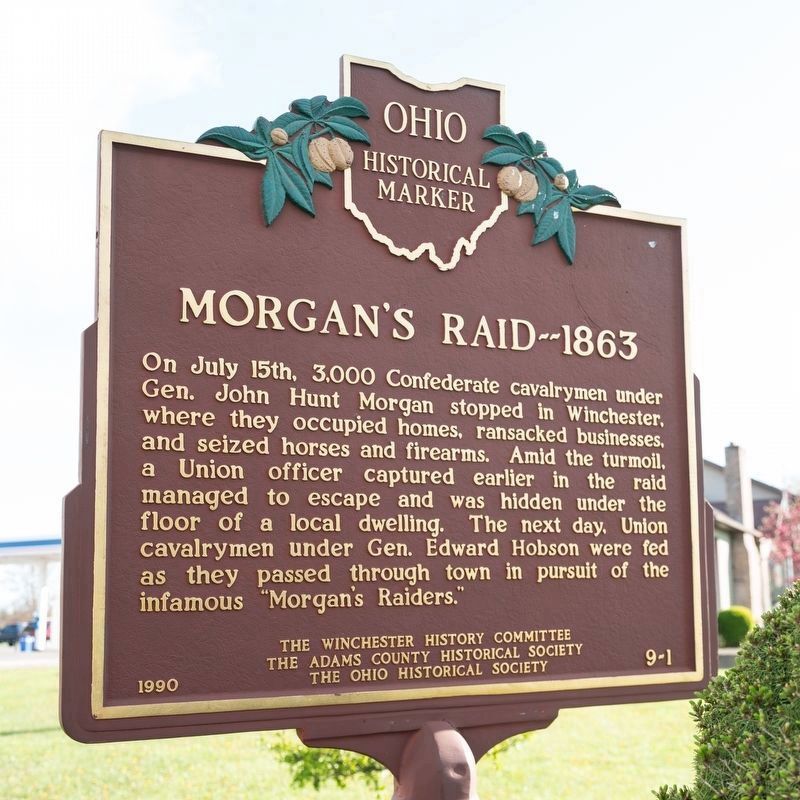
home to only 600 residents, Morgan made the Burns Hotel his headquarters for the next few hours. Despite the ever-looming threat of the Federals following closely in his rears, the general decided to wait in the town for the Aberdeen- Hillsboro stagecoach. On board the stage, set to arrive midafternoon, were copies of Cincinnati newspapers and mail. Morgan desired to know what effect his raid was having on the north and knew the papers and mail would provide that knowledge. To reduce the time spent in the town and not wanting to stay in one place for too long, the general sent an attachment out to intercept the carriage. Upon locating the stage, the rebels forced the driver from his seat and commandeered the vehicle driving it into town with the mail pouches and newspapers. Also while in Winchester, Gen. Morgan sent scouts to the local home guard building. There, they found many muskets; rather than making use of them they brought them out into the street and broke all of them. No one in the small town was permitted to leave their residence, and those who entered the town were detained by rebel guards.
At Winchester’s post office, Morgan entered the building, and those with him began opening all the mail, looking for money. The postmaster, Johnny Frow, in a fit of courage ordered them to return the mail. Upon hearing this demand, Morgan replied, “I am the postmaster today and also the U.S. Government. You get out before I kick you out.” Mr. Frow quickly left. In the newspapers, Morgan read about his own movements and their pursuers. After speaking with some in his ranks about the precarious situation that now befell them, all agreed it was time to move on from the town.
Continuing along the northern route across the state, Gen. Morgan and the raiders passed through multiple small towns and villages, bringing terror to the residents. Upon reaching Locust Grove late in the evening, the rebels waited for Col. Morgan and his men. After the two columns reunited, they continued on their way.


