War Is Hell, But Even Hell Has Rules: Paroles Per the Lieber Code
This post is part of a series.
A prior post explored the Lieber Code’s[1] provisions on the controversial prisoners of war issue. As noted therein, Article 119 of the Code observed that “Prisoners of war may be released from captivity by exchange, and, under certain circumstances, also by parole.”
During the Civil War the POW parole system became a source of bitter contention and heated argument between the combatants. Each side accused the other of trickery and bad faith.[2]
The basis of the parole system was simple enough. Paroles allowed captured soldiers to be released from captivity based on their promise not to fight until formally “exchanged” for an equivalent number of men taken by the enemy. [3]
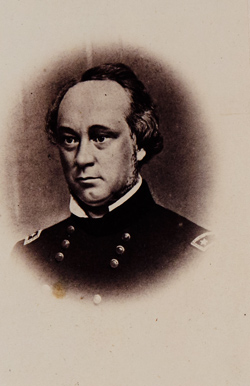
But U.S. General-in-Chief Henry W. Halleck objected to the Confederate practice of granting mass paroles on the battlefield, rather than taking custody of the prisoners and later delivering them for exchange at one of the sites designated by the Dix-Hill Cartel, the 1862 agreement governing POW issues.[4] In the months leading up to Halleck’s creation of the committee that drafted the Lieber Code, the Confederates had used battlefield paroles to take thousands of Union soldiers out of combat without having to devote resources to guarding, housing and feeding those paroled. Instead, the U.S. had to detain and feed these “on the shelf” men who were exempt from the perils of combat until formal exchange could be arranged, which caused a variety of problems. Halleck was determined to rein in paroles.[5]

Francis Lieber, the primary drafter of the Code bearing his name, was only too happy to comply with Halleck’s goal. Lieber himself found the easy availability of paroles distasteful and subject to abuse; he felt that paroles placed “a premium on cowardice.”[6]
The Lieber Code confronted this issue. Indeed, Lieber’s Code devoted an entire section–16 articles–to paroles.[7]
Article 119.
Prisoners of war may be released from captivity by exchange, and, under certain circumstances, also by parole.
Article 120.
The term Parole designates the pledge of individual good faith and honor to do, or to omit doing, certain acts after he who gives his parole shall have been dismissed, wholly or partially, from the power of the captor.
Article 121.
The pledge of the parole is always an individual, but not a private act.
Article 122.
The parole applies chiefly to prisoners of war whom the captor allows to return to their country, or to live in greater freedom within the captor’s country or territory, on conditions stated in the parole.
Article 123.
Release of prisoners of war by exchange is the general rule; release by parole is the exception.
Article 124.
Breaking the parole is punished with death when the person breaking the parole is captured again…
Article 126.
Commissioned officers only are allowed to give their parole, and they can give it only with the permission of their superior, as long as a superior in rank is within reach.
Comment: Here is set forth the first of several restrictions on giving one’s parole.
Article 127.
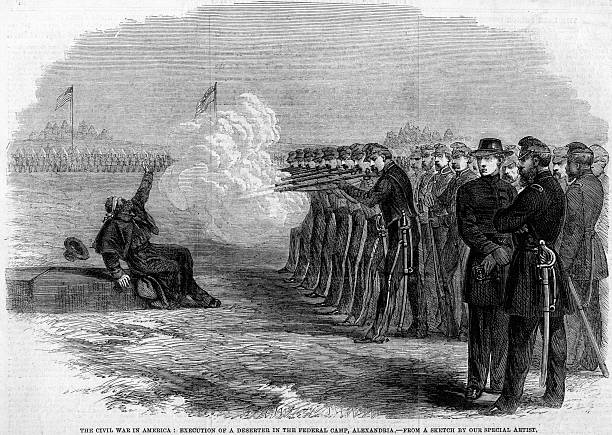
No noncommissioned officer or private can give his parole except through an officer. Individual paroles not given through an officer are not only void, but subject the individuals giving them to the punishment of death as deserters… (emphasis supplied).
Comment: Here, Lieber cracks down hard on paroles. Non-officers are forbidden from giving their own paroles and threatened with death if they improperly do so.
Article 128.
No paroling on the battlefield; no paroling of entire bodies of troops after a battle; and no dismissal of large numbers of prisoners, with a general declaration that they are paroled, is permitted, or of any value.
Comment: This directly addresses Halleck’s concern about the Confederate practice of issuing battlefield paroles.
The new parole policy adopted by the Lieber Code (as well as orders in the same spirit issued by Halleck) had immediate and consequential impact. General Robert E. Lee tried to relieve himself of his Union POWs before starting his retreat from Gettysburg; however, U.S. Maj. Gen. George G. Meade refused the proposed POW exchange. Days thereafter, finding his retreat hampered by some 4,000 POWs, Lee attempted to parole all of them. Lee’s effort was stymied when he learned that the paroles would not be honored. Indeed, captured U.S. officers warned their men not to accept Confederate parole offers.[8]
Of course, the prohibition against issuing battlefield paroles also applied to the U.S. army. In that regard, U.S. Grant appeared to violate Article 128 at Appomattox Court House, when he granted Lee’s Army of Northern Virginia a mass battlefield parole.
Article 130.
The usual pledge given in the parole is not to serve during the existing war, unless exchanged.
This pledge refers only to the active service in the field, against the paroling belligerent or his allies actively engaged in the same war…; but the pledge does not refer to internal service, such as recruiting or drilling the recruits, fortifying places not besieged, quelling civil commotions, fighting against belligerents unconnected with the paroling belligerents, or to civil or diplomatic service for which the paroled officer may be employed.
Comment: This Article explains what duties could be performed by paroled soldiers. The description is inconsistent with the restrictions on parolees established by the Dix-Hill Cartel.[9]
Article 131.
If the government does not approve of the parole, the paroled officer must return into captivity… (emphasis supplied).
Comment: Article 131 is undoubtedly the most consequentially inane aspect of the Lieber Code. It is remarkable that this provision survived the scrutiny of those who reviewed the Code prior to its issuance. Presumably Halleck, Secretary of War Edwin Stanton, and Abraham Lincoln himself (who after all, formally issued the Lieber Code) read what was being approved. Yet they approved as legally binding a document that committed the U.S. army to return into captivity any officers whose parole the government deemed invalid.
This absurd provision was amplified by Halleck himself. Halleck, consumed by his determination to stop improper Confederate parole practice, decided to expand Lieber’s “must return into captivity” principle. Halleck’s General Order No. 49, issued February 28, 1863 and based on a draft of Lieber’s parole provisions, announced that all U.S. soldier recipients of invalid paroles were required to return into Confederate captivity. As a result, when Confederates continued to issue mass battlefield paroles, the U.S. had legally committed itself to force thousands of U.S. soldiers back into physical captivity in the Confederacy. The sheer political impossibility of enforcing such a practice caused enormous (and embarrassing) problems for the U.S. in its dealings with the Confederacy over POW exchange issues, a situation explored in a prior ECW post.[10]
Article 134.
The commander of an occupying army may require of the civil officers of the enemy, and of its citizens, any pledge he may consider necessary for the safety or security of his army, and upon their failure to give it he may arrest, confine, or detain them.
Summary: Suffice it to say, the Lieber Code fumbled the parole issue. Rather than simply decreeing that the U.S. would not honor invalid paroles, both Lieber and Halleck adopted a policy that sought to threaten their own soldiers into refusing to accept invalid paroles by threatening their return to the Confederates. The result was as predictable as it was embarrassing.
[1] The War of the Rebellion: A Compilation of The Official Records of The Union and Confederate Armies, Series III, Vol. 3 (U.S. Government Printing Office, Washington, D.C., 1880 – 1901), pp. 148-164.
[2] Kevin C. Donovan, “Exchanging Insults Rather Than Soldiers: Solomon Meredith, Robert Ould and the Breakdown of the Civil War Prisoner Exchange System (Part I),” Emerging Civil War (January 13, 2025),https://emergingcivilwar.com/2025/01/13/exchanging-insults-rather-than-soldiers-solomon-meredith-robert-ould-and-the-breakdown-of-the-civil-war-prisoner-exchange-system-part-i/.
[3] You’re Free To Go — Military Paroles in the 18th and 19th Centuries (December 4, 2015), https://militaryhistorynow.com/2015/12/04/youre-free-to-go-military-paroles-in-the-18th-and-19th-centuries/; Mark M. Boatner, Civil War Dictionary, pp. 619-620 (David McKay Company, Inc., New York, NY, 1988).
[4] OR, Series II, Vol. 4, pp. 266-268. See the terms of the Cartel at https://cwnc.omeka.chass.ncsu.edu/items/show/611.
[5] Matthew J. Mancini, ‘Francis Lieber, Slavery, and the “Genesis” of the Laws of War,’ The Journal of Southern History, Vol. 77, No. 2 (May 2011), pp. 330, 339-341; John Fabian Witt, Lincoln’s Code: The Laws of War in American History(Free Press, New York, NY, 2012), pp. 230, 254-255.
[6] Mancini, pp. 330, 339-341. Secretary of War Edwin Stanton felt similarly. Stanton believed that the prior practice of sending captured soldiers back to their home states “operates as an inducement for shameful surrender,” and forbade furloughs for parolees, ordering them into parole camps. OR, Series II, Vol. 4, 94, 562.
[7] Code, Section VII, Articles 119-134.
[8] Kent Masterson Brown, Meade at Gettysburg: A Study in Command (The University of North Carolina Press, Chapel Hill, NC, 2021), p. 311; Thomas J. Ryan and Richard R. Schaus, “Lee is Trapped and Must be Taken”: Eleven Fateful Days after Gettysburg, July 4-14, 1863 (Savas Beatie, El Dorado Hills, CA, 2021), p. 74; “Gettysburg: The Fate of the Prisoners,” Head Quarters 13th Regiment Rifles, Mass. Vols.,https://www.13thmass.org/1863/aftermath_prisoners.html#:~:text=The%20Federal%20soldiers%20captured%20at,be%20recognized%20by%20the%20government; Albert Wallber, “A Wisconsin Prisoner of War at Gettysburg,” Dan Masters’ Civil War Chronicles (May 09, 2023), https://dan-masters-civil-war.blogspot.com/2023/05/a-wisconsin-prisoner-of-war-at.html.
[9] OR, Series II, Vol. 4, pp. 266-268; see also https://cwnc.omeka.chass.ncsu.edu/items/show/611. Article Four of the Cartel restricted parolee activities: “[They] shall not be permitted to take up arms again, nor to serve as military police or constabulary force in any fort, garrison, or field-work held by either of the respective parties, nor as guards of prisons, depots or stores, nor to discharge any duty usually performed by soldiers, until exchanged under the provisions of this cartel” (emphasis supplied).
[10] Kevin C. Donovan, ‘“The First Thing We Do, Let’s Kill All the Lawyers”: Henry Halleck, Esq.’s Parole Order Fiasco,’ ECW (October 15, 2024), https://emergingcivilwar.com/2024/10/15/the-first-thing-we-do-lets-kill-all-the-lawyers-henry-halleck-esq-s-parole-order-fiasco/.


Really enjoying this series.
Brian, glad you are enjoying the series. Still a few to go,
thanks Kevin, another nice addition in your series … to your point on Grant’s parole of Lee’s army being a violation of Article 128, was Grant similarly out of bounds when he paroled Pemberton’s army at Vicksburg?
Good question. Grant’s action in paroling Pemberton’s Vicksburg army was indeed controversial. As described below, Grant tried to be clever about it. However, the Confederates would not accept what he did as proper, and the dispute became part of a bitter argument between the USA & CSA about how the terms of the Dix-Hill Cartel on POWs & exchanges was supposed to operate.
Specifically, in his Memoirs Grant acknowledged that he knew that the Cartel required that prisoners had to be physically taken either to Aiken’s Landing in Virginia, or to Vicksburg itself (which of course he captured), there to be formally exchanged or paroled. Halleck even expressed concern shortly after Vicksburg’s surrender that Grant’s failure to follow the Cartel would be used by the Confederates as an excuse to void the Vicksburg paroles. But Grant justified his action of not taking into physical custody the Vicksburg POWs by noting that he turned the Vicksburg prisoners over to a Confederate commissioner of exchange who happened to be posted at Vicksburg, deliberately not taking that commissioner prisoner so that he could carry out his duties. John F. Marszalek, Ed., with David S. Nolen and Louie P. Gallo, The Personal Memoirs of Ulysses S. Grant: The Complete Annotated Edition, pp. 387, 394 (Edited by, The Belknap Press of Harvard University Press, Cambridge, MA, 2017). Grant’s ploy was not accepted by the Confederates, who also deemed invalid the paroles granted by Nathaniel Banks to the POWs taken at Port Hudson shortly after Vicksburg’s capture. Essentially, the CSA position was that if the USA was insisting – as it was – that battlefield paroles were invalid, then that rule applied both ways (including to the Vicksburg & Port Hudson paroles).
Actually, I should clarify. The formal CSA position was that it could deem the Vicksburg parolees “exchanged” (and thus immediately available for combat) for a similar number of paroled USA soldiers. The issue was that the paroled USA soldiers being used as set offs for the CSA parolees were USA soldiers whose paroles the USA deemed invalid (because they were battlefield paroles). The CSA took the position that Grant had effectively done the same thing, i.e., given battlefield paroles. At its core, the CSA position was that what was sauce for the goose was sauce for the gander. If Grant’s paroles were valid, so too were the paroles extended to the USA soldiers. But if the USA persisted in its position that battlefield paroles given to USA soldiers were void, then so too were Grant’s paroles. The whole situation became a contentious mess.
thanks Kevin … probably with the exception of Old Brains, this parole process seems far too complicated for commanders in the field to understand.