Til’s Last Visit: Tilghman Howard and the Fight at Uniontown
“And fame will remember,
In a cause that is just,
The life of a hero
And his mouldering dust.
For none brighter is offered
When death shots are showered
None braver, none truer
Than thine, gallant Howard.”
-Ared F. White[1]
On the first of September 1862, 17-year-old Frank Maxwell Howard was home on furlough from the Union Army, staying with his family in Parke County, Indiana. His upstairs bedroom was too hot to sleep in, so he stretched out on a wooden bench in the foyer at the foot of the stairs. The family’s faithful dog, Tanner, curled up beneath him.
Frank woke suddenly to the sound of Tanner howling. Reaching down, he tried to soothe the trembling setter. Cool night air drifted through the open doorway, where a dark figure stood silhouetted against the night. Even in the dim light, Frank recognized the familiar outline of his older brother, Tilghman. Til, a captain in another regiment, had come home, too!
Excited, Frank rose to greet his brother, but by the time he reached the open front door, the figure had vanished. He called out into the night, but the only reply was Tanner’s whining and howling beneath the bench. It had not been a dream, but what exactly was it? A few days later, their mother received word that Tilghman had been killed at Uniontown, Kentucky, on that very day.[2]
A version of the preceding ghost story appeared in Juliet Ott Snowden’s book Legends & Lore of Parke County, Indiana. Frank M. and Tilghman A. Howard Jr. were sons of Tilghman Ashurst Howard (1797–1844), a one-term Indiana congressman who later served as a diplomat to the Republic of Texas before his untimely death.[3] Though Tilghman Jr.’s crisis apparition may belong more to folklore than history, the people and events surrounding the tale were very real.
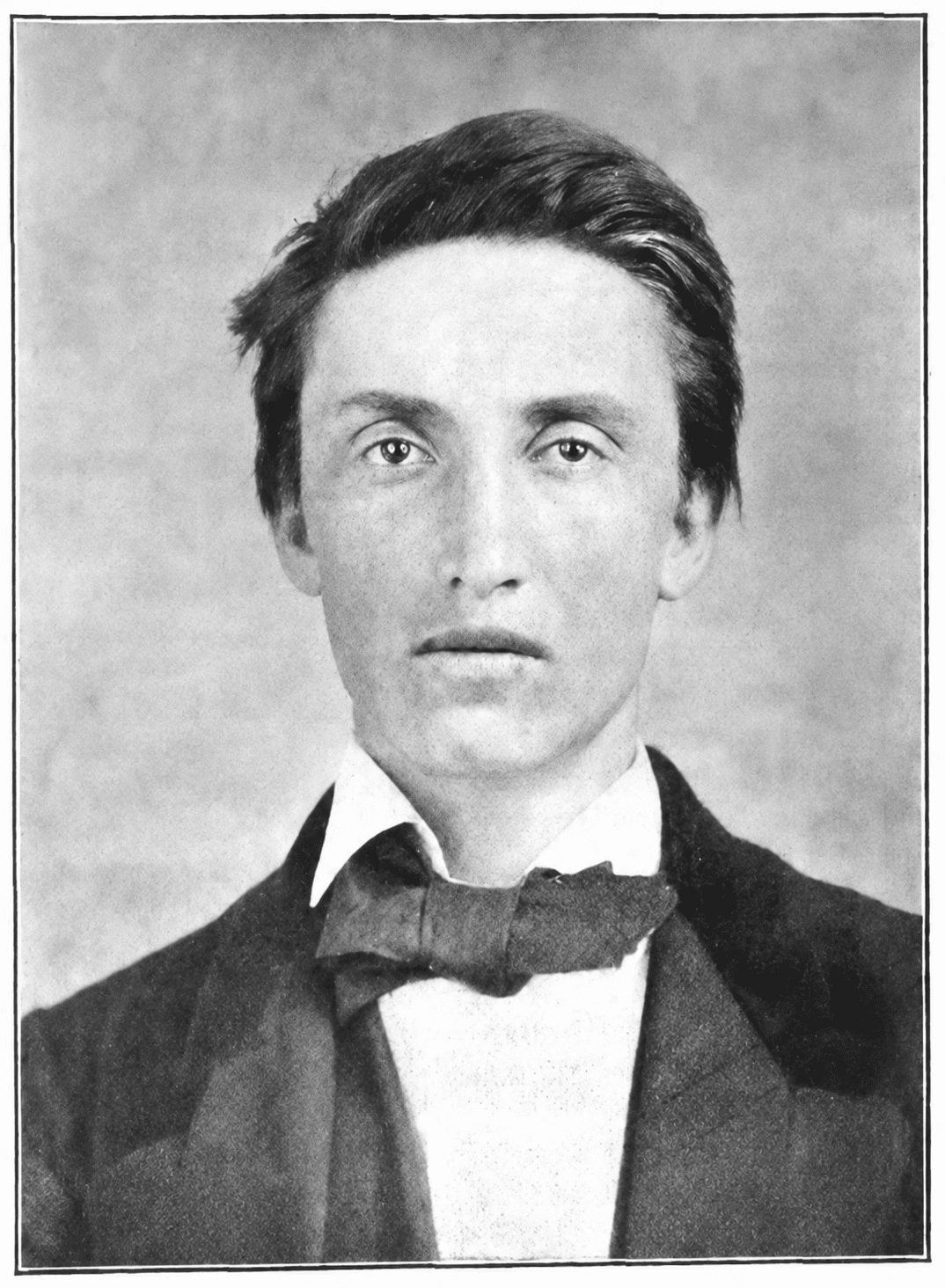
At the outbreak of the Civil War, Frank and Tilghman Howard lived with their widowed mother in Rockville, Indiana, the seat of Parke County. Known as the “Covered Bridge Capital of the World,” Parke County still hosts a popular covered bridge festival each October, and its population today is not much larger than it was during the war years.
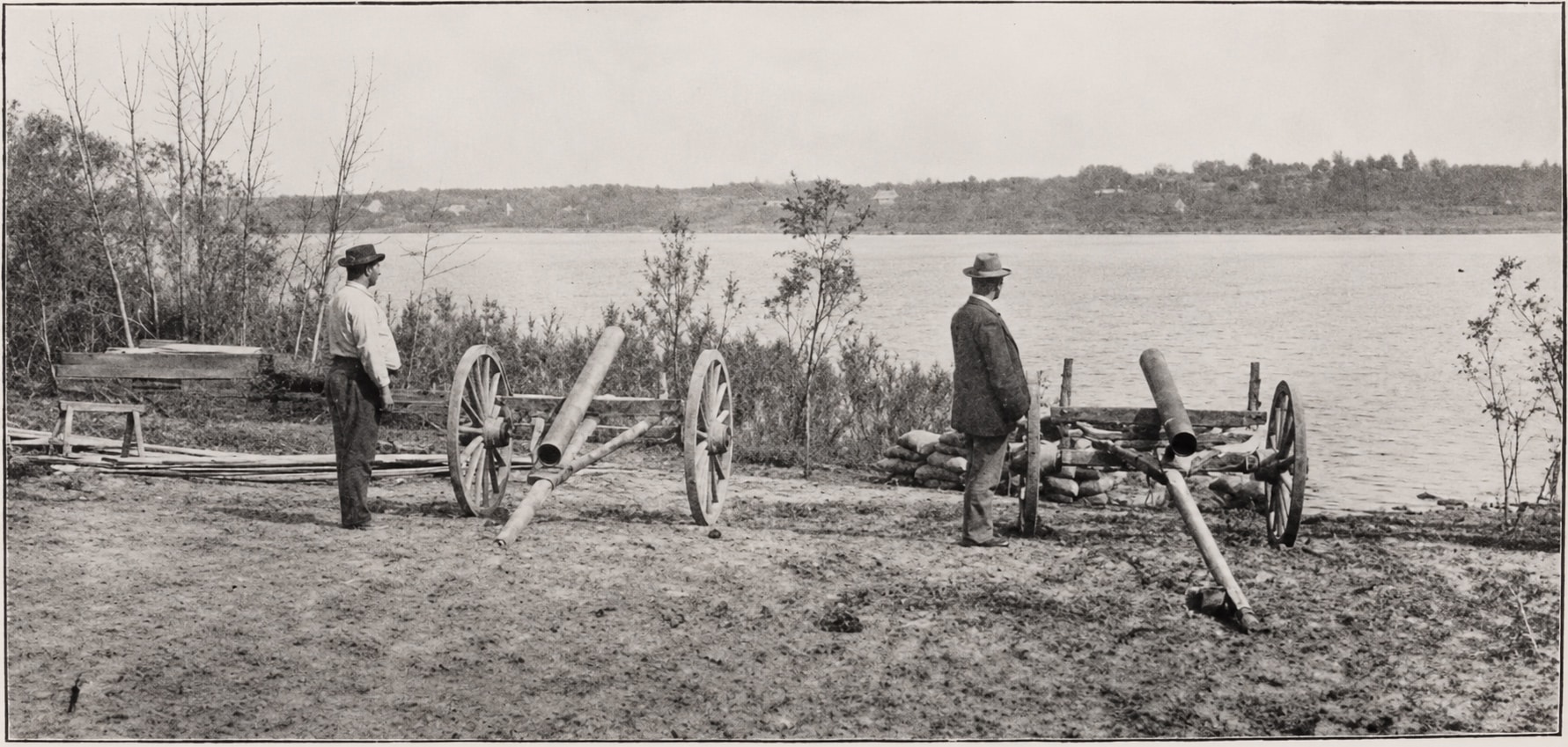
Tilghman’s story begins on July 18, 1862, when frontiersman Adam R. Johnson crossed the Ohio River with several dozen Kentucky partisan rangers and raided the town of Newburgh, Indiana. Johnson bluffed the local militia into surrender by positioning two Quaker guns fashioned from stovepipes, logs, and wagon wheels, then threatening to shell the town. The exploit marked the first successful Confederate raid north of the Ohio River and earned Johnson the nickname “Stovepipe.”[4]
The raid jolted Indiana Governor Oliver P. Morton into action, prompting him to call for several emergency regiments. One of them was the 78th Indiana Infantry, a 60-day regiment of six companies mustered into service on August 5, 1862, under Lt. Col. William L. Farrow. Twenty-two-year-old Tilghman Howard Jr. had briefly served with the 14th Indiana as captain of Company A, but resigned to become captain of Company C in the 78th.[5]
Braxton Bragg’s Heartland Offensive, which kicked off in late summer, emboldened Confederate partisans in Kentucky. Throughout late August, a force led by Lt. Gen. Edmund Kirby Smith drove north to Lexington and Frankfort. “Stovepipe” Johnson’s partisan rangers operated behind the lines in counties with strong Confederate support, like the ironically named Union County across from where the Wabash enters the Ohio River (the county got its name from the unanimity of its residents in creating the new county in 1811).[6]
After the Newburgh raid, Governor Morton tasked Lt. Col. John W. Foster and the 65th Indiana Infantry with driving Confederate guerrillas out of western Kentucky. On August 25, Johnson delayed Foster with an inferior force and prevented him from seizing supplies at Madisonville.[7] Emboldened by the success, Johnson moved northwest toward Uniontown on the Ohio River, where Farrow and part of the 78th Indiana were stationed. Johnson later claimed that Farrow had been extorting the people of Union County by forcing them to pay ransom in bonds.[8]
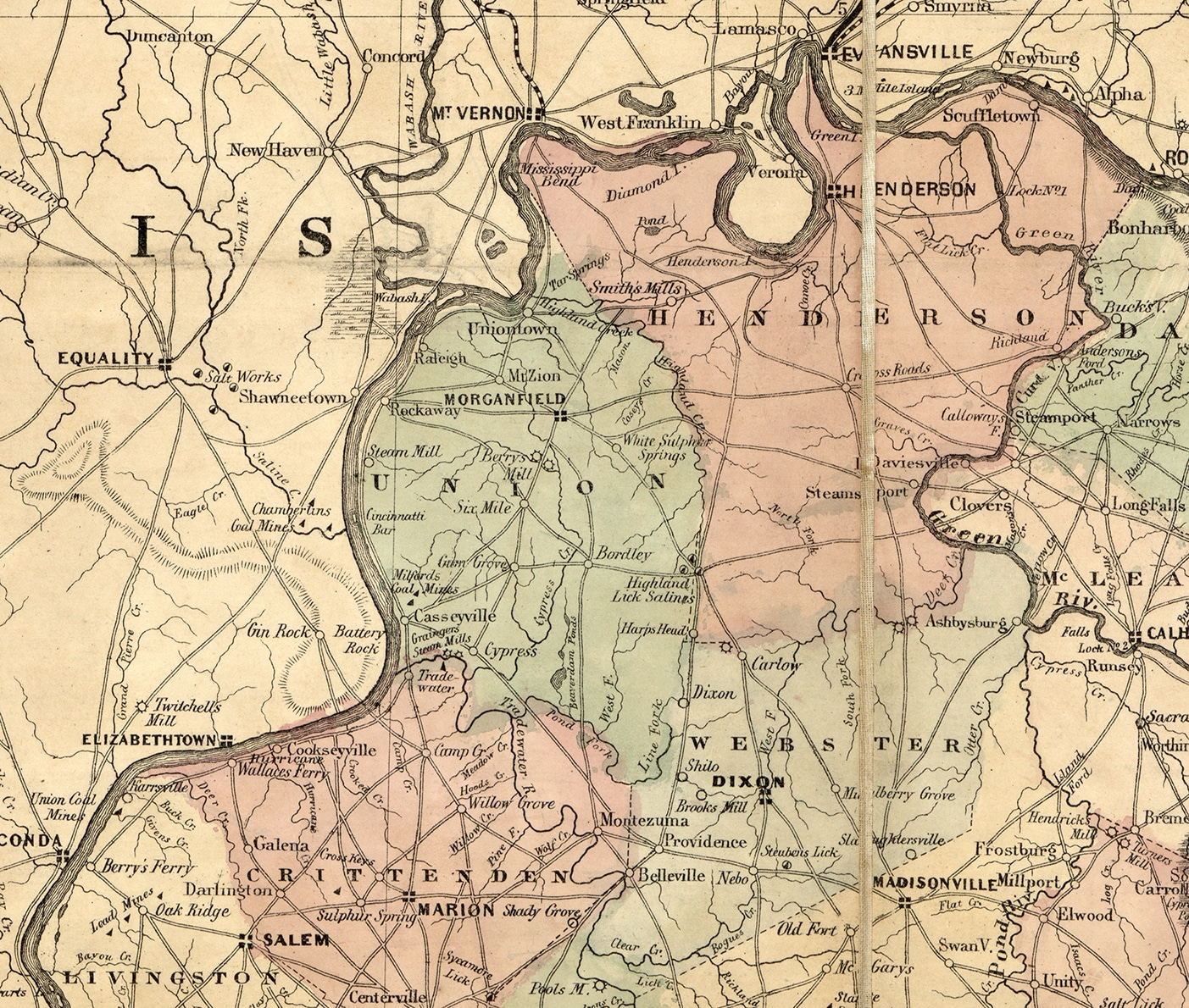
A rainy, caliginous night slowed Johnson’s advance, delaying his arrival until after noon on September 1. By then, someone had warned the Federals of his approach. The Hoosiers, fresh from dinner, were encamped on the outskirts of town. The entire force, including Capt. Tilghman Howard Jr.’s Company C along with Companies A and B, numbered about 146 men.[9] Estimates of Johnson’s command vary, but it likely included several hundred mounted and dismounted cavalrymen and a 6-pounder cannon under Lt. Henry Cromwell.
Arrayed in loose semicircles astride the Morganfield Road, the two sides traded fire for roughly twenty minutes before Lt. Col. Farrow arrived from his headquarters in town. During his absence, Tilghman moved among the ranks, encouraging his men and urging them to stand firm. Johnson’s largely ununiformed force gradually pressed in, while their cannon spread havoc among the green Hoosiers.[10]
At some point in the fighting, Tilghman was struck down “without fear, without reproach,” and the men around him began to waver. Farrow reportedly told Capt. Robert E. Smith of Company A that “if he could not get his men to stand, that they had better quit.” Smith raised a white flag, but received no response, so he handed it to his commanding officer. Farrow then walked the flag toward the Confederate cannon to draw their attention.[11]
As he had done before, Johnson, knowing he could not be burdened with so many prisoners, offered generous terms. Referring to Farrow, Johnson later recalled in his memoirs that “his relief, upon being told they were not to be injured, but paroled and turned loose, was almost ludicrous.”[12] Some Federals escaped along the river, but besides the death of the gallant Tilghman Howard Jr., the Union force suffered another twenty wounded. No accurate count of Confederate casualties exists. Johnson merely wrote that several of his men were “sick.”
“Possibly some of them had lead poisoning from our Enfield rifles,” one Hoosier in Company A wryly remarked.[13]
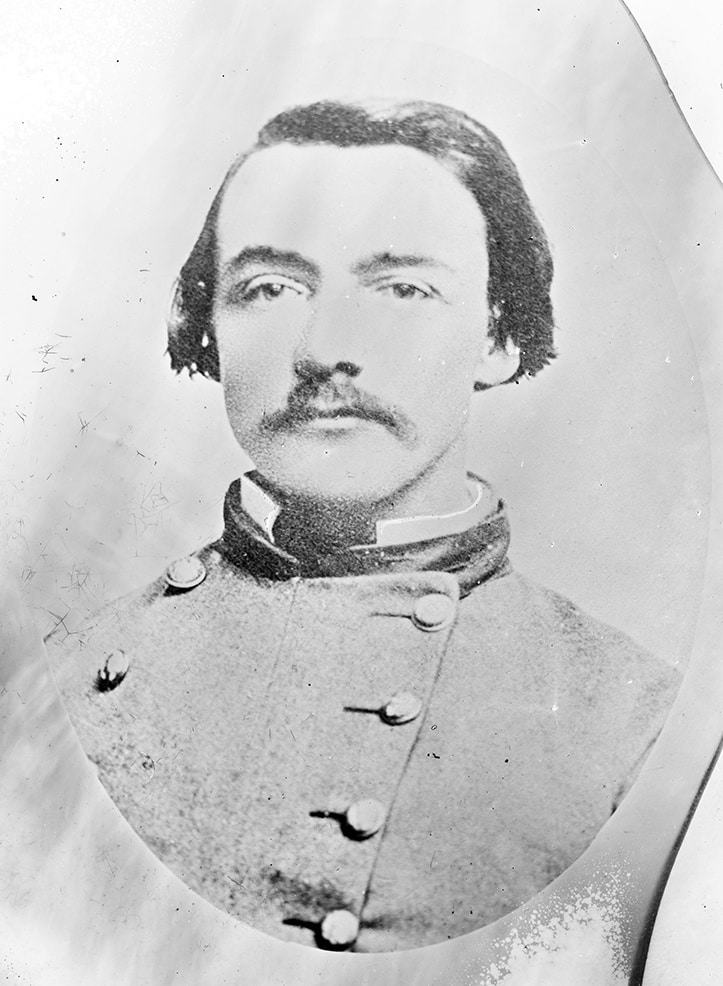
With reports of Federal reinforcements approaching, Johnson ordered his men to gather the captured arms and equipment, then disperse into the countryside. He continued serving in various roles for the remainder of the war, eventually leading a cavalry brigade during Morgan’s Raid. In 1864, he was accidentally blinded and captured. After the war, Johnson moved to Texas and published his memoirs in 1904.
Following the skirmish at Uniontown, a controversy erupted in the pages of The Evansville Daily Journal over Lt. Col. William Farrow’s conduct. Some accused him of avoiding the fight or even being drunk, while others rushed to his defense.[14] Johnson himself held his opponent in open contempt. Though blame is almost always liberally applied after a defeat, Farrow appears to have been a less-than-inspiring figure at that critical moment.
The paroled men of the 78th Indiana arrived in Indianapolis on September 3, 1862, minus a young and promising captain named Tilghman Ashurst Howard Jr., who was less than a month shy of his twenty-third birthday.[15] Tilghman’s remains were first buried in the family plot and later reinterred at Rockville Cemetery.[16] Who can say whether his spirit truly visited his brother on the night of his death, but the strange story has kept his memory alive.
[1] Isaac R. Strouse, Parke County, Indiana, Centennial Memorial, 1816-1916 (Rockville Chautauqua Association, 1916), 77.
[2] Juliet Snowden, Legends & Lore of Parke County, Indiana (By the author, 1981), 25.
[3] William Wesley Woollen, Biographical and Historical Sketches of Early Indiana (Hammond & Co., 1883), 262-4.
[4] Adam Rankin Johnson, The Partisan Rangers of the Confederate States Army, edited by William J. Davis (G.G. Fetter Company, 1904), 106-8.
[5] Report of the Adjutant General of the State of Indiana, 1861-1865, Vol. 3 (Samuel M. Douglass, State Printer, 1866), 21-2.
[6] For more on “Stovepipe” Johnson and partisan warfare in the region in 1862, see Derrick Lindow, We Shall Conquer or Die: Partisan Warfare in 1862 Western Kentucky (Savas Beatie, 2024).
[7] Derrick Lindow, “Foster’s Raid on Madisonville, Kentucky,” Kentucky Civil War, Mar 23, 2019. https://www.kentuckycivilwarauthor.com/post/francis-marion-reborn
[8] Johnson, The Partisan Rangers of the Confederate States Army, 117-8.
[9] Johnson, The Partisan Rangers of the Confederate States Army, 117; The Evansville Daily Journal, September 3, 1862.
[10] The Evansville Daily Journal, September 6, 1862.
[11] Nelle Decker Hubbard, Pinhook to Brazil (By the author, 1936), 42; The Evansville Daily Journal, September 4, 1862.
[12] Johnson, The Partisan Rangers of the Confederate States Army, 117.
[13] Rev. Ransom Hawley, undated letter to Miss Crawford, Vigo County Public Library (VCPL) Special Collections, Terre Haute, IN. https://archive.org/details/wars-civil-war-letters-a-m-1/page/n43/mode/2up
[14] The Evansville Daily Journal, September 3 & 6, 1862.
[15] Daily Wabash Express, September 4, 1862.
[16] Strouse, Parke County, Indiana, Centennial Memorial, 23.


Well-researched & presented. Not to mention, you made me look up “caliginous.”
Thank you, I love a good word that just fits right into a sentence. This article does bring up some interesting issues related to the Lieber Code. Would the Union Army have accepted this battlefield parole by ununiformed partisans as legitimate? Though LTC Farrow caught all kinds of criticism, folks back home treated the men like returning heroes.
You identify a good point. These paroles would not be deemed valid under the Lieber Code because they fell into the category of battlefield paroles, in which the CSA did not take sustained physical custody of the POWs and deliver them for exchange under parole to one of the official sites for such exchange.
In fact, the practice of irregulars paroling captured U.S. soldiers on the spot then riding on was one of Halleck’s main concerns leading to Lieber addressing the issue. Halleck also issued his own order on the subject (a subject of a prior post-“First Thing We Do, Let’s Kill All the Lawyers ”).
Irregular warfare under the Lieber Code is addressed in tomorrow’s post on the Code.