War Is Hell, But Even Hell Has Rules: The Legacy of the Lieber Code
This post concludes the series.
Prior posts have addressed the origin of the Lieber Code[1] and examined many of its precepts. Those discussions explored instances in which certain articles of the Code stressed, in high-minded prose, the duty to conduct war on a humane basis, yet others endorsed the harshest of actions against both armed combatants and civilians.[2]
The 157 articles of the Lieber Code were published in 1863. Therein, Professor Frances Lieber sought comprehensively to codify the then commonly accepted rules governing the conduct of war. [3] But what effect, if any, did the Code actually have? In that regard, it is fair to say that the Lieber Code spoke to three audiences: the U.S. military, the Confederacy, and ultimately, the world.
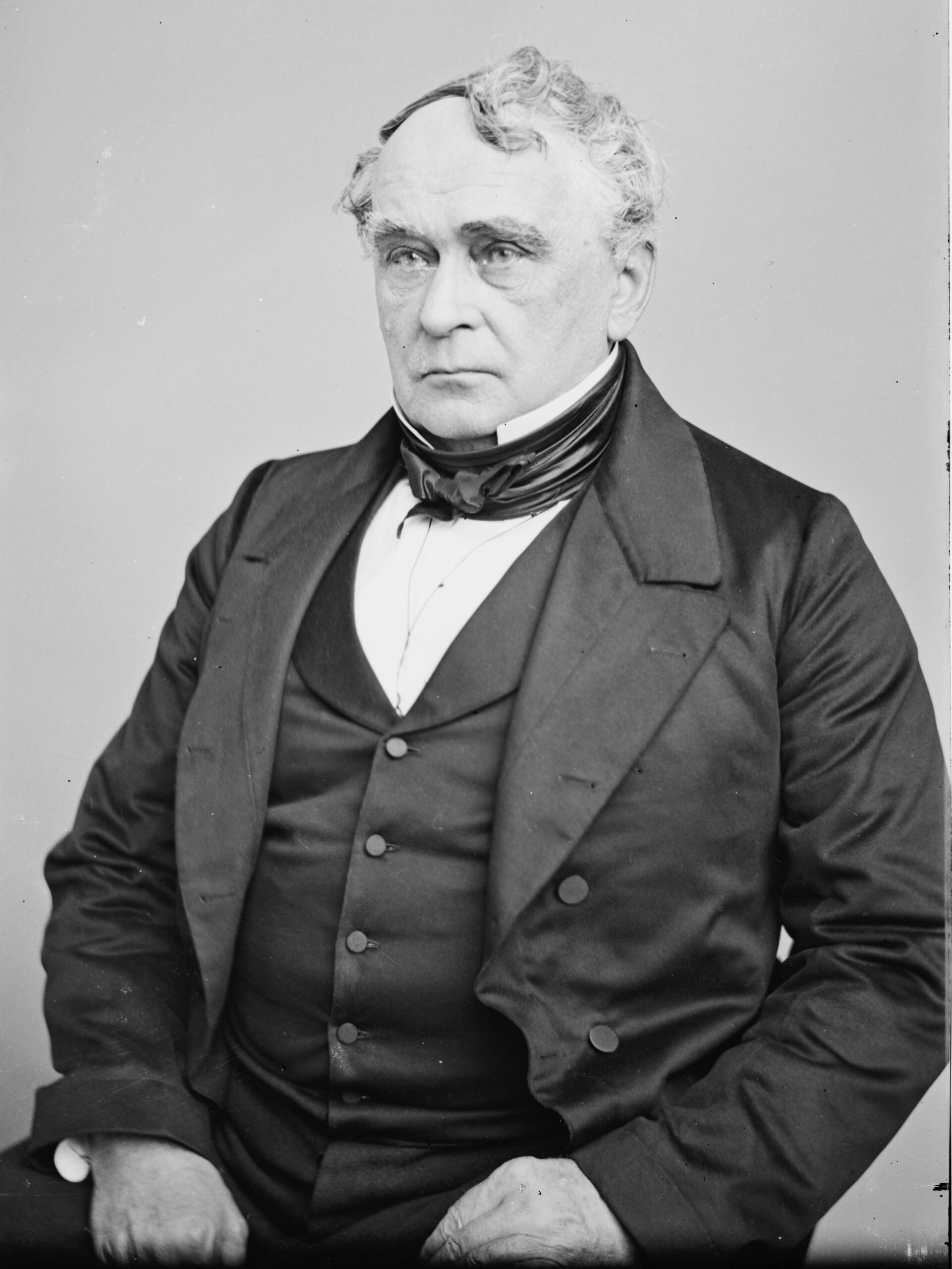
As for the first audience, it is difficult to judge the Code’s full impact without evidence of who actually read the document and strictly followed its rules. As “Instructions for the Government of Armies of the United States in the Field,” presumably the intent was that—at minimum—commanding officers would familiarize themselves with the Lieber Code. Yet while the Lincoln administration issued the Code under the rubric “General Orders No. 100,” the Code was presented more as a “FYI.” The Order’s introductory passage simply recited that the President “commands that they [the Instructions] be published for the information of all concerned.”[4] Missing was any explicit directive that officers (of any rank) read the Code and commit to its terms.
This rather casual approach was in stark contrast to the treatment afforded the U.S. Articles of War, whose terms mandated that every U.S. army officer “subscribe” (sign onto) those Articles as acknowledgment that they governed his conduct. Further, all non-commissioned officers and soldiers were to have the Articles read to them and be sworn to follow the same.[5]
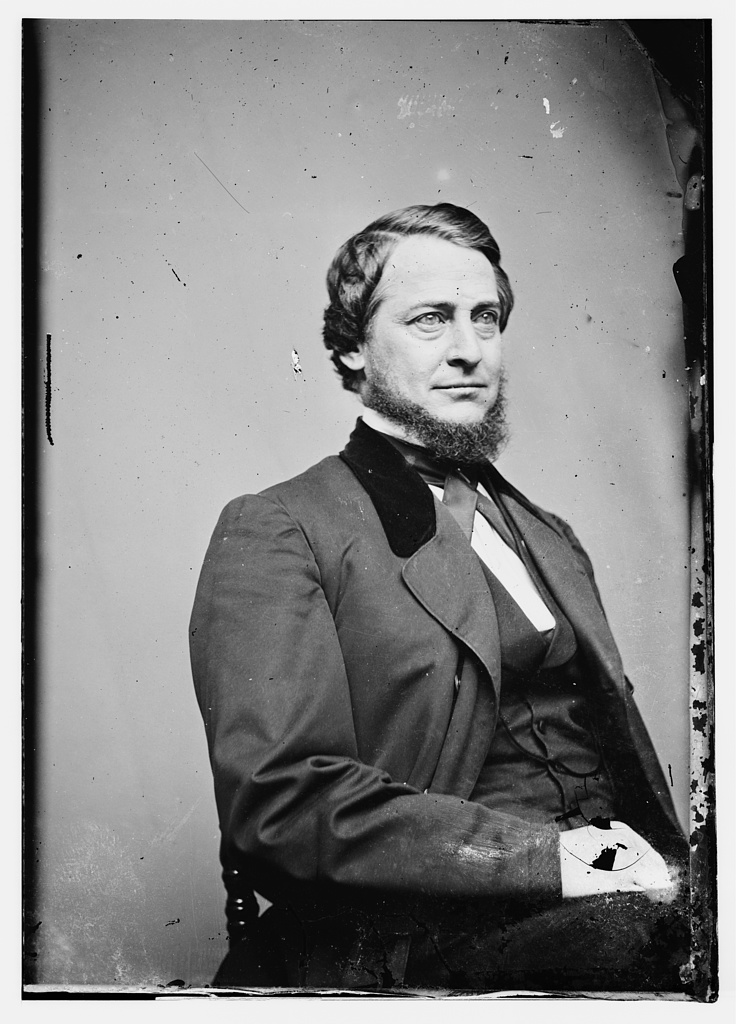
There is no question that some in the U.S. military took notice of the Code and utilized it. As noted in a prior post, Maj. Gen. Ambrose Burnside relied upon an unpublished draft of the Lieber Code to justify his arrest of Copperhead leader Clement Vallandigham.[6]
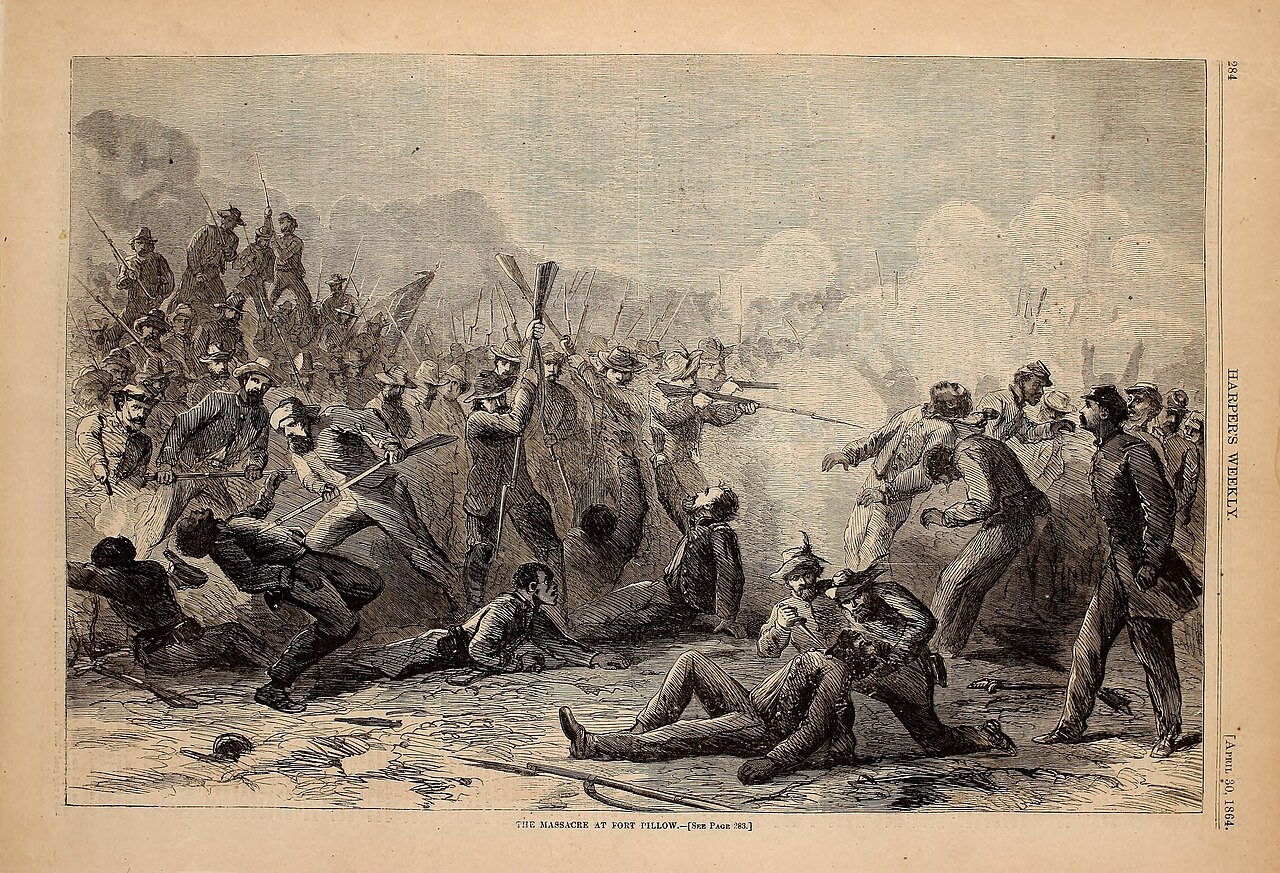
In July, 1864 Maj. Gen. Cadwallander Washburn, in Tennessee, sent a copy of the Code to Nathan Bedford Forrest after the massacre of African American soldiers at Fort Pillow. Washburn did so as a warning of what “the laws of war” permitted in terms of U.S. retaliation for the conduct of Forrest’s troops.[7] Moreover, federal officers responsible for POW exchange issues enforced the Code’s provisions protecting African American soldiers in persistently refusing to continue prisoner exchanges until and unless the Confederates agreed to grant Black soldiers POW status.[8]
Yet there is no evidence known to this writer that Ulysses S. Grant consulted the Code for justification before he ordered the controversial 1864 “Burning” by Maj. Gen. Philip Sheridan in the Shenandoah Valley. Further, William T. Sherman rebuffed Confederate General John Bell Hood’s protest that Sherman had improperly cannonaded the civilian population of Atlanta “without notice” by claiming that “I was not bound by the laws of war to give notice… See the books,” suggesting sources other than the Code (although Article 19 of the Code arguably justified Sherman).[9] It remains unclear what impact the Code had upon the deliberations and actions of most U.S. commanders in the field.
The Confederate government, however, took special notice of the Code (whose terms would be applied against it). Confederate Secretary of War James A. Seddon, reacting to a copy of the Code sent across the lines, summed up what he perceived as the absurd flexibility it afforded U.S. military commanders:
“Order No. 100 is a confused, unassorted, and undiscriminating compilation from the opinion of the publicists [law of war experts] of the last two centuries, some of which are obsolete, others repudiated; and a military commander under this code may pursue a line of conduct in accordance with principles of justice, faith, and honor, or he may justify conduct correspondent with the warfare of the barbarous hordes who overran the Roman Empire, or who, in the Middle Ages, devastated the continent of Asia and menaced the civilization of Europe.”[10]
Seddon’s criticism here focused on the internal contradictions within the Code, many of which have been cited in these posts. Seddon also disparaged the German-born Lieber himself, noting:
“The fact is stated in the title of Military Order No. 100 that it was proposed by a German professor, an alien by nativity to the Constitution, laws, and institutions of the United States. The intrinsic evidence furnished by the order itself shows that it is the handicraft of one much more familiar with the decrees of the imperial despotisms of the continent of Europe than with Magna Charta, the Petition of Right, the Bill of Right, the Declaration of Independence, and the Constitution of the United States.” [11]

Seddon’s hyperbole aside, the Code’s endorsement of harsh action against civilians, including the destruction of civilian property to the point of causing starvation, as well as virtually any other action if its end goal was a speedier subjugation of the foe,[12] certainly provided legal cover for the actions of U.S. proponents of “hard war.” Indeed, as Lieber stated in Article 5: “To save the country is paramount to all other considerations.”
The third audience for Lieber’s Code proved the most consequential. The world took notice of this first effort by a government to formulate a comprehensive set of rules for the waging of war that sought, however imperfectly, to civilize that inherently bloody undertaking.
Lieber sent his Code to correspondents throughout Europe, where it became “instantly influential.” Johann Caspar Bluntschli, a Swiss-born jurist at the University of Heidelberg translated the Code into German, attaching an 1864 treaty signed by twelve European states protecting the wounded and those aiding them (who were to be designated by a new armband – a red cross on a white field). Bluntschli dedicated his work to Lieber. Bluntschli’s work resulted in Lieber’s Code being adopted by the Prussian army in 1866. The Code also inspired a burgeoning drive across Europe to codify the laws of war. “Military manuals on the laws of war followed in the Netherlands (1871), France (1877), Serbia (1879), Spain (1882), Portugal (1890), Great Britain (1894), and Italy (1896).” Russia also adopted a manual by 1877.[13]
The Code’s impact did not end there. The proliferation of codes by multiple nations sparked an effort to harmonize their terms. Russia proposed an international conference in 1874, to be held in Brussels. There, the Russian delegation offered an amended version of the Lieber Code as the solution. The Conference delegates adopted the proposal, with only minor revisions. While never ratified, the Brussels Declaration of 1874 became the basis of further codification efforts and later, the two Hague Conventions on land warfare adopted in 1899 and 1907.[14]
In the United States Lieber’s Code (amended by subsequent treaties), continued to serve as the backbone of U.S. military law governing conduct in the field well into the 20th century. Ironically, when the Code was being distributed in 1898 to the troops at the outset of the Spanish-American War, the Judge Advocate General responsible was Norman Lieber, the great author’s son.[15]
While not perfect, the Lieber Code represents a significant milestone in the journey towards seeking to humanize, in at least some measure, the inhumanity that is war. Sherman was correct: war is hell. But if we are not to descend fully and irretrievably into that pit, hell must have at least some rules.
[1] The War of the Rebellion: A Compilation of The Official Records of The Union and Confederate Armies, Series III, Vol. 3 (U.S. Government Printing Office, Washington, D.C., 1880 – 1901), pp. 148-164 (“OR”).
[2] Compare, for example, Article 15 (“Men who take up arms against one another in public war do not cease on this account to be moral beings, responsible to one another and to God”) with Article 17 (“War is not carried on by arms alone. It is lawful to starve the hostile belligerent, armed or unarmed, so that it leads to the speedier subjection of the enemy”) (emphasis supplied).
[3] John Fabian Witt, Lincoln’s Code: The Laws of War in American History (Free Press, New York, NY, 2012), p. 2.
[4] OR, Series III, Vol. 3, p. 148.
[5] Revised Regulations for the Army of the United States 1861 (J.G.L. Brown, Publisher, Philadelphia, PA, republished by The National Historical Society, Harrisburg, PA 1980), Articles 1, 10. Moreover, the Articles were to be read and published to every unit every six months. Article 101.
[6] Witt, pp. 271-273.
[7] OR, Series I, Vol. 32 (Pt. 1), pp. 601-602; Witt, pp. 248-249.
[8] Witt, pp. 258-263. In response Robert Ould, the Confederate agent for prisoner exchange, retorted that the Confederates ‘would “die in the last ditch” before giving up the right to send slaves back to slavery as property recaptured’ although “they were willing to make exceptions in the case of free blacks.” OR, Series II, Vol. 6, p. 226.
[9] William T. Sherman, The Memoirs of General W. T. Sherman, Vol. II, Chap. XVIII, pp. 122, 128 (D. Appleton & Co., New York, NY, 1876).
[10] OR, Series II, Vol. 6, p. 41.
[11] OR, Series II, Vol. 6, p. 46.
[12] It should be noted, however, that the Code absolutely prohibited the use of torture, poison, wanton revenge and cruelty, and “assassination” (which Lieber defined to include the Confederate practice of deeming certain U.S. personnel as “outlaws,” subject to summary execution if captured). Code, Articles 16, 70, 148.
[13] Witt, pp. 327-328, 338-340, 342-343; Jenny Gesley, ‘The “Lieber Code” – the First Modern Codification of the Laws of War,’ Library of Congress Blog, April 24, 2018, https://blogs.loc.gov/law/2018/04/the-lieber-code-the-first-modern-codification-of-the-laws-of-war/.
Bluntschli also credited Lieber as inspiration for the creation (in 1873) of the Institute of International Law. Witt, p. 343.
[14] Witt, pp. 343-344; “Project of an International Declaration concerning the Laws and Customs of War. Brussels, 27 August 1874,” International Humanitarian Law Databases (of the International Red Cross), https://ihl-databases.icrc.org/en/ihl-treaties/brussels-decl-1874.
[15] Witt, pp. 328, 362-363.


Wonderful and eye-opening series! I’ve looked forward to every installment. I suspect knowledge of the Lieber Code is concentrated mainly among students of military jurisprudence or international law. I appreciate your adding that the Code “was presented more as a ‘FYI.'” That’s probably why it’s not referenced more often. In all my decades of studying the Civil War, I’ve never heard of it until your series–so thank you for doing such an in-depth overview, and an overview that included your own insights as an attorney. That’s not a perspective you often get when reading about history.
It was indeed my pleasure. Thank you for reading and joining in the discussions.
thank Kevin … nice wrap-up to a great series … appreciate all your research and thoughtful responses … and i agree with your point about the Lieber Code casting a long shadow — both here and abroad.