The Perils of Wig-Wag: Profiles in Courage on Sugar Loaf Mountain, September 1862
ECW welcomes back guest author Cory M. Pfarr.
On September 6, 1862, two Federal signalmen found themselves doing considerably more than communicating messages with flags. While attempting to escape Confederate cavalry near Maryland’s Sugar Loaf Mountain, they captured an enemy courier carrying messages from President Jefferson Davis to Gen. Robert E. Lee. Taking their prisoner with them, the Federals headed north toward Urbana, where they sought refuge in a nearby house.
Their escape did not last long.
Confederate cavalrymen arrived at the house and took the two men prisoner. Soon they were standing before Maj. Gen. James Ewell Brown (J.E.B.) Stuart. He greeted his captives cheerfully: “Good morning, gentlemen, I am very happy to see you.”
First Lieutenant Brinkerhoff N. Miner was in no mood to reciprocate. “Good morning, General, we are sorry we cannot return the compliment.”[1]
Miner was an acting signal officer in the Federal Signal Service. His companion, Pvt. Albert H. Cook, served as his flagman. For several days, the two had occupied a signal station on Sugar Loaf Mountain, a roughly 1,280-foot peak about ten miles south of Frederick.
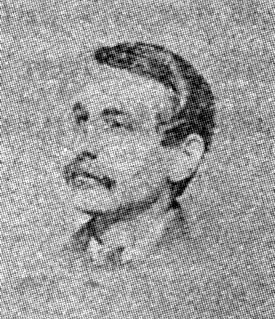
Their assignment coincided with Lee’s Army of Northern Virginia crossing the Potomac into Maryland. From Sugar Loaf, Miner and Cook had an exceptional vantage point from which to watch events unfold.
Chief Signal Officer Albert J. Myer later wrote that the mountain offered a field of observation “unequaled by that from any other in Maryland.” Several Potomac crossings and their Virginia approaches were visible, along with a broad expanse of Maryland countryside.[2]
Yet the same elevation that made Sugar Loaf valuable also left its signalmen isolated. Miner maintained contact with Acting Signal Officer Louis R. Fortescue on Elk Ridge at Maryland Heights, nearly eighteen miles away. At that distance, even sunlight affected their ability to read one another’s flags. Miner generally used a white flag against Sugar Loaf’s wooded backdrop, while Fortescue displayed a black one against the skyline. The two officers arranged specific periods during the day when conditions were most favorable for communicating.[3]
Those difficulties soon became secondary to a more immediate concern: Confederate troops were approaching.
At 4 p.m. on September 4, Miner observed a wagon column, which he estimated at fifty to seventy-five vehicles, moving east from Leesburg, Virginia, toward Edward’s Ferry. Dust rising from other roads indicated still more activity. He also reported hearing firing near the Chesapeake and Ohio Canal aqueduct over the Monocacy River and suspected that Confederate forces were attempting to cross the Potomac.
At 9 a.m. the following day, Miner reported approximately 2,000 Confederates, whom he believed to be cavalry, on the Maryland side of the Potomac near Noland’s Ferry. Despite Confederate cavalry operating nearby, Miner and Cook wig-wagged their observations to other Federal signal stations, allowing the intelligence to move through the communications network toward Washington.
Myer subsequently attached considerable importance to their work. He credited the Sugar Loaf station with tracking Confederate movements around Leesburg, watching the army approach and cross the Potomac, and reporting the beginning of its advance into Maryland. He went so far as to call Miner’s intelligence “the first official information” received in Washington of the Confederate crossing.
That last distinction requires some qualification.
At 10 p.m. on September 4, Col. Dixon S. Miles at Harpers Ferry had already telegraphed authorities in Washington and Baltimore with information received from Col. Henry B. Banning at Point of Rocks that a substantial Confederate force had crossed the river. Miles’s telegram preceded Miner’s 9 a.m. observation by nearly eleven hours and reached Washington well before Miner’s information.[4]
The Sugar Loaf observations nevertheless provided valuable firsthand confirmation of Confederate movements from men who could see the approaches to the Potomac from their elevated post. Miner and Cook had watched the invasion developing below them and reported what they saw.
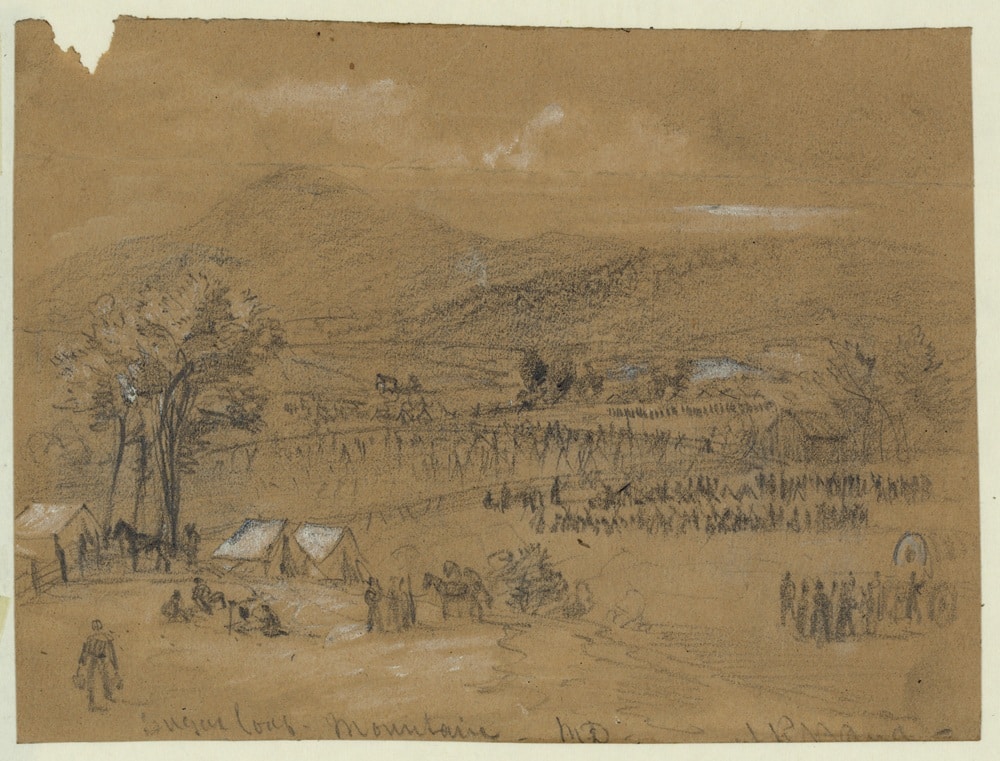
By September 6, however, observing Lee’s army from Sugar Loaf was becoming considerably easier than escaping from it.
That morning, Miner and Cook returned to the mountain, despite the increasing likelihood that Confederate forces would soon overrun their position. Their return gave them another opportunity to report the enemy’s approach, but it also brought their service on Sugar Loaf to an abrupt end.
Myer later reported that Miner was last observed signaling that Confederate troops were drawing near before furling his flags and preparing to depart. What happened next was less certain. Myer acknowledged that his information was “unofficial,” but reported that Miner descended the mountain and, near its base, captured a Confederate courier carrying dispatches.
Later accounts supplied additional details, though they differ somewhat over the precise sequence of events. Acting Signal Officer Louis R. Fortescue recalled that Miner had remained in the vicinity despite the danger, apparently trusting his familiarity with Sugar Loaf and its surrounding paths to help him evade Confederate cavalry. Other accounts describe Miner and Cook making their way toward Urbana with the captured courier before Confederate horsemen overtook them.[5]
Whatever the exact sequence, Miner and Cook ultimately fell into Confederate hands, and the courier and his dispatches were recovered. Their encounter with J.E.B. Stuart produced the memorable exchange that opened this story, but captivity proved far less lighthearted.
Miner and Cook remained prisoners with Stuart’s command through the battles of South Mountain and Antietam. The day after Antietam, they were sent south with hundreds of other Federal prisoners and endured a difficult march to Richmond. There they were confined in Libby Prison until October 5, when they were released on parole and sent to Camp Parole at Annapolis.
For Miner, release did not bring a quick return to health. He eventually resumed signal duty as an instructor, but lingering illness and his inability to return to field service contributed to his decision to leave the service.
Miner survived the war, but never regained robust health. Consumption claimed his life on January 16, 1871, at only thirty-five years old.
The drama surrounding their capture should not obscure what Miner and Cook accomplished during their brief assignment on Sugar Loaf. For several days, two men occupying an isolated mountain station watched Confederate movements unfold across a wide stretch of countryside and communicated what they saw even as the invading army approached their position. Their experience illustrates that Civil War signaling could demand considerably more than technical proficiency with flags and telescopes. A signal station’s usefulness depended upon visibility, and visibility could work both ways.
Myer ultimately included Miner among the officers he singled out for commendation during the campaign: “For services at Sugar Loaf Mountain, September 4, 1862, observing and reporting the advance of the enemy into Maryland: First Lieut. B. N. Miner, Thirty-fourth New York Volunteers. The signal station was held so long by this officer that he was captured in leaving it [emphasis added].”[6]
The same commanding view that allowed Miner and Cook to watch Lee’s army entering Maryland also left them exposed as that army closed in around them.
Cory M. Pfarr works for the U.S. Government and is the author of Longstreet at Gettysburg: A Critical Reassessment (2019), Righting the Longstreet Record at Gettysburg (2023), and The Federal Signal Service at Antietam (2026), all published by McFarland. His essays have appeared in Gettysburg Magazine, North & South, Studies in Intelligence, and The Massachusetts Historical Review, and he has presented his research at the U.S. Army War College.
[1] “Sugarloaf Mountain: A Signalman’s Lot,” Antietam Campaign 1862, Historical Marker Database, https://www.hmdb.org/m.asp?m=147010; Edwin C. Fishel, The Secret War for the Union: The Untold Story of Military Intelligence in the Civil War (Houghton Mifflin, 1996), 211–12; J. Willard Brown, The Signal Corps, U.S.A. in the War of the Rebellion (Arno Press, 1974), 241–42, 325–27; D. Scott Hartwig, To Antietam Creek: The Maryland Campaign of September 1862 (Johns Hopkins University Press, 2012), 108–9.
[2] Melanie Choukas-Bradley, Sugarloaf: The Mountain’s History, Geology, and Natural Lore (University of Virginia Press, 2003), ix, 6; “Sugarloaf Mountain: A Signalman’s Lot”; The War of the Rebellion: A Compilation of the Official Records of the Union and Confederate Armies (1880–1901), ser. 1, vol. 19, pt. 1, 118 (hereafter OR).
[3] J. Gregory Acken, ed., Service with the Signal Corps: The Civil War Memoir of Captain Louis R. Fortescue (University of Tennessee Press, 2015), 109.
[4] Fishel, Secret War for the Union, 211; OR 19/2, 179–81, 184–86, 188; “Sugarloaf Mountain: A Signalman’s Lot”; Hartwig, To Antietam Creek, 131, 145, 164, 171; Acken, Service with the Signal Corps, 110–11; OR 19/1, 118.
[5] “Sugarloaf Mountain: A Signalman’s Lot”; Hartwig, To Antietam Creek, 108–9; OR 19/1, 118; Acken, Service with the Signal Corps, 111–12.
[6] Syracuse Daily Journal, January 21, 1871, reproduced at “Brinkerhoff Nodiah Miner,” Find a Grave, https://www.findagrave.com/memorial/74409266/brinkerhoff-nodiah-miner; Acken, Service with the Signal Corps, 307n33; Brown, Signal Corps, 241–42; Hartwig, To Antietam Creek, 103–4; OR 19/1, 118, 124.


