Symposium Spotlight: A Sunday Morning Tour at Stevenson Ridge

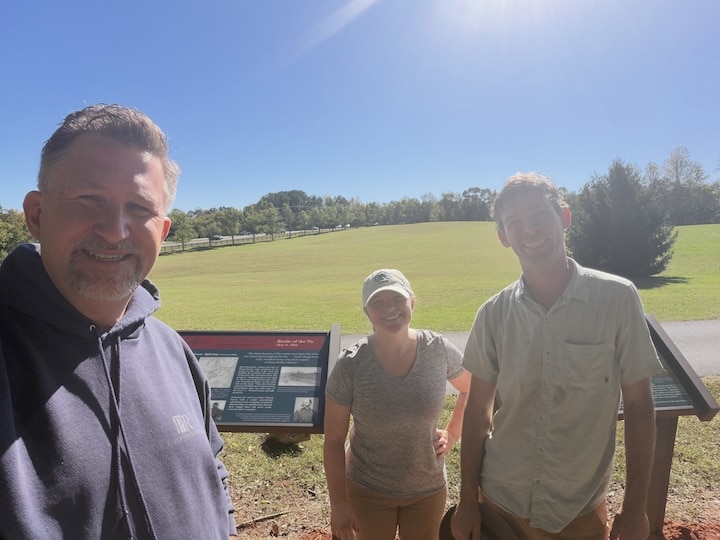
As the historian-in-residence at Stevenson Ridge, I’ve wanted for years to get some wayside signs installed at the Ridge to help us highlight our Civil War history more prominently. Last week, that long-term plan finally began to come to fruition!
Cavalry from the Army of the Potomac and the Army of Northern Virginia skirmished in what is now Stevenson Ridge’s front yard on the morning of May 8, 1864, as Federals looked for a back door into Spotsylvania Court House. Federal infantry showed up in force on the morning of May 9, triggering a fight the O.R.s refer to as “The Battle of the Ny,” named after the Ny/Ni River, a deep creek that flows through the area. And then, for the next twelve days, different portions of the Federal army occupied the ground.
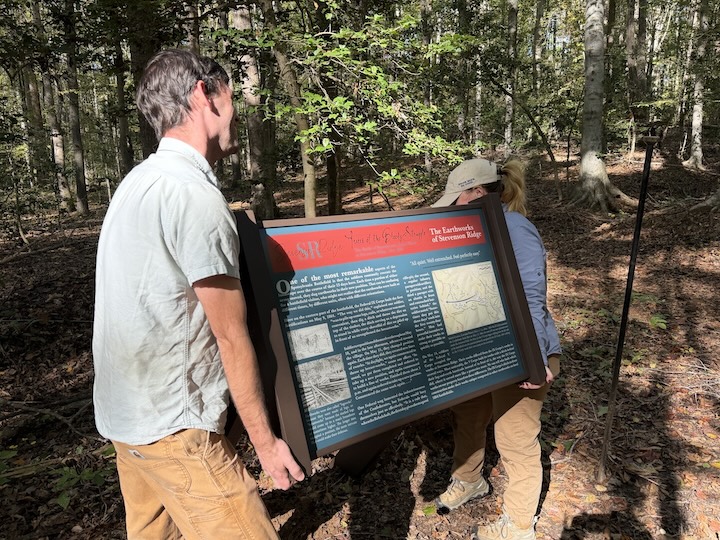
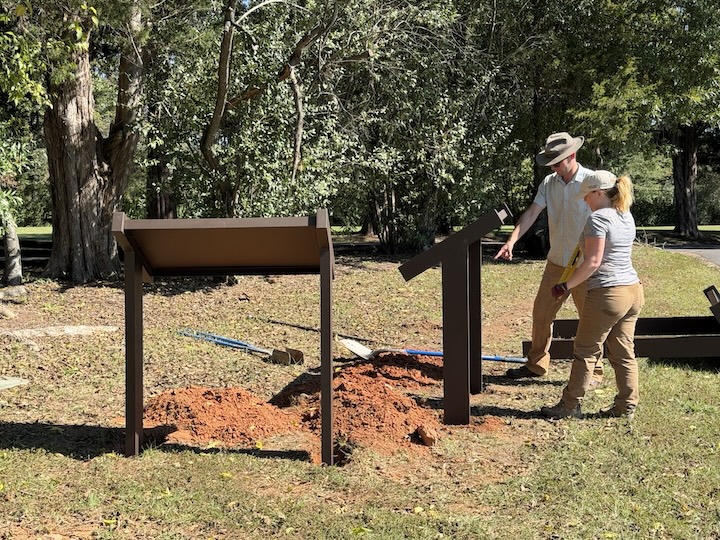
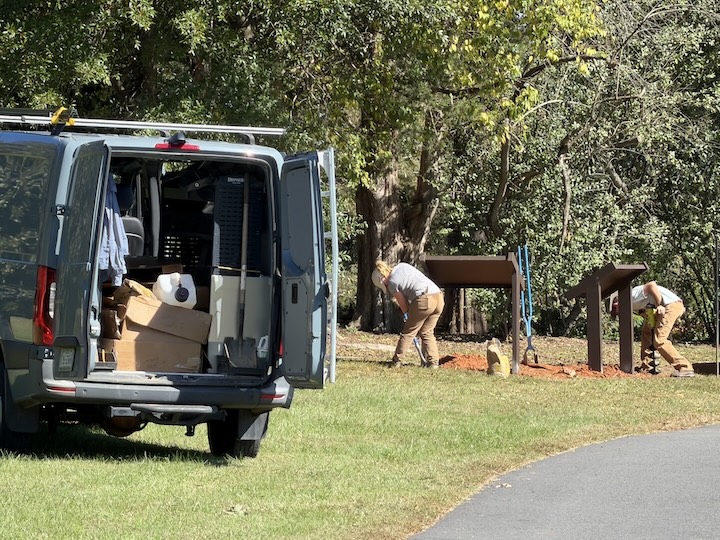
With help from our good friends at Civil War Trails, I was able to install four wayside markers at Stevenson Ridge:
- “Stevenson Ridge During the Civil War,” which offers an 1864 overview of the property and its owner
- “The Battle of the Ny,” which maps out the opening action on Spotsylvania’s eastern front
- “The Death of General Stevenson,” which recounts the May 10 mortal wounding of Brig. Gen. Thomas Greely Stevenson, the IX Corps division commander for whom the property is named
- “Earthworks at Stevenson Ridge,” which explains how earthworks are made and why SR’s earthworks are a bit different than those in most other places
My original impetus for doing this project was triggered by Stevenson’s death. On virtually any other battlefield, a division commander would have a marker or monument of some sort, but Stevenson’s death has largely gone unrecognized. I think a lot of it has to do with the fact that he served in the oft-dismissed IX Corps under Ambrose Burnside, whom Civil War buffs often don’t take seriously. I think some of it has to do with the fact that Stevenson was a Yankee, killed in the heart of Virginia, where they weren’t too eager to remember the Yankees after the war. Stevenson’s death was also overshadowed by Maj. John Sedgwick’s death the day before. And, of course, the unrelenting pace of the Overland Campaign turned much of the six-week action into a blur that has obscured all sorts of stories, including Stevenson’s.
I wanted to erect a sign that would acknowledge Stevenson’s death. That then got me thinking about other stories from Spotsy’s eastern front that I’d like to share. It’s an overlooked part of the battlefield because so much attention over the years has drifted to the Mule Shoe’s Bloody Angle, but capture of the Fredericksburg Road was a huge operational advantage for Federal forces.
I’m excited for the chance to share some of these stories during the 2027 Emerging Civil War Symposium at Stevenson Ridge. For our Sunday morning tour, I’ll walk folks around our property and help them see the “traces of the bloody struggle” that are still written across our landscape. We have extensive earthworks on the property and more than a mile and a half of walking trails to explore them by.
We’ll hear about Stevenson, of course, but I have plenty of other stories to share, too. We’ll hear about the heroics of the 50th Pennsylvania’s Capt. Robert Shwenk. We’ll inspect the lines with engineer Nathaniel Michler. We’ll visit with Mrs. Lydia Bixby, who purportedly “laid so costly a sacrifice upon the altar of Freedom.” And we’ll spend a lot of time talking about earthworks, earthworks, earthworks!
You can find out more information about our 13th Annual Emerging Civil War Symposium at Stevenson Ridge, Aug. 6–8, 2027, by visiting our Symposium page. Early bird tickets are available now through December 31, 2026, for only $275.
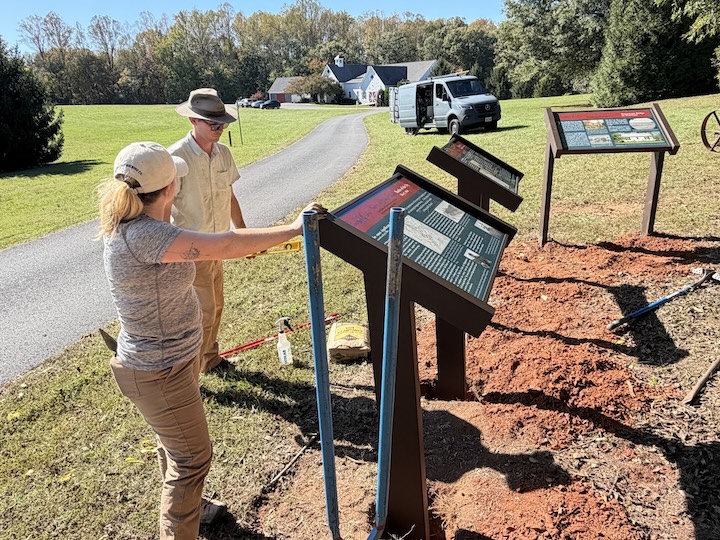
I want to thank Chris Brown and Ashley Bassetti of Civil War Trails for their fabulous work producing and installing the signs. It was a pleasure to spend some time with them, and a pleasure to see the final results!