CSS Joy: The Confederacy’s Phantom Gunboat
In late 1861 and early 1862, a Confederate naval squadron amassed at New Orleans with the hope of defending the Confederacy’s largest city. Ironclads were abuilding in the Crescent City, and river steamers were hastily converted for wartime use as gunboats and rams. One of the ships often listed among those purchased and outfitted is the Confederate gunboat Joy. This ship, however, is merely a phantom of poor Confederate record keeping and inconsistent handwriting, and did not actually exist.
While many say that Confederate naval records are sparse, there remains significant documentation about warships serving in Rebel naval forces, especially in the National Archives. Nonetheless, there remains an occasional black hole where there is just not much known about a particular warship. The Confederate gunboat Joy falls into this category. There remain several mentions of the phantom ship in Confederate records, but these are spotty at best.
The best description of the phantom CSS Joy comes from Lt. Charles Read, executive officer of the Confederate war steamer McRae. Read, just 21 years old in 1861, described Joy as “a side-wheel river boat, formerly a tow-boat.”[1] Major General Mansfield Lovell also made note of Joy’s presence at New Orleans. In testimony given in April 1863 about the loss of the Crescent City, Lovell testified that as he assumed charge of the city’s defenses, “there were two small vessels” of the Confederate Navy defending the city, “the McRae and the Joy, and the ram ‘Manassas’ with one gun.”[2] Henry W. Allen, a colonel in the war’s first year and Louisiana’s wartime governor in the conflict’s latter half, also acknowledged “two small vessels, the McRae and the Joy” protected the Crescent City in 1861, but his statement is eerily similar to Lovell’s testimony.[3]
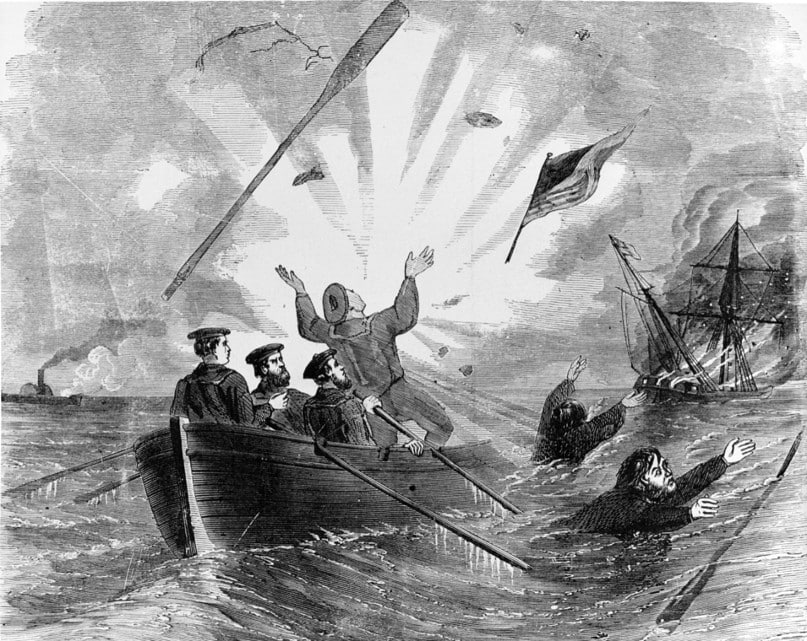
Lieutenant Read left a clue as to Joy’s contributions to the Confederate defense of New Orleans. In his postwar recollection, Read noted that the phantom gunboat “occasionally reconnoitered the river below” New Orleans, down to its mouth.[4] He also made specific mention that Joy escorted a French warship up the Mississippi River. The Associated Press documented Joy as a Confederate warship, claiming it mounted “an 8 inch 32 pounder rifled.”[5] Some newspapers claimed “an exchange of shots and shells” between Joy and USS Water Witch occurred on September 20, 1861, while another claimed a similar attack occurred by Joy on October 8, 1861.[6] Joy is again mentioned as part of Captain George N. Hollins’s Confederate Mississippi River naval squadron, with Hollins riding Joy “en route for New Orleans” in April 1862.[7] The paperwork trail ends there, with some postulating that Joy went on to be destroyed in the battle of Forts Jackson and St. Philip in April 1862.
The problem is that this ship simply did not exist. The Dictionary of American Naval Fighting Ships does not mention any Confederate vessel named Joy. No Confederate officer ever claimed to have served on this ship. The Confederacy’s register of officers does not mention any officer ever having been assigned to Joy. Captain Hollins, who theoretically rode on the ship, never mentioned it in any of his reports or in his (admittedly convoluted and confusing) memoir. The Ship Register and Enrollments of New Orleans for the years just before the Civil War likewise make no mention of a civilian river steamer named Joy. Finally, the Official Records of the Union and Confederate Navies in the War of the Rebellion makes no mention of the ship.
So, if CSS Joy has been documented by both military and naval officers, politicians, and newspapers as existing, how can it be a phantom? The answer likely comes from poor transcription and even poorer cursive handwriting.
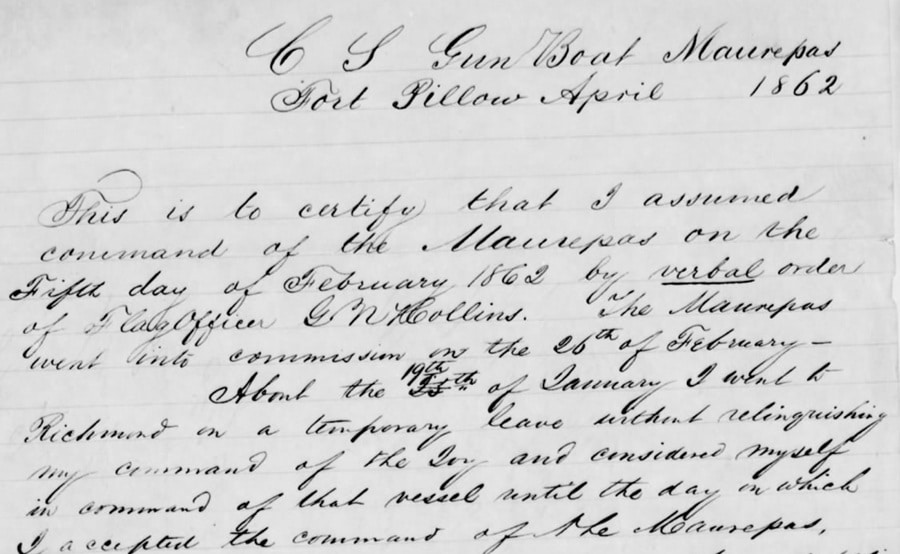
Putting the pieces together of the events described, it becomes clear what ship is being described. The phantom CSS Joy was actually the Confederate gunboat Ivy. Ivy was a river steamer that, for a short time, operated as a privateer. When the Mississippi River blockade solidified, the ship became a warship protecting the Mississippi River. Entrusted to Lt. Joseph Fry, Ivy was armed with a pair of naval guns, including a rifled 32-pounder.
Fry’s gunboat was present when the French warship Lavoisier entered the Mississippi River in 1861 and did indeed skirmish with blockading forces near the mouth of the Mississippi in late 1861. Finally, Hollins indeed rode Ivy down the Mississippi River in April 1862 to reach New Orleans before David Farragut.
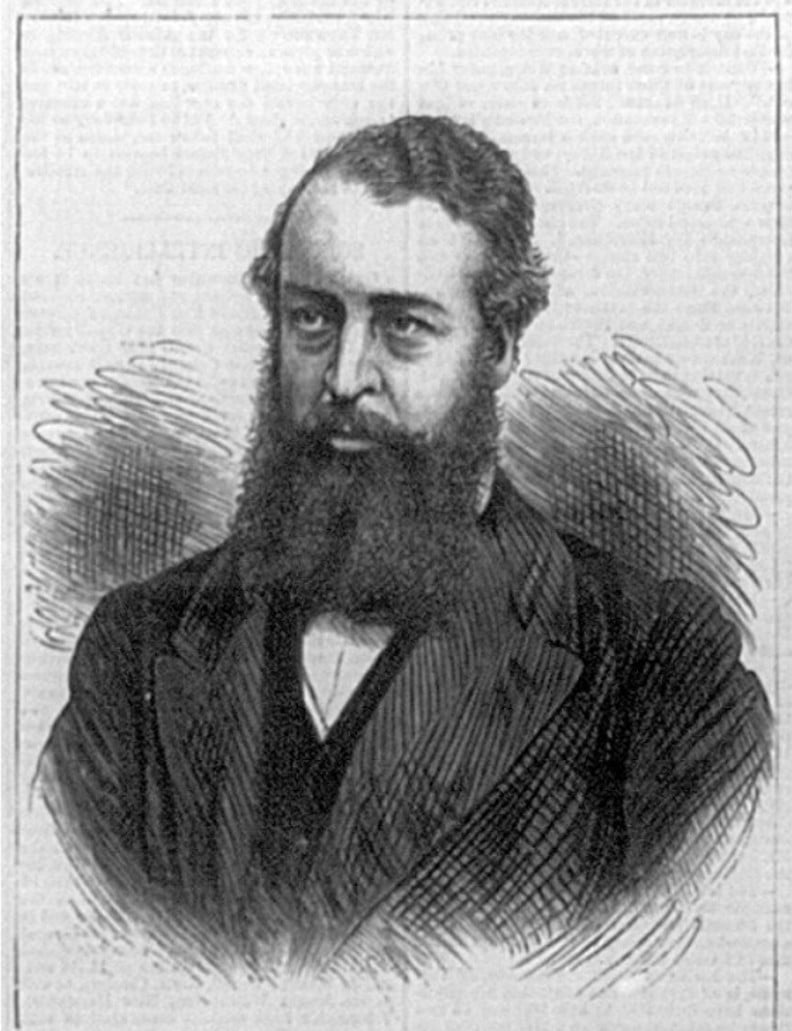
The question of poor handwriting came to me when looking over documents from the National Archives about the New Orleans campaigns. There were many mentions of CSS Ivy where the cursive handwriting could easily be interpreted as Joy instead. Perhaps the best proof of this mistaken cursive handwriting comes from one notation in the army’s Official Records, which contains Mansfield Lovell’s New Orleans testimony. The OR pages contain the same Lovell testimony that “there were two small vessels” of the Confederate Navy defending the city, “the McRae and the Joy, and the ram Manassas with one gun.”[8] However, if one looks at the start of that volume, at the list of corrections, there is a notation to substitute CSS Ivy in place of the steamer Joy.[9] It seems that the OR’s compilers eventually found the mistake.
So, the phantom CSS Joy was instead the very real CSS Ivy. There are some lessons to be learned here. Always corroborate information, especially from wartime memoirs. Typescript documents can often contain mistakes and thus, it is always better to look at the original handwritten versions if available. Finally, the Official Records, both the army and navy volumes, contain errata of corrections and updates. They are certainly worth checking out. You never know what you may find. In this case, it helped clear up some inconsistencies about one of the Confederacy’s nonexistent ships.
Endnotes:
[1] Charles W. Read, “Reminisces of the Confederate States Navy,” Southern Historical Society Papers (1876), Volume 1, 334.
[2] Testimony of Major General Lovell, April 7, 1863, Proceedings of the Court of Inquiry Relative to the Fall of New Orleans (Richmond, VA: R.M. Smith, 1864), 12.
[3] Sarah Dorsey, ed. Recollections of Henry Watkins Allen, (New York: M. Doolady, 1866), 88.
[4] Read, 334.
[5] “The Affair at New Orleans, The Detroit Free Press, Detroit, MI, October 22, 1861.
[6] “From Rebeldom,” The Detroit Free Press, Detroit, MI, October 10, 1861; “Additional Particulars of the Engagement at New Orleans,” The Daily Times, Reading, PA, November 23, 1861.
[7] “Miscellaneous,” Charleston Mercury, Charleston SC, April 23, 1862.
[8] Testimony of Major General Lovell, April 7, 1863, The War of the Rebellion: The Official Records of the Union and Confederate Armies, Series I, Vol. VI, 559.
[9] Additions and Corrections, OR, Series I, Vol. VI, 3.


Great detective work! Until your conclusion, I was wondering if maybe the ship had a temporary name. For a very brief period in the spring of 1861 the USS Monticello was renamed Star (because of its association with Thomas Jefferson, a Virginian, I guess?). So you’ll read reports in the OR mentioning the USS Star but they are talking about the Monticello.
Yes, great detective work. Sherlock Holmes would be proud.