Finding Gun No. 2
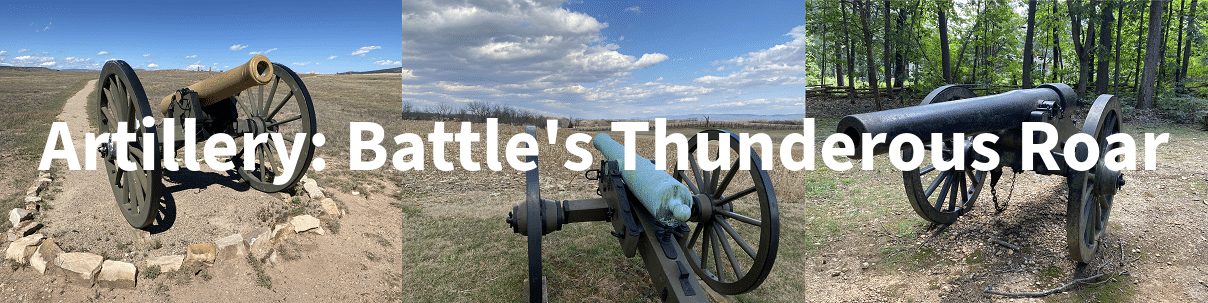
Civil War heroes come in all shapes and sizes, from generals to privates, from horses to canines. Unfortunately, all of these have now passed and our physical proximity to them is resigned to visiting a monument in a cemetery. Fortunately, some tangible links to those four bloody years remain in the forms of buildings, witness trees, and guns, specifically the scores of cannon that dot our Civil War battlefields.
What if those buildings or trees or cannons could tell us their stories—where they had been and what they witnessed? Very rarely are we able to link cannons adorning battlefields or Civil War monuments with their stories. Occasionally, the stars align, allowing us to dig through the records of the past and piece together the service record of one of these visible war heroes.
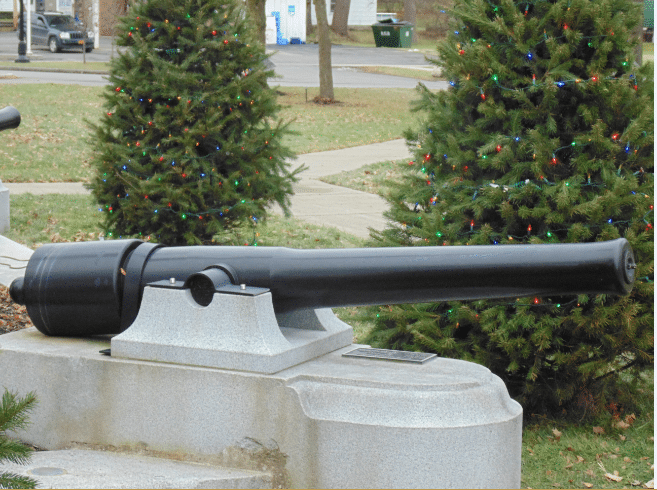 One such gun can be found sitting quietly in the town square of Avon, New York in the western part of the state. There, at the northeast corner of the town’s Civil War monument sits a 1861 10-pounder Parrott Rifle marked “No. 2.” If this gun could talk, the stories it would have. Civil War records place the gun at First Bull Run—probably atop Henry House Hill—Antietam, and very likely, atop Little Round Top on July 2, 1863 at Gettysburg. As if these laurels were not enough, the gun has a unique reunion story with one of its former cannoneers.
Gun No. 2 is the earliest surviving Parrott gun whose location is known that the Federal government bought at the outset of the Civil War. Entered into the hands of the United States Army on May 23, 1861, this gun, crafted at the famed West Point Foundry on the banks of the Hudson and approved by Robert Parker Parrott, appropriately became a part of Battery D, 5th United States Artillery. The West Point Battery, as it was commonly called because many of the men comprising the unit were enlisted from the academy, has a storied history in the annals of the war’s Eastern Theater.
Charles Griffin, a career soldier with “a contentious disposition and a volatile temper,” used his soldierly ability to craft the battery in his image. Battery D would be known for being a hard fighting and gritty battery like its commander, whom it always showed adoration for. Griffin “is always the friend of the enlisted men and looks closely after their wants,” noted one of his peers. But where they were going, Griffin could not protect his men entirely.
Nearly one month after Battery D received Gun No. 2, it marched off to war as part of Irvin McDowell’s Army of Northeastern Virginia. On July 21, the men of Battery D rose well before the sun and joined in the flanking column meant to defeat the Confederate Army posted along Bull Run approximately 25 miles from Washington City. Battery D and Gun No. 2 would find itself in the climax of the war’s first major battle in less than twelve hours.
Gun No. 2 was one of four 10-pounder Parrott rifles with Griffin and his men that day. Two howitzers rounded out the battery’s armament. The gunners of Battery D were part of Irvin McDowell’s flanking column sent north of the Confederate lines that would act as the hammer according to the general’s battle plan. Unfortunately for the men in blue, the attack met more resistance early in the day than anyone would have liked. Into the fray developing on Matthews Hill rushed Griffin, his gunners, and Gun No. 2.
Battery D’s position on Dogan’s Ridge presented the gunners with an excellent field of fire. Situated on the left flank of the opposing infantry, Griffin’s guns could rake the Confederate battle line before them, fire into reinforcing infantry rushing to Matthews Hill, or duel at a distance of 1,500 yards with supporting Confederate artillery. Despite the advantageous position held by the West Point Battery, it failed to dislodge the southern guns on Henry House Hill to the south.
While the artillery duel ensued across the intervening valley, Union infantry prevailed atop Matthews Hill and sent the gray-clad infantrymen scurrying south to the summit of Henry House Hill. The southern artillery backed out of the duel in order to cover their foot soldiers’ rearward movement, giving Griffin an opening to advance his guns closer to the enemy. For his rifled guns, the change of position did little to dislodge the enemy but Griffin’s howitzers “hurt us more than all the rifles,” noted one Confederate artilleryman. Mounting casualties of both men and horses forced the hard fighting southerners back.
Victory was in the air, it seemed, for Irvin McDowell and his Federals. But for the next two hours, the artillery of both sides remained fixed on dueling each other from a distance. Finally, around 2 p.m., McDowell himself made one of the most controversial decisions of the war. Looking to break the artillery stalemate, he directed Griffin’s and James B. Ricketts’s batteries to ascend the crest of Henry House Hill and break up the Confederate infantry organizing there under Thomas J. Jackson.
Volatile Charles Griffin opposed the move immediately. Citing a lack of infantry support in this “artillery charge,” Griffin attempted to talk his superiors out of such nonsense and offered a different plan. McDowell’s chief of artillery could not sanction this modification, however, and pledged Griffin and Ricketts would be supported. Realizing the futility of arguing further, Griffin consented, saying, “I will go; but mark my words, they will not support us.”
During the hours long artillery duel, one of Griffin’s new 10-pounder Parrotts jammed while firing from atop Dogan Ridge (it is unclear if this was Gun No. 2), meaning he and Ricketts went to the plateau named for the Henry family with eleven guns and found thirteen Confederate pieces confronting them there.
Ricketts’ crews led the “artillery charge” up Henry House Hill and deployed upon its flat summit south of the Henry house. Griffin’s gunners followed shortly thereafter and dropped trail north of Mrs. Henry’s home. When Griffin’s rifles and howitzers opened fire, Confederate guns vigorously responded at a distance of only 400 yards. This close quarters fight took a toll on Griffin’s gunners. Lt. Charles Hazlett of the battery remembered the Confederate “fire was exceedingly hot…. We presented a better mark for them than they did for us.”
Charles Griffin knew the situation could not remain this way, and drastic measures had to be taken to break the stalemate. He decided to dispatch his two howitzers to the right of Ricketts. Griffin himself would accompany these short-range guns to a position where they could fire down the length of the Confederate line atop the hill. This movement sparked a free-for-all melee that resulted in the line of Federal guns on Henry House Hill changing hands repeatedly between the Federals and their opponents.
North and South now staked victory on the control of Charles Griffin’s and James Ricketts’ eleven guns perched around the Henry House. A two-hour fight for the guns led them to change hands multiple times, but eventually a breaking point occurred. Fresh Confederate reinforcements finally tipped the scales in the Confederacy’s favor and by 4 p.m., most of Griffin’s and Ricketts’s guns were in southern hands and the Union army was fleeing the field.
In their rush from Henry House Hill, Griffin’s cannoneers left behind all but one Parrott rifle and a limber for one of the howitzers. Additionally, four of Griffin’s men lay dead, thirteen were wounded, and ten were missing or became prisoners of war. Gun No. 2 was a part of the Confederate arsenal now.
For the next fourteen months, Gun No. 2 fades from the historical record, though it must have served with an unknown battery in the Army of Northern Virginia until it reappears in September 1862. As Robert E. Lee prepared to embark upon his first invasion of the North, a reorganization of his army’s artillery commenced, inaugurating the dispersion of some of the army’s more unfit batteries. At this time, the Louisianans of the Donaldsonville Artillery under Victor Maurin ditched two of their English-made Blakeley rifles for two 10-pound Parrott rifles, one of them being Gun No. 2.
Victor Maurin’s Creole artillerists were part of Richard H. Anderson’s Confederate division and spent the middle portion of the Maryland Campaign participating in the operations against Harpers Ferry. Following the capitulation of the Federal garrison there, Maurin’s gunners endured a grueling overnight march to rejoin the rest of the army at Sharpsburg. They arrived just as the sun rose on America’s bloodiest day and spent the early morning hours listening to the bursting shells and crackling of muskets off to their north—“an indication of trouble awaiting us,” one Creole wrote.
The resounding bugles instructed the tired, weary men to fall in on their pieces. Between 9 and 10 a.m., Maurin’s Donaldsonville Artillery advanced towards the Sunken Road, the next part of the Confederate line subjected to the sledgehammer blows being applied against it by their Federal counterparts. Upon reaching the Hagerstown Pike west of the Sunken Road, Maurin received orders to deploy his guns atop the commanding Reel Ridge opposite the end of the worn-down farm lane.
Immediately, Maurin’s gunners fell under a severe Federal fire. Ironically, some of that fire came from guns across Antietam Creek, including Battery D, 5th United States Artillery, now under Lt. Charles Hazlett. Casualties began to mount in Carey Grimes’ artillery battalion, of which Maurin’s guns were a part. Upon deploying, one battery lost two men killed and another two wounded. The next battery to unlimber lost two men killed and three wounded before getting off a single shot. Grimes himself was mortally wounded and less than twenty minutes after entering the fight, Maurin’s gunners were the only ones in the battalion still in fighting shape.
The Louisianans remained “hotly engaged” for the remainder of the day, constantly hurling shot, shell, and canister at the advancing Federal infantry. With one of their Creole gunners singing the “Marseillaise” in the heat of battle, Maurin’s men—whose “blood seem[ed] to course through the veins with fever heat” during the fight—leapt “to and fro, loading, firing, and handling the artillery….” Finally, the fighting around the Sunken Road closed, and except for sporadic firing, both sides “stood silently eyeing each other,” wrote one of Maurin’s men.
Despite being in the thick of the fight for several hours, Maurin’s battery escaped virtually unscathed—four men were wounded though the battery lost fifteen horses, including one that had an artillery shell pass through its neck. As darkness descended upon the battlefield, Gun No. 2 and the other rifled guns of the Donaldsonville Artillery remained in position and witnessed a gruesome scene unfolding beneath them—the flickering of lanterns denoting soldiers looking for any survivors. All day on September 18, the displaced Louisianans rested and dreamt of home. They had left New Orleans on their way to the front exactly one year ago. Perhaps their greatest test came one year and one day following their departure and Gun No. 2 again became embroiled in the midst of a hasty retreat.
The pitch-dark night of September 18 “rivaled Bedlam,” recorded one soldier. Under the cover of night, approximately 31,000 Confederates began making their way to the Potomac River. Lee’s army was leaving Maryland and its soldiers had to slowly snake their way towards the river crossing that would carry them back to Virginia—Boteler’s Ford.
It was “a slow all night march,” a Louisianan wrote in his diary. Upon reaching the Virginia shore, the Donaldsonville gunners saw Robert E. Lee watching the crossing. Lee quickly ordered Maurin to ascend the eighty-foot bluffs that ran along the river on the Virginia side “to protect the retreat.” Throughout the dark night, Lee cobbled together a line of 34 guns, with 10 in reserve, and approximately 600 infantry protected on their flanks by cavalry. The command of this rearguard fell to the former Episcopal minister and now Lee’s Chief of Artillery, 53-year-old William Nelson Pendleton.
“These arrangements had not all been completed,” Pendleton said, before Federal cavalry and artillery appeared on the opposite bluffs about 10 a.m. on September 19, 1862. Quickly, the two sides showered each other with shot and shell. Initially, the Confederates had the upper hand in the fight, forcing the Federal commander to call for more artillery and even infantry support. As September 19 passed into the afternoon, newly arriving Federal batteries took position and dominated the Confederate gunners. Pendleton wrote his wife that his guns “were but as pop-guns” compared to the Federal long arm.
The Donaldsonville Artillery fell victim to this harassing fire. Despite the odds, an eyewitness recalled the fortitude of Maurin’s battery: “Shot and shell was shrieking and bursting all along the line and plowing up the ground and tearing through [its] lines, but the Battery seemed more interested in the effect of their shots upon the enemy than any damage they might sustain….”
Eventually, the Federal fire took its toll and forced Maurin to remove several of his guns to the rear. Due to their short range, the battery’s three 6-pounders proved ineffective and were removed from the line while Maurin’s 3-inch Ordnance Rifle was out of long-range fuses, forcing it to head for the rear along with the 6-pound guns. By this point in the fight, a new threat had developed that also plagued the Louisiana gunners situated high atop the bluff.
The Chesapeake and Ohio Canal ran along the northern edge of the Potomac River opposite Shepherdstown. Fitz John Porter, the commanding Federal officer at Shepherdstown, instructed infantry under Brig. Gen. Charles Griffin to take position in the canal “to clear the fords, and, if possible, secure some of the enemy’s artillery.” Following the hard handling of his guns at First Bull Run, Griffin remained in the artillery until accepting a position to command an infantry brigade in the Fifth Army Corps in late June 1862. Now, unbeknownst to him or Gun No. 2, they found themselves face-to-face across the wide Potomac.
Pendleton’s situation at Boteler’s Ford was rapidly deteriorating as the sun began to set on September 19. Just like Maurin’s Ordnance Rifle, other guns expended all of their needed ammunition and could no longer effectively participate in the fight. Rather than retiring most of those guns to the rear as his orders instructed, the fighting preacher left the unserviceable guns in plain view of the enemy in an attempt to prevent them from forcing a crossing. Pendleton had forgotten that guns in position that were not firing might also induce the enemy to cross the river. The latter is exactly what happened.
While the Federal infantry fire coming from the canal “proved to us an evil not slightly trying,” Federal artillery increased its “furious” fire. One shell exploded a caisson for one of the Donaldsonville Artillery’s 6-pounders behind the main line. Another wounded Arnold Wiedemere in the arm on this, his twenty-fourth birthday. Wiedemere and a sergeant within the battery survived their wounds but Private Frederick Wagner was killed on the bluffs overlooking Boteler’s Ford. The Federal fire also disabled twenty of the battery’s horses.
Suddenly, about 400 Federal infantry under Charles Griffin stormed across Boteler’s Ford in the waning daylight, scattering the Confederate infantry and artillery. Upon receiving orders—or perhaps sensing the uselessness of remaining where he was—Maurin limbered up the two Parrott rifles and began to head for the rear.
Federal guns zeroed in on the road running south from Boteler’s Ford, closing off that option for Maurin. Thus, Maurin was “obliged to cut across fields and fences and a country entirely unknown to me, without a guide,” he later wrote. Gun No. 2 and its team fell behind the lead piece. Lt. Landry of the Donaldsonville Artillery headed back for the rear to retrieve it and redirect it, but soon he and the gunners encountered a heavy woodlot that could not be crossed. Maurin’s men had been in possession of Gun No. 2 for less than two weeks and now they had to abandon it and spike it on the field of battle, leaving it for the fast pursuing enemy.
Early on the morning of September 20, in advance of a larger reconnaissance to take place later that morning, Charles Griffin sent two regiments of infantry as well as horses from his old Battery D, 5th United States Artillery across Boteler’s Ford. On the Virginia shore, they found “three guns, several caissons, 5th one battle-flag.” One of the guns brought back to the Maryland side of the Potomac at this time proved to be Gun No. 2, Griffin’s long lost acquaintance that he had not seen since July of the previous year!
Charles Griffin was “well pleased at getting the gun back,” said a member of his brigade. Another wrote, “General Griffin was exceedingly pleased at this recapture, and highly complimented the gallantry of his brigade.” The ecstatic general thanked the men from the two retrieving regiments and “we went to bed satisfied,” said one of them. Griffin’s gun was discovered to have three bullet holes throughout its carriage and another through the accompanying limber chest. However, there was no mistaking the initials of the West Point Foundry and Robert Parker Parrott on its right trunnion and the clearly stamped “No. 2” on its muzzle. Griffin, Battery D of the 5th Artillery, and Gun No. 2 were reunited.
What happened to Gun No. 2 after is somewhat of a mystery—at least for right now. It was definitely placed once again in its old battery but no records exist beyond that. If it did remain with Battery D for the next nine months, then it found itself perched atop another storied hill in Civil War lore: Little Round Top. There, the battery retained all of its guns but lost its commander, 24-year-old Capt. Charles Hazlett. It is likely that Gun No. 2 was firing from atop Little Round Top on July 2, 1863, but it cannot be certainly known.
Gun No. 2’s final appearance came in 1882. It had been five years since the small town of Avon, New York had erected its Soldiers’ Monument in the town square but finally the monument would be completed. United States Representative James W. Wadsworth—son of the United States’ deceased general James S. Wadsworth—secured for the monument four decommissioned cannons from the West Point Foundry. They arrived by rail in 1882 and one was placed at each corner of the monument.
Today, you can still find Gun No. 2 resting quietly in Avon’s bustling town square. As the traffic passes by this silent war hero, its story yearns to be told. Next time you visit western New York, make a point to stop by and visit this hero of the Civil War.


Neat story indeed.
What a wonderful story. I look forward to more details to come.
Great story. It would be nice if these things could talk – can’t imagine the tales they would tell.
Great Story, Kevin. Interesting and well told.
Watch out for speed traps, just sayin