“A Born Quartermaster”: Practical Heroism from Illinois’ “Hundred and Two Dozen”
Richard Lawrence Howard had completed a sacred task. Howard, a Baptist minister and the former chaplain of the 124th Illinois Infantry Regiment, was charged with composing the regimental history. He found considerable joy in the work. “Our dear comrades, both living and dead, have seemed to stand by my side and fill the room,” he recounted, “and in their coming, considering their numbers, they have brought little pain, with much, very much, to gladden.”[1]
Drawn from the farms and villages of northern Illinois, the 124th Illinois responded to Lincoln’s call for 300,000 volunteers in the summer of 1862. Its Yankee roots were deep: eleven ordained and five licensed ministers served in the ranks, and three of its companies consisted entirely of Temperance men.[2]
Howard’s regimental history is largely typical of those written by veterans in the postwar years. While praising the dedication of the whole regiment, he pays special attention to those of greatest importance to the regiment’s service and those who gave the ultimate sacrifice to the Union cause.
Unlike many other regimental accounts, Howard places another individual near the top of the regimental pantheon: the regimental quartermaster, Captain Alonzo N. Reece. According to Howard, Reece was a “born Quartermaster” universally appreciated by his comrades for his “efficiency and promptness,” as well as ability in “securing for us more than other regiments were able to get.”[3]
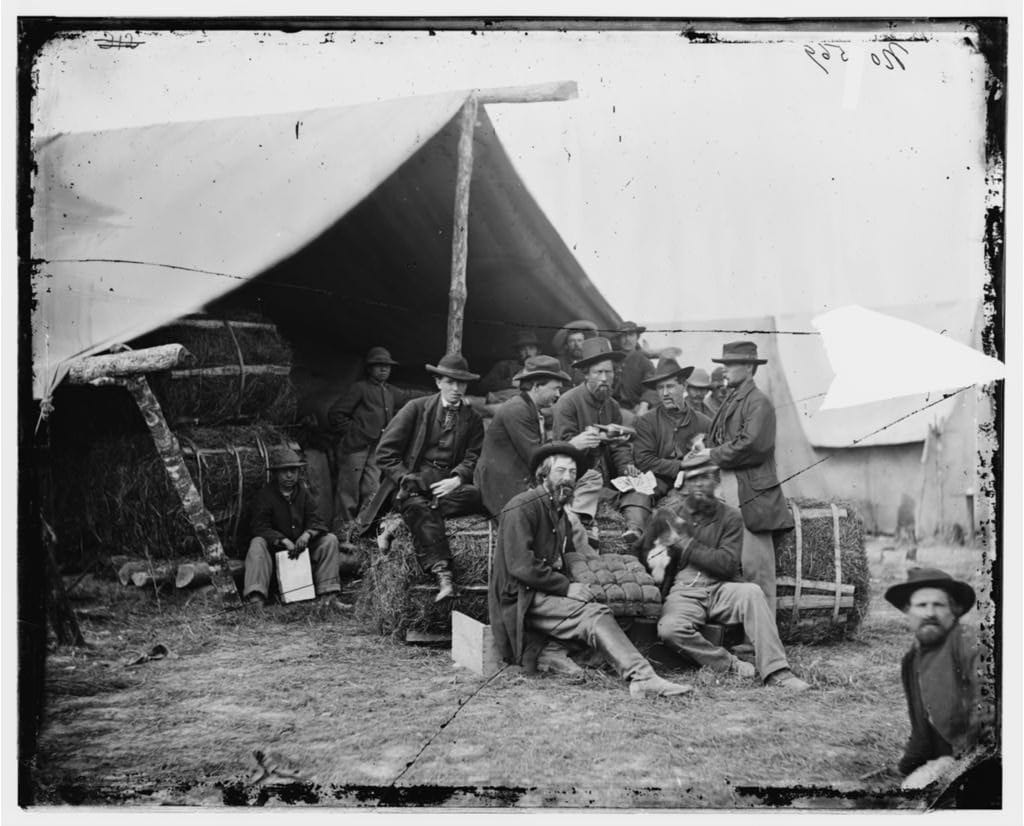
Reece’s contributions are a constant narrative thread throughout Howard’s text. He is another, more practical kind of hero; one that resonated with veterans. Reece was a patriot, committed to the cause but especially devoted to the well-being of the men of the regiment. Never surrendering his ingenuity and resourcefulness to strict military discipline, he mastered navigating the military bureaucracy while maintaining the confidence of his superior officers.
Howard suggests that Reece’s place in the regiment was providential, without “the remotest idea of promotion, as he was the 110th man [in Company A], and all the officers elected.”[4] Reality was less divinely inspired. Thomas J. Sloan, the first Colonel of the 124th, was the headmaster of the Chicago commercial college from which Reece graduated.[5] The two men were well acquainted. Howard notes that Reece “opened the negotiations with [the man] who afterwards became its Colonel.”[6]
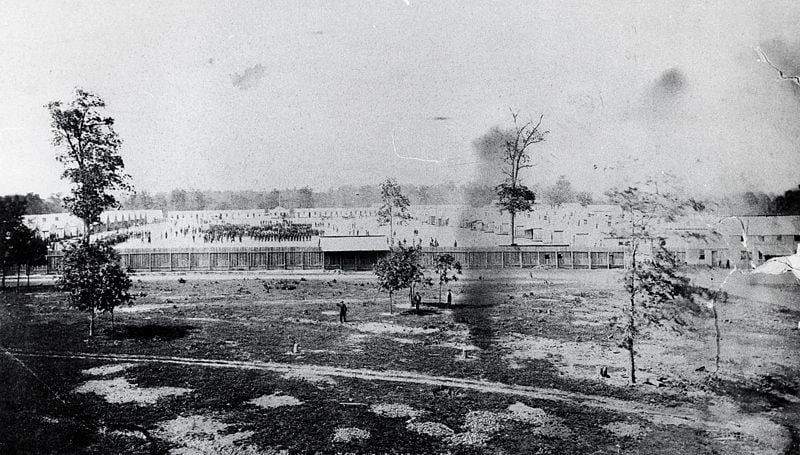
Reece’s vocational training soon proved its worth. He received a commission and the position of regimental quartermaster shortly before the regiment’s arrival at Camp Butler among a deluge of newly mobilized regiments. With the men left to fend for themselves in crowded surroundings and an overburdened quartermaster department, Reece set things right. The results were profound. Per Howard, “Reece came to our aid with all the ‘cooking apparatus’ required, and a full outfit of clothing and blankets, obtained on his personal responsibility.”[7] As the men were without shelter, Reece organized the necessary tools, lumber and hardware such that “almost as by magic, commodious barracks sprang into existence, clean and sweet.”[8]
Foresight was another of the quartermaster’s prized talents. “Ever on alert,” Howard recalled, Reece was attentive to opportunities to improve the condition of the men. Prior to departing Illinois, Reece “succeeded in drawing a full supply of most excellent tents” and “saw at a glance” when the Post Quartermaster had drawn a quantity of high-quality woolen undergarments, requisitioning 3,000 pairs, “the like we never saw again in the service.”[9]
This efficiency was not accidental. He was willing to use many means to fulfill his duty. For Reece, the foremost duty was to the men of the regiment. In the spirit of an army overwhelmingly made up of amateur soldiers, Reece’s approach put outcomes ahead of military procedure.
At times, this required uncharacteristic boldness. When the regiment was undersupplied with mules by a Post Quartermaster, Reece impetuously “reported the case to General Logan,” the division commander, with the result being an order for additional teams, “which was duly honored.”[10]
His cunning ability to work through – and around – the military supply system was fondly remembered. During the Meridian Expedition in early 1864, Reece received an order to turn over all surplus mules to the Divisional Quartermaster. Not so easily persuaded and “determined to maintain his advantage…while turning over so many mules that [Reece] was reported as having obeyed the order, managed to corral a number of the best where they were not discovered.”[11] Leadership was none the wiser.
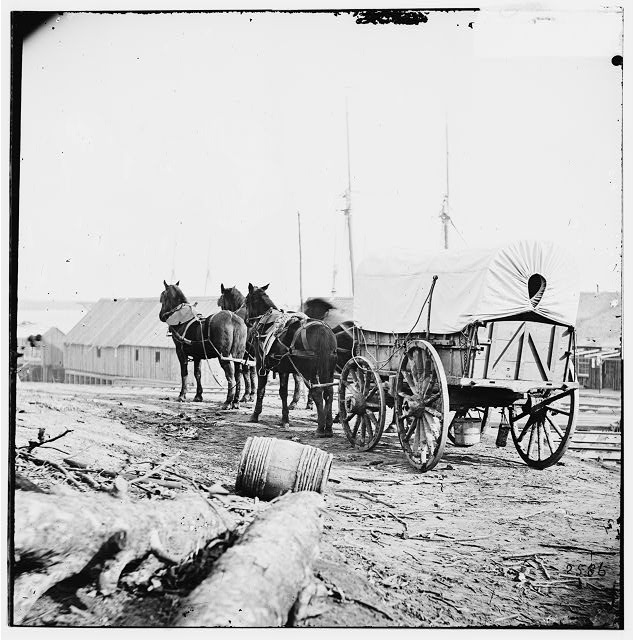
Senior officers appeared to turn a blind eye to his bold approach. They had reason to tolerate it; he benefitted them as well. When the officers of the 124th Illinois were forced to leave their horses behind during Grant’s crossing of the Mississippi below Vicksburg, “Reece was on hand as usual, and smuggled over the horses of our officers with those of a battery,” making several attempts before succeeding.[12] One wonders what “gentleman’s agreement” was struck with the battery commander.
Regardless of the method used, the regimental history re-iterates a common theme: the men of the 124th Illinois and their Quartermaster shared a special bond. They were confident he would do the utmost for them, and he lived up to their trust. When left with “very ragged and insufficient” clothing and prostrate with illness during the Vicksburg Campaign, Reece was “untiring,” in getting the men re-equipped, “and for a time was the hardest worked officer in the regiment.”[13] During the Mobile Campaign, Reece forced the regimental baggage to the front of the boat queue, placing his teams in a place “where they could not be passed, or turned back, and had to be taken.” Although earning Reece animosity from other units, it “was an event to the blanketless men and destitute officers” of the 124th.[14]

Although these anecdotes were frequently lighthearted, Howard makes clear that Reece experienced the horrors of war. Reece’s brother, a member of the regiment, died from illness in the summer of 1863.[15] Reece’s diary also describes a harrowing twilight journey across the Champion Hill battlefield in the aftermath of the fighting, in which he “cannot describe the scenes of that night. It sickens me to think of them now, and should I live a hundred years they will never be effaced from my memory.”[16] This awareness may have motivated his desire to provide for his men.
The presence of Reece throughout the narrative of the 124th Illinois’s regimental history is remarkably prominent. This demands further scrutiny. Some important clues are revealed. Howard and Reece appear to have had a close camaraderie during their war service, and Howard used the latter’s diary as an important reference in his writing.[17] Howard also credits Reece as “the inspirer and backbone of the enterprise, without whom the noble One Hundred and Twenty-Fourth Illinois Infantry Volunteers would never have had a written history.”[18]
Yet it would be unfair to dismiss the portrayal of Reece as excessive deference to a friend and benefactor. The exceptional respect and admiration for Reece among his fellow officers and men was contemporary and genuine. When in Chicago awaiting their discharge, the officers organized a surprise testimonial for Captain Reece and presented him with a gold medallion. General John H. Howe, former commander of the regiment, provided remarks reviewing the Quartermaster’s achievements “to show that the gifts were no empty compliments.”[19]
Alonzo N. Reece would continue to live in Chicago after the war as an employee of Henry W. King & Co. a major Midwestern clothing wholesaler and retailer.[20] He and his wife were part of the turn-of-the-century social elite of Chicago’s South Side.[21] A leader in veterans organizations, he was the First Vice-President of the Society of the Army of the Tennessee and Senior Vice-Commander of the Military Order of the Loyal Legion of the United States in Illinois.[22]
Reece does not easily fit our armchair conceptions of Civil War heroism. It is, however, one that was entirely relatable to the men who marched, camped and fought across the landscape of the war. For those veterans who lived through years of violence and disease, the heroes were those who gave them comfort in hard service and helped them get home alive.
Endnotes:
[1] R.L. Howard. History of the 124th Illinois Infantry Volunteers, otherwise known as the ‘Hundred and Two Dozen’. (Springfield, IL: H.W. Rokker, 1880), iii.
[2] Howard, 4; 7.
[3] Howard, 9.
[4] Howard, 3.
[5] Chicago Tribune. (Chicago: August 26, 1858), 1.
[6] Howard, 4.
[7] Howard, 9-10.
[8] Howard, 10.
[9] Howard, 10; 19.
[10] Howard, 40.
[11] Howard, 200.
[12] Howard, 76.
[13] Howard, 55-56.
[14] Howard, 285.
[15] Howard, 137.
[16] Alonzo Reece in Howard, 100-101.
[17] Howard, 41.
[18] Howard, iv.
[19] Howard, 392.
[20] Chicago Tribune. (Chicago: February 18, 1888), 1.
[21] Chicago Tribune (Chicago: November 19, 1886), 3; Chicago Tribune (Chicago: June 20, 1901), 16.
[22] The Sun (Chicago: September 25, 1914), 9; Chicago Inter Ocean (Chicago: January 3, 1902),10.


Thanks, Devan, for posting this wonderful article and honoring Captain Reece. So nice to read about a quartermaster, who really looked out for his men
thanks Devan, great article … it almost sounds like you’ve got some “born quartermaster” in you … and your phrase “putting outcomes ahead of procedure” is the essence of every great quartermaster I have ever seen.
Devan, wonderful story, well told. Captain Reese seems somewhat like the “Scrounger,” the character played by James Garner in “The Great Escape.”