Framing History: Grant, Rawlins, and the Tale of the Missing Tail
Union Gen. John A. Rawlins served for much of the war as Gen. Ulysses S. Grant’s adjutant or chief of staff. Their strong professional partnership was matched by a close personal friendship that had taken root before the war in their hometown of Galena, Illinois.
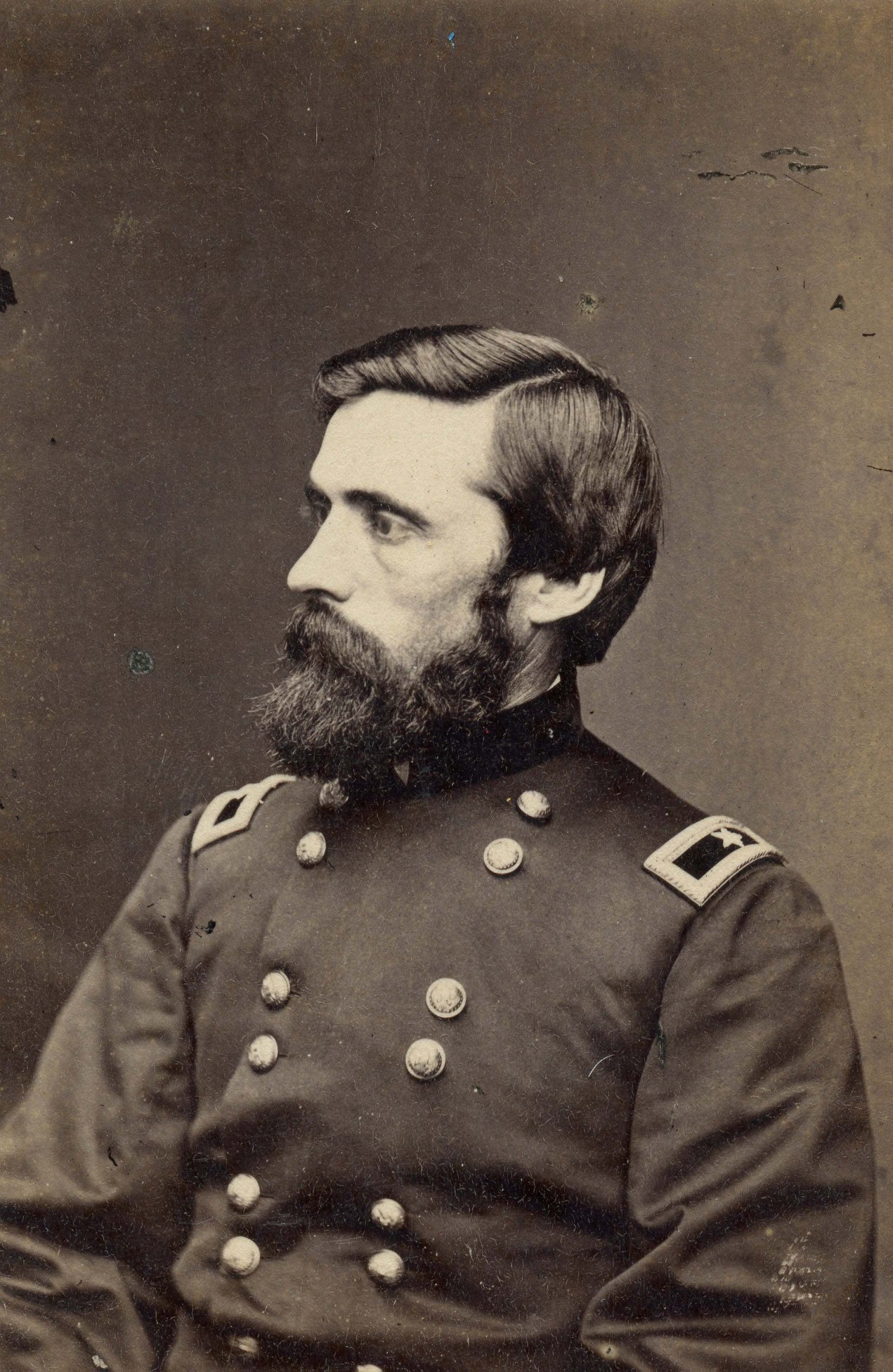
Their kinship, at times, could provide an amusing reprieve from the pressing stresses of war bearing down on them. Such was the case when Rawlins’ prized horse met with a comical mishap. The bay horse had been a gift from Galena friends to commemorate Rawlins’ appointment to Grant’s staff in August 1861. Rawlins was known to be particularly fond of its lavishly long tail. One morning, Rawlins found the tail had been reduced to a two-inch stub. At the sight of it, the excitable Rawlins raged and declared that should he ever find the enemy who did it, he would shoot him.
An amused Grant, through fits of laughter, explained that the “enemy” was likely not human, but an army mule that had munched the tail off. “Well, general,” Rawlins replied with exasperation, “I hope that some night a mule will eat off the tail of your old yellow horse—and then see how you’ll like it.” For months, Grant remained amused by the horse’s shortened tail, spontaneously laughing at the sight of it when he found himself riding behind Rawlins.
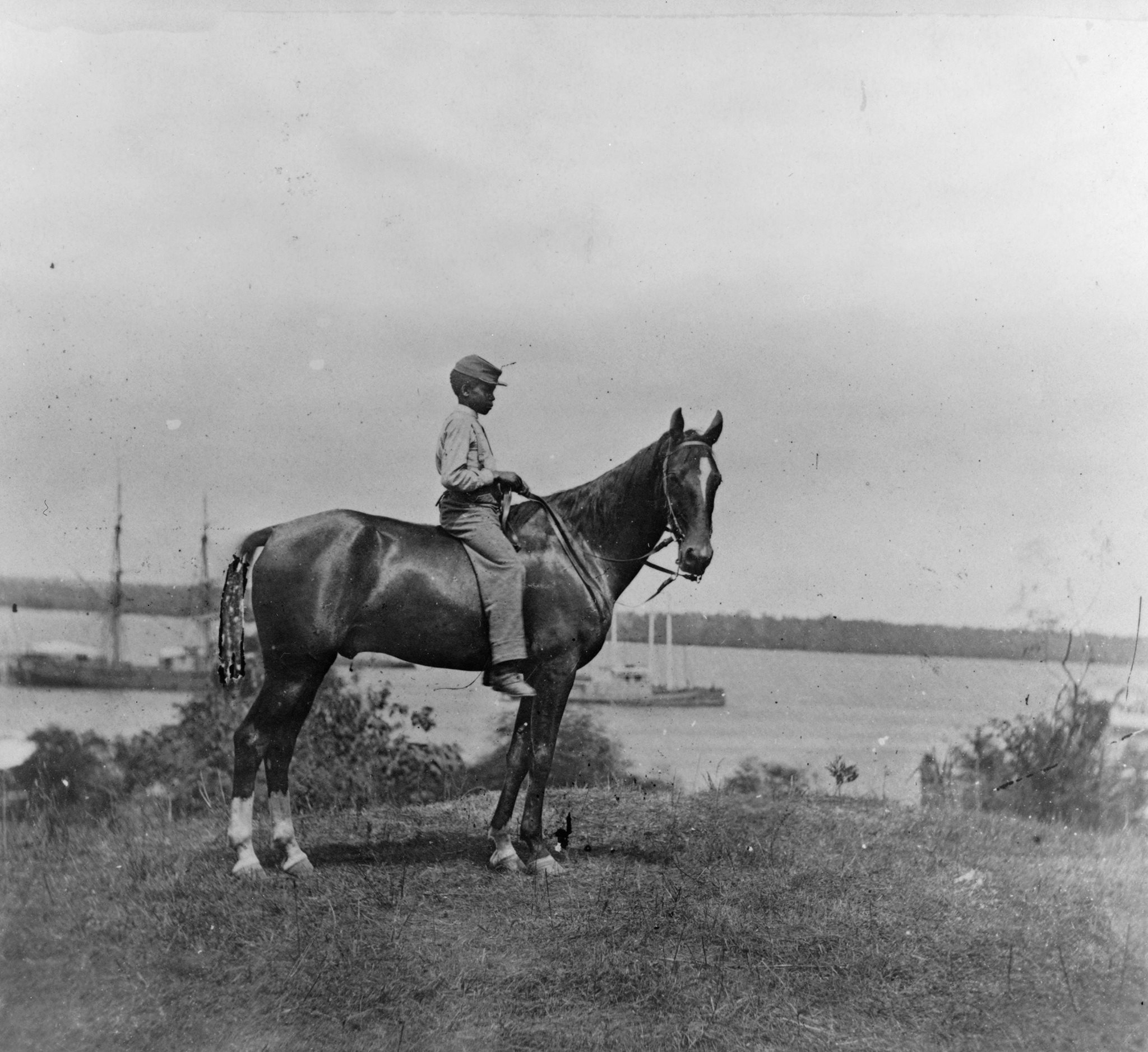
This photograph at the Library of Congress shows an African American boy on John Rawlins’ horse, most likely at City Point in 1864. The tail looks suspiciously touched up or drawn on.
Source:
Ottens, Allen J. General John A. Rawlins: No Ordinary Man. Indiana University Press. 2021. 194-195


The tale (no pun intended) of a mule eating the tail of a horse is assured to elicit a smile, and even a chuckle in this readers case.
Melissa Winn, Thank-you for introducing this important Civil War personality, one of the keys to understanding Ulysses S. Grant.
Major General John A. Rawlins eventually became Secretary of War in the administration of President Grant. But, arguably, Rawlin’s more important role was as President of the Society of the Army of the Tennessee, which organization nurtured the Legacy and memories of that great western army initiated by Major General U.S. Grant.
One of the most sought after artefacts of the Civil War is John Rawlin’s diary, due to the treasure trove of U.S. Grant contemplations and decisions it would contain, compiled by a man who knew Grant better than most. In meantime, some of Rawlin’s thoughts may be found in Reports of the Proceedings of the Army of the Tennessee, available at HathiTrust [especially see pages 8, 9, 23-59] https://babel.hathitrust.org/cgi/pt?id=mdp.39015070226132&seq=13
Mike, your comment about the missing Rawlins diary is intriguing. What is known about what happened to it (until the trail went cold)? We can always hope that something like that will turn up. I recall that a significant cache (dozens, I think) of Robert E. Lee’s letters to family suddenly turned up a few years ago.
Kevin, Thank you for your query. Several years ago I attempted to track down Rawlin’s diary, believing it was held by the United States Military Academy Library in their Special Collections. But contact with West Point revealed: “They do not have Rawlin’s diary. And they are not aware that General Rawlins ever kept a diary.” I was also unsuccessful with a search of “John A. Rawlins, 1831 – 1869: Correspondence” held by Library of Congress. Most recently I have contacted Mississippi State University: University Libraries knowing they hold “The Papers of Ulysses S. Grant” and being informed that they also hold “The John A. Rawlins Papers.” I will report back here with their response.
All the best
Mike Maxwell
Hi! To the best of my knowledge, General Rawlins did not keep a diary. I’m very familiar with the John Rawlins Papers at Mississippi and they do not hold a diary. Sure would have been great if did! There are lots of letters that still exist of his, however, including at the Library of Congress and the Chicago Historical Society. A treasure trove, really! They are very useful and insightful! Although, they are letters and likely a little more censored than a diary would have been.
While waiting for reply from Mississippi State University: University Libraries, I had a review of the Ulysses S. Grant Papers maintained by the Library of Congress. Because most people are interested in John Aaron Rawlins due his direct connection to General Grant, the following link to “Provenance of the Ulysses S. Grant Papers” is worth a read, not only for Rawlin’s input to those documents, but for introduction to terms such as “letterbook” [a bound volume of “Official Letterhead blanks” and blank pages that made use of carbon paper to record a copy of Letters, memos and Official Orders generated, maintaining a permanent copy of those records inside the letterbook.] Also, the impact of the near-loss of Grant’s HQ at Holly Springs late in 1862 on “the necessary destruction of some records” is explained; as is “the means of correcting mistakes in Grant’s Memoirs” and the creative link to Mrs. Grant’s published letters. See https://www.loc.gov/collections/ulysses-s-grant-papers/articles-and-essays/provenance-of-the-ulysses-s-grant-papers/
That is a great note about Rawlins, Melissa. He was the first major for the 45th Illinois Infantry, before Grant summoned him to be his chief of staff. Not quite 1/3 of the 45th Illinois came from Jo Daviess county, with many of the officers and some enlisted men knowing Grant before the war.
ECW Enthusiasts, I received response from Dr. Ryan P. Semmes, Professor and Director of Research for the Ulysses S. Grant Presidential Library:
Dear Mr. Maxwell,
I have received your email inquiries. I hope my answers to your questions will suffice.
The John A. Rawlins Papers have been available at the Ulysses S. Grant Presidential Library at Mississippi State University since they were acquired in the Fall of 2023
The materials in the John A. Rawlins Papers are not found in the published Papers of Ulysses S. Grant volumes. In order to view the Rawlins papers a researcher will have to request them on site at the Ulysses S. Grant Presidential Library here at Mississippi State University. Also, we have over 10,000 additional documents, letters, articles, and other materials relating to John A. Rawlins in our “Unpublished files”. These are duplications of materials from archives, libraries, museums, and private collections around the world. These can only be viewed on site.
I am not aware of any diary, journal, or day-book compiled by John Rawlins. It is possible that such an item may exist in the War Department records at the National Archives in Washington, DC.
I hope these answers were helpful. Please let me know if you have additional questions.
Sincerely,
Ryan P. Semmes