“The Noblest, Rarest Human Being”
As Booker T. Washington drafted his memoir, Up From Slavery, he recounted his remarkable story of a life well-lived. That journey had brought him into contact with many of the most prominent figures of the late 19th century, including William McKinley, Susan B. Anthony, Andrew Carnegie, Henry M. Stanley, and even Queen Victoria.
Among all of these acquaintances, however, one individual stuck out above them all in Washington’s mind. In Washington’s words, he was “the noblest, rarest human being that it has ever been my privilege to meet.”[1] These accolades were given to a man who has long since receded into the shadows of the past, but who nonetheless has a remarkable life story: Brevet Brig. Gen. Samuel Chapman Armstrong.
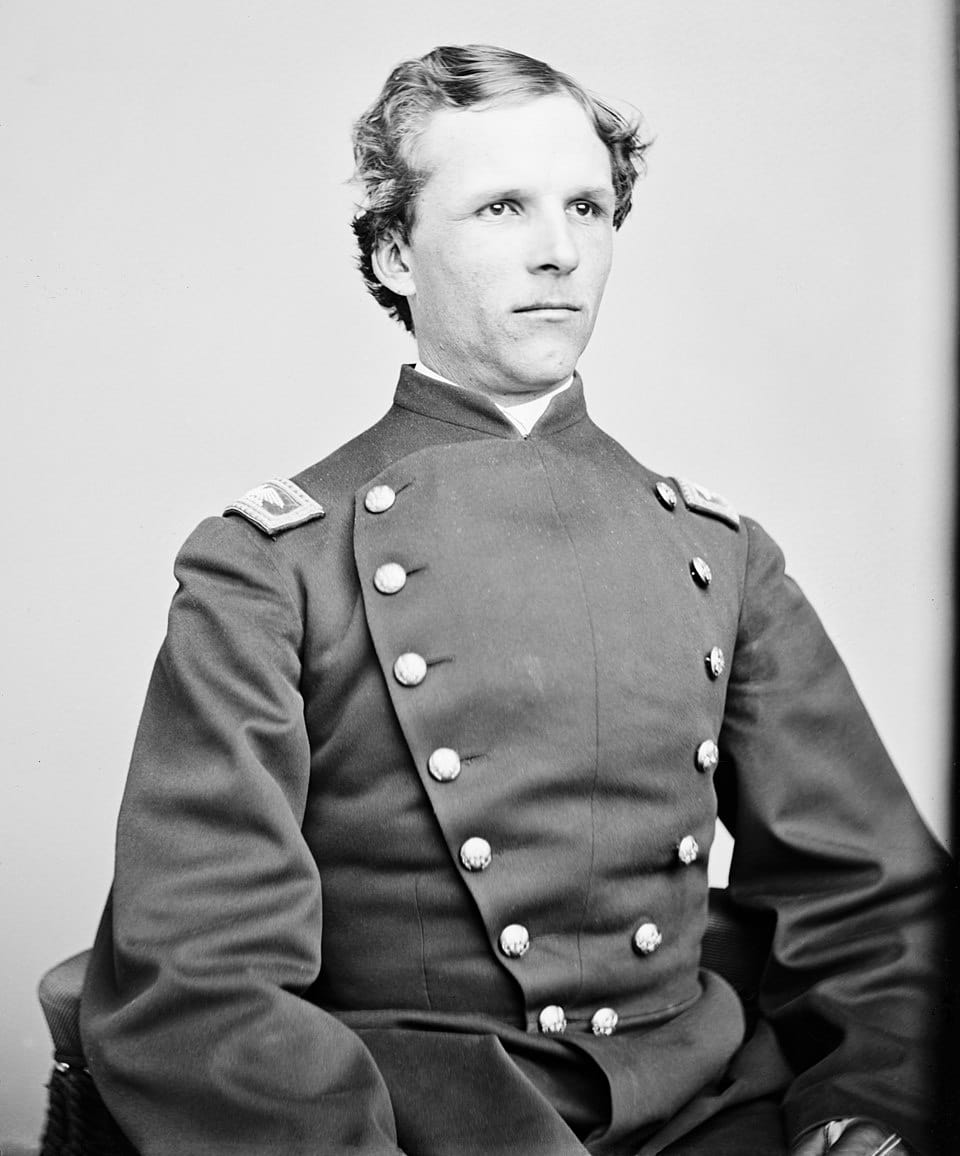
Even from the moment of his birth, Armstrong was unique from the other generals of the Civil War. He was born on January 30, 1839 on the island of Maui in the Hawaiian island chain. The son of missionaries, he spent his formative years on the Hawaiian isles and spent time with the royal family of the Kingdom of Hawaii. The death of his father to a horse-riding accident marked a turning point in Armstrong’s life. His father had long hoped for his son to attend Williams College in Massachusetts. The dutiful son did precisely that, landing in the United States and beginning his studies in 1860. This placed him in the country right as it prepared to tear itself apart in its most momentous conflict.[2]
When Armstrong graduated from Williams in 1862, he still had no particular investment or interest in the national crisis consuming the country. Viewing himself as a Sandwich Islander (or Hawaiian in more modern parlance), the appeals of Unionism had little draw for him, nor did he have particular concern with the plight of the slave. Ultimately, his enlistment in the 125th New York Infantry came more from the encouragement of his college friends, the allure of a proffered appointment as an officer, and a desire to “see the elephant” than any of the more grand ideals of the war.[3]
His military career began rather inauspiciously. Stationed with the 125th at Martinsburg, Pennsylvania in early September 1862, they arrived in the wake of the Union debacle at Second Manassas and the start of Lee’s Maryland campaign. The inexperienced Union troops were fearful that Lee and Jackson might descend upon them at any moment. Captain Armstrong later recalled, “At Martinsburg we considered ourselves as bagged … Jackson was supposed to be in the rear.” In one instance, a nervous Union guard nearly shot Armstrong when the latter was patrolling the men on duty.[4]
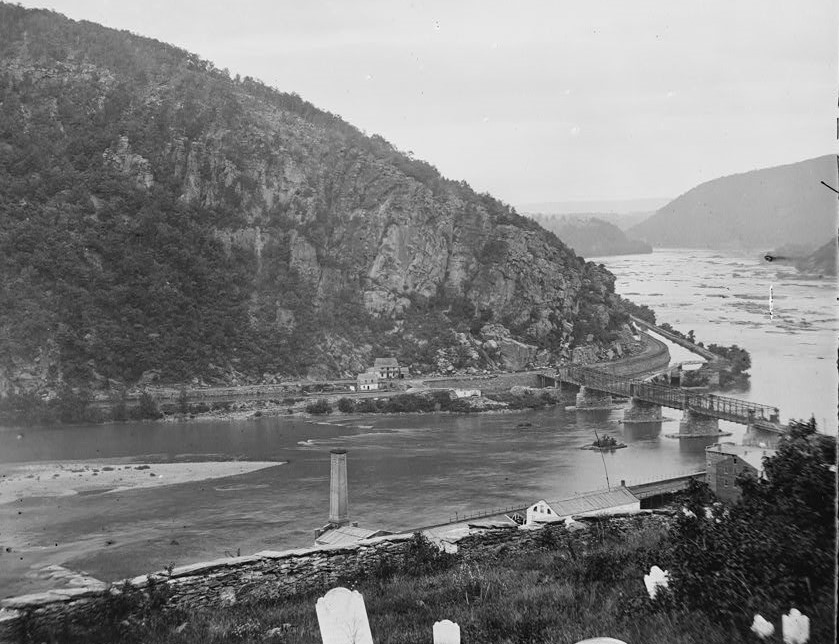
Their fear of capture by Jackson proved well-founded. Sent to reinforce the Union position at Harpers Ferry, they engaged in what their colonel George L. Willard described as “a speedy and somewhat disorderly retreat” when first put under enemy fire on September 14, 1862.[5] Although they eventually rallied, they were among the 12,000 Union soldiers surrendered the next day on September 15. Paroled with his men, Armstrong went with them to Camp Douglas in Chicago to await exchange. This came on November 22, 1862, after which they returned to the Eastern Theater.[6] Arriving in Washington D.C. on November 25, 1862, they were held in reserve and consequently missed the Union slaughter at Fredericksburg and disaster at Chancellorsville.
As the year turned from 1862 to 1863 and the Emancipation Proclamation went into effect, Armstrong spent his time away from the front-lines to re-evaluate his position on race and slavery. On December 24, 1862, he wrote, “the first day of January is at hand — possibly the greatest day in American history — when the sons of Africa shall be free. To wait until that day I am content, and then I shall know for what I am contending — for freedom and for the oppressed.” He had come to view abolition as worth fighting for, his own personal cause in the struggle. Nevertheless, he still viewed African-Americans as inferior, writing in another letter, “I am a sort of abolitionist, but I haven’t learned to love the Negro.”[7]
As June 1863 began, Lee once more invaded the North, and the 125th New York Infantry once more joined the fight to defeat him. Attached to the II Corps of the Army of the Potomac, their brigade came to be commanded by their colonel George L. Willard. Arriving at Gettysburg on the night of July 1, they joined the action on July 2. Fighting on the south of Cemetery Ridge, the 125th took part in some of the fiercest fighting of the day. Willard’s brigade managed to repulse an assault by William Barksdale’s Mississippi brigade in a struggle that left both commanders slain. Armstrong recalled in a letter after the battle, “Men fell dead all around me. … In the charge after the rebs I was pleasantly, though perhaps dangerously, situated. I did not allow a man to get ahead of me.[8]
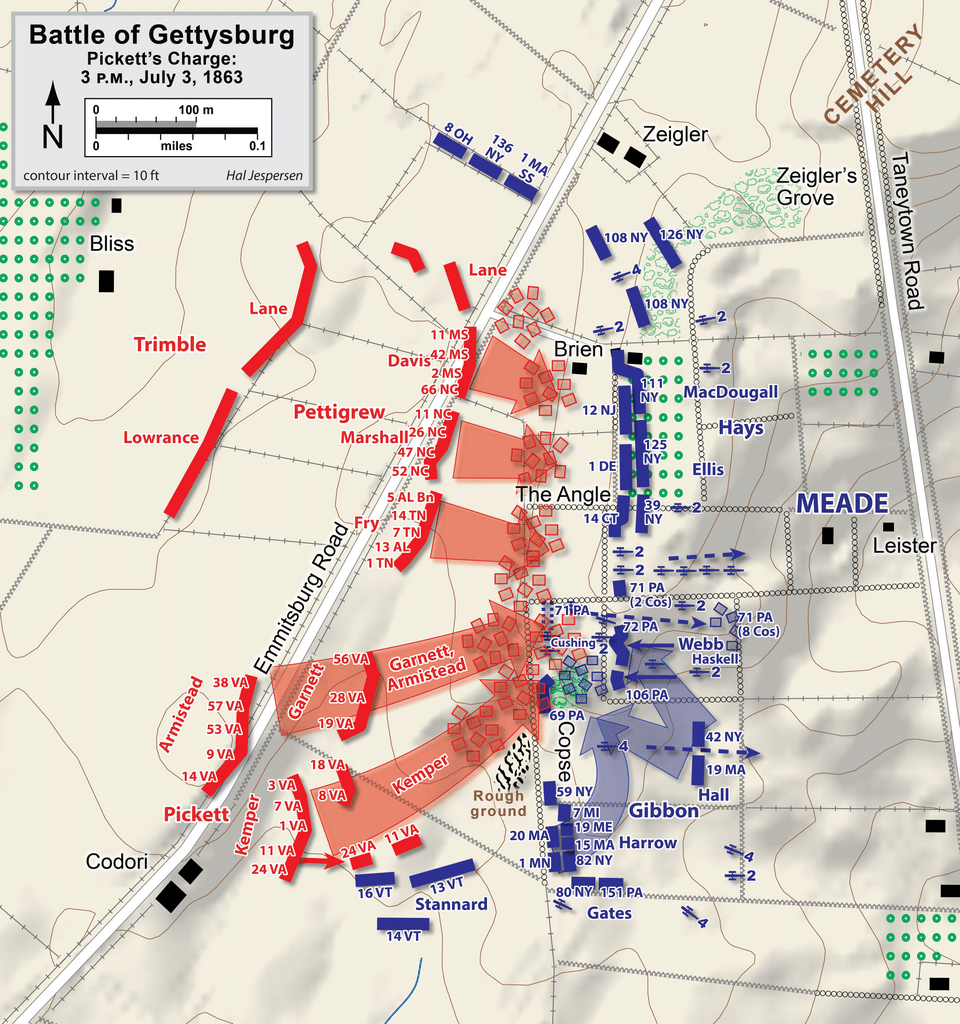
July 3rd marked a further test of his skill and resolve, as he found himself at the heart of the Pickett-Pettigrew-Trimble charge. That morning, the captain had been assigned command of the brigade’s pickets. He led them in skirmishing with the Confederates until noon.[9] The Confederate artillery bombardment, the largest of the war, began battering the Union center by 1 p.m., followed the onset of their charge around 2 p.m.. Armstrong recalled, “Finally the rebels came out of the woods in three long lines … with glittering bayonets and battle-flags flying. It was grand to see those masses coming up, and I trembled for our cause.”[10]
Although most of the 125th New York was with the Union line at the Angle that bore the brunt of the Confederate attack, Armstrong was still with his skirmisher detachment further north on the Emmitsburg Road alongside the 8th Ohio Infantry. As the Confederate line closed in on the Union defenses, their left flank became open to this detachment of Union forces. Seizing the moment, Armstrong rallied his skirmishers to join the 8th Ohio in attacking the left of the Confederates. Although this placed them under fire from both the Union and Confederate lines, Armstrong’s attack managed to hold together and crashed into the rebel flank. Adding yet more pressure to the doomed Confederate advance, the rebels were soon in disorderly retreat. As one of his 125th comrades noted after the war, “Distinct record should go into [the] general history of Captain Armstrong’s brave and skillful part at that important point of the battle.”[11]
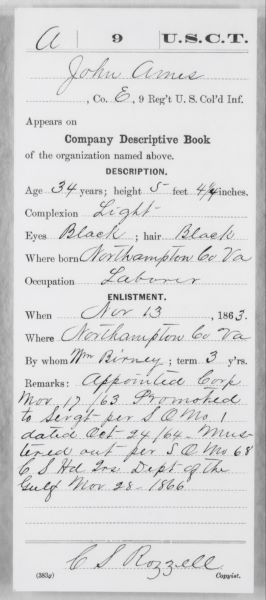
Armstrong’s superiors agreed, promoting him to major of the 125th on August 26, 1863, to rank from his distinguished service on July 3.[12] Dispatched on a recruiting mission in New York, the pull of ambition again played upon him. He determined that the best way to advance in rank was taking a role in the newly forming United States Colored Troops regiments. Still holding to his earlier racial views, he declared in a letter to a friend, “Here’s to the heathen! Rather, here’s to the Negro! I say Negro or anything to get out of this.”[13] Although he hoped for a colonelcy, he eventually settled for the rank of lieutenant colonel of the 9th United States Colored Infantry.
With it, the first signs of a transformation began appearing. He wrote to his mother after receiving the command, “I tell you the present is the grandest time the world ever saw. The African race is before the world, unexpectedly to all, and all mankind are looking to see whether the African will show himself equal to the opportunity before him. And what is this opportunity? It is to demonstrate to the world that he is a man, that he has the highest elements of manhood, courage, perseverance, and honor.” Although still viewing African-Americans as having to “earn” equality, that he viewed equality as a possibility at all marked a dramatic shift in his outlook.[14]
As Armstrong spent more time with his USCT regiment, his estimation of their race continued to grow. Recalling after the war how his views had shifted, he wrote, “I did not then realize how wise it was to put the black man into uniform and use him as a United States soldier … The Negro rallied grandly to the duty required. There was, as there has been ever since, more in him than we expected to find and more than his old masters ever dreamed of.”[15]
Craving a return to action, news of the 9th’s transfer from their light duty in South Carolina to the Army of the James and the Petersburg campaign elated Armstrong. Arriving in early August, the 9th soon joined the fray. Concerning their conduct at the second battle of Deep Bottom, Armstrong proudly boasted, “My men fell fast, but never flinched. They fired coolly and won great praise.”[16] His opinion of them as both soldiers and men grew continually as the campaign progressed.
An interesting encounter highlighted the lieutenant colonel’s transformation from the beginning of the war. A truce had been called after the second battle of Deep Bottom to allow for the collection of the fallen. During a lull in this labor, Armstrong conversed with Brig. Gen. Martin W. Gary of the Confederacy, a firm defender of slavery. Eventually the topic turned to why they were fighting. As could be expected, Gary stated his cause to be the independence of the Confederacy and preservation of slavery. Armstrong’s response proved more surprising. He declared, as recounted in a letter several days later, “The Union is to me little or nothing. I see no great principle necessarily involved in it. I see only the 4,000,000 slaves, and for and with them I fight.”[17] His journey from adventurer to abolitionist was complete.
The war continued for several more months. During that time, Armstrong continued to lead USCT troops on the Petersburg line. In late September he had to be hospitalized for fatigue due to his habit of working both day and night to improve his defenses. Consequently, his beloved 9th assaulted Fort Gilmer on September 9 without him, but he once more had praise for them from his sick bed: “No men were ever braver.”[18] Once he recovered, he finally gained the colonel’s commission he had so long desired, albeit over the 8th United States Colored Infantry. With this regiment, he witnessed the fall of Richmond, where his men were among the first to march through the rebel capital, and the surrender of Appomattox.[19]
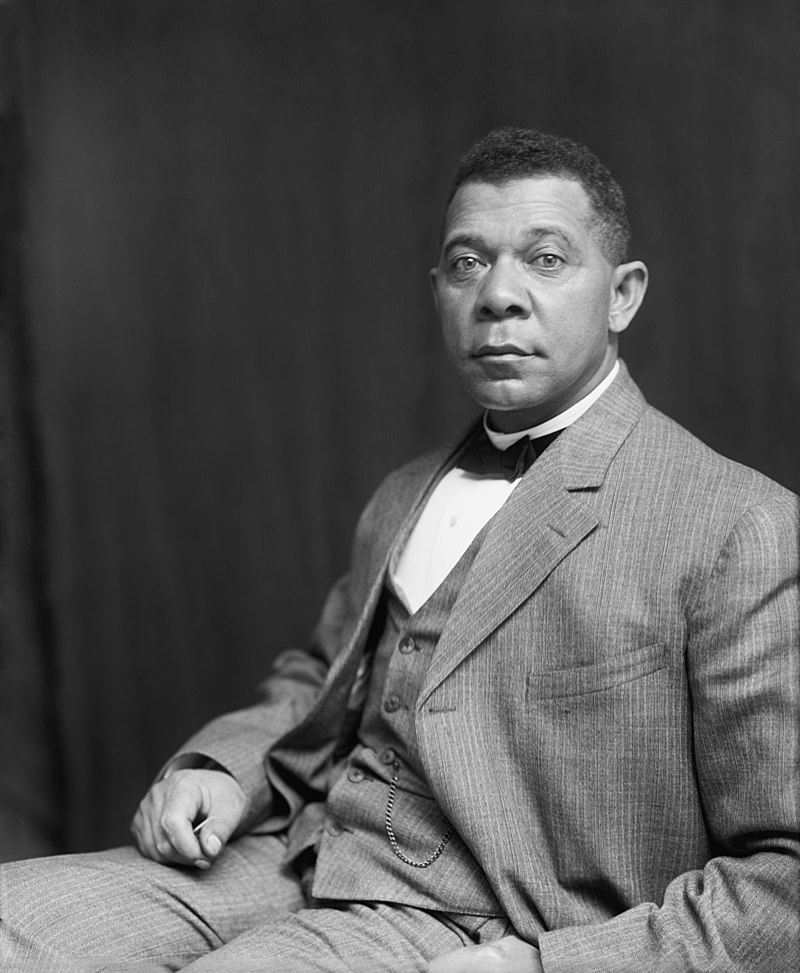
As the war drew to a close, so did the military career of Samuel Chapman Armstrong. He received a brevet promotion to brigadier general and accompanied his men to Texas as part of the pressure campaign against Emperor Maximilian in Mexico. His future, however, was out of the army.[20] Given his new found desire to advance the rights of African-Americans, joining the Freedmen’s Bureau was a natural next step. As part of their education initiative, he founded Hampton University in Virginia.[21] At that academy, he met an eager, bright young student named Booker T. Washington, whom he helped along his path of greatness. Although Armstrong had come to the United States simply hoping to fulfill the dreams of one man, by his actions he helped to fulfill the dreams of many, many more.
Endnotes:
[1] Booker T. Washington, Up From Slavery: An Autobiography (New York: Doubleday, Page & Co, 1901), 54.
[2] Edith Armstrong Talbot, Samuel Chapman Armstrong: A Biographical Study (New York: Doubleday, Page & Co, 1904), 3-36.
[3] Talbot, Samuel Chapman Armstrong, 63.
[4] Ibid, 68-69.
[5] U.S. War Department, The War of the Rebellion: A Compilation of the Official Records of the Union and Confederate Armies, Series 1, 53 vols. (Washington D.C.: Government Printing Office, 1887), Series 1, vol. 19, part 1, 540
[6] Talbot, Samuel Chapman Armstrong, 75-80.
[7] Ibid, 84, 86.
[8] Ibid, 91.
[9] Ezra de Freest Simons, A Regimental History: The One Hundred and Twenty-fifth New York State Volunteers (New York, 1888), 136.
[10] Talbot, Samuel Chapman Armstrong, 92.
[11] Talbot, Samuel Chapman Armstrong, 92-93.; Simons, A Regimental History, 137-138.
[12] New York State Adjutant General, Annual Report of The Adjutant General of the State of New York Transmitted to the Legislature January 31, 1868, (Albany: Charles Van Benthuysen & Sons, 1868).
[13] Talbot, Samuel Chapman Armstrong, 98.
[14] Ibid, 101.
[15] Ibid, 108.
[16] Ibid, 113.
[17] Ibid, 117.
[18] Ibid, 118.
[19] Ibid, 120.
[20] Ibid, 121-126.
[21] Ibid, 133, 154.


