Strength, Sweat, and Reputation: Wrestling as a Civil War Pastime
The Civil War as a catalyst for the spread and popularity of baseball as an American national pastime is well examined. Soldiers in camp played a key role in both the popularization of the game throughout the country and early standardization of its rules.
Our fascination with the linkage between baseball and the Civil War is not difficult to deduce. It’s a function of its enduring popularity and place within the mythos of American popular culture. But it is easy to overrate the centrality of baseball to the soldier’s experience. Captain Asa Bartlett of the 12th New Hampshire, recalling in 1897 his experiences during the conflict, noted that while baseball games were played, noted that “this game was not then, as now, the craze of the day.” Rather, other athletics predominated, including jumping, pitching quoits, and perhaps most exuberantly, wrestling.[1]
Athletic pursuits were an important part of the soldier’s experience during the Civil War. They broke the monotony of camp life, boosted morale, and offered an outlet for physical exertion. They also provided young men – with ready access to firearms, alcohol and other hazards – with a disciplined and structured outlet for their competitiveness and frustration.
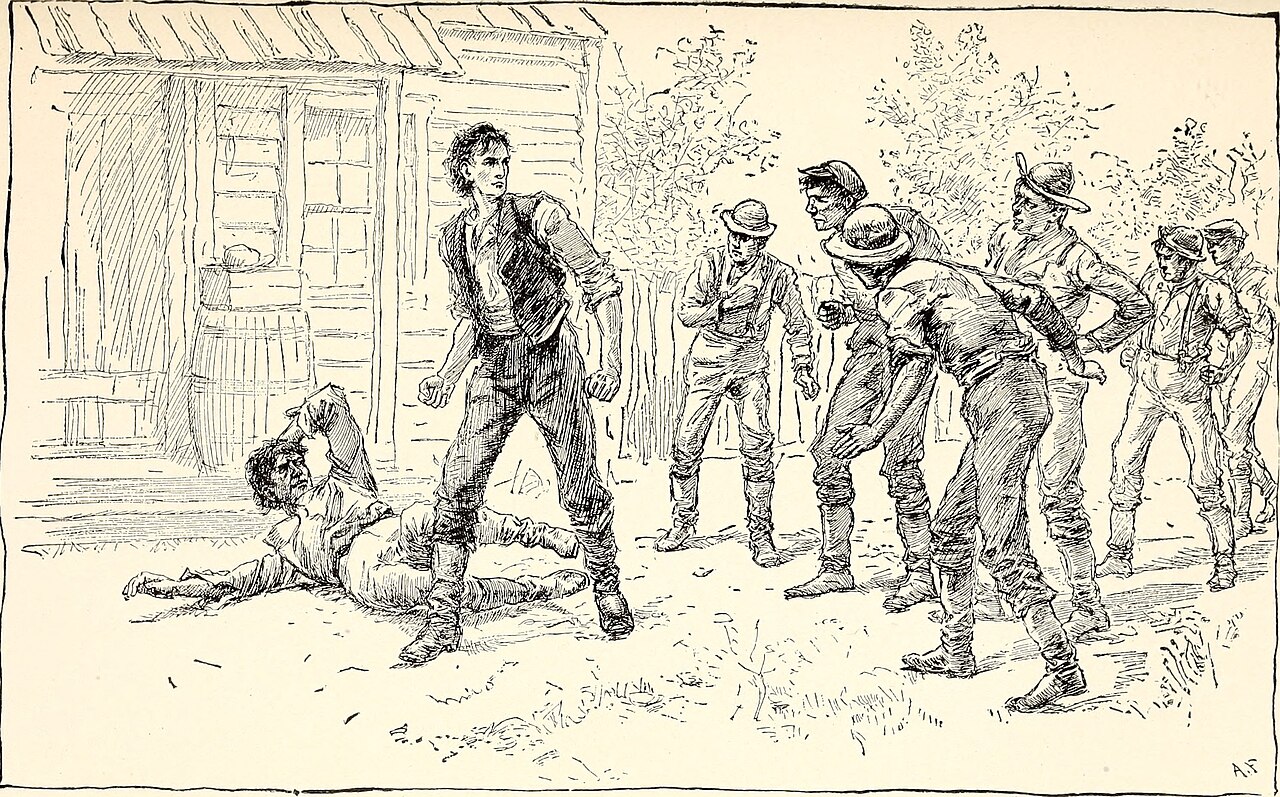
Wrestling enjoyed a deep familiarity for young men in antebellum America.[2] It was commonplace in cities and frontier communities alike, present on market days, elections or other gatherings. President Abraham Lincoln was an experienced, if not always enthusiastic, wrestler in his young adulthood. Matches from his time in New Salem became part of the young railsplitter’s popular lore.[3] The rules of wrestling, as they were generally understood at the time, differed from modern disciplines. In simple terms, competitors grappled in a “collar and elbow hold” and tried to throw their opponent onto their back to win the fall. By mutual agreement, competitors were restricted from any number of illegal maneuvers or holds.
Contemporary letters, memoirs and newspaper accounts describe competitive wrestling, both formal and informal, as a natural part of camp life. Joseph Baer of the 39th Illinois, writing to his wife in July 1862, describes being distracted in his writing by fellow soldiers wrestling outside his tent.[4] “Along that smooth, hard road,” next to his regiment’s campground, Capt. Joseph McNamara of the 9th Massachusetts recalled that “many a wrestling match had been consummated.”[5]
Wrestling provided relief from camp routine and a competitive outlet for young men far from home. A hard-earned reputation as a regimental “champion” was a point of great pride. Captain Bartlett described one member of the 12th New Hampshire as an especially great wrestler, being a “drummer, and could handle his feet about as quick as his drumsticks; and this nimbleness of foot, with corresponding quickness of strength and elasticity of body,” established him as the regiment’s premier wrestler. “Though his championship was often contested, it was never yielded,” noted Bartlett, “who has often seen him prove his rightful claim to it.”[6]
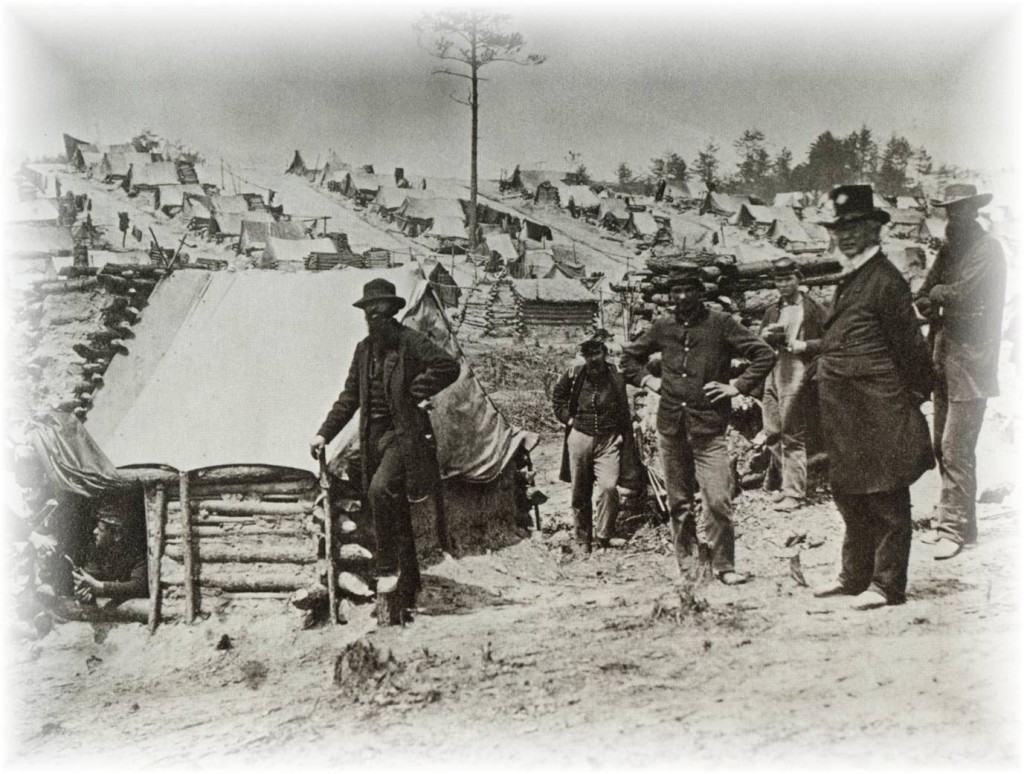
Such reputations fondly persisted into veterans’ postwar reminiscences. Writing in the National Tribune in the early years of the 20th century, Joseph A. Roe of the 3rd West Virginia Cavalry sought to correspond with some of the men he had bested in wrestling matches during the winter of 1861-62, describing himself as “one of the West Virginia boys they failed to down.” He was particularly interested in reconnecting with a Capt. Heal[e]y of the 9th Indiana, whom he described as giving him the hardest wrestle he had since he was 18 years old.”[7]
(Stafford County, PA Museum)
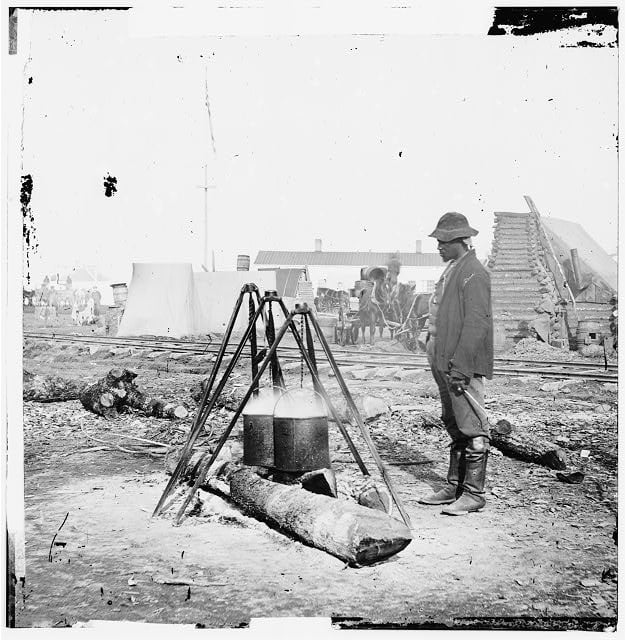
That Roe, an enlisted man, wrestled against Healey, who was both an officer and a company commander, provides an interesting demonstration of how the competitive desire to “prove oneself” overcame barriers of rank and class. In some instances, it superseded racial barriers as well. E.M. Watson, a veteran of the 9th Michigan Cavalry, recounted an incident when a man from his regiment challenged an African-American freedman employed as their company cook. The man earned the reputation as the best wrestler among the African-American cooks and teamsters, and the white soldier aimed to challenge him.
The cook initially refused, noting that “he didn’t like to wrestle with a white man, because, if he threw him, he would get mad and pound him.” With understandable clarity of perception, the cook knew the delicate racial dynamics at play when white and black competitors squared off in a test of strength and manhood. He was only persuaded when the men of the company assured him they would protect him, and the hulking opponent “declared that he would harbor no malice.” Despite a significant size difference between the two wrestlers, “the cook scored a rapid and dramatic victory, helping up his vanquished opponent to great cheers of the crowd as the opponent exited without fanfare – and returned to cooking breakfast.”[8]
Competitive wrestling matches were a regular feature of organized regimental celebrations. These were commonly organized to coincide with holidays and other dates of significance. The regimental historian of the 27th Massachusetts noted that the regimental celebration of Thanksgiving in November 1861 – then a state, rather than national holiday – was marked by a miniature feast and “closed with wrestling matches.”[9] Christmas Day festivities for the 21st Connecticut in 1864 included well-enjoyed wrestling matches, despite the expected dinner failing to arrive.[10]
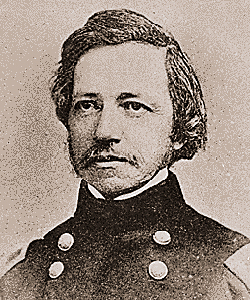
Commanders sometimes organized and sponsored these athletic contests. A 6th Maine correspondent described for the homefront a day of games convened by Brig. Gen. Winfield S. Hancock to celebrate New Year’s Day in 1862. A prize fund was raised from among the officers. Two men from each regiment were entered into the wrestling competition, with a grand prize of $10, nearly a month’s wages for a private soldier. The ultimate winner, William Powers of the 43rd New York, was chastised by the writer for his lack of “scientific wrestling,” while acknowledging that Powers, “floored them, and that seemed sufficient in the eyes of the judges.”[11] Whatever the result, wrestling and other athletic competitions helped provide stimulating diversions while enhancing unit cohesion and physical fitness, all salient considerations for commanders molding civilian volunteers into an army.
Senior officers were noted as spectators at these wrestling competitions. In addition to Brig. Gen. Hancock, attendees at the New Year’s Day games described above included two division commanders, Brig. Gen. William F. Smith and Brig. Gen. George McCall, as well as several brigade commanders. A celebration organized by the 1st United States Sharpshooters in April 1863 included a wrestling competition won by Vermonter Jacob Bailey, “against all comers,” to which both the division commander Brig. Gen. Amiel Whipple and a party of accompanying ladies were, “interested spectators.”[12]
Wrestling did not solely occur in camp and during times of relative calm. Contemporary accounts include some incidents very near to the front, particularly when the armies were in fortifications or siege lines. In the Petersburg trenches, there were incidents in which the pickets of the respective armies, “indulged in wrestling,” for the “edification of the rebel pickets,” who “in turn gave us an exhibition of their proficiency and skill in the same sports which we greatly enjoyed.” These were organized activities, rather than spontaneous occurrences, with both sides participating: “One of our men served as referee for their games, and one of theirs for our,” in some instances with “a fierce artillery duel…in progress between the opposing batteries on the main line.”[13]
These frontline contests could be uncomfortably hazardous. Sergeant Charles A. Hobbs of the 99th Illinois described an incident during the Siege of Vicksburg when his brigade was posted opposite the Railroad Redoubt, where a lively exchange of fire was common. While there, he witnessed a “regular wrestling match,” between two members of the neighbouring 8th Indiana, “right in sight of the rebels that dared to look over.” Hobbs was aghast and “expected every minute to hear a rebel volley and see one or both fall,” but “they had their fun and nobody interfered.” Recalling it as a friendly encounter – “their laughter came to my ears,” Hobbs noted that “it does show how the boys in blue were but boys in fact!”[14]
Very rarely, wrestling could turn tragic. The National Tribune described one unusual circumstance that led to a precedent-setting pension decision in 1889. Alexander McNeil, a private in the 119th Illinois, died of injuries incurred “when in a friendly wrestling match in camp with a comrade,” with severe injuries described as “purely accidental.” When his widow, Mary, applied for a widow’s pension after the war, her application was originally rejected “on the ground that the soldier incurred his injuries, which are alleged to have resulted in his death, when not in the line of his military duty.” A final decision by the commissioner of pensions reversed this decision, observing that McNeil “was at the time in camp, where his duty required him to be, and, in indulging in a harmless and innocent athletic sport, of a friendly character” and not in violation of any rules or regulations. Furthermore, “the Government placed both the soldier and his comrade with whom he was wrestling in the position where it was both natural and proper for them to indulge in such athletic sports and exercise, with the consent of their commanding officers.” Mary McNeil was granted her pension.[15]
Curiously, Confederate sources are comparatively silent on wrestling as a campground pursuit. There is no objective reason why this would be the case, and evidence like the Petersburg anecdote indicates that Southern soldiers were equally familiar with it and its conventional rules. That was true of their commanders as well. An anecdote later credited to John Laws, who was purportedly a childhood teacher to Nathan Bedford Forrest, suggested that his young ward “thought more of wrestling than his books; he was an athlete.”[16]
Whether driven by youthful exuberance, calculated competition or idleness, grappling remained a preferred test of strength and fortitude throughout the war. As such, the soldiers in blue and gray were not so different from those who had fought and marched across battlefields for many thousands of years prior, or since.
Endnotes:
[1] Asa W. Bartlett. History of the Twelfth New Hampshire Volunteers. (Concord, NH: Ira C. Evans,
1897), 356.
[2] R. Carlyle Buley. The Old Northwest: Pioneer Period, 1815-1840, Volume I. (Bloomington, IN: Indiana University Press, 1950), 316.
[3] Michael Burlingame. Abraham Lincoln: A Life, Volume One. (Baltimore: Johns Hopkins
University Press, 2008), 62.
[4] Joseph Baer Civil War Letters, May to December 1862, Accession #10689-a, Special
Collections Dept., University of Virginia Library, Charlottesville, Va.
[5] Charles M.H. MacNamara, “Story of 1000 Irishmen,” National Tribune, September 19, 1901.
[6] Bartlett, 356-357.
[7] “Information Asked,” National Tribune, December 21, 1905.
[8] E.M. Watson, “A Wrestling Match,” National Tribune, January 31, 1889.
[9] William P. Derby. Bearing Arms in the Twenty-Seventh Massachusetts Regiment of Volunteer Infantry During the Civil War, 1861-1865. (Boston: Wright & Potter Co., 1883), 83.
[10] William S. Hubbell. The story of the Twenty-first Regiment, Connecticut Volunteer Infantry,
during the Civil War, 1861-1865. (Middletown, CT: Stewart Printing Co., 1900), 361.
[11] Boston Journal, January 1862.
[12] William Young Warren Ripley. Vermont Riflemen in the War for the Union, 1861 to 1865: A
History of Company F, First United States Sharp Shooters (Rutland, VT: Tuttle & Co, 1883), 83.
[13] William P. Hopkins. The Seventh Regiment Rhode Island Volunteers in the Civil War,
1862-1865. (Providence, RI: Snow & Farnham, 1903), 281-282.
[14] Charles A. Hobbs, “Vanquishing Vicksburg,” National Tribune, April 7, 1892.
[15] “Pensions,” National Tribune, May 16, 1889.
[16] “General Forrest’s School-Teacher,” Confederate Veteran, VII, No. 4 (April 1900), 173.


