Young Marshall Moody and William Plummer Benton: Buried Together, Whether They Like It or Not
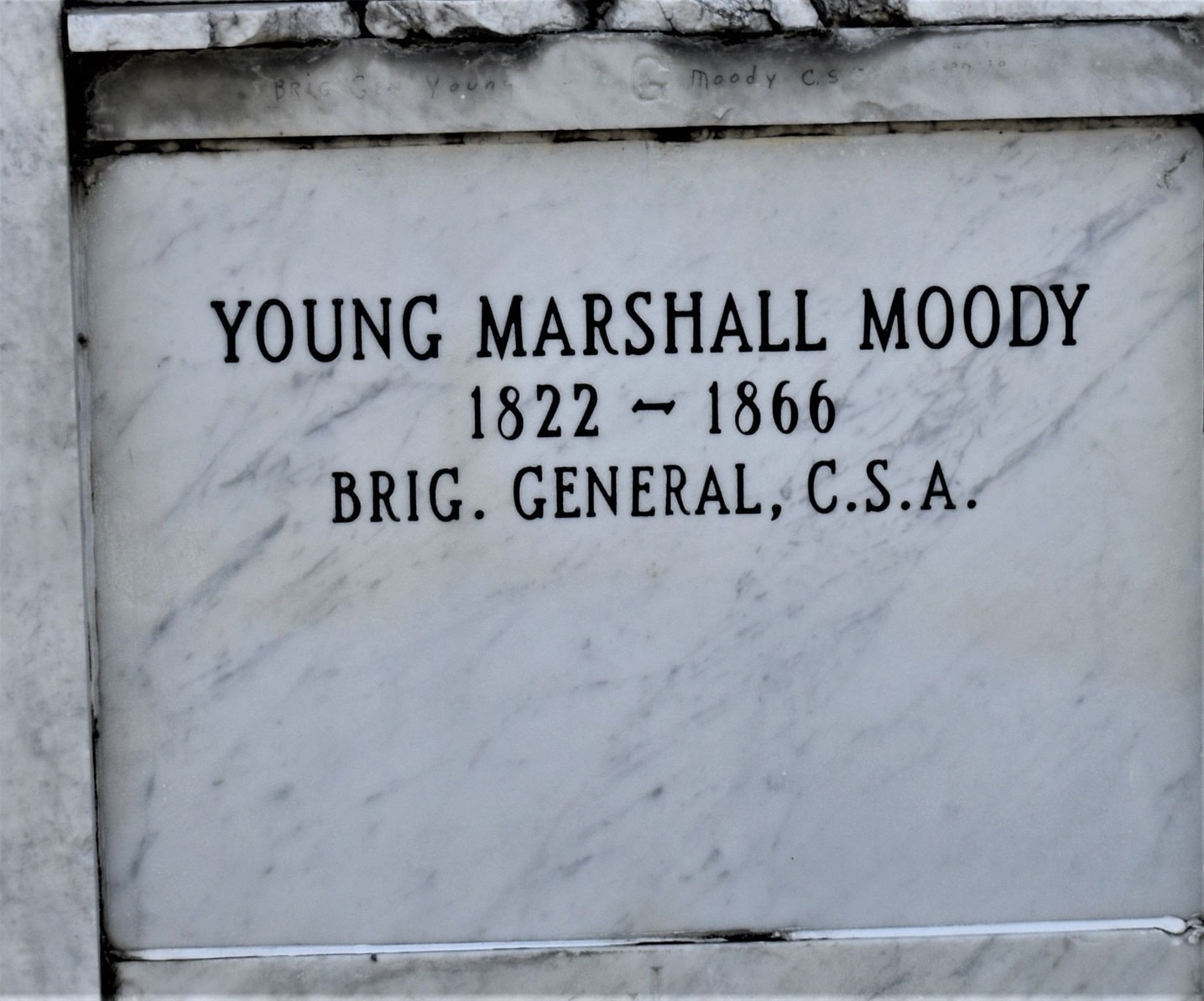
Young Marshall Moody and William Plummer Benton both made the rank of brigadier general, but neither man is well known even to Civil War historians and buffs. They fought on different sides, Moody for the Confederacy and Benton for the Union. They never faced each other in battle and likely knew little or nothing of each other. However, both rest in a wall vault in Greenwood Cemetery in New Orleans. Adding to the unusualness, both died of yellow fever, but neither perished during an epidemic. Neither man had a strong connection to New Orleans, and yet that is where they are entombed.
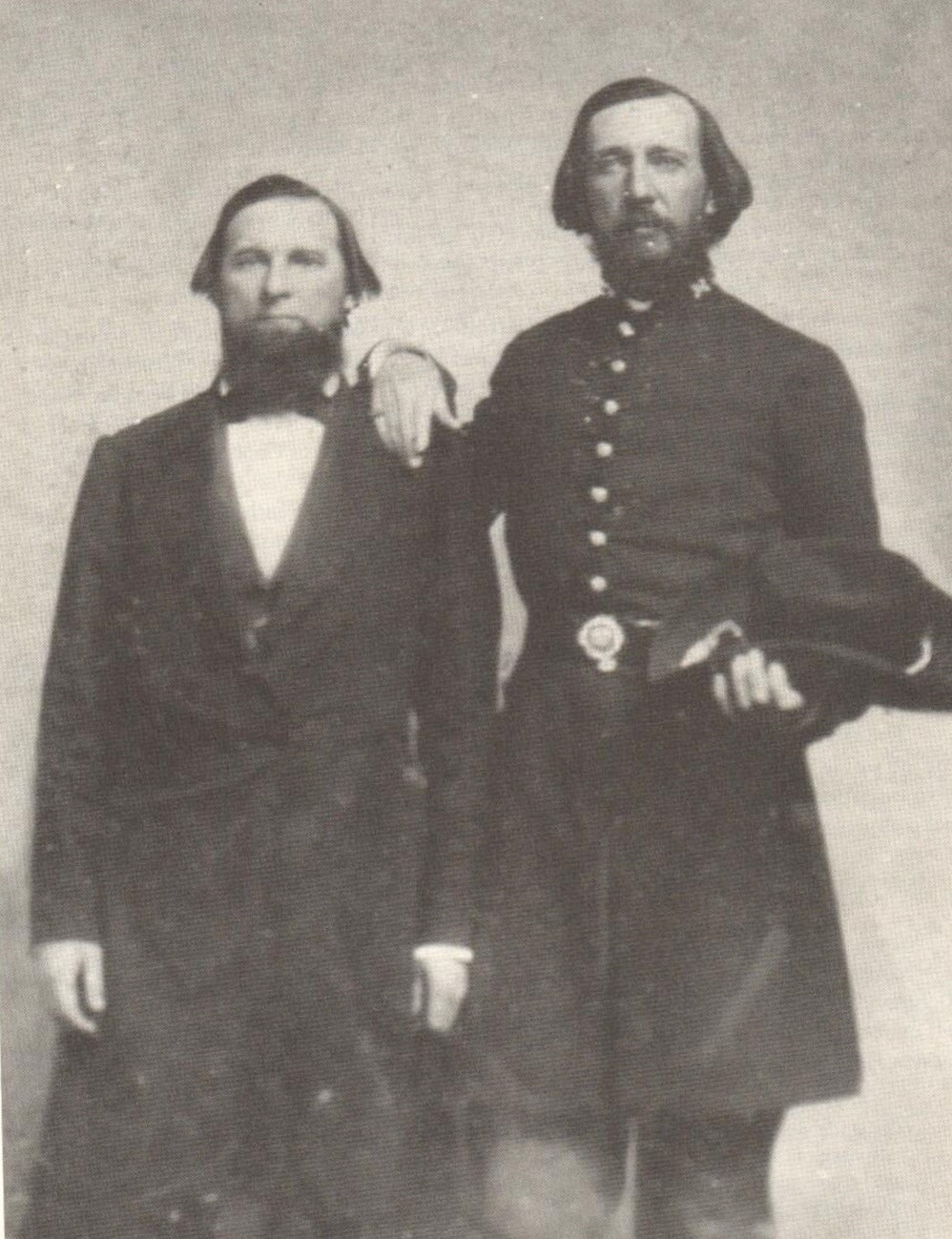
Moody was born in Virginia and became an Alabama teacher, merchant, and court clerk. He served in the 11th Alabama with Archibald Gracie III, and the pair went to Alabama to raise the 43rd Alabama in 1862 in Mobile. Moody took command of the 43rd Alabama after Perryville and led the regiment at Chickamauga and Knoxville, then in Virginia, being wounded at Drewry’s Bluff. Gracie was killed on December 2, 1864, in the trenches at Petersburg. Moody took command of Gracie’s brigade. He was among the last men to make general, doing so on March 2 or 4, 1865. He was too ill to fight at Gravelly Run but surrendered at Appomattox.
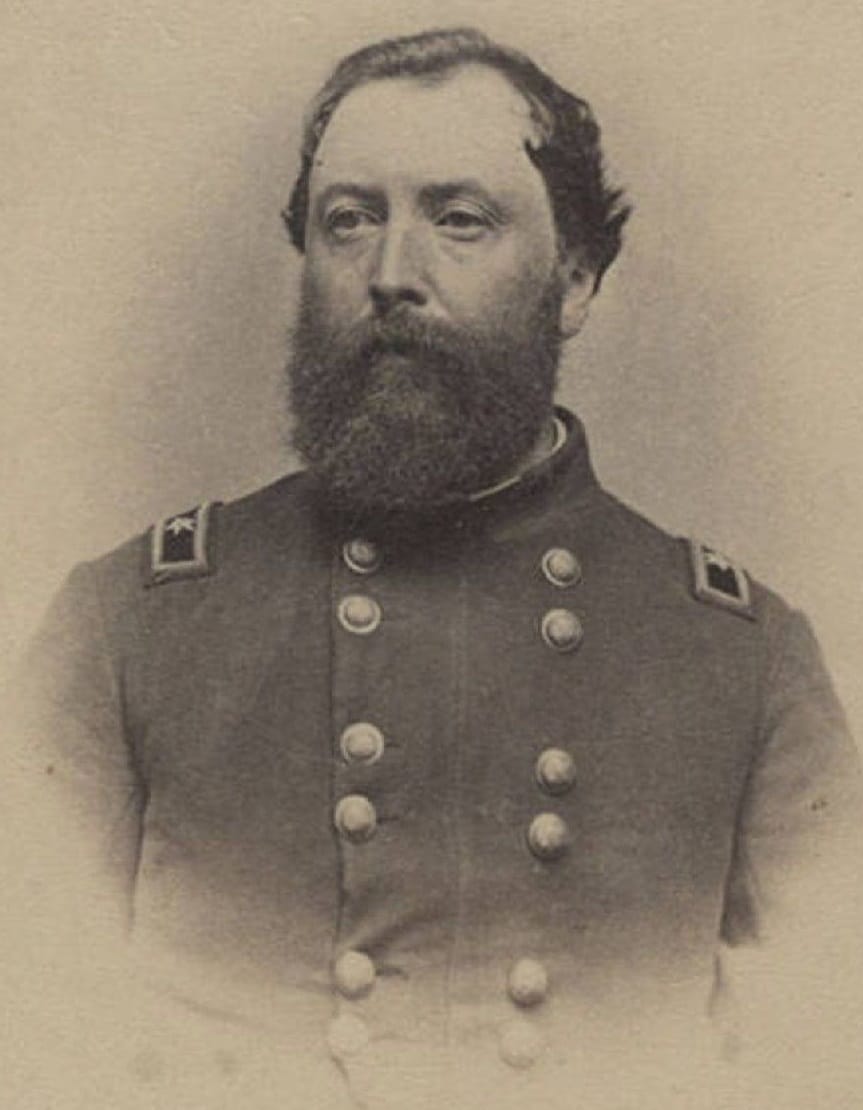
Benton was born in Maryland but raised in Indiana. He fought in Mexico and then became a lawyer and judge in Wayne County, Indiana. Benton would see service in four theaters. first with the 8th Indiana in West Virginia in 1861, then in Arkansas in 1862 before being attached to XIII Corps. Benton fought in nearly all the major battles of the Vicksburg campaign: Port Gibson, Jackson, Champion Hill, Big Black River, and the second assault on Vicksburg. The rest of his career was spent on the Gulf Coast, leading a division at Mobile and assaulting Fort Blakeley. He led troops in one of the war’s last skirmishes on April 13 at Whistler Station on the Mobile & Ohio Railroad at the Eight Mile Creek in Alabama. Perhaps the oddest moment in Benton’s career was marrying Emma Adolphin Lenhart after a ten-day courtship in 1862. This drew a lot of comment, one soldier saying it was the only brave thing Benton ever did.
Both Moody and Benton would find themselves in New Orleans for financial reasons. Moody visited in June 1866 on business and died of yellow fever on September 18, 1866, one of 192 victims that year, an uptick from the war years, but hardly an epidemic on the scale of 1853. Six days before, he wrote to his wife. His papers are held by Rice University. Benton was appointed the collector of internal revenue, but died of yellow fever on March 14, 1867.
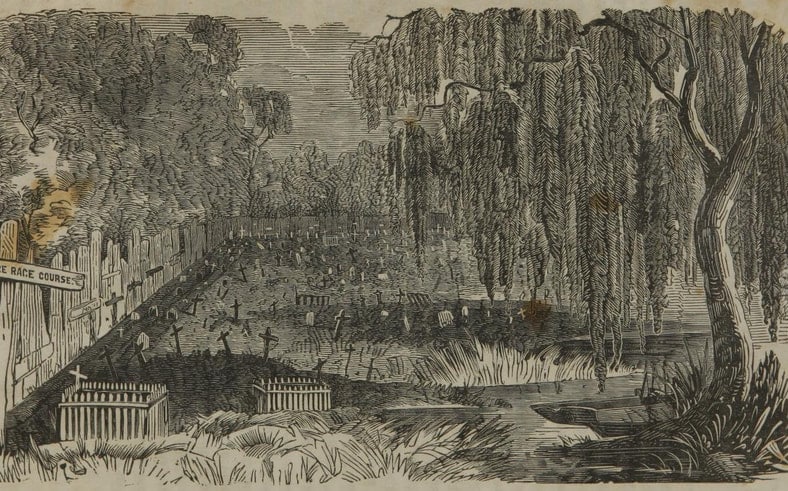
Each man found himself in a wall vault in Greenwood Cemetery. They are not far from the site of what would become the Confederate Memorial, where 600 men were interned in 1874, mostly soldiers, but also civilians arrested by Nathaniel Banks who died in jail. The most famous among them is William Mumford, hanged by Benjamin Butler for tearing down the American flag at the U.S. Mint. Most were removed from graves in the decommissioned Cypress Grove Cemetery No. 2, which became the first block of Canal Blvd. As of 2026, two old-school New Orleans restaurants are near the old cemetery’s site: Morning Call and Bud’s Broiler. This cemetery is gone, and unlike St. Peter’s (a cemetery that was once in the French Quarter), it is wholly forgotten.
Moody and Benton fit the profile of most victims of “yellow jack.” Yellow fever usually killed new arrivals to Louisiana who had no immunity, typically immigrants and the Irish in particular during this period. St. Patrick Cemetery No. 1 was founded in 1853 during the worst outbreak. The cemetery has a modest monument to the Irish who perished from the disease. The last New Orleans community to suffer from the disease was the Sicilians, who arrived in large numbers after 1870 and lived in squalid conditions in the French Quarter. The native-born usually caught it as children, rarely died, and earned lifelong immunity.
That both men died of yellow fever when they did was unusual at the time. From 1859-1866 there were no major outbreaks due to Benjamin Butler and his successors making sure the city had better sanitation and with a military garrison to enforce it. The first major epidemic struck in 1867, most dying from July-October 1867, in particular the last two months, which notably claimed Blessed Francis Xavier Seelos, one of the most beloved Catholic priests of his era.
Moody, though, perished in 1866, a year with few deaths. Benton was even more unusual. Very few ever died of the disease in March. One might call it a misdiagnosis, but it is unlikely, as the symptoms were well known, and deaths were often underreported to not cause panic. New Orleans would also have every reason to cover up the death of a former general and current government official, unless they intended it as a warning to other Northerners who might want to move to Louisiana for their fortune. Regardless, although Benton and Moody died at odd times, they fit the profile of most yellow fever victims.
Another unusual yellow fever death was John Bell Hood, who died during a quiet year in 1879. Today he rests in Metairie Cemetery, which is across the I-10 from Greenwood. Anyone travelling on I-10 will find themselves zipping between Greenwood and Metairie Cemetery.
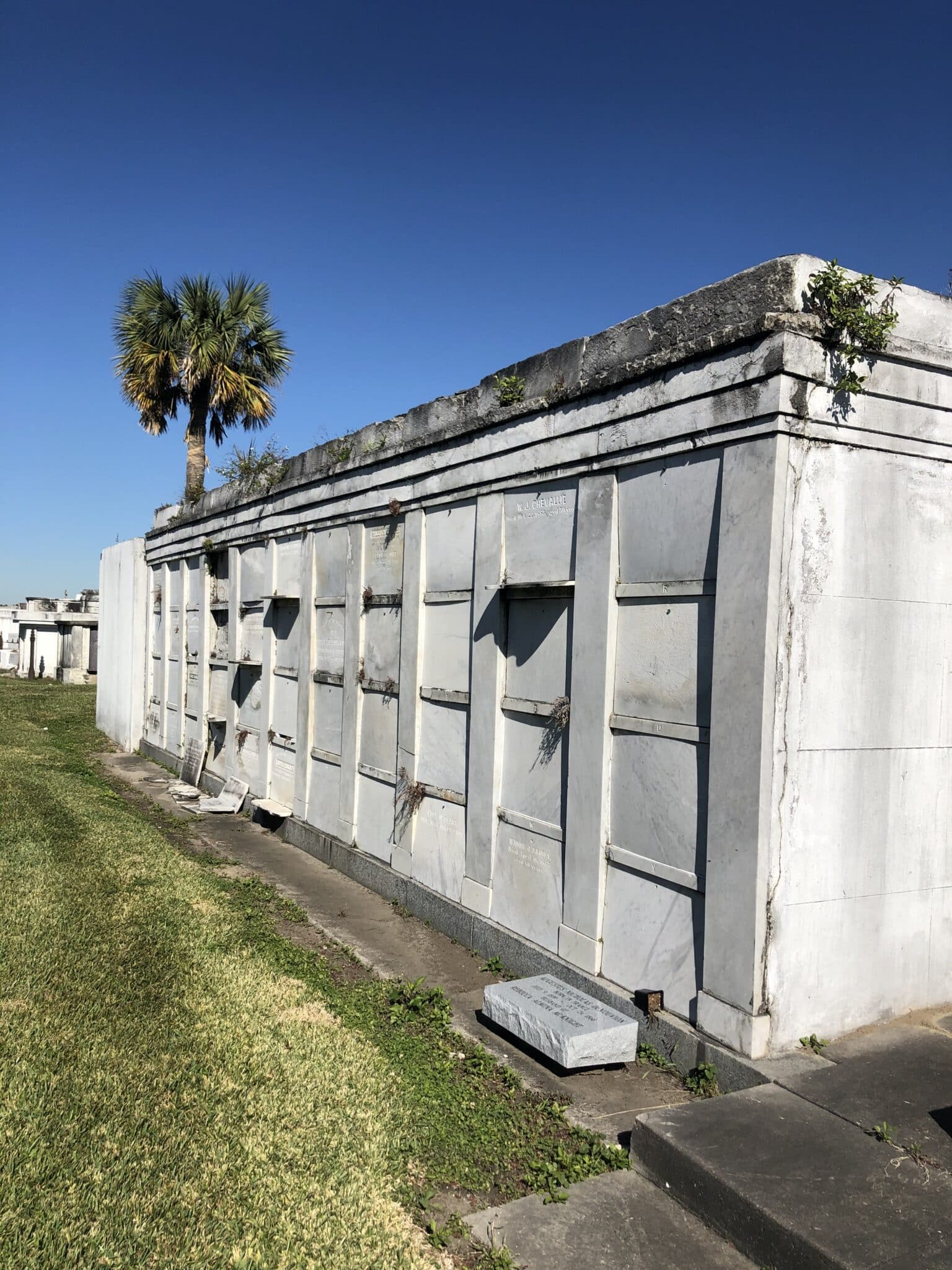
In 2016 the officers of the Children of the Confederacy placed a granite crypt cover for Moody. Shrouded Veterans tried to place a government-issued headstone for Benton. Greenwood’s brochure places Benton in the wall vault, but they informed Francis Jastrzembski that Benton is in the nearby Masonic Cemetery, which in turn claims it doesn’t have any record of Benton being there. His Greenwood grave was visited and decorated by friends and family in the 1870s and the cemtery tour features his grave. As such, Greenwood is the most likely candidate.
Benton and Moody, two relatively obscure figures, died in the same city of the same disease, but before that disease made a dramatic return. Each man made the rank of general and saw service in numerous theaters, but neither attained the fame and distinction others enjoyed, although both men fought throughout the war and had records that would have made John Floyd and James Ledlie envious. They remain in a city where neither had much of a connection and in the same tomb, perhaps the only generals from opposing sides of the Civil War to share a grave. Neither man knew the other, and with few connections to New Orleans, their tombs remain largely forgotten, while those of Richard Taylor, P.G.T. Beauregard, and John Bell Hood in nearby Metairie Cemetery still receive some attention.


Well done! Thank you for an excellent article.