“Peace to His Respected and Honored Remains”: A Sister’s Devotion
Oftentimes modern readers assume that a soldier’s story ends with his death. Less frequently we are concerned with the families and those left behind, whose struggles often began following a soldier’s death on a battlefield, hospital bed, or prison camp. Families labored to receive recognition and remuneration and faced the uncertainty of their loved ones’ final resting place. For Sarah A. “Sallie” Craft, a years-long struggle to identify her brother’s burial place ultimately ensured that his remains were identified and reinterred in a national cemetery where more than 65% of Civil War burials remain unknown.
Stacy B. Craft was 29 years old at the outbreak of the Civil War. Named after his father, Stacy worked alongside his older brother and their father in the family’s butcher business in Belmont County, Ohio. Craft was one of the many young Quakers from southeastern Ohio who disavowed the non-violence tenet of their faith and enlisted to fight for the Union. First enlisting in Co. K, 17th Ohio Volunteers (90-days), Craft passed an uneventful spring and summer of 1861, acclimating himself to army life. His experience as a butcher served him well as company commissary, where he distributed beef, bread, and beans to his comrades. Craft was especially pleased with the beans, writing home that he received “plenty of beans which I like very much,” promising to “write again in a few days if the Secesh don’t take my bean dipper [arm] before then.”[1]
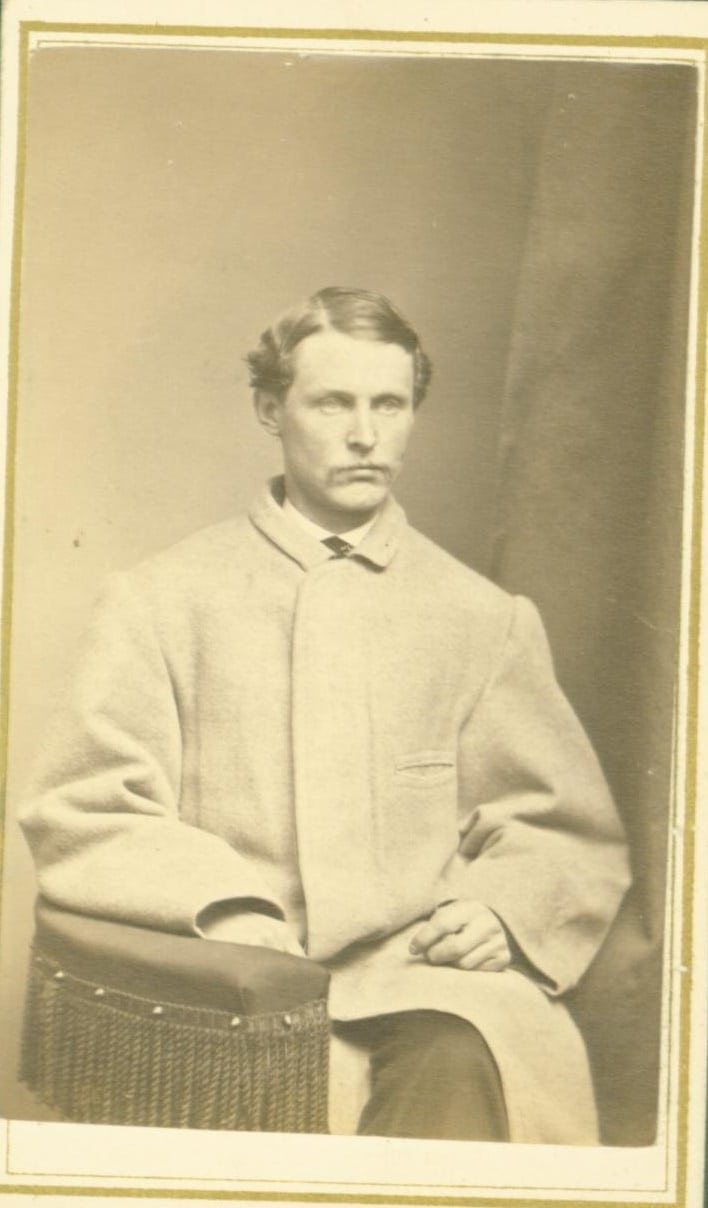
Following his service with the 17th Ohio, Craft reenlisted as a corporal in Co. E, 15th Ohio Volunteers. He dutifully wrote home letters to his sister Sallie, a schoolteacher in Belmont County, sharing details of the regiment’s movements through Kentucky. At Rowlett’s Station on December 17, 1861, Craft experienced his first battle, writing to Sallie that “I had a full sight of the elephant & this was the first time that I ever saw shot & shell fly in earnest.”[2]
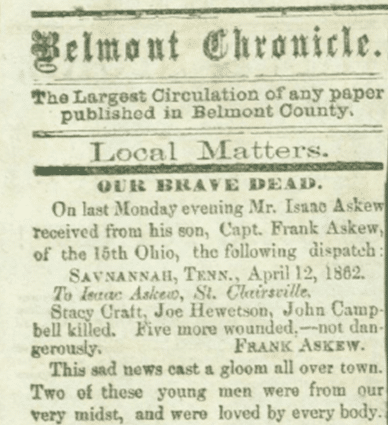
Less than four months later, a telegram from Craft’s captain hit like a thunderbolt:
Savannah, Tenn., April 12, 1862
To: Isaac Askew, St. ClairsvilleStacy Craft, Joe Hewetson, John Campbell killed.
Five more wounded, not dangerously.Frank Askew[3]
The 15th Ohio had arrived on the battlefield at Shiloh on the second day of the battle, April 7, 1862, following the start of the Union counterattack. Forming behind Brig. Gen. Lovell Rousseau’s brigade, the regiment found their position “thickly strewn with dead men and horses killed in almost every conceivable way.”[4] As Rousseu’s men expended their ammunition and fell back, the 15th Ohio and the other regiments of Col. William H. Gibson’s brigade advanced into the maelstrom, “the bullets whistling about our heads too plainly told.”[5] It was at this unfortunate moment that Stacy Craft, “poor fellow, was shot dead near the beginning of the action by a musket ball through the head.” His company captain recalled that Craft “never spoke after he was struck.”[6]
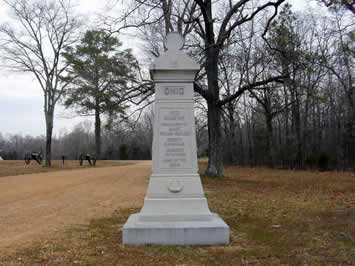
Stacy Craft was one of three men killed in Co. E, in a regiment that took 75 casualties at the battle. Craft’s death “cast a gloom all over town” in Belmont County, where one local newspaper lamented that he…
“…was one of the very first to spring into the ranks of the first volunteer company that left this town. He was active in filling up the company, and assisting in every way in his power in its completion. He was an efficient soldier – in camp, in the hospital, and on the battle-field. He took peculiar pride in doing his duty in the ranks, and in the hospital was as kind and tender as a woman. Brave and generous to a fault, he fell, lamented by his comrades and the whole community. Brave little Stacy! No truer or nobler spirit has fallen during the war.”[7]
Another local newspaper recalled Craft as having had…
“…a heart susceptible of every generous emotion and filled with the milk of human-kindness. He loved his country, its government, and its constitution, unmixed with any selfish feeling. We venture nothing in saying that no braver or more generous spirit ever entered a field of battle than Stacy Craft. Peace to his respected and honored remains.”[8]
The family also received a heartfelt letter from Craft’s captain, Frank Askew, who wrote of his…
“…painful duty to inform you of what perhaps you have already heard, although not directly of the death of your son Stacy. He was killed near the beginning of the action near Pittsburg Landing on Monday, the 7th of April, about 10 o’clock. He was shot through the head by a musket ball and died instantly. His body was carried from the field by some of our men. He was buried not far from where he fell. The highest tribute I can pay to his memory is that he died while bravely fighting the enemies of his country, a brave soldier and a true man. Accept my most heartfelt sympathy. Indeed, I feel that I have a right to grieve since our relations since we have been out have been so close.”[9]
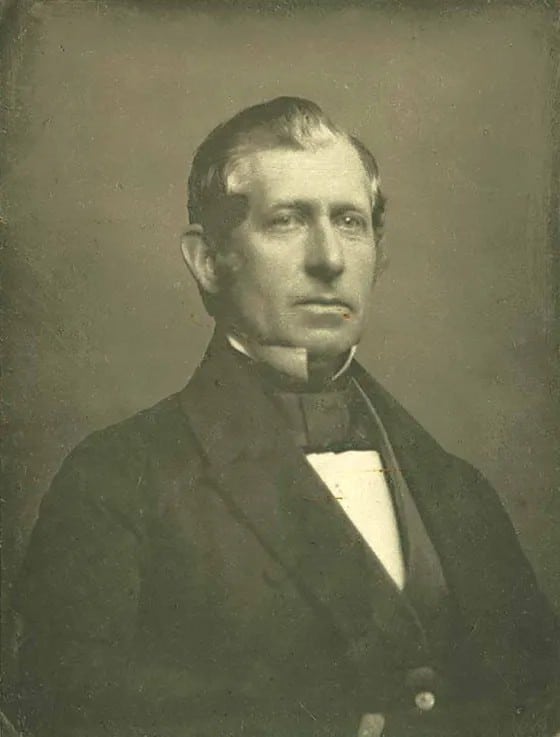
Without her brother to correspond with, Sallie Craft maintained regular correspondence with other local soldiers in both the eastern and western theaters. Following the close of the war, it was announced that a national cemetery would be established on the Shiloh battlefield. Devoted to her brother’s memory, Sallie began a letter writing campaign to ensure that Stacy’s remains were located and reinterred. In early 1866 Craft wrote to Bvt. Lieut. Col. Edmund Burke Whitman, superintendent of national cemeteries who was overseeing the removal and reinterment of Union dead in the Department of the Tennessee. Craft attempted to direct Whitman to the area where her family believed her brother to be buried, alongside the body of James McConohey of Co. F, 15th Ohio. On April 7, 1866, four years to the day of her brother’s death, Whitman responded to Craft’s letter that after surveying the battlefield, he had located her brother’s gravesite….
“…one half mile N.E. of Shiloh Church – west side of Allen Jones field in the edge of the woods are 35 or 40 graves containing the bodes of the 48th, 45th, & 40th Ohio and 30th Ind. One headboard bears the following inscription as nearly as we could make it out: S.B. Craft, Co. F & Private McC…18 Ohio, 1862.” Both names are on one board and the grave is separated from the others. Possibly we may have made an error in recording 18th Regt for 15th & Co. F for Co. E. So long a time has elapsed since the inscriptions were made that it is often very difficult to decipher them at all. Nearby were many Rebel graves. One trench with board marked “142 Rebels.” Such a record has been made as will lead to the identification of the body of Mr. Craft whenever it shall be disinterred.”[10]
Whitman assured Sallie that he had “selected a beautiful site for a cemetery, just on the bluff above the landing, and have recommended to the govt to have the bodies of all of our brave heroes removed to it.” An anxious Craft wrote again to Whitman in January 1867, inquiring as to whether Stacy’s body had yet been reinterred. The following month Whitman offered that “the work of disinterment has not yet been commenced at Shiloh. The weather has been so very bad this winter that is has been impracticable to do anything more than to prepare the grounds for the national cemetery to which the bodies are to be removed.” Whitman promised Sallie that “as soon as the remains of your brother are recovered…you will be promptly notified of the section and number of his grave.”[11]
Finally, on April 29, 1868, Sallie received the welcome news from Whitman…
“I take pleasure in informing you that the remains of your brother, Corporal S.B. Craft, Co. E 15th O.V.I., killed in battle at Pittsburg Landing, Tenn., April 7, 1862, and buried upon the battlefield have been carefully disinterred and removed to the Shiloh National Cemetery and now rest in grave No. 111, Section D.”[12]
Whitman also described the cemetery for Sallie, assuring her of the scenic beauty surrounding Stacy’s final resting place…
“This cemetery is located on the bluff just below the landing, the spot where our frightened and at first defeated army sought shelter on that memorable Sunday night. It contains the bodies of 3,534 brave soldiers, is beautifully laid out with avenues and walks, and shaded with forest trees. It is being surrounded by a permanent stone wall and a flag staff has been erected from which the glorious stars and stripes are kept constantly floating in sight of all who pass up and down the river. A keeper has been appointed to reside permanently at the cemetery to watch over the graves and give information to visitors. He is also a soldier, crippled by the loss of a leg and an arm.”
Whitman closed his letter to Sallie with the final four lines of the first stanza of the Bivouac of the Dead, now found memorialized at each of our national cemeteries…
“On fame’s eternal camping-ground,
Their silent tents are spread,
And Glory guards, with solemn round,
The bivouac of the dead.”
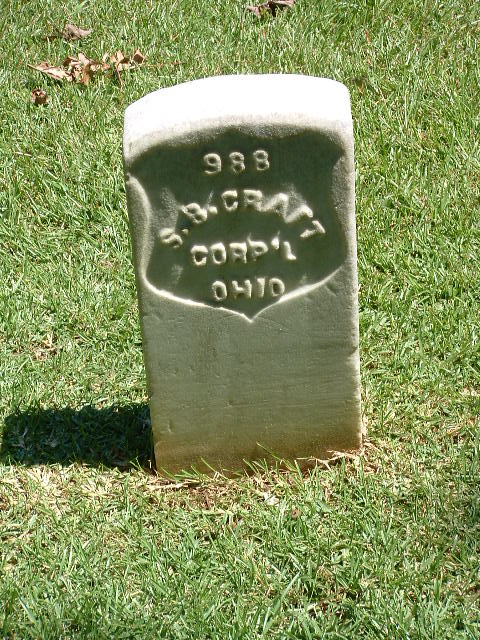
Shiloh National Cemetery today holds the remains of 3,584 Civil War dead, of which the names of 2,359 are unknown. Visitors to the cemetery may find Corp. Stacy B. Craft in plot #D988, his headstone a testament to both his own sacrifice, and a sister’s devotion to his respected and honored remains.
[1] Stacy B. Craft to Sallie A. Craft, May 23, 1861; October 3, 1861, Reiger UOVC.
[2] ibid, December 19, 1861.
[3] Belmont Chronicle, April 17, 1862.
[4] Cope, Alexis. The Fifteenth Ohio Volunteers and Its Campaigns. Author: Columbus, OH. 1915. 127
[5] ibid, 128
[6] ibid
[7] Belmont Chronicle, April 17, 1862
[8] St. Clairsville Gazette, April 17, 1862
[9] Frank Askew to Stacy Craft Sr., April 11, 1862, Reiger UOVC
[10] E.B. Whitman to Sallie Craft, April 7, 1866, ibid.
[11] Whitman to Craft, February 5, 1867, ibid.
[12] Whitman to Craft, April 29, 1868, ibid.


As always, Jon has written a great article.
Very poignant article for this April 7th.
Jon-Erik, thank you for sharing this well crafted story.