Ambrose Bierce, Shiloh, and the Nature of War
“War’s a brain-spattering, windpipe-slitting art,
Unless her cause by right be sanctified.”
So wrote Lord Byron in Don Juan. While certainly eloquent, I would counter that the wind pipe slitting part is more accurate than the part. In large part because those who fight must justify the horrors they inflicted on others. The Civil War was no different. The Just and Lost Cause legends believed that the American Civil War was worth it. Yet, no matter what a war may gain, I cannot help but think of what John Steinbeck wrote in 1958: “All war is a symptom of man’s failure as a thinking animal.”
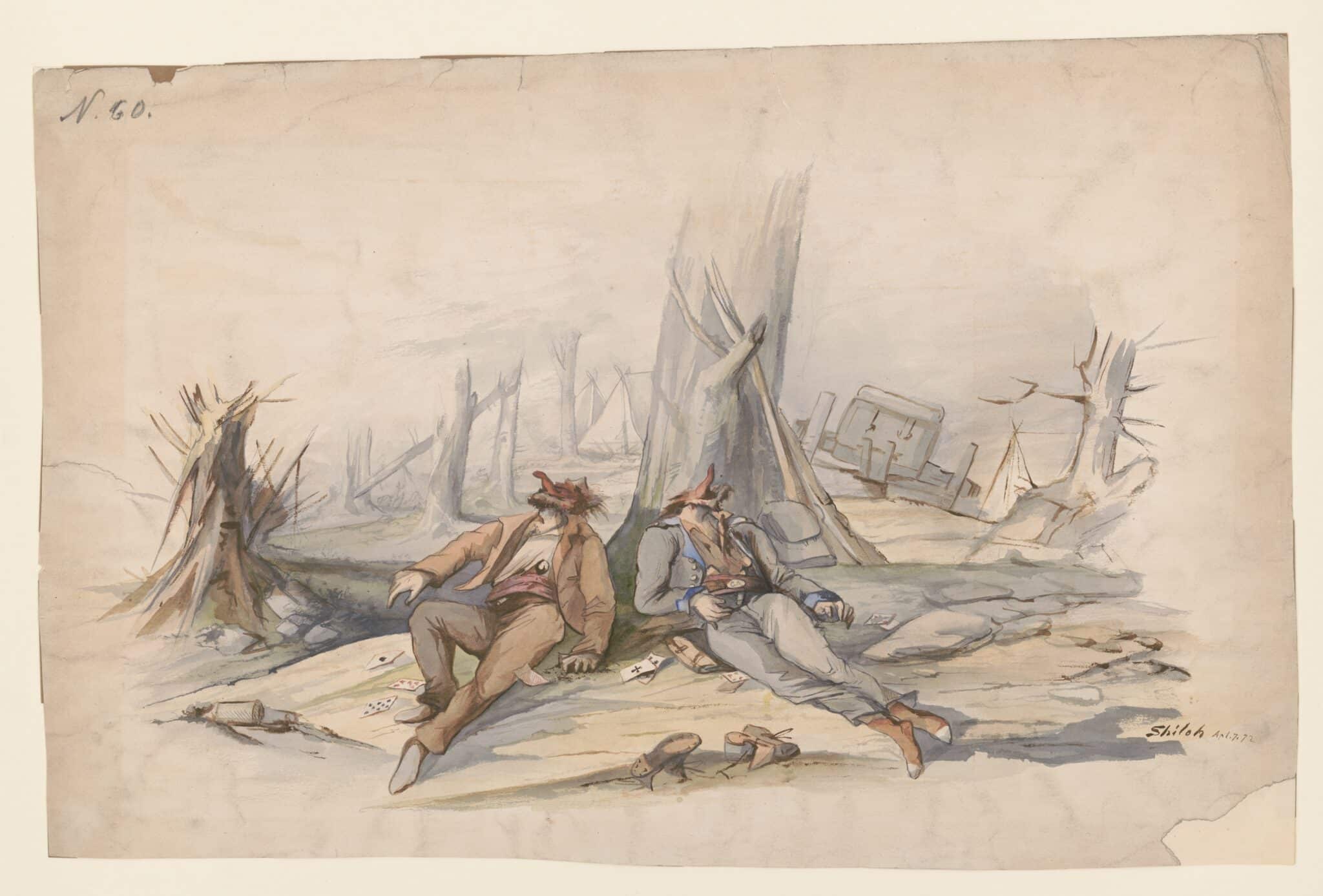
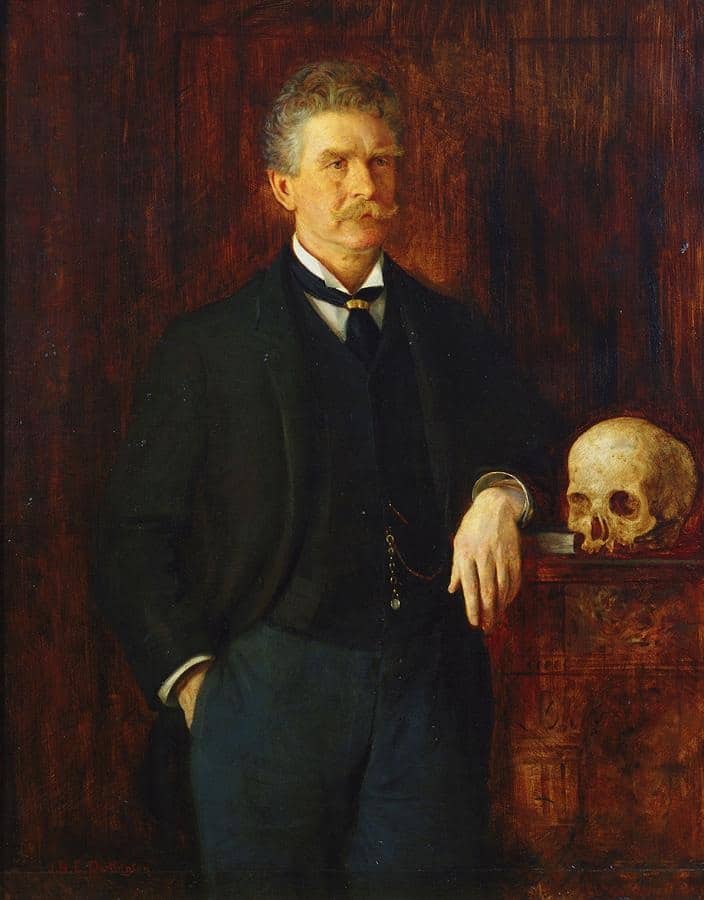
Occasionally some sly remark from an old veteran would go against the Gilded Age celebrations of valor. Francis Shoup, who commanded Confederate artillery at Shiloh, wrote, “We have been glorifying ourselves, North and South, a long time; and now I hope it will not be amiss to hold up the seamy side of things a little in a good-natured sort of way.” Shoup made a good try at that, but only in two short articles. However, Ambrose Bierce, veteran of Philippi, Shiloh, Chickamauga, and other bloodlettings, felt a certain bitterness about how all of it turned out. “Bitter Bierce” would leave a large body of work that countered the heroic myths of the War Between the States in short stories and more broadly in The Devil’s Dictionary.
Bierce is a cautionary tale in some works. David Blight, in Race and Reunion, lifts him up as the ultimate disappointed veteran, who, perhaps with a better peace, would have been at peace. Earl J. Hess wrote, “What was suffered in the conflict was endurable, as long as the cost of that suffering was valued by a society that followed through to bring justice to freed slaves and suppressed the slave power that many Northerners thought had started the war in the first place. When that reconstruction effort failed to achieve those goals, many veterans like Bierce wondered why they had fought at all.” Hess’s Bierce was a victim of a North that forgot a “war for freedom.” To Blight and Hess, the failure of Reconstruction brought us Bierce and all the other failures of reconciliation.
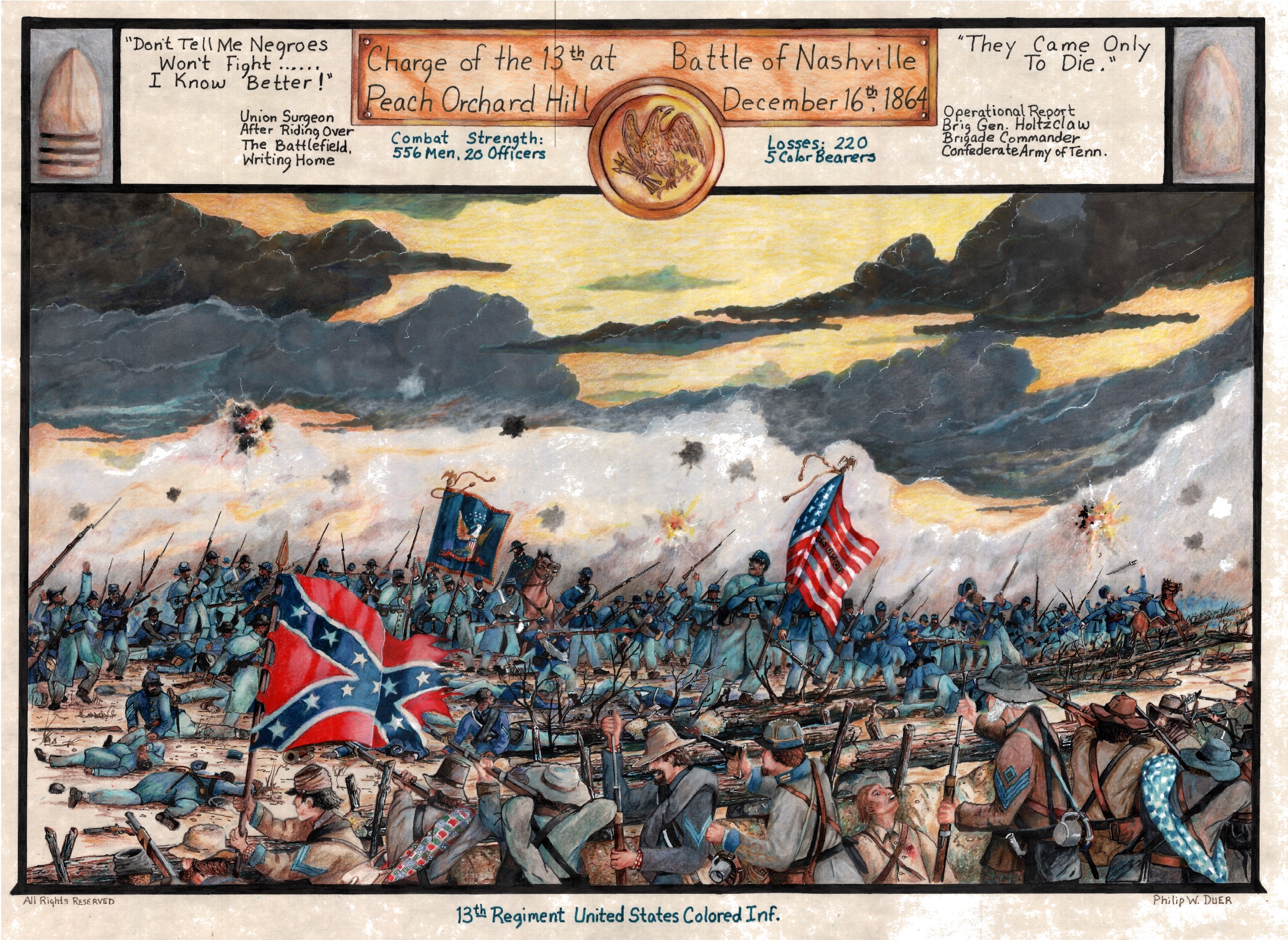
Yet, perhaps Hess and Blight saw too many chances in Reconstruction. After all, in the face of scientific racism, rising corporate power, narrow political partisanship, and the fact that the cause of union always trumped that of emancipation, Reconstruction was likely dead on arrival. Bierce himself, during the war, heard the call of war for a “higher” purpose and ignored it. He once sought a commission in the USCT (United States Colored Troops), but backed out once he was convinced the USCT would not fight. Bierce’s last battle was Nashville. There, regiments of the USCT threw themselves at the Confederates in a doomed attack on December 16. Their bravery was such that even some Rebels noted it. James Holtzclaw, a Confederate brigade commander, wrote, “I have seen most of the battlefields of the west, but never saw dead men thicker…They came only to die.” Bierce concluded, “At the battle of Nashville it was borne in upon me that I had made a fool of myself.”
Perhaps at Nashville, Bierce saw a new world emerging. And perhaps later he saw a lost opportunity. And then, with time, he perceived a deeper truth. George Frederickson pointed out in The Inner Civil War that the conflict did not create a burst of reformist zeal. War is more brutalizing than ennobling. To watch your enemies die in horrid ways, to observe their bodies piled before the “Hornet’s Nest,” and to look upon their wounded crying for their mothers, in that moment, ideals are in the service of sanctioned murder, and ideals do not survive such brutality intact. Bierce knew that in his gut, and he spilled that out on the page and took it head-on.
Bierce was a veteran of many battles, but I bring myself back to his part in Shiloh. There are so many accounts written after the fighting. Most were heroic. This regiment stood firm here; we saved the day with a gallant charge there. The generals argued for credit. Grant, Buell, Prentiss, Hurlbut, McClernand, Sherman, and a half dozen others accused other officers of incompetence or lethargy. The Confederates lamented Sidney Johnston’s death and argued about Beauregard and “lost opportunities.” Soldiers could also muse on the horror of it and leave us ghastly passages about streams turned red with blood, men burned alive in the tickets, and bodies blown apart by cannonballs. There were tales of cowardice on both sides; the shock of such a ghastly first battle meant many, Union and Confederate, ran for the rear. Almost always, though, there was the return to valor, rightness, and every other piece of eloquence man has written to make butchery grand and noble. After all, it had to be worth something, right? The death and destruction were not all in vain, right? We are not just, to paraphrase George Carlin, jungle beasts with baseball caps and machine guns?
The pages of The National Tribune were one place where the Union veterans created their memory of the war, and it was often petty. Of Shiloh, Ulysses S. Grant’s soldiers said Bierce and his comrades in the Army of the Ohio were not even needed to win on April 7. A common refrain was, “We would have whipped Beauregard’s army on Monday if none of Buell’s army had got there.” It is a far cry from the letter written in the battle’s aftermath. George W. Browning of the 54th Ohio, holding the last line at Dill Branch, wrote, “Our case looked doubtful, but relief was at hand. Buell had arrived, and his troops were crossing the river and came marching up at 5 o’clock on quick time, their bands playing the Star Spangled Banner. Never did music sound as well and never did men take such new courage.”
Grant’s men held no such thoughts when the battle was being fought, but by 1890 many had grown petty. For Don Carlos Buell’s part, he and his men said they saved Grant from destruction on April 6, and they often spoke of a shattered army, Buell even downplaying the role of Grant’s men on April 7. Shiloh became a fight soiled by men of high and low rank bickering over the scraps of honors. That particular disappointment was perhaps inevitable as old men looked at their past. Bierce embraced that inevitability with humor and often brutal honesty in penning “What I Saw of Shiloh.” Bierce also enjoyed supernatural tales. Many of his Civil War stories fit in nicely with a sense of the eerie, a styling of strange stories popular in their day, most notably The King in Yellow (I personally recommend Stay Out of New Orleans in this genre).
In understanding war and humanity, Bierce saw it mostly as a “brain-spattering, windpipe-slitting art.” Indeed, Byron never saw a war until he died of fever in Greece, which sounds like the plot of a Bierce short story. As Bierce watched the old veterans, blue and gray, submit to sentimentality, he told tales of death without meaning and fate without purpose.
The causes fade and change, but war remains eternal. Bierce realized the dark cosmic joke that had been played upon him and every soldier, from Sumerian levies to today. In that way, his comrades became the dead of Stones River and Pickett’s Mill, the men who did not grow rich, vote for Jim Crow laws, conquer the natives, or talk of brave charges. The dead, blue and gray, were suspended in that magical time before the Gilded Age and petty squabbles. He wished he could have joined them. In “What I Saw of Shiloh,” he concludes, “Ah, Youth, there is no such wizard as thou! Give me but one touch of thine artist hand upon the dull canvas of the Present; gild for but one moment the drear and somber scenes of to-day, and I will willingly will willingly surrender an other life than the one that I should have thrown away at Shiloh.” In “A Resumed Identity,” an aged veteran at Stones River sees “a pool of clear water. He crept to it to revive himself, lifted the upper part of his body on his trembling arms, thrust forward his head and saw the reflection of his face, as in a mirror. He uttered a terrible cry. His arms gave way; he fell, face downward, into the pool and yielded up the life that had spanned another life.” Bierce would before disappearing visit the old battlefields of his youth, a time for him of hope and romance, but also of horror and bitterness.
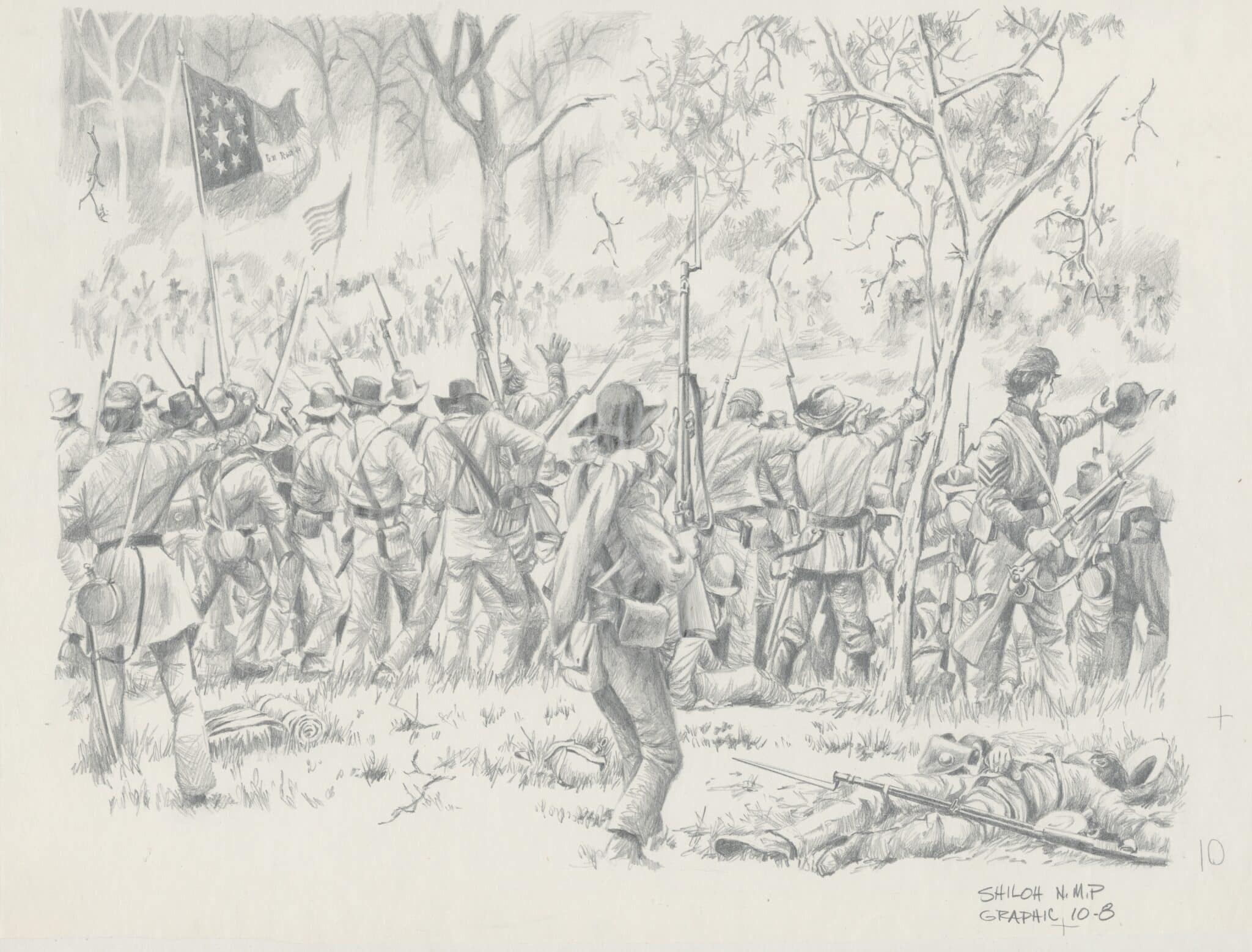
Bierce was not alone in seeing how war made men beasts. On the other side, in the 6th Arkansas, David Stanley had a realization that cut him to the core: “As I moved, horror-stricken, through the fearful shambles, where the dead lay as thick as the sleepers in a London park on a Bank Holiday, I was unable to resist the belief that my education had been in abstract things, which had no relation to our animal existence. For, if human life is so disparaged, what has it to do with such high subjects as God, Heaven, and Immortality? And to think how devotional men and women pretended to be, on a Sunday! Oh, cunning, cruel man! He knew that the sum of all real knowledge and effort was to know how to kill and mangle his brothers, as we were doing to-day! Reflecting on my own emotions, I wondered if other youths would feel that they had been deluded like myself with man’s fine polemics and names of things, which vanished with the reality.”
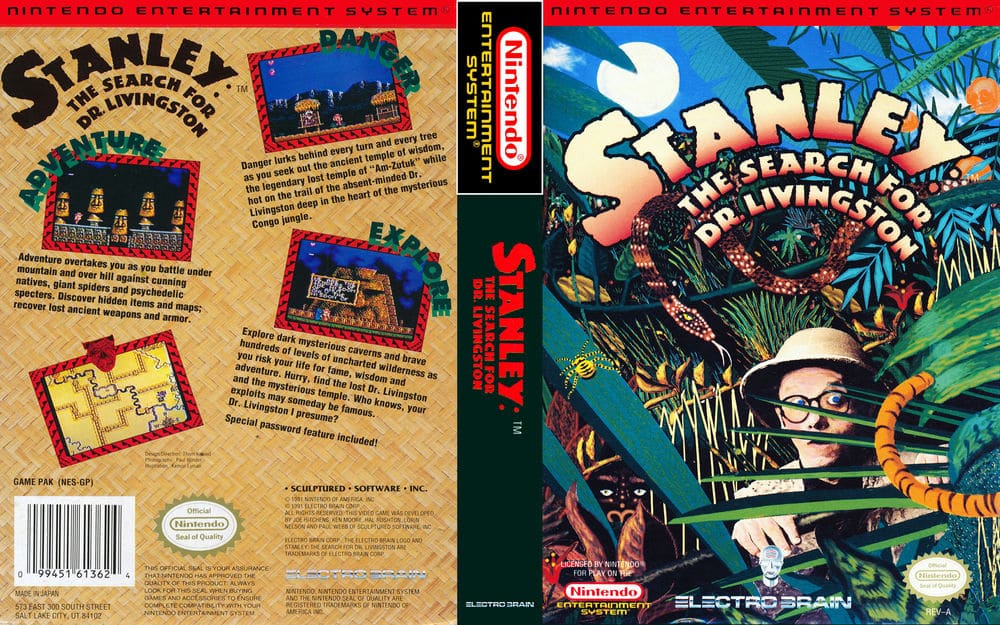
Both Bierce and Stanley became realists and famed newspapermen. Both went on adventures, too. Bierce, though, disappeared in the southwest. Perhaps it was suicide. Perhaps he was killed by Poncho Villa. Or something else happened. It remains one of the era’s great mysteries. Stanley would find Dr. David Livingstone. It was a feat so famous it somehow even received a video game treatment, coming to the Nintendo Entertainment System in 1992. No doubt Bierce would have enjoyed that odd and absurd turn.
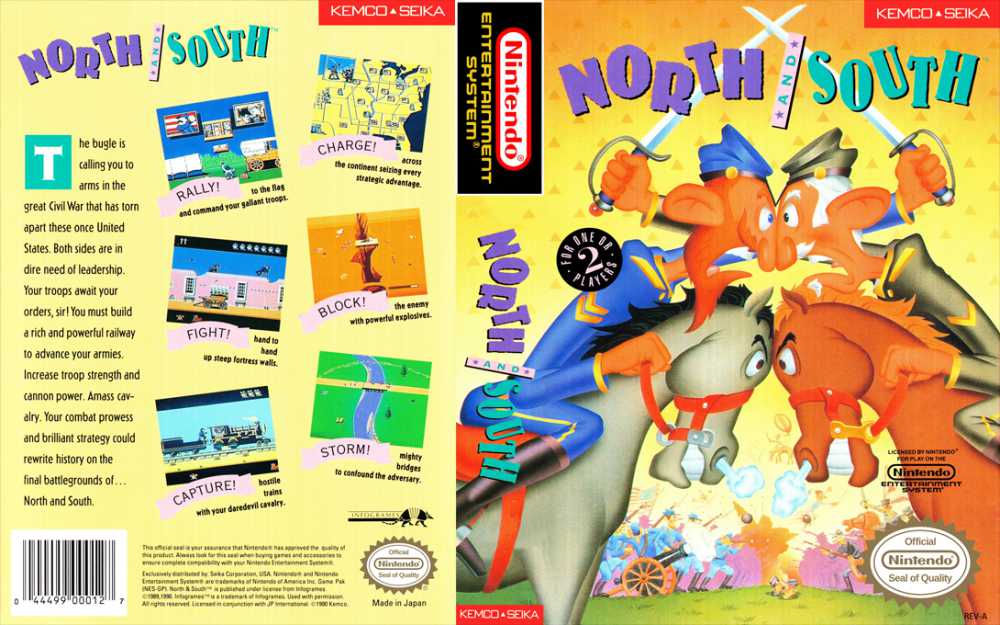
I do wonder how, in particular, Bierce and Stanley, men of eloquence and honesty, would react to the cartoonish violence of the Nintendo game North and South. For it would seem with time horror loses its potency, its meaning is stripped, and what is often left are absurd echoes and eventually legend, and enough distance to make an event feel as if it happened in a fantasy. Bierce, with his shades, absurdities, and ironies, could certainly see that.


I appreciate the brutal honesty that flows from this piece. For any good that comes from a war, it must be remembered that a heaping serving of hell is right beside it.
This was a beautifully-written article and gave a lot to think about, thank you. I think Bierce would have approved.