“A Colony for Incurables”: Surgeon Sylvester Willard & His Insane Asylum
In April 1864, the New York Senate authorized volunteer surgeon Sylvester D. Willard (1825-1865) to investigate the conditions of insane inmates in the county poorhouses, almshouses, asylums, and prisons. Willard reported his unfortunate claims to a panel of judges and was later made the state’s surgeon general before his premature death by typhoid fever. The surgeon’s findings culminated in the Willard Act of 1865, which established the largest psychiatric facility in New York, also aptly named Willard Asylum for the Chronic Insane after the humanitarian who paused his Civil War work to be in service to a vulnerable population: the mentally ill.
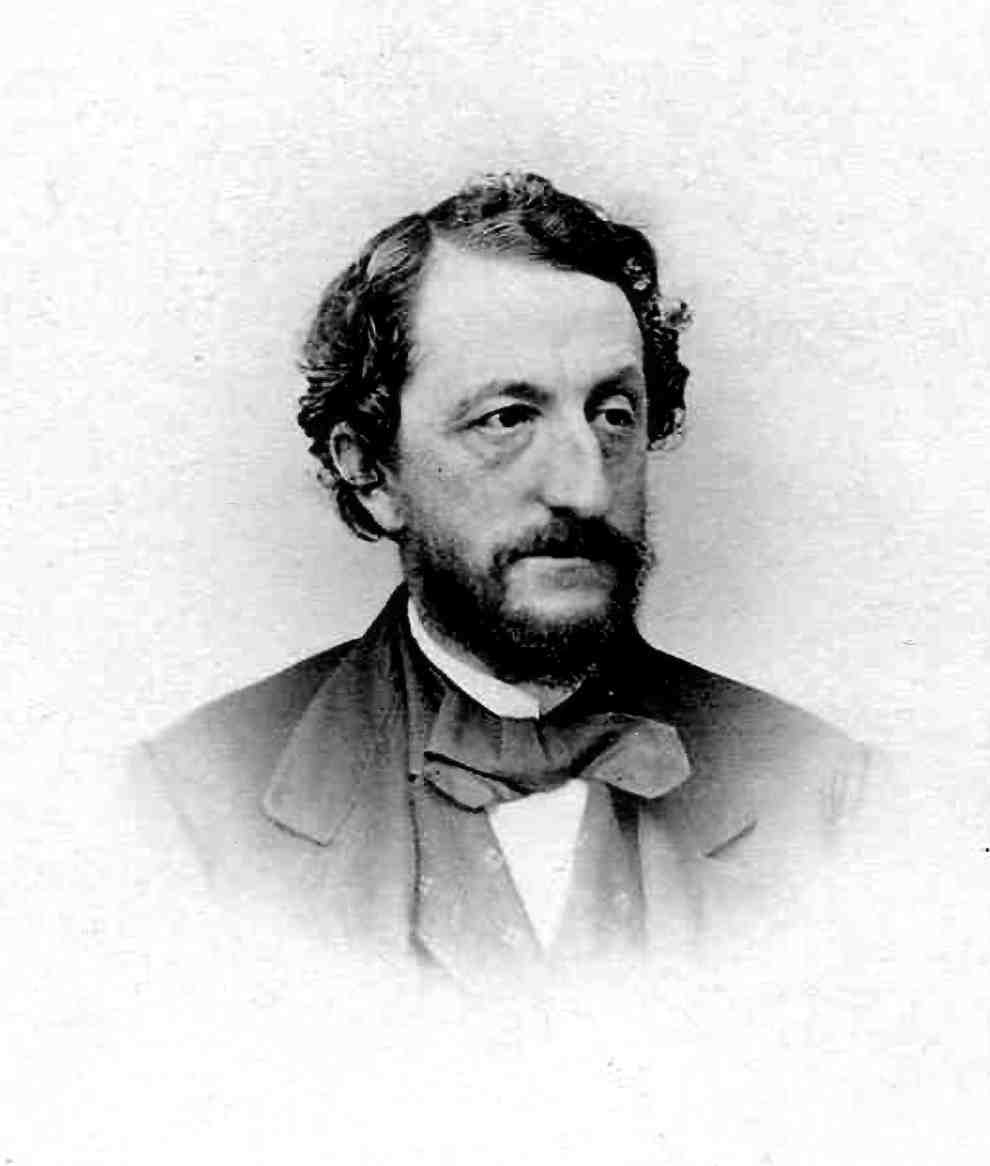
Willard was born to a decorated family of physicians; tthe Willards have deeply-rooted medical and theological ties to New England and even the presidency of Harvard College. Prior to the war, Sylvester Willard served as the secretary for the New York State Medical Society and the president of the Albany County Medical Society.[1] Attempts at “pauper relief” and mental health reform began in the state as early as 1855.
Pressure mounted to relieve the only existing mental hospital at Utica, since the county poorhouses were also forwarding their residents to this facility. Because Willard had just assumed his role as secretary of the state’s main medical body, he was tasked with surveying close to 60 relief organizations in New York in the middle of a national crisis. He modeled his study after reformer Dorothea Dix’s own assessment of asylums in the 1840s.[2] This task permanently removed Willard from his fieldwork in the present conflict.
In early 1862, Willard and several other surgeons from Albany County enlisted as volunteers in the Army of the Potomac. His assignments brought him Fortress Monroe, then to Virginia’s White House (outside of Richmond), where he petitioned for the establishment of more field hospitals in order to bring immediate relief to wounded soldiers. Dr. Willard published Conservative Surgery back home in Albany in 1862, which reported on these Virginian field hospitals.[3]
It was during his time in the South that Willard began to feel poorly, likely owing to the exposure and hardships of his projects. Upon returning to New York, he resumed his work with the insane and commenced the study that would lead to the Willard Asylum. Additionally, the doctor also acted as the examining surgeon for the Pension Office, which reflected the state’s administrative need to manage the high influx of medically discharged soldiers toward the end of the war.[4]
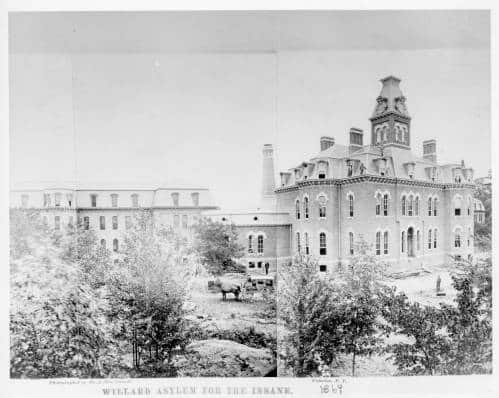
The Willard Act considered Willard State Hospital, as it would come to be known by 1890, as a site for “incurables to be colonized.” This language is harsh and most likely taken from Dr. Willard’s report on the state’s poorhouses. Built in the Second Empire style, the asylum followed the curative blueprints promoted by Dr. Thomas Story Kirkbride. The “Kirkbride Plan” believed that wide corridors, ample work opportunities, and plenty of fresh air could heal even the most afflicted patient. Willard Asylum officially opened four years later in 1869 and grew so large that the campus had its very own rail line, telephone service, firehouse, daily mail arrivals, and public events hosted in its fields.
Was Sylvester Willard’s vision for an impactful hospital realized? The first few decades were promising: occupational and musical therapies, Turkish baths, fresh produce, and interaction with general society were all guaranteed. Despite attacks by the era’s contagious diseases, the asylum continued to flourish, eventually constructing the first infirmary to be installed in an American psychiatric institution.
Like many Kirkbride Era asylums, Willard State Hospital, renamed Willard Psychiatric Center in 1974 to reflect its growing on-site drug abuse treatment options, finally shut its doors in 1990s. The repeal of the Mental Health Act of 1980 removed federal funding for state-run institutions and government oversight that protected patient rights. The American insane asylum was no longer.
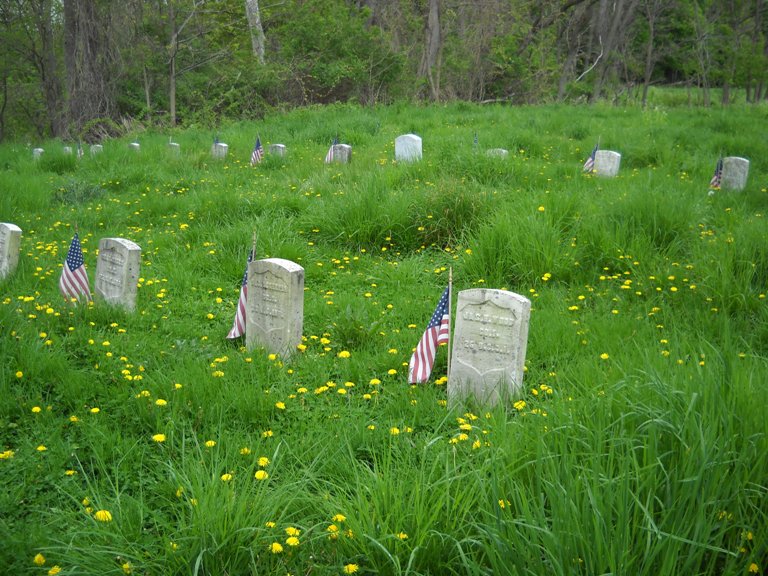
The hospital cemetery is the final resting place for over 5,000 souls, housing a quarter of the patients who died at the asylum. There is a small section of the cemetery reserved for Jewish patients, who are to this day still unclaimed. Psychiatric hospitals across the country admitted thousands of Civil War veterans for symptoms of post-traumatic stress disorder and other wartime maladies. Pvt. Aaron Ackerman of the 33rd New Jersey Infantry, Pvt. Lewis Crosson of the 76th New York Infantry, and dozens of other former soldiers spent their final years at Willard Asylum. Only these veterans have true, individual headstones. Everyone else is unknown or unmarked. We can wonder how Dr. Sylvester Willard would have cared for these veterans himself, if he had lived to see the asylum’s creation.
Madeline Feierstein is an Alexandria, VA historian and founder of the educational & historical consulting company Rooted in Place, LLC. A native of Washington, D.C., her work has been showcased across the Capital Region. Madeline is a member of Emerging Civil War and has written for Emerging Revolutionary War, Clara Barton Missing Soldiers Office, and the National Museum of Civil War Medicine. She leads significant projects to document the sick, injured, and imprisoned soldiers that passed through Alexandria and Washington, D.C. Her first book, Occupied Alexandria: How the Civil War Transformed a Southern City, will be printed in Fall 2026 by Arcadia Publishing. Madeline holds a Bachelor of Science in Criminology from George Mason University and a Master’s in American History from Southern New Hampshire University. Explore her research, schedule a meeting, and book a guided tour at www.madelinefeierstein.com.
Endnotes
[1] “Death of Dr. Willard,” Buffalo Weekly Express (11 April 1865), uploaded by Mark Saligan on 5 June 2019, Find a Grave, https://www.findagrave.com/memorial/11697170/sylvester_david-willard#view-photo=186968689.
[2] Philip M. Ferguson, “Creating the Back Ward: The Triumph of Custodialism and the Uses of Therapeutic Failure in Nineteenth Century Idiot Asylums,” (Orange: Chapman University, 2014) 8, https://digitalcommons.chapman.edu/cgi/viewcontent.cgi?article=1006&context=education_books.
[3] Sylvester David Willard, Conservative Surgery: With a list of the medical and surgical force of New York in the War of the Rebellion, 1861-2: to which is added a brief notice of the hospitals at Fortress Monroe and Virginia’s White House, (Albany: C. Van Benthuysen, 1862), Google Books, https://books.google.com/books?hl=en&lr=&id=1PxZAAAAcAAJ&oi=fnd&pg=PA1&ots=RqpAC6KtYY&sig=Vc0xUtgXbLmxZLduPxZxg6LAQpw#v=onepage&q&f=false
[4] “Willard, Sylvester D.,” VCU Social Welfare History Project, from Linda H. Stuhler and Inmates of Willard, https://socialwelfare.library.vcu.edu/programs/mental-health/willard-sylvester-d/.


Another fine piece by Madeline. One thing near the end struck me as odd – that the Jewish patients were “still unclaimed.” It would seem their community would have been especially conscientious about claiming them.
I completely understand. Sadly, many patients who died at asylums like Willard were left to the institution’s care and often “abandoned” by family members. As for burial, some of these asylums were too far away from the family burial grounds for transfer. Perfect storm scenarios for “lost graves.”
Very interesting background. Fun fact: they used to give hugely popular tours once a year and the year I was sent to Fort Drum in upstate NY (2015) was one of the last years they did it. I drove for over two hours and waited in a line of cars for about another 30 mins only to be turned away bc they ran out of parking space. Never did get to see it. Its sad to think how many veterans ended up at places like this because things like PTSD were poorly understood.
I would’ve loved to have toured it! And I completely agree.
What on earth is an “ impactful hospital” (sic)?
If you’re asking what “(sic)” stands for, it implies that parts of the statement were mispelled (and the author corrected it for clarity) or aspects of the statement were removed from the quote due to irrelevancy.
thanks Madeline — a great story, but ultimately a tragic one … despite the best efforts of the Department of Defense and the VA, understanding and solving veteran’s a mental health issues remains a work in progress.
Exactly! Even though this is a story from the 1860s, we can still see it happen today, unfortunately.