“May God blot it from our land”: John A. Logan, Military Emancipation and the Army of the Tennessee
Lorenzo Thomas was not a compelling orator. Nearly sixty years of age, with snowy white hair and a face creased by decades of frontier service, the adjutant-general of the Federal Army was, “not eloquent in word and manner, and must have a very interesting topic for discussion to hold the attention of his hearers.”[1]
Before the sprouting of the first spring leaves, Thomas was dispatched from the comfortable confines of a desk in Washington to the sodden camps of the Army of the Tennessee scattered along the Mississippi River. Ordered into the field by Secretary of War Edwin Stanton, he was directed to ensure that the Lincoln Administration’s emancipation policy was vigorously implemented throughout the secessionist heartland, including raising and arming freed slaves for service in the Union Army.[2] He expected a tepid response.
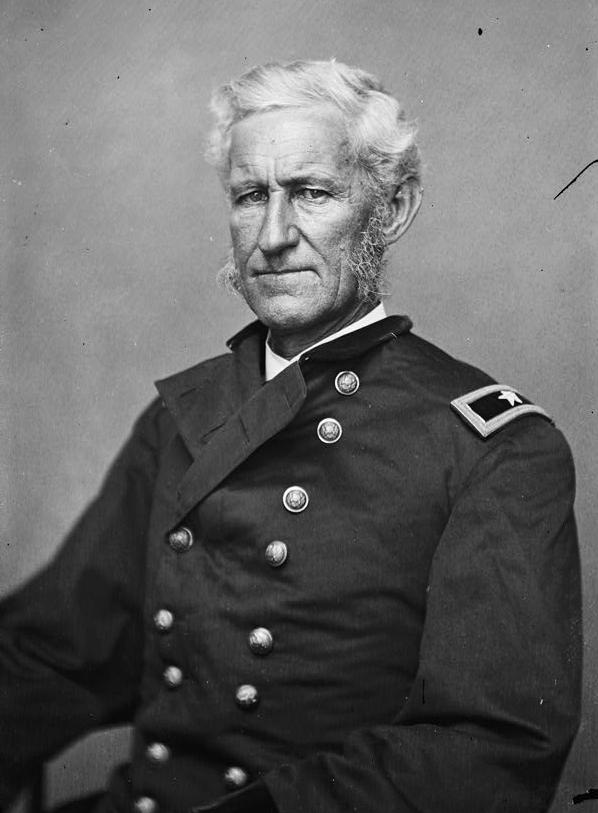
At Lake Providence, Louisiana on April 8, 1863, two days after his arrival in the theater, Thomas faced one of his toughest audiences. Drawn up to receive the adjutant-general were the 8,000 men of the XVII Corps’ 3rd Division, and animosity and skepticism prevailed among the hard-bitten veterans. Many of the regiments were recruited all or in part from ancestrally Democratic regions of their respective states. Hatred for the Democratic Party’s peace wing, or Copperheads, was intense – but nearly matched by animosity towards perceived Republican radicalism on slavery. Thomas’ remarks were “dry and formal” and failed to move the assembled crowd, among whom “some hissed at the mention of negro soldiers.”[3]
With his mission off to an inauspicious start, Thomas ceded the rostrum to the division commander, Maj. Gen. John A. Logan. Among those in attendance, what followed was a singularly riveting experience of the lengthy Vicksburg Campaign. In ten minutes and in his inimitable fashion, Logan transformed the minds – if not the hearts – of his men towards a fervent embrace of militant emancipation.[4]
Logan’s forceful words were unexpected, which in turn made them all the more impactful. Dubbed “Black Jack” by the men under his command, “in consequence of his dark complexion,” the stocky Logan possessed, “the finest pair of eyes ever possessed by a man,” a drooping mustache and a bellowing voice.[5] The latter was put to excellent use in the prewar years, during which time Logan rose to national fame in the political arena.
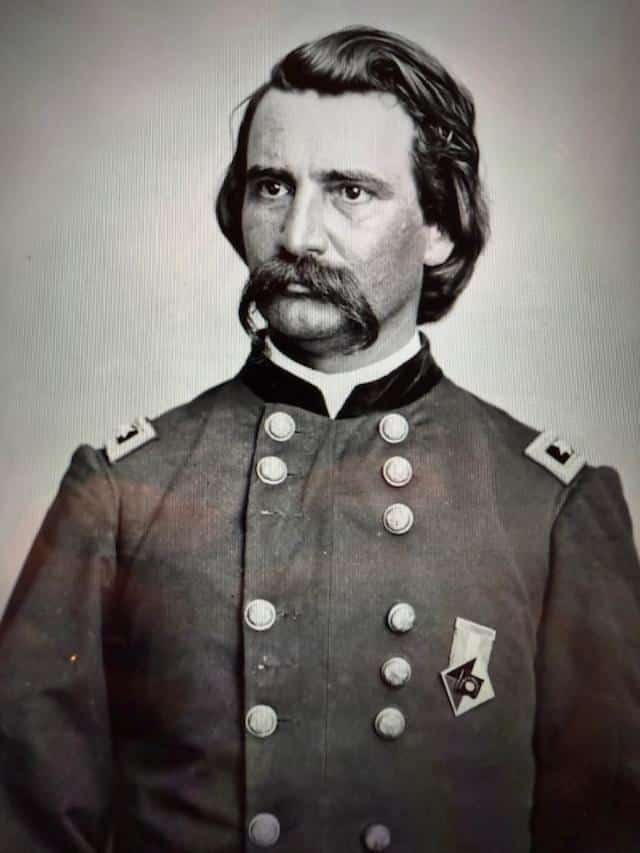
Logan represented the southernmost counties of Illinois as an intensely partisan Democrat and loyalist of Illinois Senator and presidential candidate Stephen A. Douglas. Like most of his constituents, Logan traced his roots to migrants from Tennessee and the Carolinas, in a region bordered by slave states and thickly settled by Southerners.[6] As a young politician, he shared and became a leading advocate for sympathetic attitudes to slavery that prevailed in that section of the state. As a freshman state representative in 1853, Logan sponsored the successful passage of a law barring free blacks from settling in Illinois. He was emphatic in defense of the bill and the racist sentiments it represented, expressing that African-Americans “were not suited to be placed on a level with the white men,” a common attitude in both Southern Illinois and throughout much of the Northern body politic.[7]
Elected to Congress later in the decade, Logan called for robust enforcement of the Fugitive Slave Act, contending that Democrats were “willing to do that dirty work,” of catching and returning escaped slaves that reached Northern states.[8] Thereafter, his opponents referred to him as “Dirty Work” Logan; he embraced the facetious nickname.
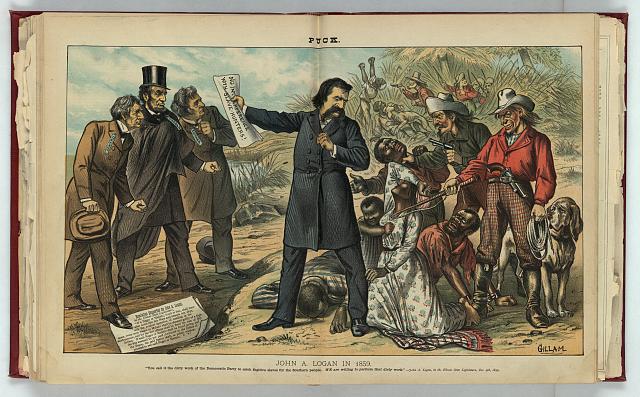
By 1863, he was a veteran general and division commander in the Army of the Tennessee, and among the most notable War Democrats in the Western Theater. Despite no formal military education or professional military service, his natural leadership, battlefield prowess and personal magnetism endeared him to the men under his command, his superiors and former adversaries.
“Gen. Logan is one of the most popular Generals in the field, although he is one of the strictest disciplinarians,” shared James McCabe of the 45th Illinois, adding, “we would follow him anywhere.”[9] A furor erupted among the men in his division when Logan’s promotion to major general was incorrectly believed to be stalled in the United States Senate. Twelve regiments and five batteries passed resolutions forcefully championing “his signal ability, honesty of purpose … his unsullied patriotism and unswerving fidelity.”[10] Terrible songs and limericks were composed in his honor, including one allegedly from the 7th Missouri that repeatedly called on the Lincoln Administration to “give us John A. Logan.”[11]
Affection and respect for Logan as a leader and commander surmounted partisan divides. McCabe expressed that “loyal Democratic soldiers love him, as do our Republicans.”[12] Newspaper correspondent Albert H. Bodman observed that these sentiments were widely held, he having “yet to see the man in the division, and it is a large one, who does not speak well of his soldierly qualities and patriotism.”[13] The staunchly Republican Chicago Tribune was equally magnanimous in its embrace of Logan, reminding readers that despite intense disagreements over politics and personality in the prewar years, his courage and commitment to the Union cause were beyond reproach. “To say that he commands the respect and obedience of his men,” the newspaper continued, “is but to faintly shadow forth the unbounded admiration that is accorded to him by those whom he commands.”[14] Perhaps no greater endorsement of Logan was offered than that of his former commander, Ulysses S. Grant, who considered the amateur soldier “as being as competent division commanders as could be found in or out of the army…equal to a much higher command.”[15]
As Logan prepared to follow Thomas and deliver remarks to his assembled command, he faced a body of men with whom he had forged an intense bond. Most were veterans of Fort Donelson and Shiloh, with unquestioned collective valor, but with suspicion towards the Lincoln Administration and emancipation. Colonel Lindorf Ozburn, Logan’s Virginia-born brother-in-law and the commander of the 31st Illinois, openly repudiated the Emancipation Proclamation. Logan asked for and received his resignation.[16]
There is no precise transcript of Logan’s impromptu remarks. Nevertheless, those in attendance recalled the themes with remarkable consistency, both in the immediate aftermath and long after the war. Logan started by acknowledging his prewar attitudes on race and the institution of slavery. His upbringing and political education had instructed him to see slavery and the racial hierarchy it reinforced as a positive good.[17] His military service was to preserve the Union and he entered with “no intention of helping to destroy slavery”.[18] But the experience of war transformed his perspective. “I confess that my views of the institution are much changed,” he was paraphrased as stating, and foresaw no place for slavery in the future of the American republic.[19]
For Logan, slavery was the cause and sustaining force of secession. He was committed to fighting until it and the rebellion it spawned were crushed.[20] Logan’s conviction was powerful, but so was his pragmatism. Striking blows against slavery – through emancipation, assisting escaped slaves, and enlisting black soldiers to serve the Union cause – would accelerate the end of the war and return his men to their homes and families. He laid it plain for the men in the ranks: “take their corn-raisers and woman-protectors and fort-builders from them, and set them to stopping bullets for us, and the thing is done.”[21]
He then turned to the hardest hearts among them, the 31st Illinois, which he had raised and commanded. “And you, my old Dirty-First,” rekindling his personal connection with the men he’d known as neighbors and voters, “you are willing even a colored man should shield you from rebel bullets. I know you are.”[22] With the flourish of a seasoned political campaigner, he ended on a rising note, calling on the men to “unite on this policy, putting the one who is the innocent cause of the war, who has everything to gain or lose in this war, in the front rank, and pressing on to victory.”[23] The hazard of the front rank – and the desire that another take that place – was something his veterans intimately understood.
Logan’s words landed like a thunderbolt among the assembled soldiers. Thomas, sensing the power of the moment, jumped forward to ask all those in favour of the policy to raise their hats. “Immediately every hat was raised and many flew through the air,” noted an observing correspondent, “and then followed a shout, and such a shout!”[24]
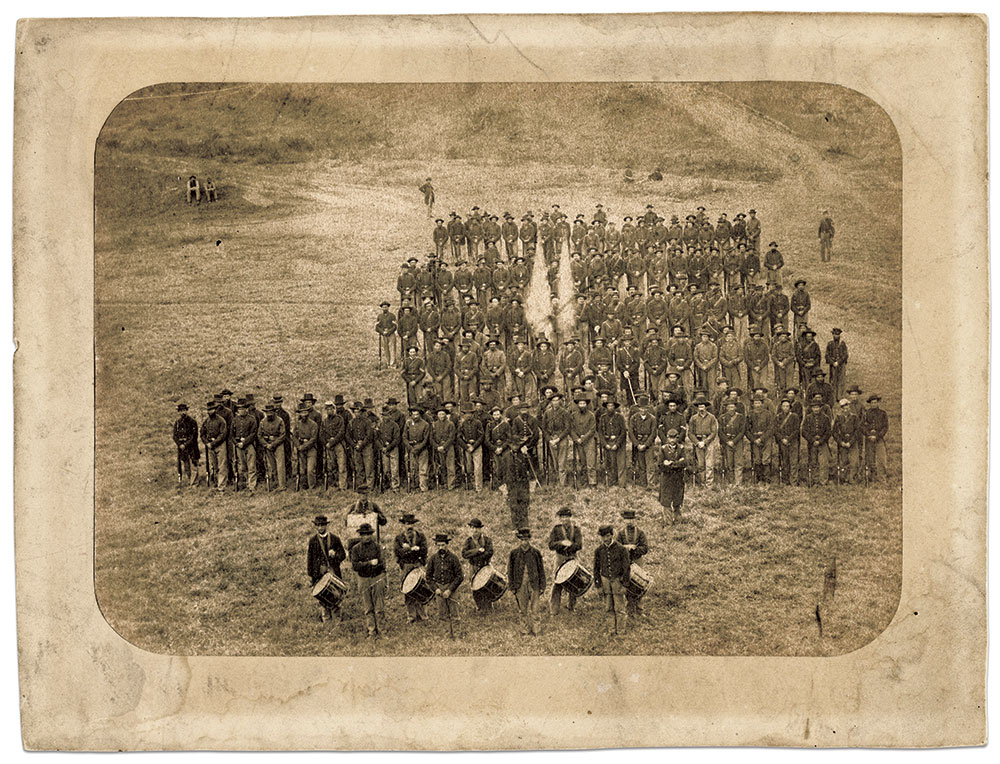
Reactions to Logan’s speech were widely published in the Northern press by those in attendance. One correspondent referred to it as a “thrilling speech in favour of the new policy, endorsing most cordially the policy adopted by the President.”[25] Illinois artilleryman David Cornwell described it as “a rattling ten minute speech.”[26] Logan, reflecting his unique capabilities as a politician and speaker, successfully explained and reframed emancipation so as to turn a crowd of lukewarm dissenters into champions. “The 31st was won,” referring to the Southern Illinois veterans, “from that day forward we heard but little against negro troops.”[27] W.S. Post, the chaplain of the 81st Illinois, shared with a St. Louis newspaper that “the policy as announced by Major-General Thomas at Lake Providence…meets with a hearty and enthusiastic response from our noble soldiers. Entire uniformity of sentiment and harmony of sentiment seem to prevail.”[28] The Illinois State Journal found Post’s observation compelling, informing readers that the 81st Illinois was raised in the southern portion of the state and that the chaplain “was an earnest and active Democrat.”[29] Private Edwin Philbrook of the 8th Illinois explained bluntly, “We are in favour of anything that will put down the rebellion in such a way that the canker, slavery, shall fall with it.”[30]
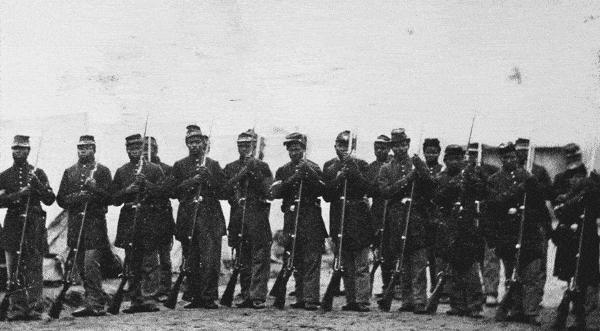
Logan’s speech did not aim to change prevailing racial attitudes. It neither validated or repudiated them, and did not challenge the audience to reconsider them. His speech succeeded by sidestepping the racial and social tensions around emancipation and instead putting the question in plain, self-interested terms that made sense to the men at the sharp end of the war. Breaking slavery and arming freedmen not only undermined the ability of the Confederacy to maintain the war effort, but turned that labor against it. Every black soldier in uniform represented a shorter fight – and a better chance of returning home safely. Emancipation, as framed by Logan, was pure pragmatism. His own evolution on the subject was not only relatable to the men; his reputation on the matter gave each soldier a permission structure to take the same leap upon the same premise.
As he had many times before, Logan confounded expectations. In doing so, he reflected the high praise of Charles A. Dana, the assistant secretary of war, who observed of Logan that “few can serve the cause of the country more effectively than he, and none serve it more faithfully.”[31]
Endnotes
[1] Cincinnati Daily Commercial, April 17, 1863.
[2] The War of the Rebellion: The Official Records of the Union and Confederate Armies, Series 3, Vol. 3, 100.
[3] R.L. Howard. History of the 124th Illinois Infantry Volunteers, otherwise known as the ‘Hundred and Two Dozen’. (Springfield, IL: H.W. Rokker, 1880), 65; Bloomington [IL] Pantagraph, April 18, 1863.
[4] David Cornwell. The Cornwell Chronicles: Tales of an American Life on the Erie Canal, Building Chicago, in the Volunteer Civil War Western Army, on the Farm, in a Country Store. John Wearmouth, ed. (Bowie, MD: Heritage Books, 1998), 187.
[5] William F.G. Shanks. Personal Recollections of Distinguished Generals. (New York: Harper and Brothers, 1866), 307; James Pickett Jones. John A. Logan and Southern Illinois in the Civil War Era. (Carbondale: Southern Illinois University Press, 1995), 174.
[6] Jones, 2.
[7] John A. Logan in Jones, 18.
[8] Illinois State Journal, January 11, 1860; Jones, 44.
[9] The State Journal-Register, April 15, 1863.
[10] St. Louis Globe-Democrat, April 15, 1863.
[11] St. Louis Globe-Democrat, April 15, 1863.
[12] The State Journal-Register, April 15, 1863.
[13] Chicago Tribune, April 11, 1863.
[14] Chicago Tribune, May 27, 1863.
[15] Ulysses S. Grant. Personal Memoirs of U.S. Grant. (New York: Charles L. Webster & Company, 1894), 294.
[16] William S. Morris. History of the 31st Regiment Illinois Volunteers, Organized by John A. Logan. (Evansville, IN: Keller, 1902), 179.
[17] Howard, 66.
[18] Edwin Philbrook in Bloomington [IL] Pantagraph, May 20, 1863.
[19] Ibid.
[20] Howard, 66-67.
[21] Howard, 67.
[22] Howard, 67.
[23] Ibid, 67.
[24] Bloomington [IL] Pantagraph, April 18, 1863.
[25] Bloomington [IL] Pantagraph, April 18, 1863.
[26] Cornwell, 187.
[27] Howard, 67.
[28] W.P. Post, “The Army on the Contraband Question”, St. Louis Globe-Democrat, May 4, 1863.
[29] Illinois Weekly State Journal, May 13, 1863.
[30] Edwin Philbrook in Bloomington [IL] Pantagraph, May 20, 1863.
[31] Charles A. Dana. Recollections of the Civil War. (New York: D. Appleton & Company, 1898), 67.


Truly, one person can make a difference.
The more one learns of John A. Logan the more impressive he is revealed to be. He is arguably the best non-West Point educated general during the Civil War.
Thanks for this interesting piece. I wasn’t aware of Logan’s speech. What a contrast to McClellan’s reaction to the EP and, even more so, to the reaction of McClellan’s subordinate and friend Porter, whose correspondence on the issue with the anti-administration New York World editor Manton Marble was – even as minimized by Porter’s sympathetic biographer Marvel – “seditious sounding”.