Chasing Light and Memory: Photographing Civil War Battlefields
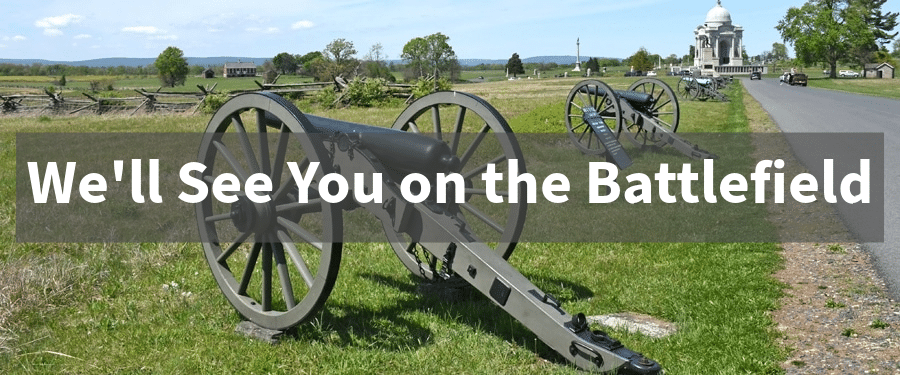
There is a reason some of us photographers return to Civil War battlefields again and again. Long after the battles have ended and the smoke has lifted, these landscapes still carry atmosphere, emotion, and memory. For photographers, they offer something increasingly rare: preserved spaces where history and landscape still speak with remarkable clarity.
Civil War battlefield photography is not just about monuments or cannons, although they can lend themselves well to setting a scene. The best images often emerge from moments — morning fog hanging low over East Cemetery Hill at Gettysburg National Military Park, a multi-hued sunrise over the fields of Antietam National Battlefield, or a winter snow tracing the contours of Henry Hill at Manassas National Battlefield Park. The landscape itself is a storyteller.
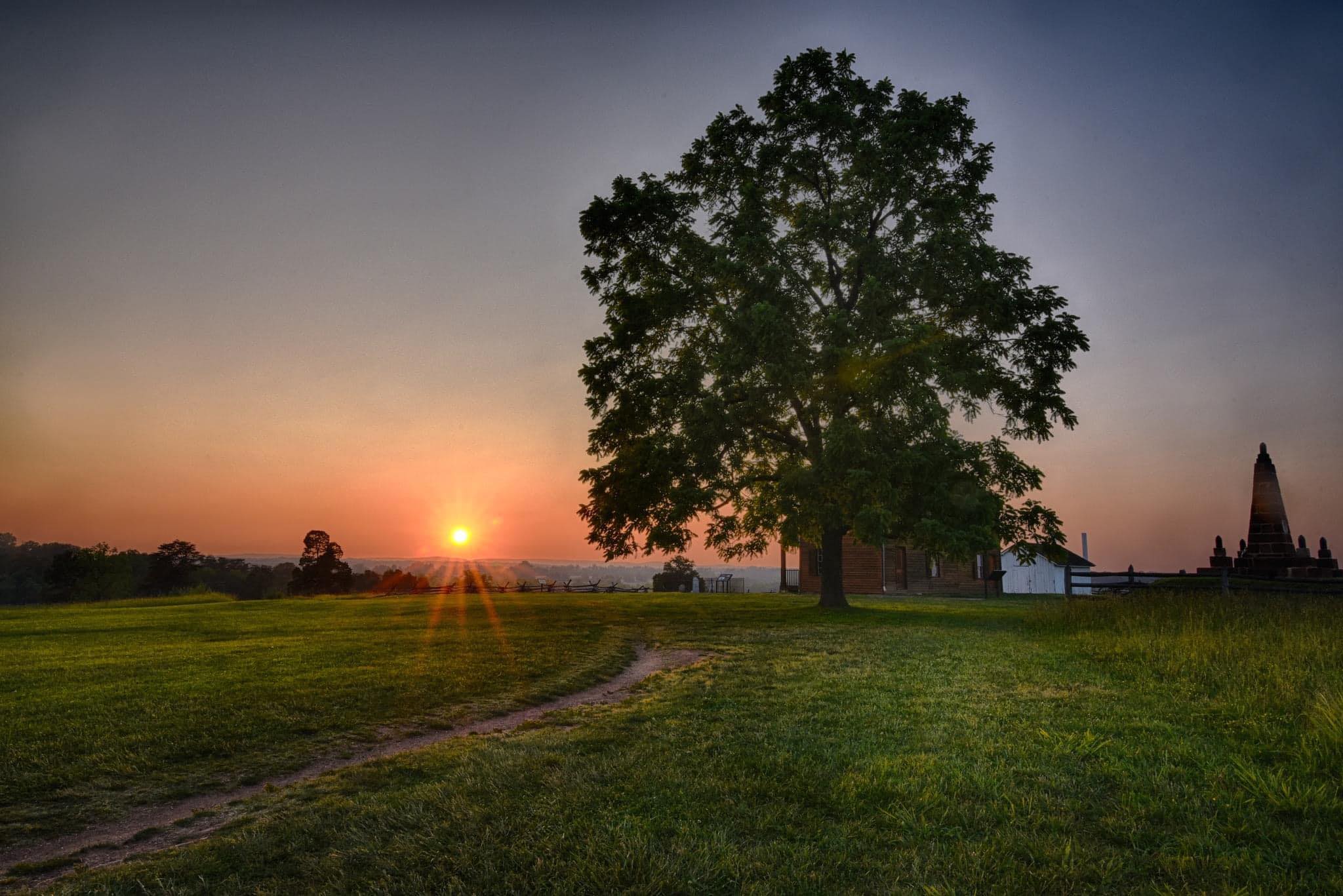
I see the light.
The most rewarding battlefield photography rarely happens at Noon. (My family portrait clients will tell you I say the same about outdoor portrait sessions. I don’t book them at Noon, when the sun is high in the sky, creating harsh unflattering shadows.) Sunrise and sunset offer muted or dramatic light that can transform familiar ground into something evocative and atmospheric. (The absence of crowds of visitors is also invaluable.) Early morning light softens the terrain and creates layers of mist that can render a familiar space unrecognizable and add a sense of mystery. East Cemetery Hill on the Gettysburg battlefield is one of my favorite morning spots for photography. As the sun rises, the silhouette of the monuments against the sky is dramatic and moody. The fog often settles on the field below and hangs still as sunrise colors the sky beyond with beautiful hues. At dusk, warm light catches monuments, split-rail fences, and tree lines in ways that can feel almost painterly. The same field photographed at different hours, or in different seasons, can become an entirely different place.
Sky, glorious sky.
Nothing makes or breaks a photo faster than the sky. Fog and storm clouds often can create compelling photographs. So, too, can a bold beautiful blue sky with buoyant white clouds. A dramatic sky over a battlefield like Fredericksburg and Spotsylvania National Military Park can convey tension and scale in ways bright sunlight cannot. It creates a backdrop for monuments, buildings, bridges, and skylines that an overcast white sky evaporates. See here, two photos of Fort Negley I captured on the same day, May 17, 2023. The first one at about 9:00 a.m. was taken with an overcast, colorless sky. The front gate section is imposing and enchanting, but the white sky steals its thunder. By Noon of the same day the sky was a striking blue with big bold clouds. You can see the dramatic difference.
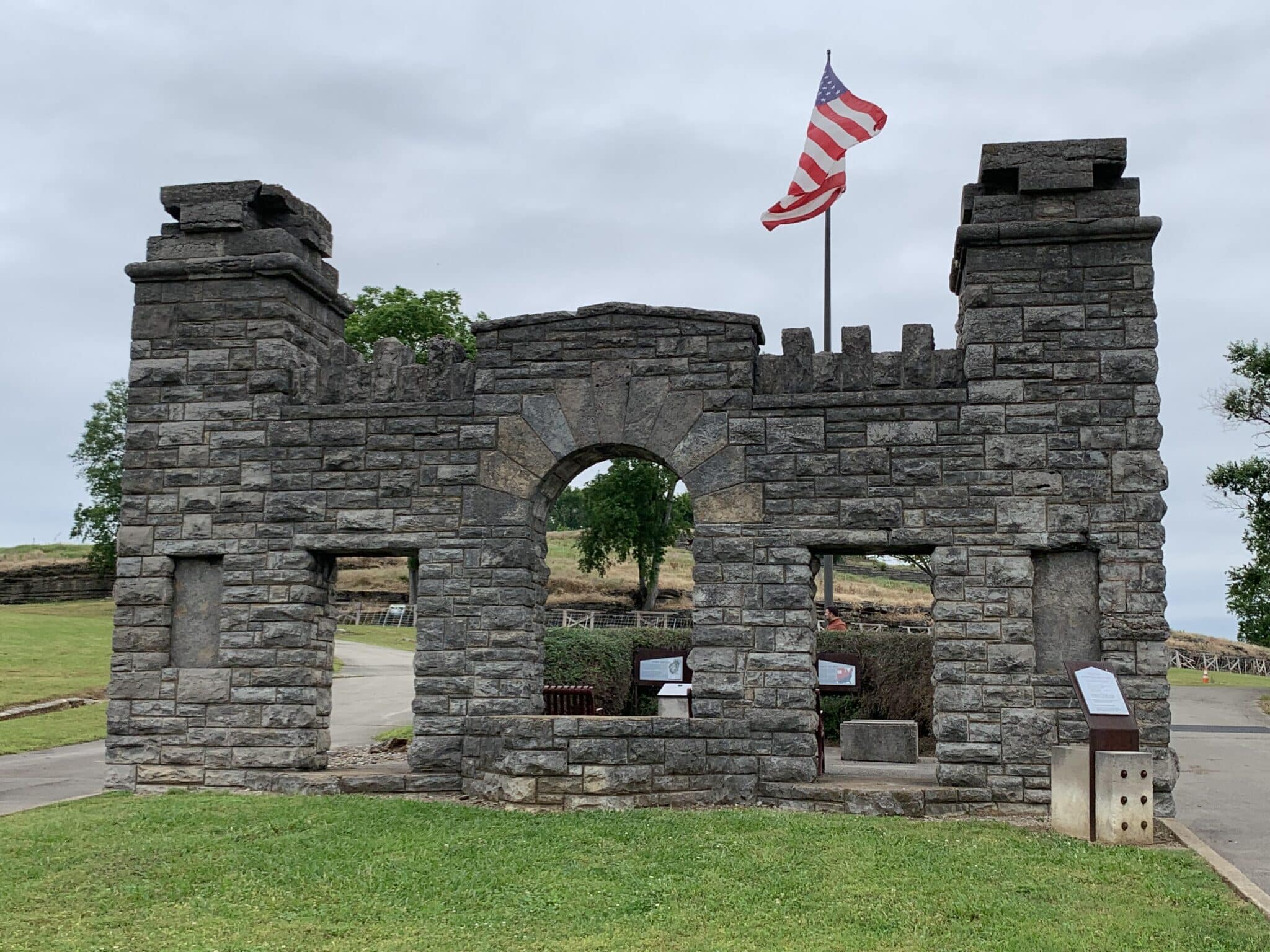
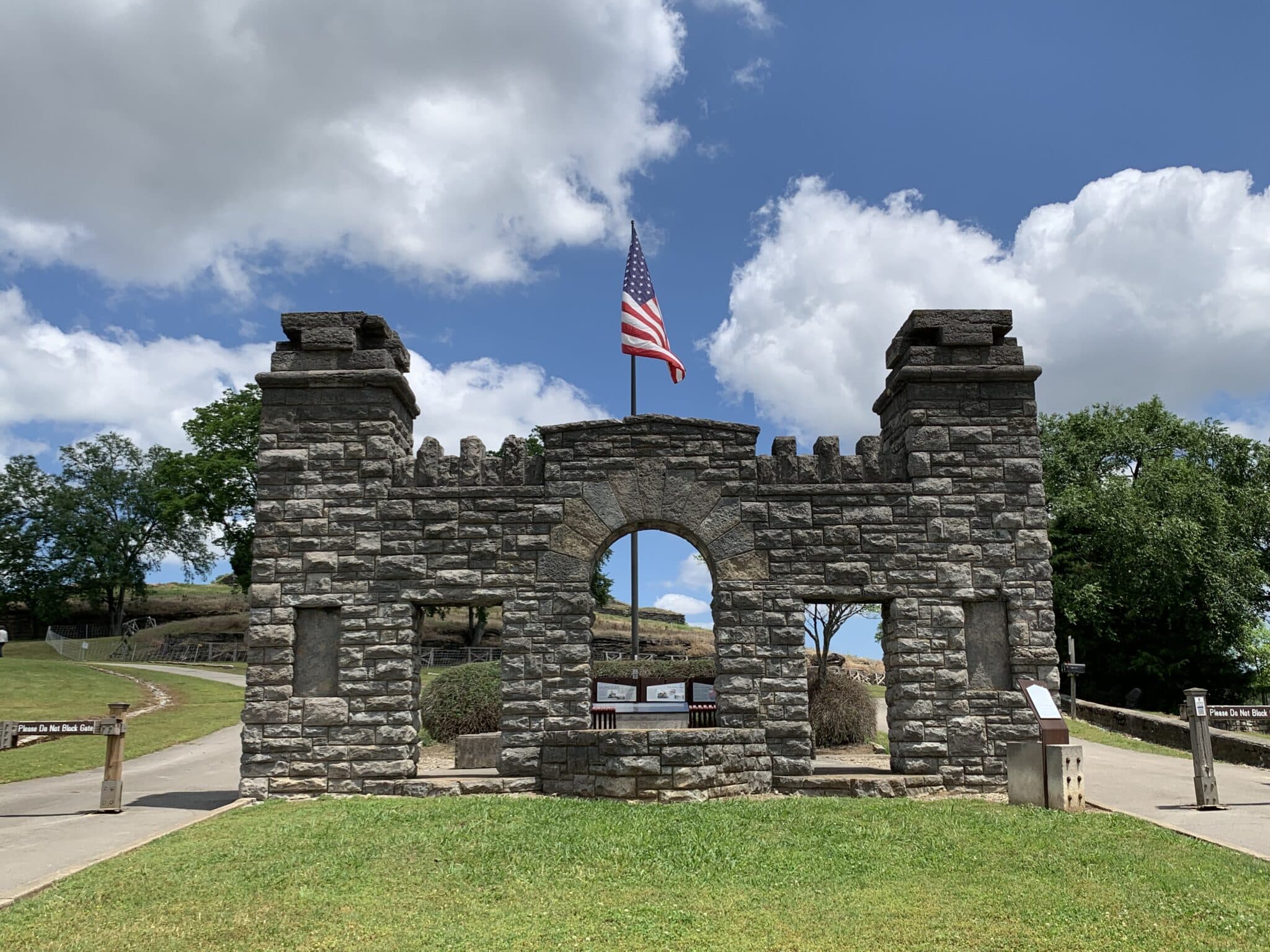
Many a friend and co-worker has heard me glory about a stunning blue sky with fluffy clouds and, likewise, whine and complain about a vacant white sky that steals any drama from a photo. Many will also tell you that I’ve spent an entire morning photographing sites with that dreadful white sky only to have the afternoon sky erupt in a blazing blue with scenic clouds like this Fort Negley example and that I’ve then dragged said friend or co-worker back to every site photographed in the morning to shoot them again under the new sky.
Which brings me to the most important tip that the best battlefield photographers have learned.
Patience is a virtue rewarded.
Waiting for the right light or sky can take time. It might mean arriving at the battlefield an hour or two before the sunrise to setup your camera or it might mean waiting at day’s end behind a camera and tripod for an hour or more for sunset. It might mean coming back a second day when a sky is more amenable to being photographed and act as a backdrop.
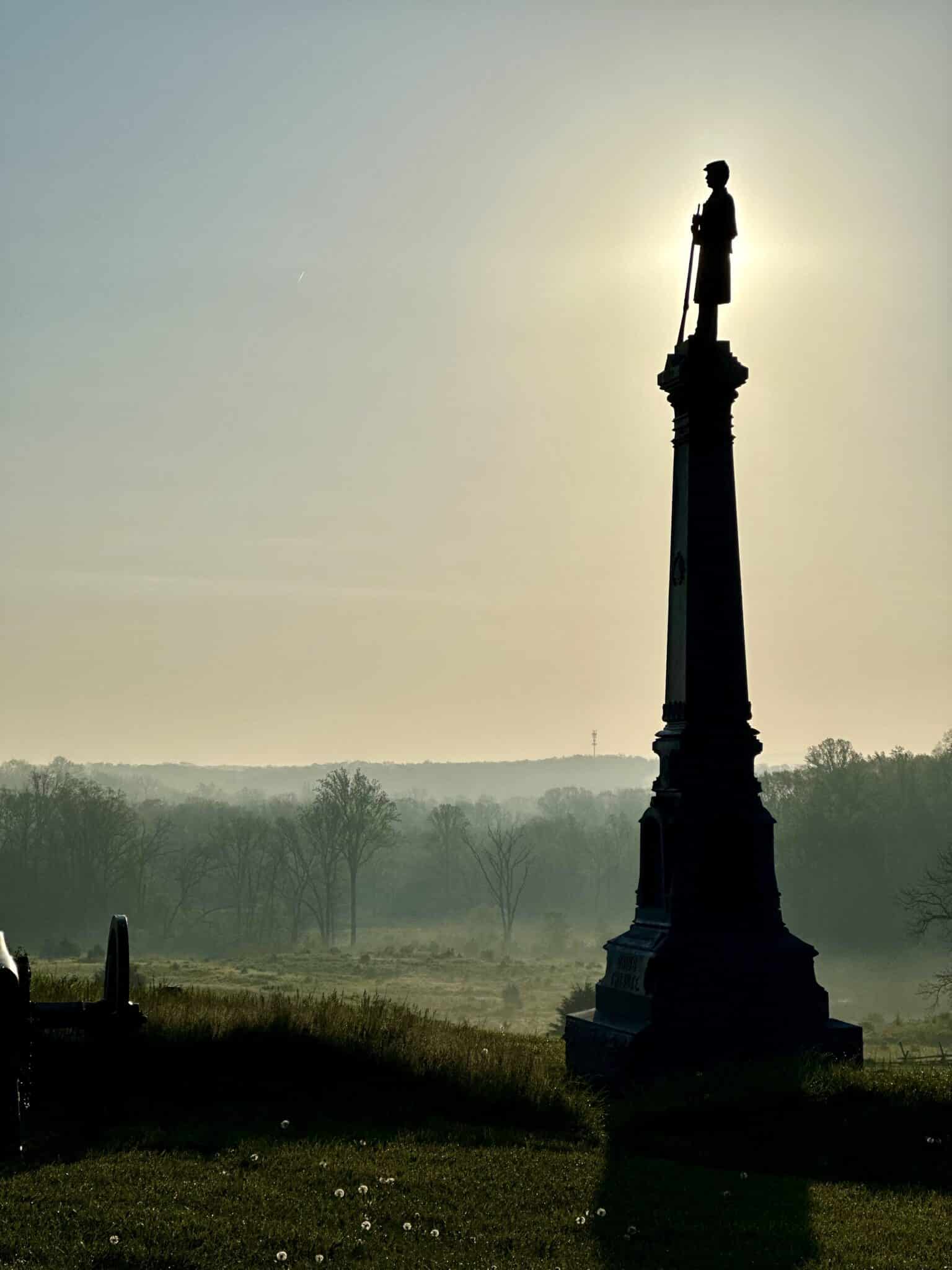
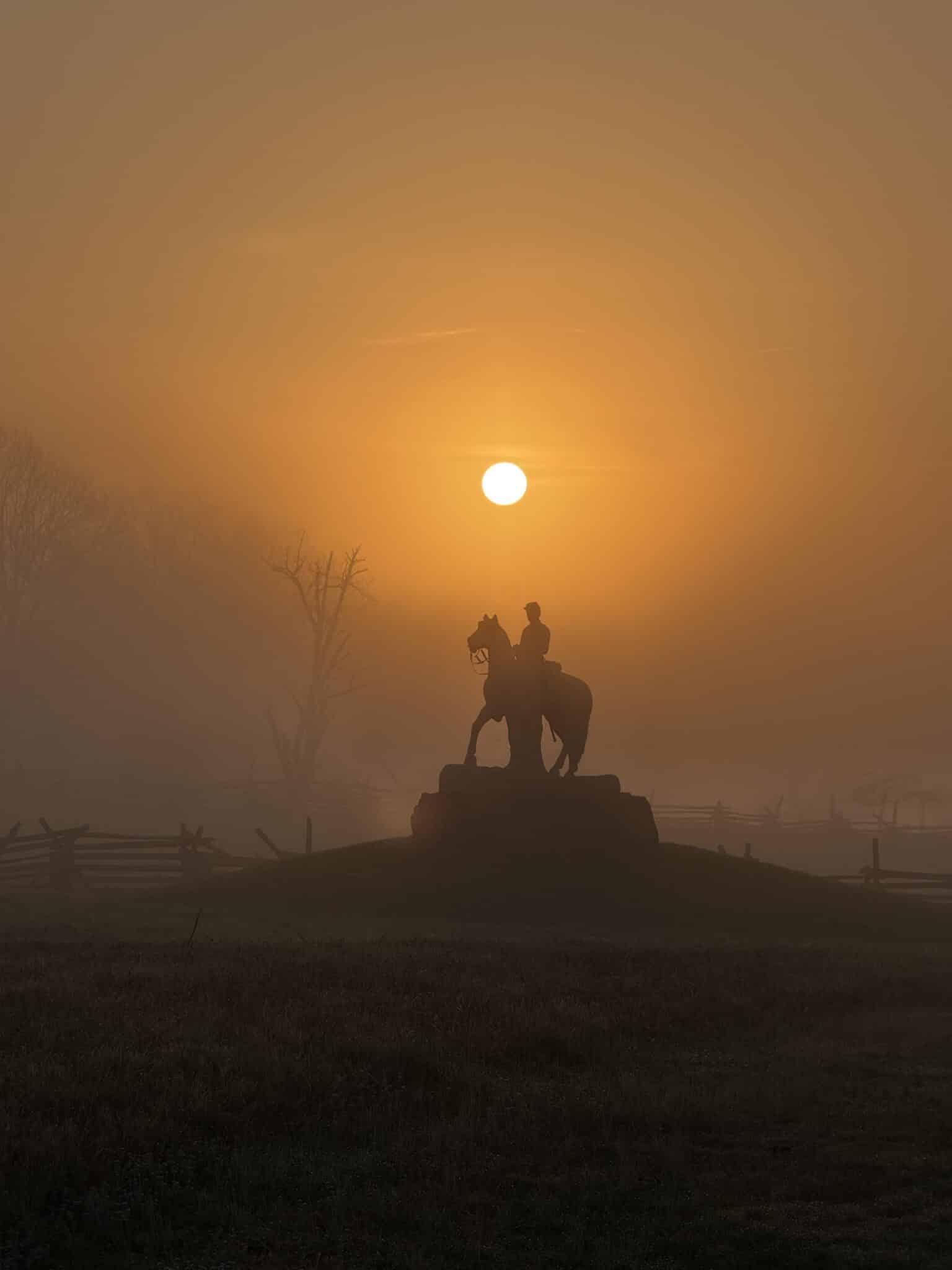
Patience includes a new vision. Theatrical skylines and landscapes may not be possible if the conditions on your visit don’t present and you don’t have time to reschedule or return anew the next morning. In that case, good photographers will look for alternative visions or focus. It’s tempting to photograph only the obvious landmarks, but meaningful images often appear in overlooked details: worn pathways, weathered grave markers, rusted iron fences, a monument’s details or relief, or the way light filters through trees planted long after the fighting ended. On a recent trip to Gettysburg, I ventured to Hancock Ave. in early morning to capture the fields at sunrise, but a fog hung over the battlefield so thick there was barely a sightline. I concentrated instead on details, like this photo of the 8th Pennsylvania Cavalry monument off Pleasonton Ave., a monument I’m embarrassed to say I had hardly ever noticed before as it sits so far back off Hancock Ave., it gets lost in the field. The sunrise glowed orange around it and its silhouette immediately drew me in. A lone monument framed against a backdrop of light or fog can say more than an entire panorama.
Battlefield photography exists somewhere between landscape photography and historical reflection. The camera captures trees, fences, monuments, and skies, but also something harder to define: the lingering presence of the past.
Every battlefield has its own personality. The challenge — and the reward — is learning how to see it.


Great artistic work, evocative of what occurred there. One thing is, we tend to see many more photos of the battlefields that are major national parks, the monuments and statues, etc. I’d like to see photos like this of the fields that are less developed, more rustic, such as the sites of the Seven Days Battle(s) – at least, those spots that have not been covered over with roads and burger joints.
Very good article, by a fantastic photo “
Thanks, Phil! ♥️
I love seeing your photography, I can only hope one day to be able to capture images like that. The 8th Pennsylvania monument is a favorite from what you’ve posted here.
Thank you! It was a beautiful morning on the battlefield and glad I was there to capture it! Look forward to your photos!!
Great article and magnificent photos. Always love your work.