Lincoln’s Directive When the Naval Going Got Tough: Send in Farragut!
While researching This Great Contest Afloat: The Civil War on the Seas, Coastline, Rivers, and Oceans, I stumbled on some really interesting anecdotes. One of my favorites was Lincoln ordering Farragut to be sent to Virginia in early 1865 when things got tough.
By 1865, David G. Farragut had rightfully earned the reputation as the United States Navy’s most capable squadron commander and senior line officer. He ran his squadron past the batteries of Forts Jackson and St. Philip, Port Hudson, and Fort Morgan to secure New Orleans, Port Hudson, and Mobile Bay respectively. When a tough assignment appeared, Farragut was one of just a few naval officers constantly pressed into service. The grade of vice admiral was created in late 1864, and Farragut became the first to hold such a title in U.S. naval history. Titles and accolades are one thing, but I imagine that the best testament to Farragut’s wartime standing occurred in January 1865, when President Abraham Lincoln desperately called on him to save Ulysses Grant’s base at City Point.
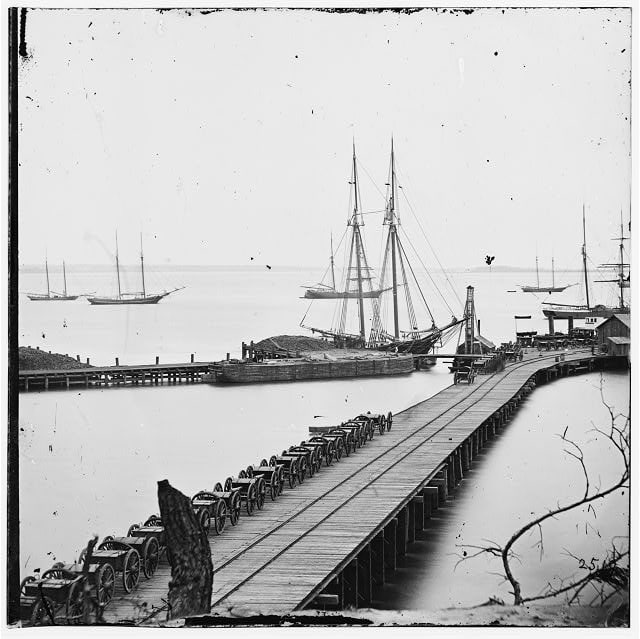
The water space around City Point was under the jurisdiction of the navy’s North Atlantic Blockading Squadron, but in late 1864, most of its efforts focused south to the Cape Fear River and silencing the Confederate bastion of Fort Fisher. First efforts in December 1864 proved catastrophic, proving that Rear Admiral David Dixon Porter commanding the squadron and Maj. Gen. Benjamin Butler commanding the assault force could not work together.
Sailors demanded a military officer who could work with Porter. The admiral insisted Grant “send me the same soldiers with another General and we will have the fort,” while junior officers lamented they could “silence the forts, but cannot take them without a soldier to command the troops.”[1] Butler was supplanted with Maj. Gen. Alfred H. Terry, and in January 1865 the great assault against Fort Fisher was relaunched, ultimately succeeding.
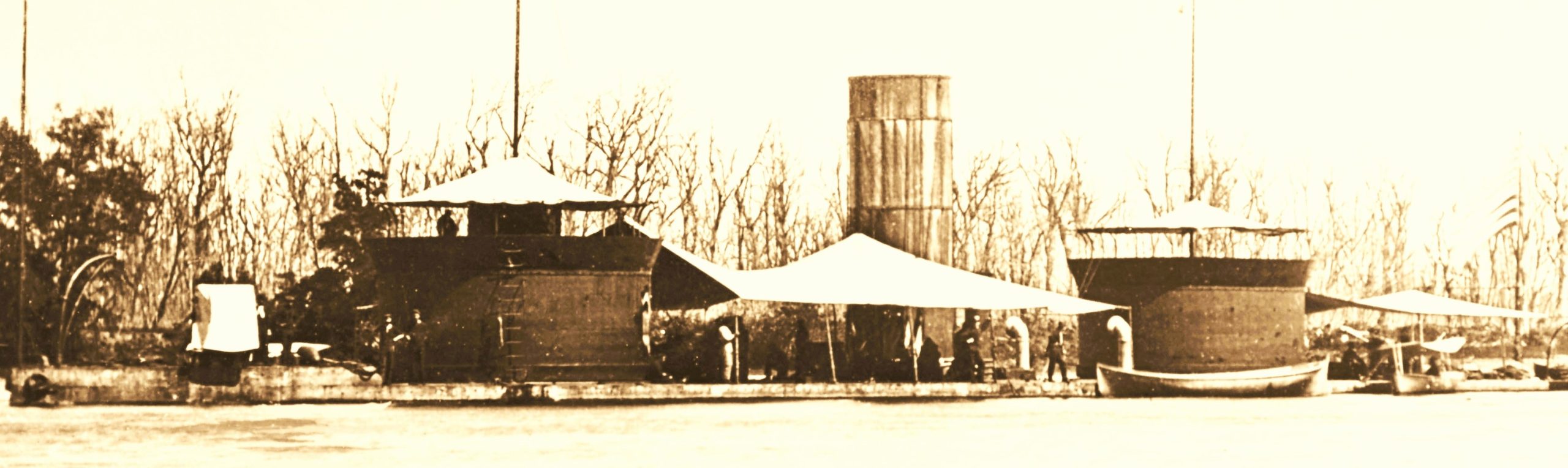
Confederates on the James River knew the North Atlantic Blockading Squadron was prioritizing Wilmington, which left Federals in Virginia only one ironclad, USS Onondaga, and a handful of wooden gunboats guarding Grant’s supply base at City Point. Onondaga was a double-turreted monitor-style ironclad. Its pair of 15-inch Dahlgrens and pair of 150-pound Parrot guns were few in number, but massive.
In late January, hoping to destroy supplies and break Petersburg’s siege, Capt. John K. Mitchell steamed the bulk of the Confederacy’s James River Squadron downriver. His assault force included the ironclads Virginia II, Fredericksburg, and Richmond, as well as five wooden gunboats and three torpedo boats. To reach City Point, they needed to navigate a minefield, shore batteries, river obstructions, and guard ships.
Things initially seemed cheerful for the Rebels, with Federal wooden ships withdrawing, unwilling to give battle. Sensing his naval support collapsing, and all of his transports at risk of a Confederate assault, Grant quickly sent a note to Assistant Navy Secretary Gustavus Fox in Washington explaining the situation and admitting he expected “little assistance … from the navy.”[2]
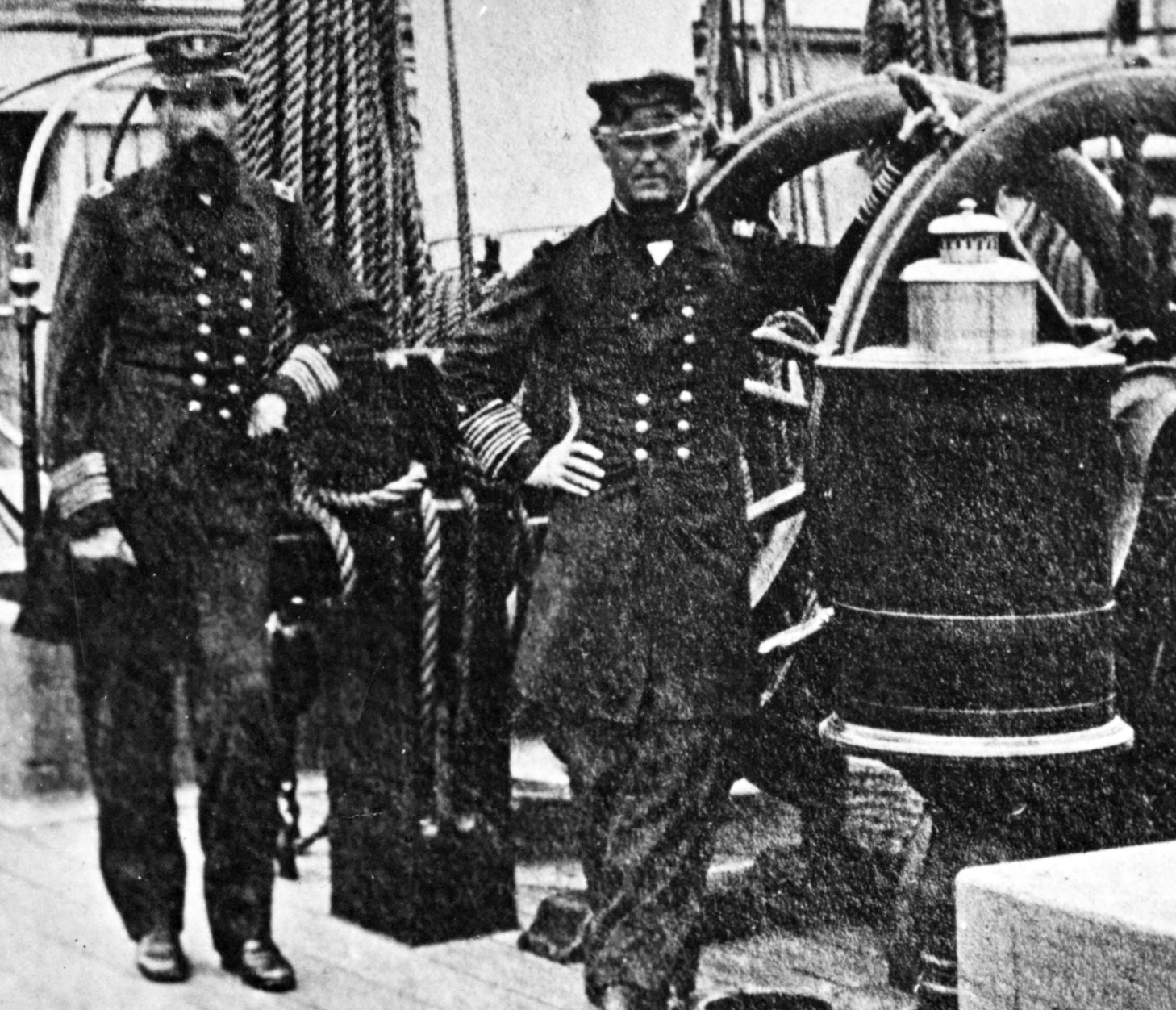
Fox took the note to Navy Secretary Gideon Welles, and even to Abraham Lincoln. After conferring with everyone, a flurry of telegrams were dispatched to Virginia. One from Welles told the naval officers on the James River to get their ships in order and strike the Confederate ironclads. But another telegram back to Grant began with some surprising information: “The President just sent for me and suggested that Admiral Farragut should go to the James River, and leaves for Annapolis in an hour.[3]
Farragut was then in New York City, and another telegram was rushed to him to get to the James River as soon as possible. If the Confederates pressed their attack, Lincoln wanted his best naval officer on the scene, a true testament to the president’s trust in Farragut’s abilities.
Before Farragut reached the scene however, things had been resolved. Mitchell’s advance proved disastrous, as ships struggled passing obstructions. Four ships grounded on January 24. Meanwhile, the double-turreted monitor Onondaga and supporting gunboats finally closed to give battle in what became the battle of Trent’s Reach. Commander John M. Kell, commanding the ironclad Richmond, recalled how Federal ships “pelted us for over six hours.”[4] Armor was penetrated on the Confederate ironclads. CSS Drewry, CSS Scorpion, and one torpedo boat became “nothing but a mass of ruins” and were lost.[5] After refloating his ironclads, Mitchell acknowledged “the failure of our enterprise” and withdrew, ending the Confederacy’s last serious naval offensive.[6]
City Point was safe and the siege of Richmond and Petersburg continued, though without Farragut present; instead, the admiral had the sure knowledge that he held the full confidence of President Lincoln, a man who three months later he would act as pallbearer for.
Endnotes:
[1] David D. Porter, Incidents and Anecdotes of the Civil War (New York: D. Appleton and Company, 1885), 273; Lamson to Kate, Dec. 27, 1864, James McPherson and Patricia R. McPherson, Lamson of the Gettysburg: The Civil War Letters of Lieutenant Roswell H. Lamson, U.S. Navy (New York: Oxford University Press, 1997), 217.
[2] Grant to Fox, Jan. 24, 1865, Official Records of the Union and Confederate Navies in the War of the Rebellion, Series 1, Vol. 11, 635.
[3] Fox to Grant, Jan. 24, 1865, ORN, Series 1, Vol. 11, 637.
[4] John McIntosh. Kell, Recollections of a Naval Life: Including the Cruises of the Confederate States Steamers, “Sumter” and “Alabama” (Washington: The Neale Company, 1900), 269.
[5] Wall to Mitchell, Jan. 25, 1865, ORN, Series 1, Vol. 11, 679.
[6] Mitchell to Mallory, Jan. 25, 1865, ORN, Series 1, Vol. 11, 668.


