The 77th Pennsylvania Monument Dedication at Shiloh: A Party of One
ECW welcomes back guest author Dean W. Chester.
On the morning of April 6, 1862, most of Maj. Gen. Don Carlos Buell’s Army of the Ohio was 20 miles east of the Tennessee River and Pittsburg Landing, the location of his planned rendezvous with Maj. Gen. Ulysses S. Grant and the Army of the Tennessee, when the sounds of artillery were heard in the distance. The 77th Pennsylvania Infantry and the other regiments of Brig. Gen. Alexander McCook’s 2nd Division, 5th Brigade, quickly drew additional ammunition and rapidly moved towards the sounds of battle. They arrived at the river that evening.
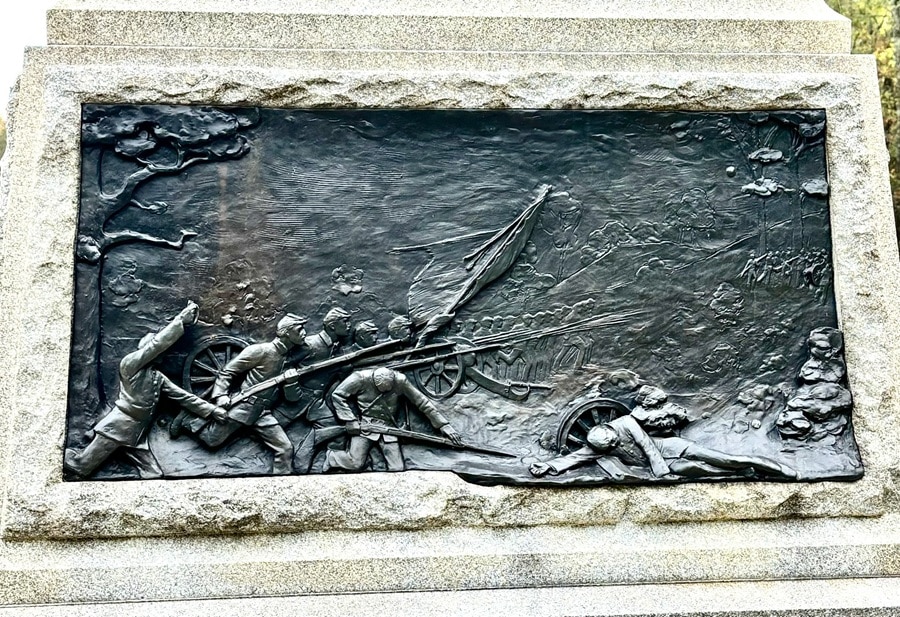
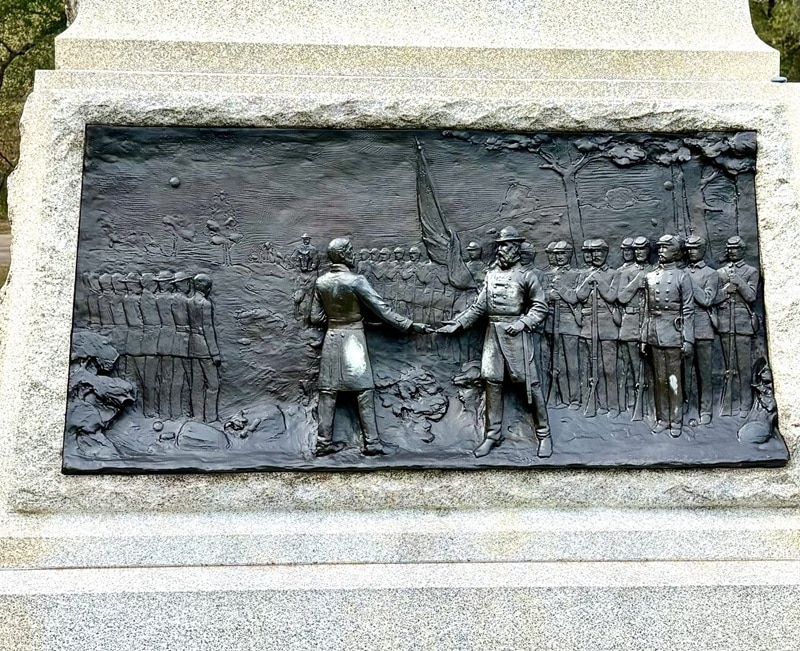
At about 4:30 a.m. on April 7, the 500 men of the 77th began crossing the river by transport steamers.[1] During the afternoon’s fighting the 77th, positioned on the division’s extreme left, charged a Confederate battery, capturing two cannons and many prisoners, including Col. Joel Battle of the 20th Tennessee. The regiment sustained light casualties, 3 killed and 7 wounded.[2] The 77th went on to fight in 26 major actions and many smaller engagements in the Western Theater. On January 16, 1866, the men of the 77th were discharged from service as the “last Pennsylvania regiment to leave the field.”[3]
In the years after the war, the Commonwealth of Pennsylvania and Pennsylvania veteran associations actively promoted the construction and dedication of monuments recognizing the sacrifices made by Pennsylvanians from 1861-1865. For over 25 years, the focus was on the Eastern Theater. After the establishment of the Chickamauga-Chattanooga National Military Park in August 1890, the Commonwealth and veterans worked to place monuments there and on November 15, 1897, “Pennsylvania Day,” 15 monuments were accepted by the park. This included one for the 77th.[4] Veterans of the regiment asked, “Why a monument wasn’t also erected at Shiloh?”
The answer was simple: location and access. Chickamauga was connected by road and rail networks to major cities, which included Chattanooga, Tennessee and Atlanta, Georgia. Shiloh was not. The nearest railroads were in Corinth, Mississippi, 21 miles south of the battlefield, and the connecting roads were poor. Primary access was still by river steamer from Johnsonville, Tennessee.[5]
Finally, in June 1901, the Pennsylvania legislature authorized the creation of the Shiloh Battlefield Commission (SBC) and appropriated $5,000 for a monument to the 77th, to be placed at Shiloh, and an additional $1,000 for expenses incurred by the commission. Governor William A. Stone, a Civil War veteran, signed the appropriation on July 18, reducing the amount to $4,000 for the monument and eliminating the funds to cover the commission’s expenses. The reduction, he said, was a result of “insufficient State revenue.”[6] On September 20, Stone selected seven men to serve as commissioners for the battlefield commission.[7] The commissioners met for the first time on October 15; among the actions taken was the selection of John Obreiter, a former sergeant in Company K, as Chairman, creation of an executive committee, and an agreement for a single monument.[8]
Working quickly, the commissioners met with representatives of the Shiloh National Military Park Commission and Atwell Thompson, the park engineer, at the battlefield on November 23. They selected a site at the southwest corner of Review Field.[9]
While the site visit was taking place the SBC issued a call for design submissions. The design was for a single monument of granite and bronze, the cost not to exceed $3,000 including materials, construction, transportation, and erection on the battlefield. The SBC, working within Gov. Stone’s funding revisions, held the remaining $1,000 to address cost overruns and authorized add-ons.
The contract was awarded to the Harrison Granite Company of New York City on February 27, 1902. The delivery date was September 15, 1902.[10] Unfortunately, the remoteness of the battlefield and water levels in the Tennessee River prevented delivery until March 30, 1903. The work was completed less than a month later.[11]
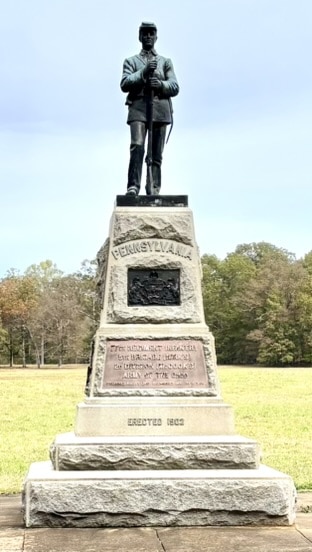
On May 19, Chairman Obreiter, Commissioner Michael McNally, and Thompson inspected the monument and a concrete pad that had been approved. Obreiter examined the carved granite and the bronze statue atop the stone. It is likely, as he gazed at the statue, he felt a surge of pride with a flash of humility. A wartime photo of Obreiter had been used for the statue, and he was surprised how recognizable he was.[12] On the southward facing front of the monument was a bronze state seal and panel that read:
77th Regiment Infantry
5th Brigade (Kirk’s)
2d Division (McCook’s)
Army of the Ohio
Organized August 1, 1861 — Discharged January 16, 1866.
There was a bas-relief of the charge on the battery on the west face and a bas-relief of the surrender of Col. Battle on the east face.
There was another bronze panel on the north face that read:
The 77th Penna. arrived at Pittsburg landing at 7:00 A.M. April 7, 1862. It was the only Pennsylvania regiment on the field.
About 2:00 PM the regiment charged upon and captured two guns of a Confederate battery.
“Being now satisfied that the enemy had changed his point of attack from the right to my left, I ordered the 77th Penna. to take a position on my extreme left and repel the assault there being made. It immediately engaged the enemy. At this moment the contest along the whole line became terrible.”
“This regiment partially isolated from the division, moved steadily over the field under a heavy fire, while here the enemy’s cavalry charged it twice, but were each time repulsed with heavy loss. Colonel Stumbaugh had the satisfaction of receiving the sword of Colonel Battle of the 20th Tenn., who surrendered as a prisoner.”
General McCook’s Report.[13]
Obreiter and McNally approved the work, paid $4,000, and accepted the monument from the contractor.
With the monument completed, Pennsylvania officials and the SBC began developing plans for a dedication ceremony to be attended by as many surviving veterans of the 77th and other guests as possible. On March 25, the legislature appropriated $5,000 for veterans to travel to the dedication and return home.[14]
In June, the adjutant general’s office sent notice to G.A.R. posts across the state advising veterans how to secure free transportation to attend the dedication. The response was overwhelming, with 77th veterans from across the state requesting transportation. There were two other commissions working on dedication ceremonies, so Gov. Samuel Pennypacker decided to consolidate the three: Andersonville Prison, November 10; the 73rd Infantry at Chattanooga, November 11; and Shiloh, November 16.[15] Delays and funding limitations forced the postponement of the Andersonville ceremony, so the 73rd and 77th dates were revised to November 9 and 12, 1903.[16]
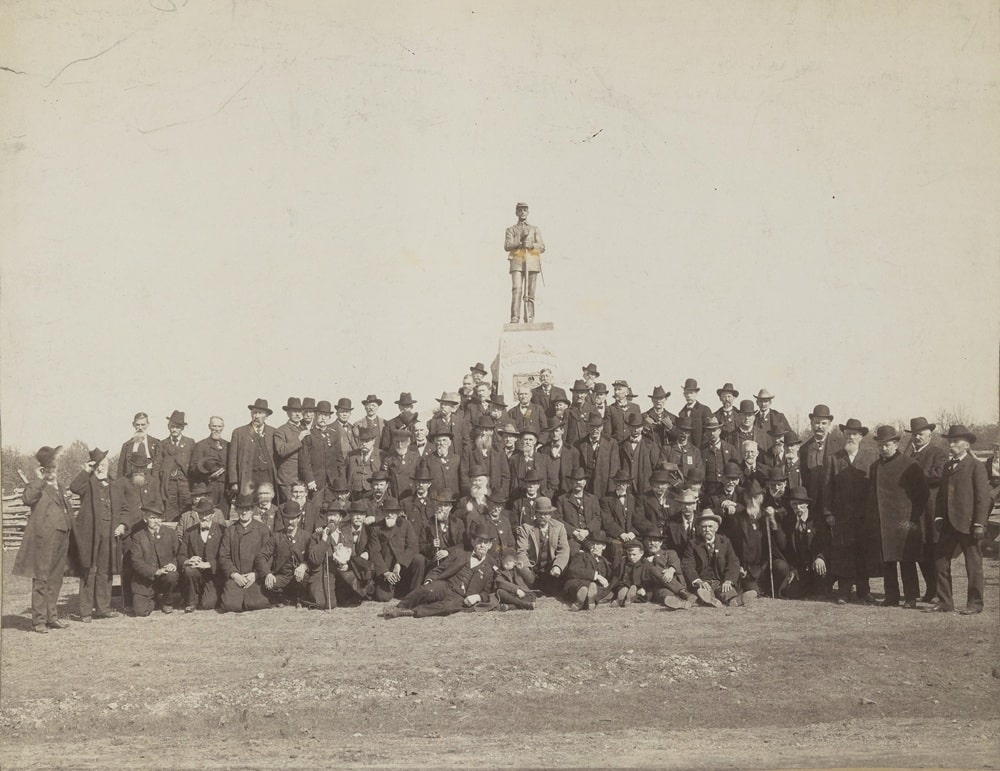
Some 77th veterans attended the 73rd ceremony while others continued to Corinth so they would be on the battlefield by November 12. Governor Pennypacker, commonwealth officials, and 77th veterans arrived at Pittsburg Landing aboard the steamboat Clyde at 5:30 a.m. on November 12. During the ceremony Pennypacker, on behalf of the commonwealth and the regiment, presented the monument to Cornelius Cadel, chairman of the commission. Speeches were made, photos were taken, then attendees made their way back to Corinth by road or to Johnsonville by steamboat. Eighty-three veterans attended the dedication ceremony, reconnecting with friends and comrades they had not seen in years, honoring brothers who died here or on one of the other 25 battlefields upon which they fought.[17] After the ceremony, according to the Chattanooga Daily Times, “The Pennsylvanians were loud in their expressions of gratitude to the National Commission for the many courtesies shown to them.”[18] The 77th was the only regiment from east of the Ohio River to fight at Shiloh.[19]
Dean W, Chester supports battlefield preservation and education through local and national trusts and foundations. Mr. Chester lives in Northern Virginia.
Endnotes:
[1] The Seventy-Seventh Pennsylvania at Shiloh, History of the Regiment (Harrisonburg, PA: Harrisonburg Publishing Co, State Printer, 1908), 78-79.
[2] 77th, 80-83.
[3] 77th, 228.
[4] Pennsylvania at Chickamauga and Chattanooga, Ceremonies at the Dedication of the Monuments Erected by the Commonwealth of Pennsylvania (Harrisonburg, PA: State Printer of Pennsylvania, 1900), 193.
[5] 77th, 25.
[7] “Monument Commission Named”, Lancaster New Era, September 20,1901.
[8] 77th, 17-18, 291.
[9] “Monument to Seventy-Seventh”, Lancaster New Era, November 27, 1901; 77th, 18.
[10] 77th, 20-21.
[11] 77th, 25.
[12] 77th, 24-25.
[13] 77th, 23-24.
[14] “Bills in the House”, The Philadelphia Inquirer, March 25,1903; “Monument at Shiloh”, Public Opinion (Chambersburg, PA), April 22, 1903.
[15] “Dates Set for the Dedication of Monuments in the South”, The Evening Star (Washington, DC), July 23, 1903.
[16] “Dedication of Monument Postponed”, The Harrisburg Telegraph, October 9, 1903.
[17] 77th, 34, 59-61.
[18] “Shiloh Dedication”, Chattanooga Daily Times, November 15, 1903.
[19] “County’s Soldiers Share in Shiloh Memorial”, Public Opinion, July 31, 1902.


Nicely done. Certainly a point of pride for the soldiers and their descendants. Charging at cannons was serious business.