Poetry as Civil War Dispatch: Verse, News, and Grief in a Nation at War
ECW welcomes guest author Don Iannone.
A Civil War newspaper did more than report the war. It interpreted it. A reader in 1862 or 1863 might unfold a paper and find battle news, casualty lists, political speeches, recruiting notices, advertisements, and somewhere among them, a poem. The poem was not merely decorative; it gave emotional shape to the news. It told readers not only what had happened, but how it might be mourned, justified, remembered, or endured.
In that sense, Civil War poetry functioned as a kind of dispatch. It carried grief from the battlefield to the parlor, anger from the pulpit to the printed page, patriotism from public meetings to soldiers’ camps, and memory from fresh graves into national consciousness. In an age before radio, film, television, and digital media, verse helped Americans absorb events moving faster than their moral understanding could keep pace.
Emerging Civil War has explored this terrain before, including Sarah Kay Bierle’s discussion of poetry honoring African American soldiers and Caroline Davis’s treatment of Herman Melville’s Civil War verse. This essay builds on that conversation by looking less at one poet or poem than at poetry’s broader wartime function as news, mourning, argument, and memory.[1]
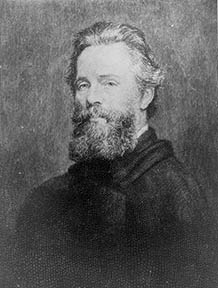
Poetry was everywhere in Civil War print culture. It appeared in newspapers, magazines, broadsheets, sheet music, song sheets, letters, and memorial programs. The Library of Congress notes that thousands of Civil War poems were written by everyday citizens and published in forms ranging from periodicals to broadsheets and song sheets. These poems inspired soldiers, mourned the dead, strengthened loyalties, and later helped shape the language of reunion and remembrance.[2]
The war’s great public documents, presidential addresses, military reports, congressional speeches, official correspondence, gave the conflict structure and policy. Poetry gave it a pulse. A battle report could say who advanced, who retreated, how many fell, and what ground changed hands. A poem could linger over the field afterward, when rain fell on the dead, when a mother read the name of her son, when a soldier tried to make peace with the fact that courage had not saved his friend.
That distinction matters. Civil War poetry should not be read only as literature in the narrow sense. It was a form of public discourse. It moved through the same channels as news and politics. Eliza Richards, in Battle Lines: Poetry and Mass Media in the U.S. Civil War, argues that Civil War poetry developed in close relation to mass media and modern warfare, as poets used inherited forms to make sense of unprecedented events for a reading public hungry for interpretation.[3]

The North and South both used poetry to explain themselves to themselves. Union poems often drew on the language of liberty, emancipation, sacrifice, and national preservation. John Greenleaf Whittier’s abolitionist verse placed slavery at the moral center of the crisis. George Henry Boker’s “The Black Regiment,” published in 1863, celebrated Black soldiers as active agents of freedom, valor, and national redemption. Walt Whitman’s war poems widened the field of vision, looking not only at causes and leaders but at bodies, wounds, hospitals, comradeship, and grief.
Confederate poetry often turned on honor, home, martial sacrifice, agrarian memory, and the defense of a threatened social order. Henry Timrod’s “Ethnogenesis” helped give lyrical expression to Confederate nationalism. Father Abram Joseph Ryan’s postwar “The Conquered Banner” became an elegy for defeat, loss, and Southern memory. Such poems were not neutral. They were part of the struggle to define what the war meant.
Poetry could rally. It could sanctify. It could also obscure. Much Confederate verse ennobled a cause built upon slavery, while much Northern verse could sentimentalize sacrifice without fully confronting racial injustice. That is one reason Civil War poetry remains so revealing. It exposes not only what Americans believed, but what they wished to believe.

The best Civil War poetry often resists easy triumph. Herman Melville’s Battle-Pieces and Aspects of the War, published in 1866, is a book of victory shadowed by unease. Melville did not treat the war as a simple pageant of glory. His poems return again and again to ambiguity, exhaustion, violence, and the cost of national survival. In “Shiloh,” the battlefield is quiet after the killing. Nature does not explain the dead. It only receives them. The poem’s restraint becomes its judgment.
Elegy was one of the central modes of Civil War poetry because death was the central fact of the war. The conflict produced grief at a scale few Americans had imagined. Families waited for letters that did not come. Newspapers carried names that turned public information into private devastation. Communities learned to count their losses by household, regiment, church pew, and cemetery row.
Poetry gave that grief ritual form. It allowed mourning to become public without ceasing to be intimate. Francis Miles Finch’s “The Blue and the Gray,” published after the war, grew from the story of women in Columbus, Mississippi, decorating both Union and Confederate graves. The poem became one of the best-known reconciliation poems of the postwar period. Its image of the dead lying under flowers, rain, and judgment offered a language of reunion. Yet its very beauty also reveals the danger of reconciliation without full moral reckoning. To honor all grief is humane. To forget what caused the war is perilous.
The poetic record of the Civil War extends far beyond the famous names. Soldiers wrote poems in camp, in hospitals, in prisons, and sometimes before battle. Officers wrote of duty and sacrifice. Enlisted men wrote of homesickness, fear, comrades, and death. Medics and chaplains, standing close to suffering, often wrote from another vantage point altogether. Their poems were less about banners than bodies, less about victory than the final words of men who knew they were dying.
This wider record matters because the Civil War was not experienced only by generals, presidents, and celebrated authors. It was endured by farm boys, nurses, stretcher-bearers, enslaved people, freed people, widows, printers, editors, and readers. Poetry gave many of them a way to speak into history, even if anonymously, even if briefly, even if only through a few lines preserved in a newspaper column or broadside.
One of the most important developments in recent Civil War literary scholarship has been the recovery of African American wartime poetry. African American and abolitionist newspapers, including The Anglo-African and The National Anti-Slavery Standard, published poems that addressed emancipation, enlistment, citizenship, family separation, racial violence, and hope. These poems remind us that African Americans were not merely subjects of wartime poetry. They were makers of it. They used verse to claim voice, dignity, political presence, and historical agency.[4]
Broadside collections also show how poetry entered American life as something immediate and ephemeral. Brown University’s Harris Broadsides Collection preserves poems printed as single sheets, often responding to public events, patriotic feeling, death, reform, and commemoration.[5] Such poetry was meant to circulate. It was meant to be read aloud, posted, saved, sung, mailed, folded, or carried. Much of it was not written for the ages. Yet it helps us understand the age.
To read Civil War poetry today is to enter the emotional newsroom of a republic at war with itself. The poems carried what official dispatches could not: the tremor beneath patriotic certainty, the ache behind the casualty list, the prayer beside the hospital cot, the mother’s silence, the soldier’s dread, the moral fracture inside the Union. They remind us that war is never only an event. It is also an interpretation, a memory, and a wound searching for language.
Don Iannone is a Cleveland Civil War Roundtable member, and the author of six nonfiction books, two works of fiction, and twelve poetry collections. In 2024, he authored The Civil War Yesterday and Today in Poetry, a collection of poems and historical narratives about the Civil War; he holds a PhD in philosophy and teaches at the European Union-based Transcontinental University.
Endnotes:
[1]Sarah Kay Bierle, “‘Freedom!’ Their Battle-Cry: 1863 Poetry For African American Soldiers,” Emerging Civil War, February 13, 2019; Caroline Davis, “A Poet’s Perspective: Herman Melville and the Civil War,” Emerging Civil War, November 14, 2017.
[2] “Civil War Poetry and Verse,” Library of Congress, accessed May 22, 2026, https://www.loc.gov/rr/program/bib/lcpoetry/cwvc.html.
[3] Eliza Richards, Battle Lines: Poetry and Mass Media in the U.S. Civil War (Philadelphia: University of Pennsylvania Press, 2018).
[4] Elizabeth Lorang and R. J. Weir, eds., “‘Will not these days be by thy poets sung’: Poems of the Anglo-African and National Anti-Slavery Standard, 1863–1864,” Scholarly Editing 34 (2013).
[5] Brown University Library, “Harris Collection of American Poetry and Plays: Broadsides,” Brown University Library, accessed May 22, 2026.


Would elegies be woetry?
Maybe. Woe + poetry = Woetry!