When Pemberton Realized the Mississippi River was Closed
A primary focus of the United States in the Civil War was taking control of the Mississippi River. It was a stated objective in Winfield Scott’s famed Anaconda Plan and became the significant thrust of U.S. forces in the western theater in 1862 and 1863.[1] The objective was two-fold: open the river for loyal commerce and deny its use to the Confederacy. The river officially came under complete U.S. control in July 1863 with the surrenders of Vicksburg and Port Hudson, which opened the waterway for loyal commercial traffic. However, that was not when the Confederacy considered use of the river no longer feasible for its own operations.
The river was universally held as a vital waterway for movement of soldiers, ships, and logistics. Abraham Lincoln famously referred to it as the “father of waters.”[2] Other leaders felt much the same. Jefferson Davis called the Mississippi the “great artery of the Confederacy,” while Maj. Gen. William T. Sherman labeled it “the great artery of America.”[3] From how they described the river, it was clearly recognized as a critical highway, lending credence to the push by Federal forces to control the river to both deprive Confederates of its use for logistical support and to expand US commercial river traffic.
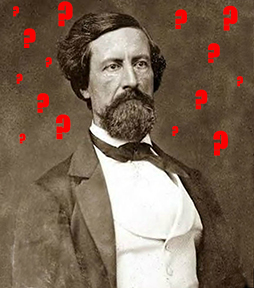
Though the river was not under U.S. control until July 1863, senior Confederate leadership considered the Mississippi closed for business months before then. Lieutenant General John C. Pemberton, commanding Vicksburg’s defenses, recognized in April of that year that he could no longer use the Mississippi River to keep his army fed and supplied.
On April 13, 1863, Pemberton wrote a short note to Brig. Gen. James R. Chalmers, commanding Confederate soldiers in northern Mississippi: “I regard the navigation of Mississippi River as shut out from us now. No more supplies can be gotten from the Trans-Mississippi Department. Can you not keep 15,000 men supplied from Panola?”[4]

Before this letter was sent, Vicksburg’s defenders regularly received supplies from across the Mississippi. Confederate river steamers generally traversed down the Red River before either moving up the Mississippi to Vicksburg or downriver to resupply Port Hudson. To stop this, Federal sailors worked to blockade the Red River in February 1863. This initial move proved an embarrassment. The U.S. Ram Fleet vessel Queen of the West was captured by Confederates, and the ironclad Indianola was rammed and sunk.[5]
Shifts in the river war in March and April changed the situation. In March, Rear Admiral David Farragut rushed warships past “a murderous fire” from Port Hudson’s guns.[6] Few of Farragut’s ships succeeded in the run, and sailors on the ships that made it past the Confederate fortifications felt “cut off from almost everything,” but they renewed the Red River blockade.[7]
Confederates countered by trying to shift four warships from Shreveport (essentially just hastily converted river steamers including the captured Queen of the West), from the Red River to the Atchafalaya River to launch a counterassault in southern Louisiana. This move failed. Two of the Confederate ships were destroyed on April 11 by more of Farragut’s ships, and the other two returned to Shreveport to guard the Red River from Federal incursions.
Finally, on April 16, Rear Admiral David Dixon Porter rushed a large element of the Mississippi River Squadron past Vicksburg’s defenses. This both allowed Maj. Gen. Ulysses Grant to safely cross the Mississippi to begin the final campaigning that forced Vicksburg’s surrender, but also allowed Porter’s and Farragut’s ships to support one another in keeping Vicksburg and Port Hudson choked off from supplies in Louisiana.

Tellingly, Pemberton’s letter stating that the river was now useless to him was written three days before Porter ran past Vicksburg’s batteries. Federal leaders may have seen Porter’s actions as the final nail in the coffin for denying Vicksburg’s defenders supplies from the Trans-Mississippi, but Pemberton considered the loss of Rebel warships in Louisiana waters and Farragut’s blockade of the Red River as the actual deciding points.
With the Confederacy essentially cut at that point, all that remained was to secure Vicksburg and Port Hudson to then open the Mississippi to Federal traffic, both military and commercial. That task, admittedly a difficult one, was accomplished three months later in early July 1863.
Endnotes:
[1] Scott to McClellan, May 3, 1861, The War of the Rebellion: A Compilation of the Official Records of the Union and Confederate Armies, Series I, Volume LI, Part I, Section 1, p 369-370.
[2] Lincoln to Conkling, Aug. 26, 1863, Roy P. Basler, ed., The Collected Works of Abraham Lincoln (New Brunswick, New Jersey: Rutgers University Press, 1953), Vol. 6, 409.
[3] Address of President Davis,” Memphis Daily Appeal, Memphis, TN, Dec. 29, 1862; William T. Sherman to Ellen Sherman, June 10, 1862, William T. Sherman Family Papers, University of Notre Dame, Notre Dame, IN.
[4] Pemberton to Chalmers, April 13, 1863, Area Files for the Confederate States Navy, compiled ca. 1924 – ca. 1929, documenting the period 1861-1865, M625, Records Group 45, US National Archives.
[5] Linn Tanner, “The Capture of the Indianola,” Feb. 2, 1906, 12, Confederate States of America Records, 1856–1915, Dolph Briscoe Center for American History, University of Texas at Austin.
[6] George S. Burkhardt, ed., Sailing with Farragut: The Civil War Recollections of Bartholomew Diggins, (Knoxville, TN: University of Tennessee Press), 2016), 77.
[7] Hart to Wife, Apr. 16, 1863, John E. Hart Letters, Special Collections and Archives, U.S. Naval Academy.


I think most people focus on Pemberton’s April 17 note to Richmond, which was his first acknowledgment to his superiors that the situation had turned: “I regard navigation of the Mississippi River as shut out from us now. No more supplies can be gotten from the Trans-Mississippi Department.” But I agree, that April 13 note demonstrates that he already felt pretty hopeless about the situation. I just don’t think he wanted to tell his bosses. Porter’s April 16 success made it impossible for Pemberton to publicly keep the lid on things.
On April 11, from Jackson, MS, Pemberton communicated to General Samuel Cooper “So far enemy has gained nothing toward opening the Mississippi”.
Consider the Federals gained complete access after the fall of Vicksburg and Port Hudson, but the CSA lost access far earlier when New Orleans fell to Union forces. What are your thoughs?
I don’t want to speak for Neil, but he wrote a book about this and he might agree in part if not totally with your argument, in that the loss of New Orleans took away the Confederates best means of constructing and maintaining a Mississippi river navy, and therefore defending Confederate access to it.
The Confederates were able to move supplies across the Mississippi after the fall of New Orleans although the Federal navy interdicted that supply chain at times. Texas cattle was swam across the river at or near Port Hudson, I believe, and boats navigated up and down the Red River into the Mississippi. Vicksburg and Port Hudson were garrisoned and built up after the fall of New Orleans and the retreat from Corinth, with the hope to try and keep a line of supply, communications, and movement open to the Trans-Mississippi, or at least western Louisiana, Texas, and Mexico. Ultimately that failed in part because there was no Confederate navy capable enough to assist in preventing the Federal navy from getting pass Port Hudson and then Vicksburg, once they were fortified.
The capture of New Orleans was huge and went a long way to determining the outcome of the war.
Lyle, Thank you for your thoughtful response!
Many people consider the fall of Vicksburg and Port Hudson as the point when the US forces gained complete access to the Mississippi, but how many readers will acknowledge the CSA lost access prior to those dates when New Orleans fell?