Private Chauncey Cooke Embraces Racial Justice
ECW welcomes back guest author James Marten.
Like many 16-year-old northern boys seized by loyalty and excitement, Chauncey Cooke lied about his age—with his father’s approval—to enlist in the 25th Wisconsin in late 1862. His dreams of fighting to free the slaves were delayed when his regiment marched instead into Minnesota to campaign against the Dakota Sioux, who a few months earlier had attacked white settlements in south-central Minnesota after years of poor treatment at the hands of government agents.
Chauncey and his comrades mainly observed the conflict, but the young Wisconsinite, who had grown up hunting and fishing with natives near his home on the state’s northwestern frontier, believed the war against the Sioux was wrong. In a letter to his family he described the 1,700 women, children, and old men being held near Fort Snelling as “a broken-hearted, ragged, dejected looking lot.”
Although obviously sympathetic, the young man—boy, really—also betrayed a clueless curiosity. As he wandered through the Sioux camp, he “lifted up the flaps of a number of their tepees and looked in. Every time I looked in I met the gaze of angry eyes.” Of course the captives were angry. “They are going to be shipped West into the Black Hills country. Like the children of Israel in the Bible story they are forced to go forever from the homes of their childhood and the graves of their fathers to dwell in the mountains and on the barren plains of a strange land.” Chauncey was just another intruder, as far as they were concerned:
The white man’s face was their hate and their horror and they showed it by hate in their eyes and their black lowering brows. Why shouldn’t they? What had they done? What was their crime? The white man had driven them from one reservation to another. They were weary and broken hearted and desperate at the broken promises of the government. And when they took up arms in desperation for their homes and the graves of their sires they are called savages and red devils.[1]
Chauncey had learned his empathy from his father Samuel. Although Chauncey admitted to his sister that “I used to think father was a curious kind of person because he differed with so many people . . . I know now our father is a sensible man. He opened my eyes about this Indian question which I am finding every day to be true.” He also made sure Chauncey understood the true stakes for which the war was being fought. With tears in his eyes, he wished his son farewell and urged him to “be true to your country my boy, and be true to the flag, but before your country or the flag be true to the slave.”[2]
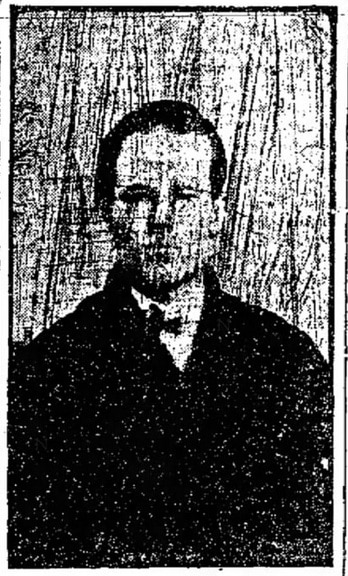
As the crisis in Minnesota dwindled, the 25th Wisconsin soon journeyed south. They did much more marching than fighting during the next year-and-a-half, as they operated in Mississippi, Arkansas, Tennessee, and Alabama. They eventually joined Gen. William T. Sherman’s army during the Atlanta Campaign and the subsequent marches through Georgia and the Carolinas. The farther south they went, of course, the more formerly enslaved people they encountered. Chauncey, whose knowledge of slavery came largely from his father or, perhaps more crucially, from reading Uncle Tom’s Cabin, was fascinated.
“We are really in the ‘Sunny South,’” he wrote after the regiment arrived in Columbus, Kentucky, in early March 1863. “The slaves, contrabands, we call them, are flocking into Columbus by the hundred. General Thomas of the regular army is here enlisting them for war. All the old buildings on the edge of the town are more than full. You never meet one but he jerks his hat off and bows and shows the whitest teeth. I never saw a bunch of them together but I could pick out an Uncle Tom, Quimbo, a Sambo, a Chloe, an Eliza, or any other character in Uncle Tom’s Cabin.” Many women washed clothes and the older men did odd jobs for the soldiers. “I like to talk with them. They are funny enough, and the stories they tell of slave life are stories never to be forgotten.”[3]
Chauncey spoke to the former slaves whenever he could, and he often passed the stories of plantation life and the cruelties of slavery on to his family. He was captivated by their singing—he and some of his comrades would sometimes pay a penny to get them to sing “the most sorrowful songs in the sweetest voices I ever heard”—and their plain, but sincere piety. He once sent to his mother a bundle of dried flowers given to him by one of the black women hired to wash clothes for the soldiers.[4]
Chauncey spent much of the late summer and early fall sick in the hospital. He missed the battle of Atlanta, but continued to describe the African Americans he met, including a washerwoman with six children—three of whom had been sold off to a planter in Alabama. When one of the patients asked if she missed them, she replied, “Shua honey I loves my chilen just likes you mammy loves you.” Chauncey was “sure the poor woman’s heart was full, for her eyes filled with tears. I thank God . . . that Lincoln has made them free.”[5]
Chauncey survived the war and attended Eau Claire Seminary. Soon after graduation—at least according to family and community tradition—he traveled to Texas to teach in a Freedmen’s Bureau school. Chauncey was back in Wisconsin by 1870 and spent the rest of his life occasionally teaching, but mostly building a very successful career as a dairy farmer and successful land developer.
Although he seems never to have held public office, Cooke was active in the Republican Party and the Grand Army of the Republic, once serving as a post commander. He occasionally weighed in on important issues—especially on race—with pointed, reasoned letters to the editors of various newspapers. After the 1908 race riot in Springfield, Illinois, he closed a letter to the Eau Claire Leader with “the massacre of innocent friendless blacks was not in just retribution of the assault on a white woman”—a traditional and virtually always false reason for white-on-black violence. “That Springfield mob drunk with negro-phobia . . . made the suspected assault a pretext for the venting of the mobs’ lust for riot and race vengeance.”[6]
Three years later, a full column letter to the Milwaukee Journal blamed the absence of leadership at the federal level for Americans’ embrace of racial violence. But mostly he blamed prejudice.
Everywhere, both north and south, the black man is denied the most sacred right of man, the right of self defense. He may not even defend his wife or daughter from the lust of a white employer. Should he attempt it and the white man be killed, lynch law will hang him, and the morning papers will report the affair as a race riot, in which the black brute who incited it was righteously hung, and that the ‘order loving citizens who conducted the execution retired quietly to their homes.’ The black citizen is riddled with bullets and burned at the stake for a sexual crime, often unproven, of which his white assailants are guilty a thousand times to his one. I speak advisedly. I have lived some years in the South.[7]
Chauncey Cooke had come a long way from his teenage encounters with men and women who, to him, resembled characters he drew from Harriet Beecher Stowe’s fiction.
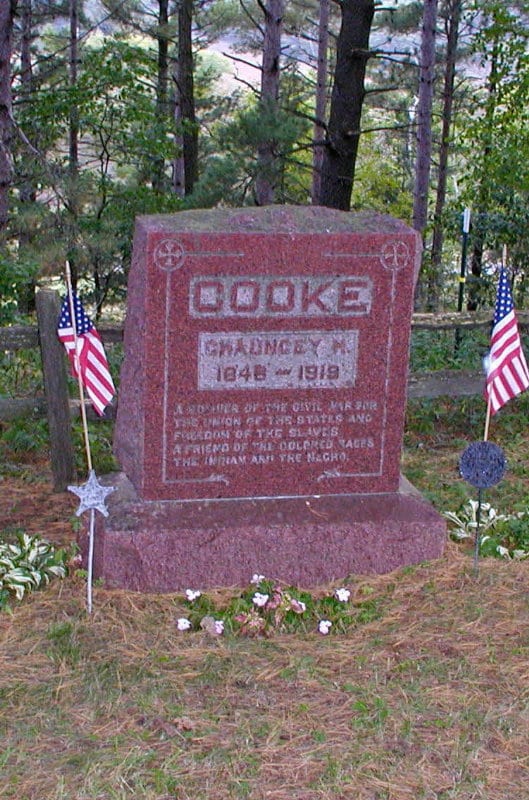
Chauncey died in 1919 at the age of seventy-three. A well-respected and influential member of his community—he was president of the Buffalo County Old Settlers Association in 1908—the businesses in Mondovi closed for two hours so everyone could attend his funeral. Even Chauncey’s gravestone articulated the principles that he had expressed in one of the first letters he wrote from the army: “A Soldier of the Civil War for the Union of the States and Freedom of the Slaves; A Friend of the Colored races, the Indian and the Negro.”
It is well that, from time to time, as the literature on Civil War soldier motivations tends to focus less than it might on moral issues, we are reminded that there were common soldiers for the Union who did, indeed, believe that they were fighting to end slavery and who remained committed to racial justice for the rest of their lives.
James Marten is professor emeritus of history at Marquette University and a former president of the Society of Civil War Historians. His most recent book is The Sixth Wisconsin and the Long Civil War: The Biography of a Regiment (Chapel Hill: University of North Carolina Press, 2025).
Endnotes:
[1] William H. Mulligan, Jr., ed., A Badger Boy in Blue: The Civil War Letters of Chauncey H. Cooke (Detroit: Wayne State University Press, 2007), 24-5.
[2] Cooke to his sister, November 4, 1862, Badger Boy in Blue, 16.
[3] Cooke to his family, March 5, 1863, Badger Boy in Blue, 39.
[4] Cooke to his sister, May 3, 1863, Badger Boy in Blue, 50-51.
[5] Cooke to his sister, September 10, 1864, Badger Boy in Blue, 115.
[6] Eau Claire (Wisconsin) Leader, August 28, 1908.
[7] Milwaukee Journal, September 4, 1911.


Thanks Jame, great piece … nice to see another reference to this important 19th-century character … in Chandra Manning’s “What This Cruel War Was For”, Chauncey figures prominently in her arguments that ordinary Union soldiers—even those with deep-seated racial prejudices—came to realize remarkably early in the conflict that the Union would never be permanently safe, nor the war truly won, until the institution of slavery was completely destroyed.