On the trail of Lieutenant Colonel David Armstrong McHolland
ECW welcomes back guest author Nate Pedersen.
Impressive and humbling as it can be to visit any battlefield, I suspect most descendants of Civil War veterans would agree there is an extra layer of meaning when we visit the battlefields where our own family members participated. How can we not ponder the fickleness of fate and the stray bits of luck that led to an ancestor surviving a battle where so many other people died? What missed shot in 1862 led to us even being at the battlefield today, contemplating these very things?
Fascinated by the intersection of the nation’s history with my own family tree, I recently visited the major war sites connected to my own great-great grandfather: Lt. Col. David Armstrong McHolland, of the 51st Indiana Volunteers.
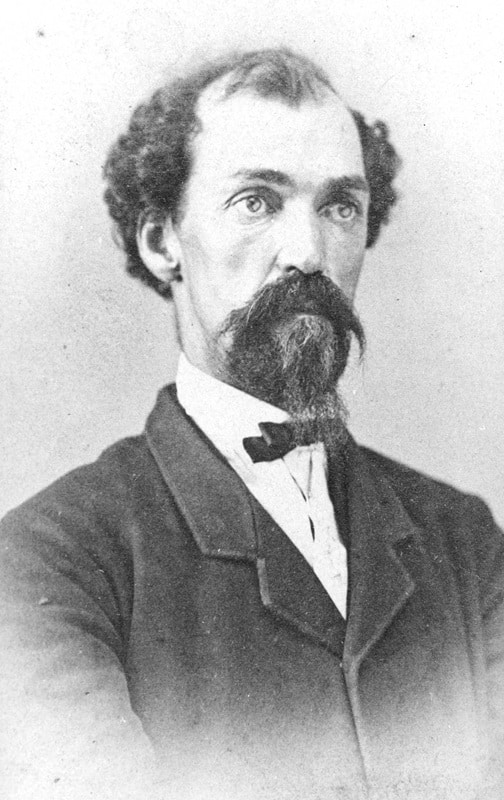
Raised in May, 1861 in Newton County, Indiana, Company B elected McHolland as captain and joined the 51st in Indianapolis. Under the leadership of Col. Abel Streight, the 51st subsequently participated in the Civil War’s Western Theater, seeing action at Shiloh, Corinth, Perryville, and Stones River.
Between April and May of 1863, Streight led the regiment on an ill-fated raid into north Georgia, where the entire regiment was captured by Nathan Bedford Forrest’s cavalry. McHolland, as well as all other regimental officers, was shipped off to Libby Prison, in Richmond, Virginia. After languishing for 22 months as a prisoner, McHolland was paroled in March 1865.
McHolland was discharged as a lieutenant colonel and returned home to Indiana only to find that another tragedy awaited him: His wife had died of illness in December 1864. With three children to care for, McHolland shortly afterwards married his neighbor, herself a war widow, and the family soon left for Missouri.
To trace some of my great-great grandfather’s experience in the war, in 2025 I visited the sites most strongly identified with his war experience: Shiloh, Perryville, Stones River, and Libby Prison.
Libby Prison:
I began at the end. McHolland suffered his way through almost two years at Libby. The prison, a converted tobacco warehouse, no longer stands: It was demolished in 1899. As such, there is little for the modern-day visitor to see at the site, besides a memorial plaque and an interpretative sign. Other former tobacco warehouses nearby gave some sense of perspective of what the prison once resembled, however what stuck with me most was not the surrounding buildings, but the view onto Mayo Isle in the middle of the James River.
As I sat by the concrete barrier wall now standing on the site of Libby Prison, I thought about how my great-great grandfather must have gazed out of the glassless windows of Libby and onto the same island, probably in competition for the fresh air and view with the hundreds of other officers crowded inside. I thought about how cold it must have been in the winter, and how unbearably hot and humid it must have been in the steamy Virginia summers, packed in with all those other officers.
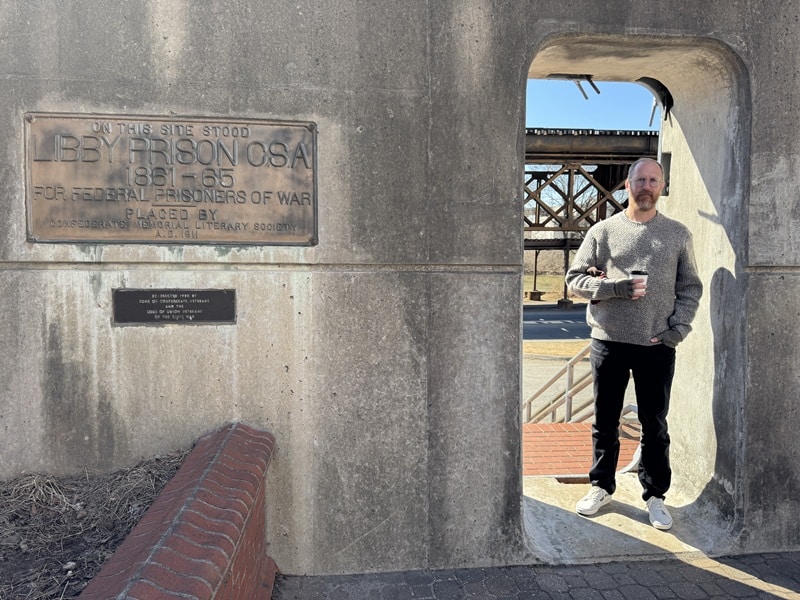
I reflected on all the open space around me today and the freedom I had to stand up, stretch my legs, and walk out of downtown Richmond, simple actions he wouldn’t be able to perform for almost two full years. I wondered about the terrible constraints and privations he must have felt, confined to that view in that overcrowded space as he waited out the war. He could have been looking onto that island the same day his wife died 750 miles away on a cold December day in 1864.
Visiting Libby was a melancholic and sobering experience.
Perryville:
My next stop was Perryville, fought on October 8, 1862. While the 51st Indiana was deployed at Perryville, they did not participate in the main action, but were instead positioned a few miles away in reserve.
Thanks to the help of one of the park rangers at Perryville, I was able to locate and visit the site where the 51st waited for orders, now a privately held farm. I thought about the shifting emotions of a regiment in reserve, the interplay between frustration and relief as rifles and artillery fired a few miles distant.
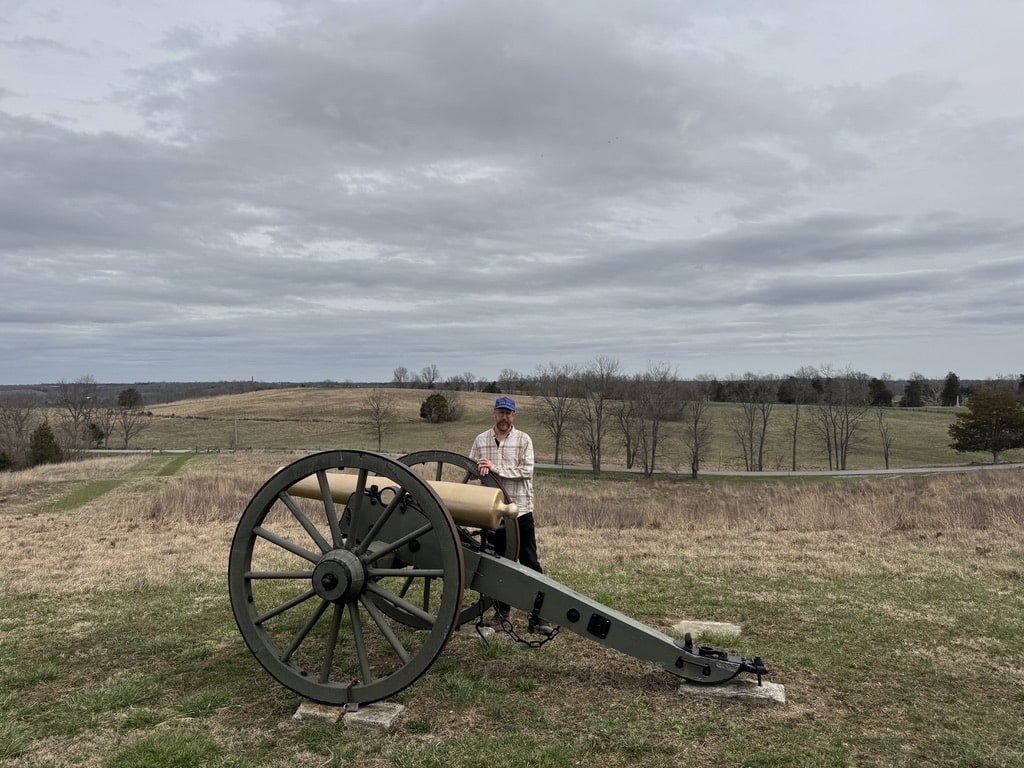
As the Confederates retreated, the 51st was called in with other reserves to sweep the battlefield and, as I walked the battlefield myself that day, I pondered McHolland’s experience walking across a battle just several hours over. The dead and dying would have been strewn across the hills and fields of Perryville, the air thick with smoke, the earth bloodied, broken, and torn to bits.
Stones River:
I next saw Stones River, which was fought between December 31, 1862, and January 3, 1863. The enormously bloody battle saw a 31% casualty rate, the highest casualty rate of involved soldiers in the entire war.
At Stones River, as part of Harker’s division, the 51st Indiana saw heavy fighting. Early in the battle, as the armies were positioning, the regiment swept past Confederate pickets and pushed them up Wayne’s Hill, held by Cobb’s Kentucky Battery. They almost took the hill, but were driven back when Confederate reinforcements arrived. The remainder of the battle saw them engaged in fierce defensive fighting along the Wilkinson and Nashville Pikes.
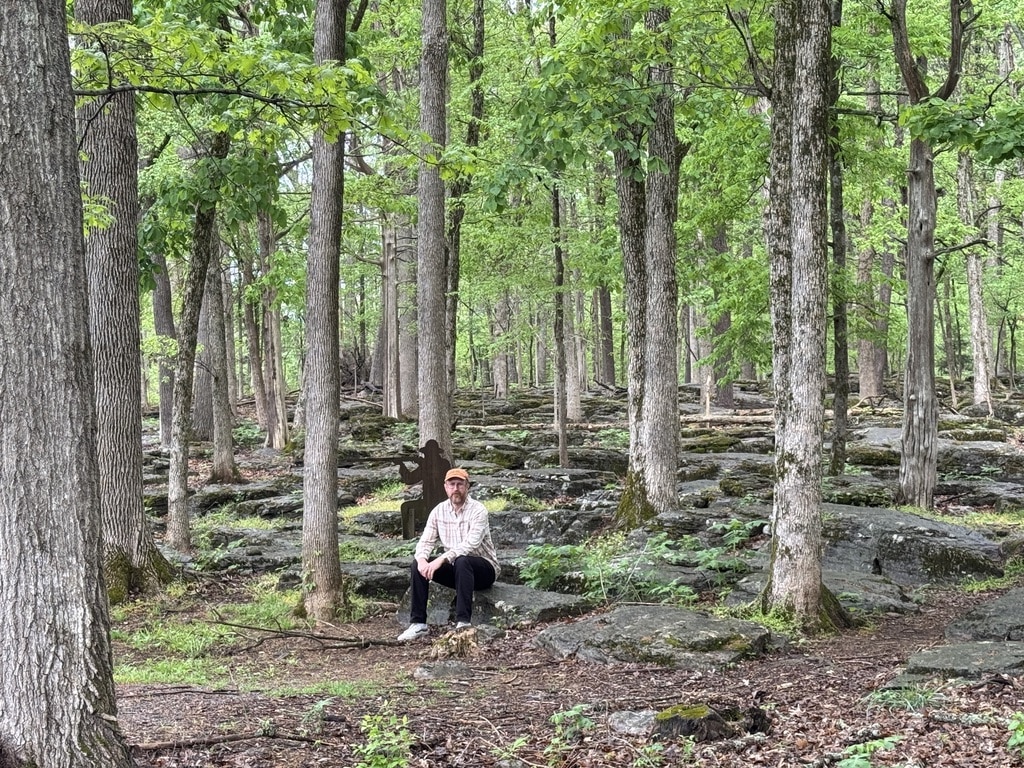
I wondered how McHolland conducted himself as a leader, how he was perceived by his men, how he cajoled or comforted them during the battle, and imagined the simple and all-consuming relief that must have been felt by simply surviving.
Today, Wayne’s Hill is not a part of the Stones River National Battlefield; a country club stands on top of it. Portions of the battlefield, however, are well-preserved by the National Park Service with support from the American Battlefield Trust. I walked along its trails, lost in thought, noting the birds flitting about in the rocks of the Slaughter Pen where so many troops died.
Shiloh:
My final visit was to Shiloh, where I was almost overwhelmed by the scale. The battle itself spread across almost 4,000 acres, most of which are preserved and walkable today.
At Shiloh, the 51st Indiana was not engaged until the second day; however I imagined their crossing of the Tennessee River at Pittsburgh Landing early in the morning of April 7 and the horrified men they would have encountered as they climbed the banks and prepared to enter the battle. The 51st Indiana joined the reinforcements to Grant’s army that collectively surged forward and pushed the Confederates from the battlefield.
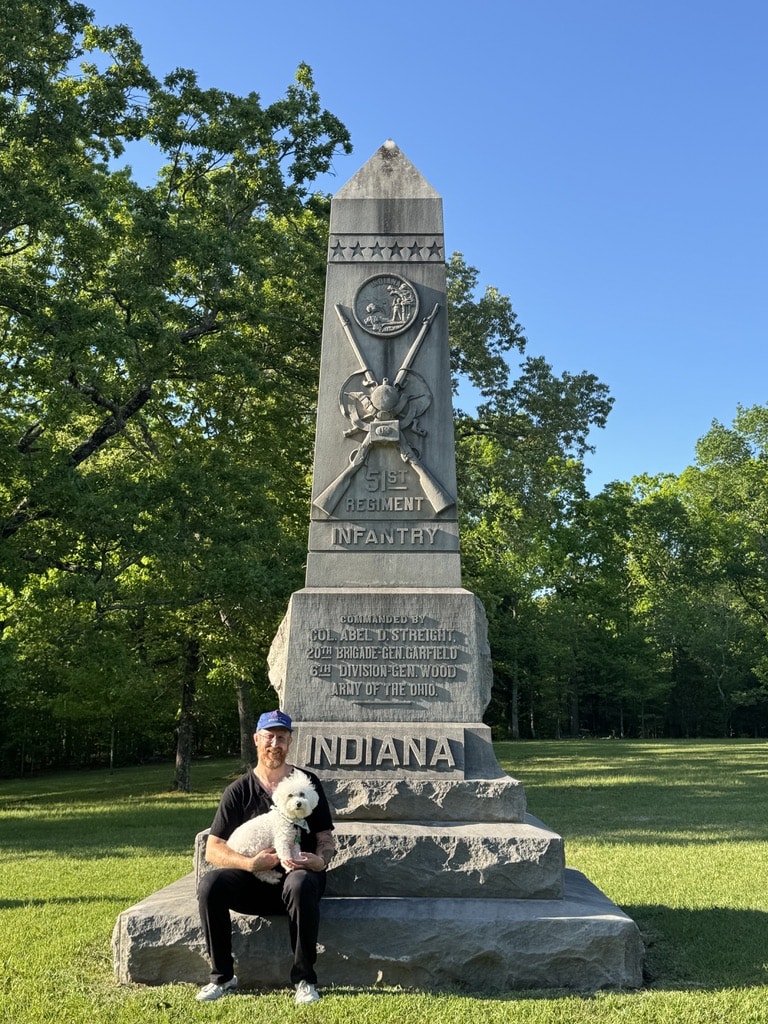
Shiloh is particularly special as it is the only battlefield with a monument to the 51st Indiana, situated not far from where the regiment crossed over from Pittsburgh Landing. I photographed the monument to commemorate the end of my journey and greatly appreciated that the monument could both symbolize the accomplishments of the regiment and also serve as a memorial stone and place of reflection for a latter-day visitor like me.
With that visceral reminder of the 51st Indiana, and with the sheer scale of the battlefield itself, visiting Shiloh was a truly humbling experience.
Nate Pedersen is a writer and historian in Minnesota. His website is http://natepedersen.com and his Instagram handle is @nate.pedersen.writer.
Sources:
- American Battlefield Trust. Battle Maps of the Civil War. Volume 2. 2nd ed. Princeton, NJ: Knox Press, 2021.
- Cavada, Benjamin Franklin. Libby Life: Experiences of a Prisoner of War in Richmond, Virginia, 1863–64. Philadelphia: King & Baird, 1864.
- Hartpence, William H. History of the Fifty-First Indiana Veteran Volunteer Infantry Regiment. Edited by James Keir Baughman. 2014 repr. Bedford, IN: Tribune Printing Company, 2014.
- National Archives and Records Administration. Compiled Military Service Record of Lieutenant Colonel David Armstrong McHolland, 51st Indiana Infantry. Record Group 94, Records of the Adjutant General’s Office. Washington, DC.


Thanks for the personal journey. I used to live in Annapolis. There is an area just west of town known as “Parole” (currently built up with condos and a retail area) but was more open when I lived there. Takes its name from Camp Parole which initially was set up to organize Maryland volunteer regiments but then shifted into being the eastern location for paroled troops waiting to be exchanged. Once the parole system was reestablished towards the end of the war it became a destination I think for Libby Prison and Andersonville. In those days there were two railroad lines serving Annapolis; one running just north of Camp Parole that ran to the B&O RR main line at Annapolis Junction near today’s Ft Meade. So if LCOL McHolland was paroled via Camp Parole he probably was sent home via that route.
Thanks for sharing. I’d love to continue the journey someday with “secondary sites” connected to his story.
What an incredible journey walking in the footsteps of your ancestor!
It truly was, thank you!
These experiences can be powerful. When I first arrived at the spot on Matthews Hill where my ggrand (4th SC) first met the Union flanking attack at first Manassas, I will admit I cried …… a grown man.
Totally understandable. It is indeed a powerful experience.
Where was he from in Newton county? I grew up there and go back often.
He had served as a musician in the Mexican War and was then granted homestead land in Kentland. He was living in Kentland at the time he enlisted. I’ve never been but would like to see it. Are you from around Kentland?