The 124th Illinois in the First Vicksburg Crater — “The Slaughter Pen”
ECW welcomes back guest author John Horn. The following is a brief extract from John Horn’s current manuscript draftVicksburg Craters: The First Military Mines Exploded in the Civil War.
————
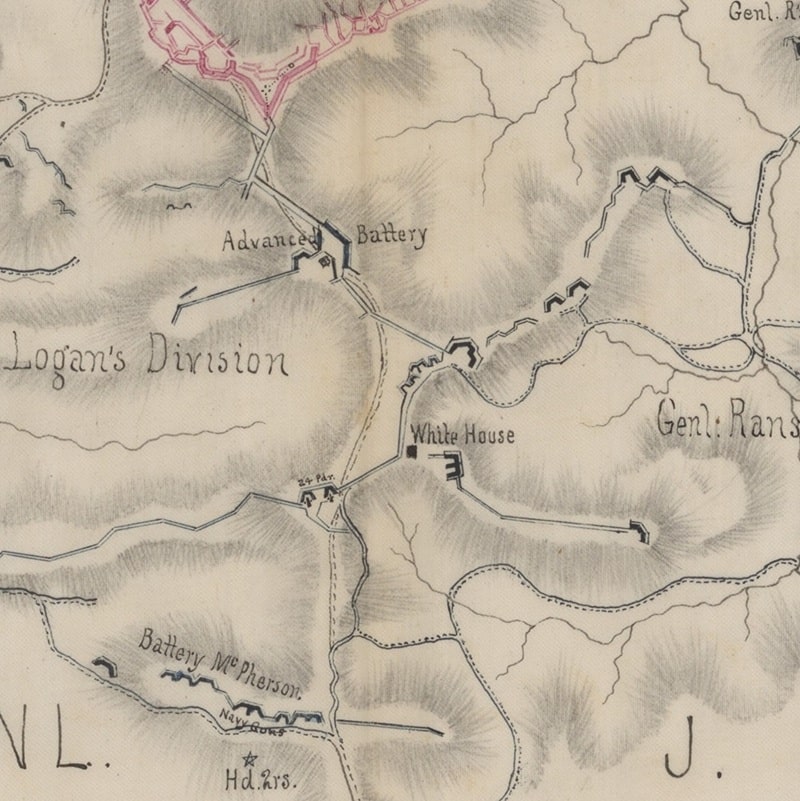
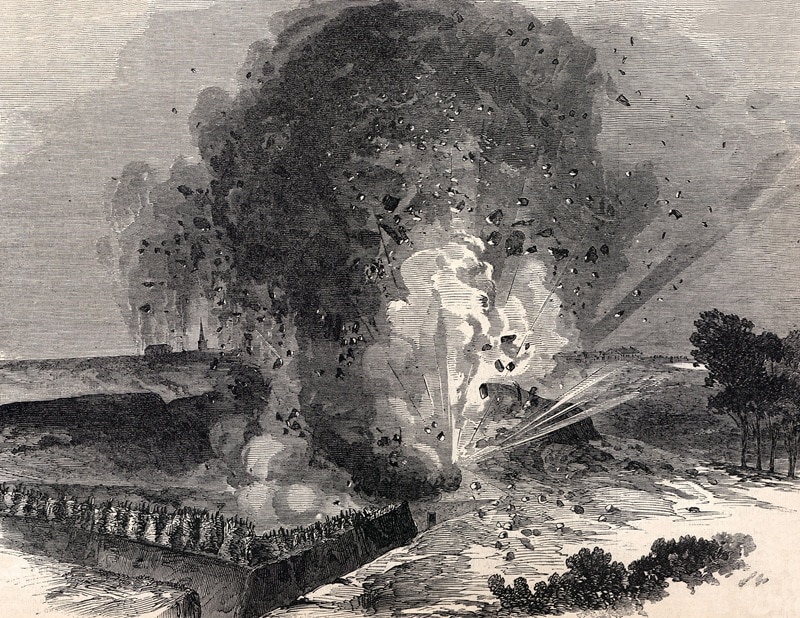
When the Confederate Army of Mississippi under Lt. Gen. John C. Pemberton retreated into the fortifications of Vicksburg, Maj. Gen. Ulysses S. Grant’s army launched two assaults against the Secessionist Sebastopol. After they failed, he lay siege to the city, employing regular approaches—14 of them—employing saps and parallels. Only one approach resulted in mine explosions: Logan’s Approach on Jackson Road leading to Fort Hill, a redan or arrow shaped earthwork guarding the road. Underneath the redan the Federals detonated the first military mine in United States history on June 25, 1863.
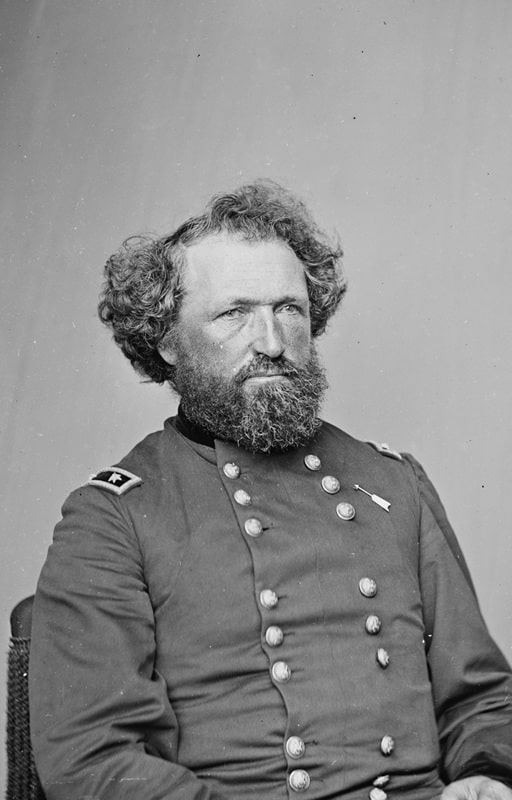
Brigadier General Mortimer D. Leggett’s reinforced brigade of Brig. Gen. John A. Logan’s division in Grant’s Army of the Tennessee drew the task of assaulting the redan. The brigade included the 124th Illinois, also known as the “Hundred and Two Dozen” or the “Commercial College Regiment.”[1] Raised in 1862, the regiment had participated in the battles of Port Gibson, Raymond, Jackson, Champion Hill, and the opening assaults on Vicksburg.
The regiment stood far back in the assault column. After the lighting of the fuses to the mine’s powder chambers, soldiers such as Mississippi-born Pvt. Stephen C. Beck of the 124th’s Company C eagerly awaited the mine’s explosion, curious about what would follow. “[W]e were all ready,” he recalled. “Every man had his gun loaded and primed waiting for orders to move.”[2]
Many had high hopes for the mine. “[G]reat expectations were entertained of success,” recollected New York-born 1st Lt. Richard L. Howard, an ordained Freewill Baptist minister in the 124th’s Company I. “Our forces were all in line and awaiting the result, hoping to walk into Vicksburg.”[3]
The 45th Illinois and on its left 100 picked men of the 23rd Indiana charged into the crater formed by the explosion. A Confederate line constructed across the rear of the redan stopped the Federals. They could do no more than hold the crater. At around 8:00 p.m., Leggett relieved the 45th with the 20th Illinois.
The men of the Hundred and Two Dozen had thought that they would relieve the 20th Illinois. “The 124th Ills. was standing in line nearby expecting to be ordered any moment into the fray,” Beck recalled. “But night coming on we were ordered back into the rifle pits to do sharpshooting which was kept up all night.”[4]
Other members of the regiment had it better. Company H “went to Quarters and slept on Arms,” recorded Sgt. Charles Henry Snedeker of the 124th’s Company H, a carriage maker born in Connecticut.[5]
About two hours later, in went the 31st Illinois, then in another two hours, the 56th Illinois, quickly followed first by the 23rd Indiana and then by the 17th Iowa after the 56th soon ran out of its rifle ammunition and could not use the same caliber as the other regiments. At intervals of about two hours, the 31st Illinois returned and afterward the 45th Illinois. To relieve the 45th at about 10:00 a.m. on June 26, Leggett finally turned to the 124th.
Two companies of the Hundred and Two Dozen entered the crater at a time. A third of their men stood as near as possible to the crater’s inner lip to fire. The other two-thirds, lower down in the crater, loaded and passed muskets up to them. “Our men loaded under cover of the dirt, and reaching up, fired over,” recalled Lieutenant Howard.[6]
Private Beck remembered that “the crater was shaped like a large wash basin and was about fifty feet in diameter.”[7] Beck did not find that the crater’s loose dirt hindered climbing. He took a place on the firing line next to the crater’s lip. “My duty was to poke the loaded gun over this bank and fire it off having no knowledge whether I was doing any execution or not,” Beck recollected. “After firing passed the gun down to be reloaded.”[8]
The 124th “hung like a leech to the side of the fort,” recalled Corp. Charles E. Bassett of the regiment’s Company B. Both sides fired blindly. “[W]e did not see a ‘Johnny’ during the whole of the time, and they did not see us; only our hands and arms as we fired over the fort.”
Secessionist bayonets and bullets wounded the hands of many of his comrades firing over the crater’s inner lip. “When our men were in the crater they were separated from the enemy only by the ridge of the fort and could easily have touched bayonets if there had been a disposition on both sides to do so,” Bassett recalled.
Several enemy bullets entered the barrels of the 124th’s muskets that day. “Each muzzle was split an inch or more at the top,” Bassett remembered. “Three pieces of one of the bullets struck me after it hit the gun barrel.”[9]
After about an hour of firing, the muskets became too hot to handle.[10] “Those gun barrels became very hot, so much so that my left hand became seared or blistered in handling those hot guns,” Beck recollected. [11] The firing companies rotated out of the crater, and two more companies relieved them. “As the reliefs returned to ‘The Slaughter Pen,’ as it soon came to be called, it was like moving into a deadly battle in cold blood,” Howard remembered.[12]
The Rebels also lobbed 6-pound shells with lit fuses over the heads of the 124th’s men in the front line. “They came directly over my head, could have reached those shells if so disposed,” recalled Beck. “I knew too well their contents and what they meant for us if we happened to be in their way.” The first shell thrown over rolled into the lap of a member of Beck’s company sitting about five yards from Beck. Its explosion badly mangled the soldier, who fell forward on his face. “In a few minutes another came over rolled to his side then exploded tearing the poor man to shreds,” Beck remembered. Soon another flew over and exploded, mortally wounding two more members of Beck’s company.
“It was too much for mortal man to stand such destruction,” Beck recalled. Those who could get away left the crater and went out into the sap. “As the gunloaders had fled for safety, I made it my business to follow as I had no ammunition to work with,” he recalled.
The heat, the absence of a breeze, the bursting shells, the air filled with dirt, “was terrific” and earned the crater the name of “The Slaughter Pen” in the 124th, he recollected. “The Rebels could tell they were doing execution for they could hear our men holler and groan when struck, as there was only a few feet between us and them.”[13]
A shell blew a soldier of the 124th apart near Pvt. Edward McGlynn of Company E, who had previously deserted from the 42nd Illinois. He wrote: “we was all lying down loading our guns and a shell came and hit in his right flank and just as it hit it bursted and tore him to pieces and wounded a man and it was a mirical that it did not strike me for i was laying close by him….i never will forget the look he gave at me and I was so stupid from the noise of the shell that i did not know anything for a minute or two i thought that I was blowed to pieces my self”[14]
The regiment’s ranks grew thin. “After a sharp succession of hand grenades from the enemy, only six men were left in the breach…, all the rest having been killed, wounded, or, for the time, left the Fort,” Howard remembered.[15]
By 5:00 p.m., pioneers had proven unable to build a timbered casemate for guns, but they had finished the covered gallery for a future mine as well as a gabion reveted parapet about midway across the crater, flush with entrance to the covered gallery, and roughly along the former line of the redan’s face, where the chief engineer thought foot soldiers would be perfectly protected against grenades thrown by the enemy.
The Confederates responded almost immediately by tossing 6 and 12 lit shells at the Illinoisans. The line along the crater’s western lip did not protect the 124th against the shells hurled by the Rebels, which proved very destructive.
Grant finally authorized abandoning the western side of the crater. The army commander did not want his men to fight any longer under the disadvantage at which they delivered hand grenades and lit artillery shells to the Secessionists above them.
The Hundred and Two Dozen’s men rejoiced in their relief. “The fearful day, the most trying and horrid in our history, was past,” recalled Howard.[16] Ohio-born Pvt. Job H. Yaggy of Company E explained in his diary, “It made it so very Horrible to us because we had to go in (the fort) and fight in the same place all the time, where the ground was already soaked with the blood of our comrads.”[17]
Their stint in the crater had left them exhausted and filthy. “After being relieved we marched to our camp—what was left of us—tired and dirty, to get some supper,” Beck recollected. [18] The 124th lost 52 men: five killed, 47 wounded. The Commercial College Regiment had spent seven of the brigade’s 26 hours in the crater, more than any other regiment in Leggett’s reinforced brigade.
John Horn is an award-winning author who has written several books of Civil War history—The Battles for the Weldon Railroad (2015), The Petersburg Regiment (2019), and Lee Besieged (2025).
Endnotes:
[1]R. L. Howard, History of the 124th Regiment Illinois Infantry Volunteers Otherwise Known as the “Hundred and Two Dozen,” from August, 1862, to August, 1865 (Springfield, IL: 1880), 111; “Forty-Fifth Illinois,” Rockford (IL) Register, July 18, 1863. In January 1864 the 124th became the “Excelsior Regiment” on account of its superlative drill. Howard, History of the 124th Regiment Illinois Infantry Volunteers, 168-172, 174-175.
[2]S. C. Beck, A True Sketch of His Army Life (Edgar, NE; 1914), (Library of Congress), 14.
[3]Howard, History of the 124th Regiment Illinois Infantry Volunteers, 116.
[4]Beck, A True Sketch of His Army Life, 14.
[5]Charles Henry Snedeker Civil War Diary, June 25, 1863, R 844, File 1, Auburn University Special Collections & Archives Department, Auburn, Alabama.
[6]Howard, History of the 124th Regiment Illinois Infantry Volunteers, 116.
[7]Beck, A True Sketch of His Army Life, 14.
[8]Ibid, 15.
[9]C. E. Bassett to Capt. J. A. Edmiston, March 12, 1902, Regimental Files, 124th Illinois Folder, VNMP.
[10]Snedeker Diary, June 26, 1863, is the most contemporaneous source on the time involved. Lt. Howard says that the companies remained in the crater 20 or 30 minutes. Howard, History of the 124th Regiment Illinois Infantry Volunteers, 116. Cpl. Bassett agrees with Lt. Howard. Bassett to Rigby, March 12, 1902.
[11]Beck, A True Sketch of His Army Life, 15.
[12]Howard, History of the 124th Regiment Illinois Infantry Volunteers, 116.
[13]Beck, A True Sketch of His Army Life, 15.
[14]Edward McGlynn to “Dear father and mother and friends,” June 29, 1863, Edward McGlynn Letters. Pvt. McGlynn died at Camp Douglas, Illinois, Aug. 15, 1865.
[15]Howard, History of the 124th Regiment Illinois Infantry Volunteers, 117-118.
[16]Ibid, 117.
[17]Job H. Yaggy Diary, June 26, 1863, Abraham Lincoln Presidential Library.
[18]Beck, A True Sketch of His Army Life, 15; Sgt. Snedeker underestimated their regiment’s casualties as 49. Snedeker Diary, June 27, 1863.


Mr. Horn, curious if you have read my work on the 45th Illinois? If you would like to discuss my work and perhaps I could assist your work, please reach out – thomasbmack@gmail.com
What a fascinating and well-researched article. I’d always assumed that the Petersburg mine event was the first military mine explosion in US history. It’s always good to live and learn! Looking forward to when the book comes out.