Book Review: He Has the People: Abraham Lincoln and the Election of 1860

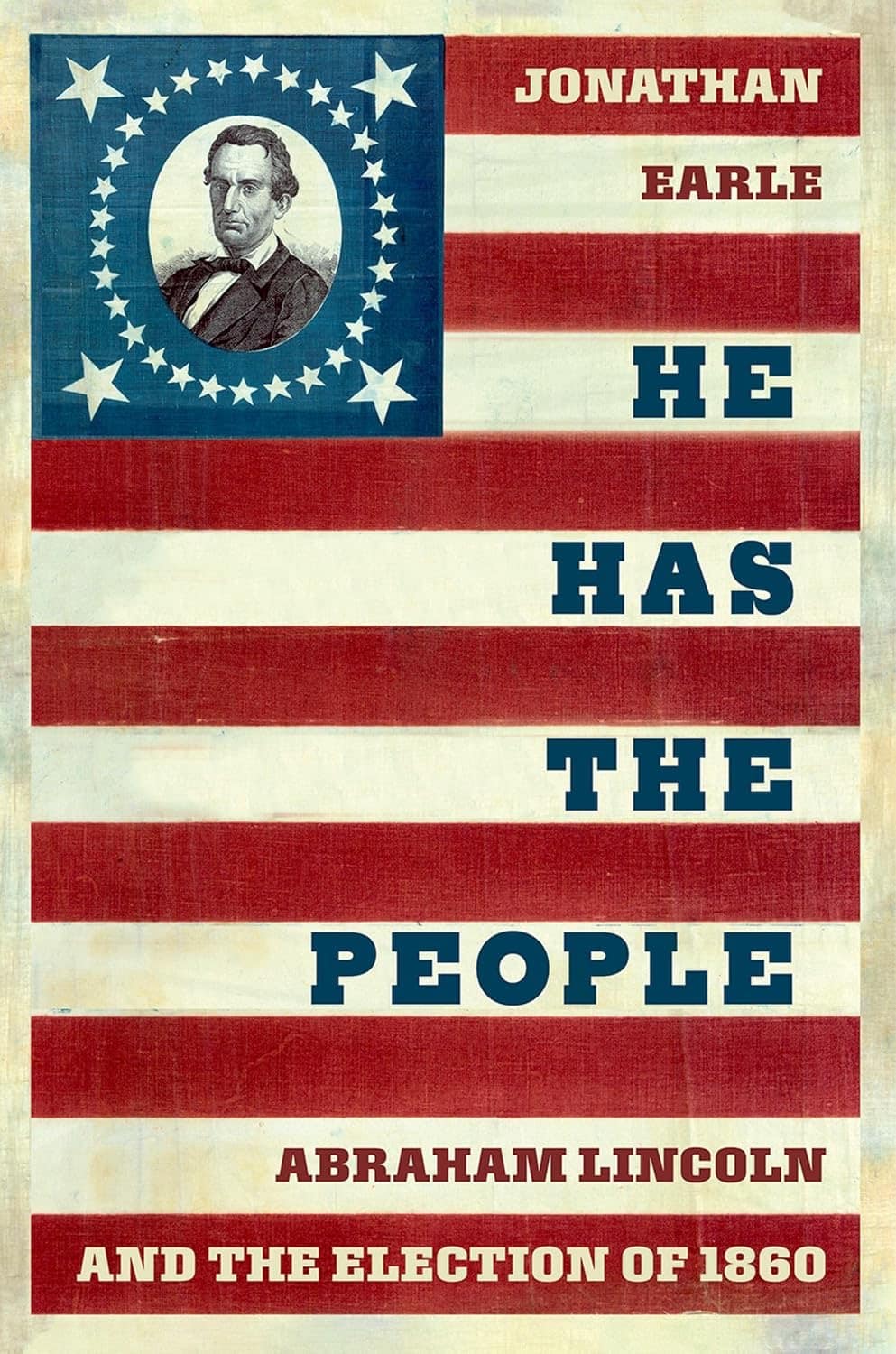
He Has the People: Abraham Lincoln and the Election of 1860. By Jonathan Earle. Oxford, UK: Oxford University Press, 2026. Hardcover, 232 pp. $29.99.
Reviewed by Pat Kelly-Fischer
When Emerging Civil War book review editor Kevin Donovan handed me He Has the People, I’ll confess that my first (fleeting) thought was: Really? Another Lincoln book?
I’m not of the mind that new books cannot, or should not, be written about topics that have already been covered. New research comes to light every day, or a new author may have a new way of telling the story. But still, some topics – Lincoln, Gettysburg, Lee – sure feel awfully well saturated. In fact, this isn’t even the first book about Lincoln’s 1860 victory that Emerging Civil War has reviewed within the last month.
But despite my initial reservation, I came away thinking that Earle has done something new and interesting with He Has the People. This book is perhaps best viewed not through the Lincoln lens, and instead through the lens of a genre that became popular in the 1990s and 2000s: the presidential campaign narrative. It has more in common with Game Change than it does with a typical Lincoln biography.
He Has the People opens with the execution of John Brown in December of 1859, and continues through to Election Day in 1860. The story of the campaign is told in large part through the reporting of Murat Halstead, who attended John Brown’s execution, and all seven (7) presidential nominating conventions in 1860.
The veritable roller coaster of tent-pole events around each party’s candidate selection process provides narrative structure for the book, but does not get in the way of the very colorful politics of the day. In Earle’s words, “In reporting directly from all seven political conventions in 1860, Halstead found a way to offer a bird’s-eye view of the critical issues and substance while also providing a window into the grasping, ignorant, drunken, and often corrupt dealings that characterized American politics.” (14)
Halstead was covering the campaign for the Cincinnati Commercial, a fairly new paper in that booming Midwestern city. He Has the People benefits from Halstead’s entertaining and colorful voice as a writer. Comparing his hometown to Washington, D.C., he wrote, “As sooty and porky as Cincinnati is at this time, I should be desolate indeed if it did not offer more attractions than this wretched wilderness of false pretenses.” (30)
One of the most compelling parts of He Has the People is its detailed treatment of candidates who aren’t Lincoln, and campaign issues other than slavery. Neither of those is ignored, but readers can also expect to spend just as much time with the likes of Stephen Douglas, John Bell, and John Breckinridge, and the debates over nativism, tariffs, and government spending on internal improvements.
With the main body of text coming in at just a hair under 200 pages, it’s a crisp and fast-moving narrative, despite how much ground it has to cover. For a Civil War enthusiast with perhaps only a passing knowledge of antebellum politics or the 1860 election, I highly recommend this book as an excellent way to dip your toes into some new waters.


