The Service and Death of Major Benjamin C. Lincoln: A Window into the Civil War in Florida
Soldiers who fought in Florida during the Civil War garner comparatively little attention compared to those who fought in major theaters of battle, but the service and death of Maj. Benjamin Lincoln of the 2nd United States Colored Troops provides a window into how Union soldiers’ experienced war in its tropical climate. On February 22, 1864, Lincoln arrived with the 2nd U.S.C.T. to garrison Key West, a significant military and commercial outpost that remained in U.S. possession throughout the entire war.
Lincoln, married not even a year to his beloved wife Dora, wanted nothing more than for her to join him on the island, as was relatively common for officers’ wives. He spent much time, and countless letters, devising plans for her and his brother Alford to journey to Key West despite being short on money to pay for travel, or even to send her, given the paymaster’s tardiness. Day after day, Lincoln climbed a parapet at Fort Taylor, looking for the steamer Nightingale, which he thought might be carrying his love who would make him perfectly contented during his military service. Lincoln frequently pined for the war’s end and the ability to resume civilian life with his new bride. But he also had ambitions to rise through the ranks and head an independent command.
Lincoln waited for Dora’s arrival, sometimes hopefully, other times despairingly. Meanwhile, he assumed temporary command of Fort Taylor when Col. John Wilder traveled to Havana, Cuba. He served on courts martial, witnessed the execution of some disobedient soldiers, and served on an examining board to assess officers of the 2nd Florida Cavalry (Union). He also devoted countless hours to providing spiritual and educational instruction to soldiers of the 2nd U.S.C.T., as well as local Blacks, despite many local civilians’ opposition to Black troops. Alford finally arrived at Key West, but Dora did not, and Lincoln vowed to continue writing to her every day.
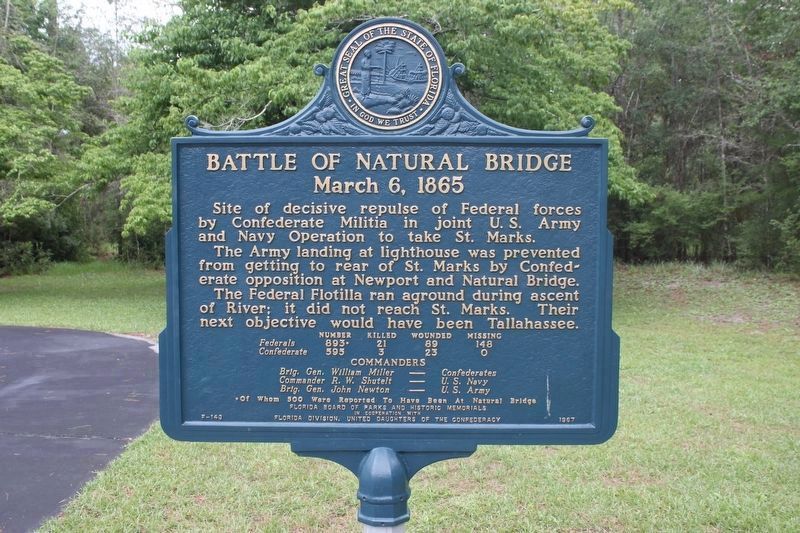
In February 1865, Lincoln left Key West withcCompanies E, G, and H of the 2nd U.S.C.T. with the object of quashing blockade running around the port of St. Marks on the Florida mainland. At dawn on March 6, 1865, Lincoln led companies B and G into the fray at the battle of Natural Bridge. Here, Lincoln met his fate.
Soon after the battle, instead of opening a letter from her husband, as usual, Dora received a letter from Col. John Wilder of the 2nd U.S.C.T., dated March 12, 1865, which described her husband’s last hours among the living. Wilder addressed Dora at Alford’s request – he was too distraught to take up the pen. Amid the battle, at 1:00 p.m. on March 6, a piece of shell from Confederate artillery struck Lincoln in the bowels. He feared that the wound was mortal, but hoped to recover on the steamer Alliance and remained cheerful as his comrades carried him from the field. Soon, after requesting to eat, Lincoln drifted into permanent sleep as his spirit “calmly and Peacefully departed.”
Dora would never again see her new husband, since Wilder could not send Lincoln’s body home, the undertaker saying he had “been dead too long in the hot climate.” Wilder’s heart bled as he praised Lincoln for being self-sacrificing, true, and ambitious. He mourned Lincoln’s loss and the irony that “it was his desire to have an independent command, and he received it, alas, only to lay it down again in death.”[1]
[1] All information about Lincoln from Benjamin C. Lincoln Papers, James. S. Schoff Civil War Collection, William L. Clements Library, University of Michigan.


