Re-tracing the Army of the Potomac’s “Lost Division”
The old IV Corps was no more. Although one of the four original army corps of the Union’s premier field army, it had gradually withered away as units were deployed to new fronts. The final death knell came on August 1, 1863, discontinued and erased in a non-descript order.[1]
The end was foreseeable. A division was transferred away in the spring of 1862 when the Army of the Potomac expanded to add two additional corps on the Peninsula. Another division would follow in the late summer with the army as it debarked for the Potomac, at first provisionally, and later officially. Together, these experienced soldiers became the nucleus of the celebrated VI Corps of the Army of the Potomac through Appomattox.
In fulfilling his orders to bring the Peninsular Campaign to a close and reinforce Federal forces in Northern Virginia, Maj. Gen. George B. McClellan withdrew the entire Army of the Potomac – with a single, notable exception. The IV Corps’ last remaining element, its Third Division, remained in a Peninsular purgatory; the Army of the Potomac’s lost division.
Its absence was attributable to a series of misfortunes and perceived shortcomings plaguing the division from its inception. The original commander, Brig. Gen. Silas Casey, was a Rhode Islander and West Point graduate of the class of 1826. A brave and competent soldier, he served against the Seminoles and in the Mexican War, where he was severely wounded leading the storming column at the Battle of Chapultepec.
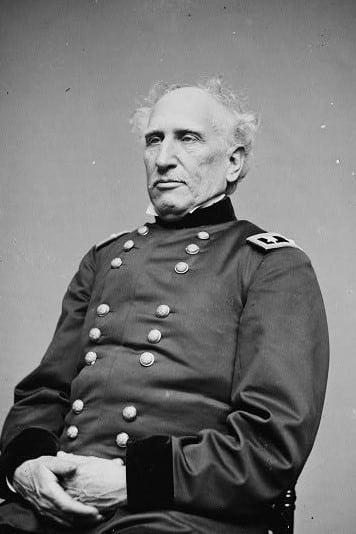
Although respected by his peers as an “unassuming gentleman, a gallant soldier [and] a skilled tactician,” the 55-year-old Casey did not immediately impress. He was described by one volunteer soldier as “an old man of small stature and very plain looking.”[2] Nonetheless, with tactical aptitude and proven leadership ability, he was a responsible choice to mold volunteers into effective soldiers.
From the outset, Casey faced challenges. As the Army of the Potomac expanded rapidly in preparation for the Peninsular expedition, Casey’s division was repeatedly depleted to stand up new formations, with the “best troops generally taken out.”[3] Despite the efforts of its accomplished commander, the division was poorly prepared and lacked cohesion when ordered to join the Army of the Potomac in the field in March 1862.
Casey departed Washington with eight untrained regiments, “which had arrived only a few days previous” and “several of them had not been armed.”[4] Casey bemoaned the inability to weed out inefficient and incompetent officers from these raw regiments, as well as the lack of brigade commanders with Regular Army experience to lead the volunteers into battle.[5]
There were tragic consequences for many of the inexperienced volunteers. Arriving on the Peninsula in early spring, Casey found the roads leading to the front badly deteriorated, making it “exceedingly difficult to keep the troops from starvation.” Orders from higher command kept the men “separated from their knapsacks or shelter tents for several days,” and thousands soon fell ill from exposure and dysentery.[6]
The division arrived at Fortress Monroe in March with 13,000 men but was reduced to approximately 5,000 by the end of May. “No Division has suffered half as much…from neglect & exposure as this,” contended one disgusted regimental surgeon, suggesting that “a dark responsibility and disgraceful neglect will be laid at the door of some of the managers.”[7]
These overlapping strains – unprepared soldiers, untried leadership, harsh conditions and illness – would come to define the division’s reputation and its relationship with the army’s commanding general. Nor were these issues unrecognized by senior leadership. Corps commander Maj. Gen. Erasmus Keyes received from Casey on May 28, 1862 a report on the division’s poor condition that identified each of these concerns.[8]
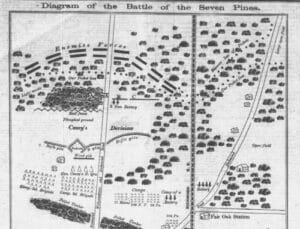
That same day, the IV Corps was south of the Chickahominy River, separated from the bulk of the Army of the Potomac with orders to fortify the intersection of the Williamsburg and Nine Mile Roads at a crossroads named Seven Pines. Casey’s division was in the vanguard, further isolated in an advance position half a mile west of the intersection, defending a fortified redoubt buttressed with six artillery pieces.[9] The division was less than six miles from Richmond.
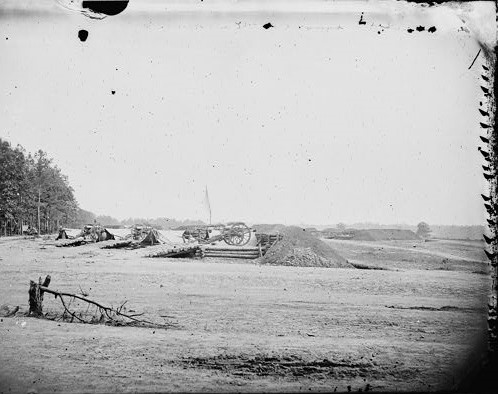
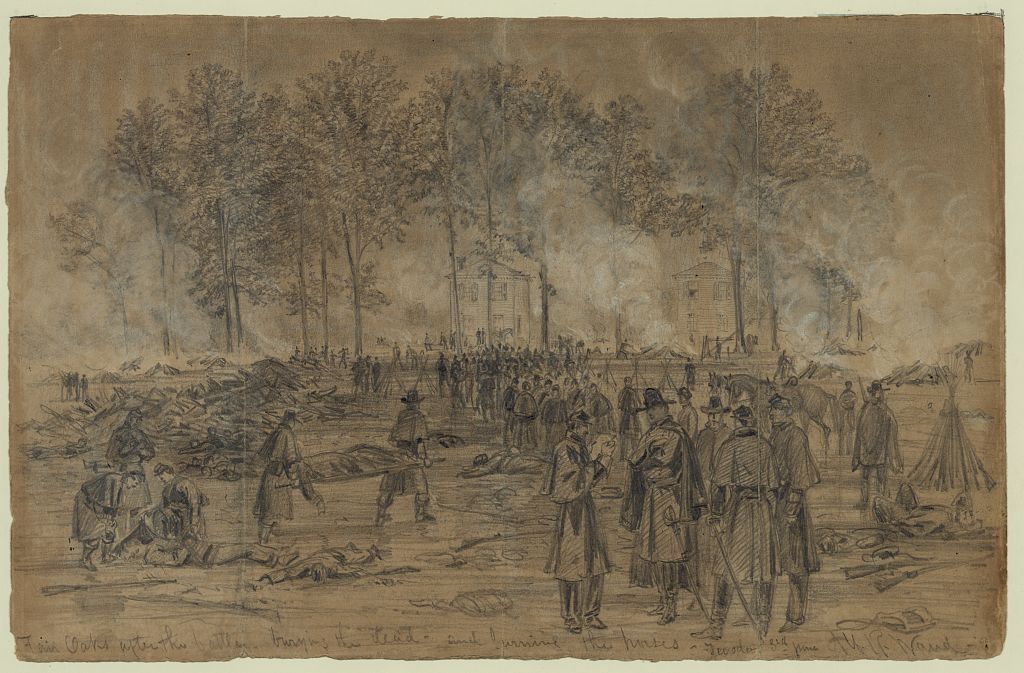
Rising from their “beds of mud,” the men of Casey’s division found themselves in the path of the Confederate onslaught that inaugurated the Battle of Seven Pines, or Fair Oaks.[13] Confused and disorganized fighting commenced in the late morning. Casey’s inexperienced division held its position against overwhelming numbers and without reinforcement for over 3 hours. Nearly enveloped, it fell back in some disarray to the main position at the intersection. Col. W.W.H. Davis of the 104th Pennsylvania recalled being pushed back under the weight of enemy numbers, and “individual soldiers came almost near enough to strike my men with the musket.”[14]
Divisional officers were in the heat of battle. Casey was “always in the thickest of the fight, encouraging his troops. He was right up at the front where division commanders do not always go.” One of his brigade commanders, Col. Henry Naglee, was omnipresent, a “sort of thunderbolt in battle.”[15] His divisional artillery commander, Guildford Bailey, was killed in the act of spiking the guns.[16] The men fought tenaciously, even launching a bayonet charge to disrupt one Confederate attack.[17] Keyes suggested that their bravery was demonstrated by the many Confederate dead strewn in front of their former position.[18]
This tenacity carried a high cost. Casey’s division suffered 1,429 casualties at Seven Pines, accounting for over half of the casualties incurred by the IV Corps and nearly a third of the total losses for the entire Army of the Potomac. The 104th Pennsylvania lost 206 men in its first major engagement. Five other regiments across the three brigades suffered in excess of 100 casualties each.[19] The men and their leaders believed their sacrifice was profoundly important. Casey was “convinced that the stubborn and desperate resistance” of his division saved the army from calamity; the 100th New York remembered the stand as that of “a division of martyrs that for hours sustained almost alone the shock of nearly thirty thousand rebel soldiers.”[20]
Unfortunately, perceptions in the rear almost immediately cast a shadow over the division’s performance. During the battle, one of Casey’s inexperienced regiments was routed and fled from the field along with many of the sick who were able to leave camp under their own power. The effect, as Keyes stated in his report, was to give “an exaggerated idea of surprise and defeat.”[21] The commanding general shared this inaccurate perception. As early as that evening, McClellan praised Maj. Gen. Samuel Heintzelman, commander of the III Corps, for “retrieving the disaster of Casey.”[22] His report to the Secretary of War the following day described a “desperate battle” in which Casey’s division was accused of retreating “unaccountably and discreditably” – the sole exception in the army condemned in such terms.[23] McClellan’s staff indicated in confidential correspondence that it was “the general’s impression that [the] division should be broken up, and such portions of it as are not completely demoralized transferred to other divisions.”[24]
McClellan’s communiques soon appeared in the press. They triggered a bewildered and strident response. Casey wrote to McClellan’s Chief of Staff, Col. Randolph B. Marcy, expressing that the statement did “much injustice” to his men and that he was “much aggrieved by the remarks of the general commanding”.[25] Casey’s brigade commanders demanded a court of inquiry.[26] Keyes referred to the “many groundless aspersions and incorrect statements” about the division circulating in the press, and his fellow Corps commander Heintzelman believed most of the men fought gallantly in consideration of their inexperience and the poor condition of their defenses.[27]
This reaction, and a detailed examination by the Inspector-General’s office, mollified McClellan. His official report, filed many months later, recounted the events as related by these officers and declared that it “affords me great satisfaction to withdraw the expression contained in my first dispatch.”[28]
The veterans of Casey’s division maintained Federal control of the tip of the Peninsula as the Army of the Potomac was withdrawn. As late as October 6, 1862, McClelland did seek their reunification, telegraphing General-in-Chief Henry Halleck to suggest that “I should be glad to have [the] division sent to me, if it can be got here within a reasonable time.”[30] It was not to be – the connection with the Army of the Potomac was severed.[31]
Casey, although his reputation for bravery was untainted, could not overcome the damage of the initial rebuke to his command. Special Orders No. 189 relieved him of his divisional command, assigning him to supervise the Army’s supply depot and hospitals at White House Landing. Several weeks later, he would be reassigned to the defences of Washington, where he would serve in administrative posts, including the court-martial of Maj. Gen. Fitz John Porter.
The men who served under Casey did not forget the man who led them in their baptism of fire. Two years later, veterans of the 11th Maine returning from furlough encountered the general and his staff near their camp. The men “all gave General Casey three times three cheers…for the hero of Fair Oaks.” Casey was taken aback, “a bright smile on [his] suddenly flushed face,” and he “bared his grey head in grateful acknowledgement of our loyal remembrance.”[32]
Casey’s division was lost to the Army of the Potomac by circumstance – and perhaps the impact of false aspersions. The bond between the men and their leader, who had sacrificed together at Seven Pines, remained evergreen.
Endnotes:
[1] The War of the Rebellion: The Official Records of the Union and Confederate Armies, Series 1, Vol. 27, Part 3, 827.
[2] George W. Cullum. Biographical register of the officers and graduates of the U. S. Military academy at West Point, N. Y. (Boston: Houghton Mifflin, 1891), 385; Cutler Edson. “Diary, November 18, 1861.” Accessed from https://ourwarmikepride.blogspot.com/2015/08/2-making-camp-in-maryland-and-first.html.
[3] OR, Series 1, Vol. 11, Part 3, 198.
[4] Ibid, 198.
[5] Ibid, 198.
[6] Ibid, 198; Luther Samuel Dickey. History of the 103d regiment, Pennsylvania veteran volunteer infantry, 1861-1865. (Chicago: L. S. Dickey, 1910), 19.
[7] William Merwin Smith. “Letter to William Van Nostrand, June 11, 1862.” Accessed from https://sparedshared23.com/category/85th-new-york-infantry/.
[8] OR, Series 1, Vol. 11, Part 3, 198.
[9] OR, Series 1, Vol. 11, Part 1, 872.
[10] United States Congress. Report of the Joint Committee on the Conduct of the War. (1863), 1:443.
[11] OR, Series 1, Vol. 11, Part 1, 872.
[12] OR, Series 1, Vol. 11, Part 1, 914.
[13] OR, Series 1, Vol. 11, Part 1, 872.
[14] William Watts Hart Davis. History of the 104th Pennsylvania regiment, from August 22nd, 1861, to September 30th, 1864. (Philadelphia: J. B. Rogers, 1866), 101.
[15] George H. Stowits. History of the One Hundredth Regiment of New York State Volunteers. (Buffalo: Matthews & Warren, 1870), 70.
[16] OR, Series 1, Vol. 11, Part 1, 915.
[17] Stowits, 64.
[18] OR, Series 1, Vol. 11, Part 1, 874.
[19] Ibid, 762.
[20] Ibid, 916; Stowits, 71.
[21] OR, Series 1, Vol. 11, Part 1, 874.
[22] OR, Series 1, Vol. 11, Part 3, 203.
[23] OR, Series 1, Vol. 11, Part 1, 749.
[24] Ibid, 750.
[25] Ibid, 752.
[26] Ibid, 750.
[27] Ibid, 815-816; 878.
[28] Ibid, 43.
[29] Stowits 86-87.
[30] OR, Series 1, Vol. 19, Part 2, 387.
[31] Albert Maxfield. The Story of One Regiment: The Eleventh Maine Volunteers in the War of the Rebellion. (New York: J.J. Little & Co., 1896), 80.
[32] Ibid, 52-53.


