Encountering John C. Frémont Repeatedly in My Research and Recent Travels, Part I: Finding Parallels between Frémont and Lincoln
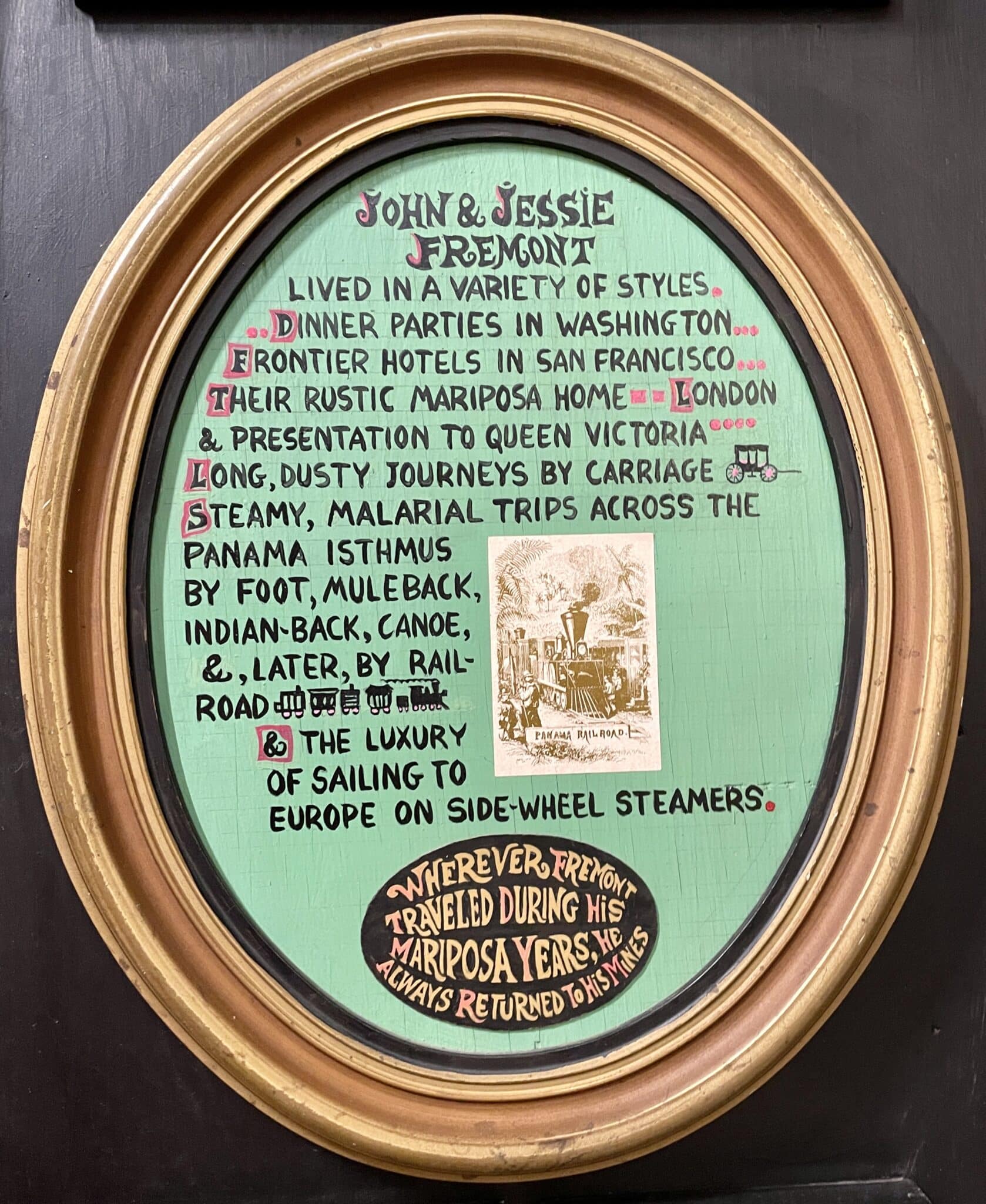
For those who live on the East Coast or throughout the South, the Civil War is an ongoing presence, with battlefields, monuments, landmarks, historic buildings, and namesake streets a constant reminder of those four turbulent years that tore the nation apart. It’s easier to feel disconnected from the Civil War out here on the West Coast, with few sites to mark war-related events or famous figures’ birth places or death sites.
Such is not the case with Civil War Gen. John C. Frémont. His name is everywhere, with many schools, parks, college dormitories, botanical species, and streets named after him, and many monuments and statues to memorialize him. Even the city right next to where I live in San Jose is named after him: Fremont, California, incorporated in 1956.
In just the past six months, I’ve encountered his name and tales of his exploits in Yosemite, Mariposa, Santa Cruz, and Santa Barbara in California; Glacier National Park and Missoula in Montana; and Zion National Park, Capitol Reef National Park, and Fremont Indian State Park in Utah. And those are just the times I noticed it!
However, here in the West, it’s not for his Civil War contributions that Frémont is most remembered. His name comes up frequently when students are studying history, especially in fourth grade when they learn California history, but I don’t remember ever hearing anything about his history as a military officer in the Civil War or as a rival to Abraham Lincoln for president of the United States.
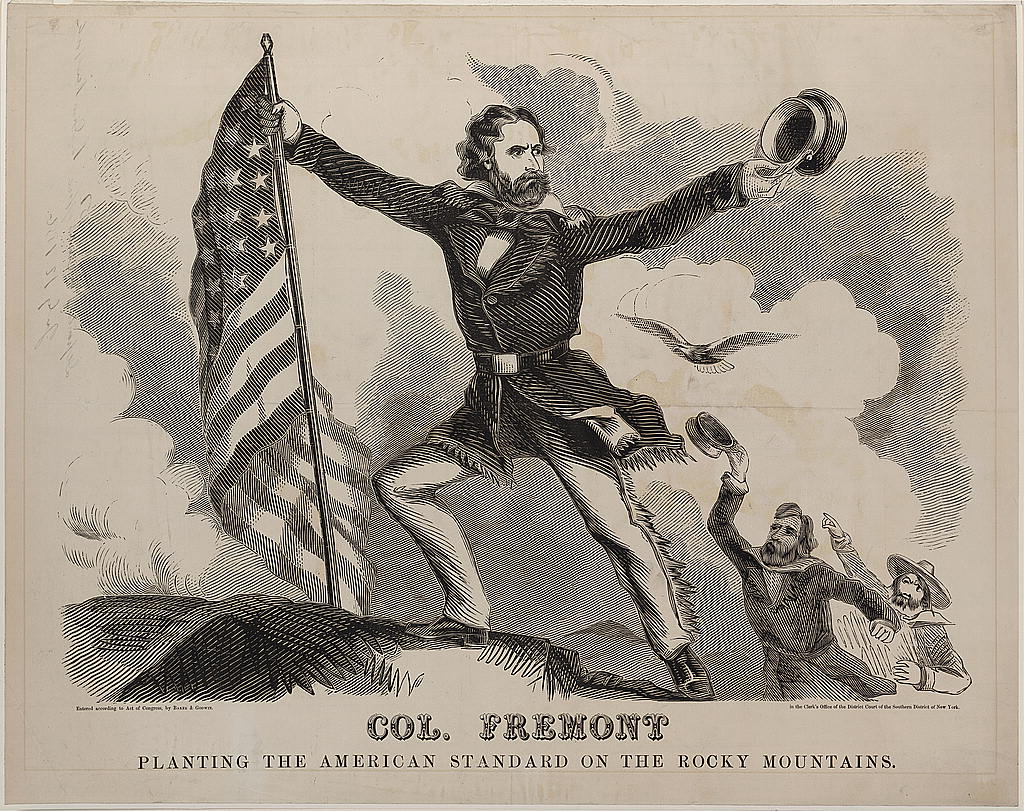
The John C. Frémont I learned about was the explorer, the adventurer, the “great pathfinder.” I read about the Frémont who, with help from frontiersman Kit Carson, led multiple government-sponsored expeditions, surveying the Oregon Trail and parts of the Sierra Nevada; the Frémont who planted an American flag atop Fremont Peak in 1846, helping to spark the Bear Flag Revolt, which became a catalyst for the U.S. taking control of California; the Frémont who became rich during the gold rush.
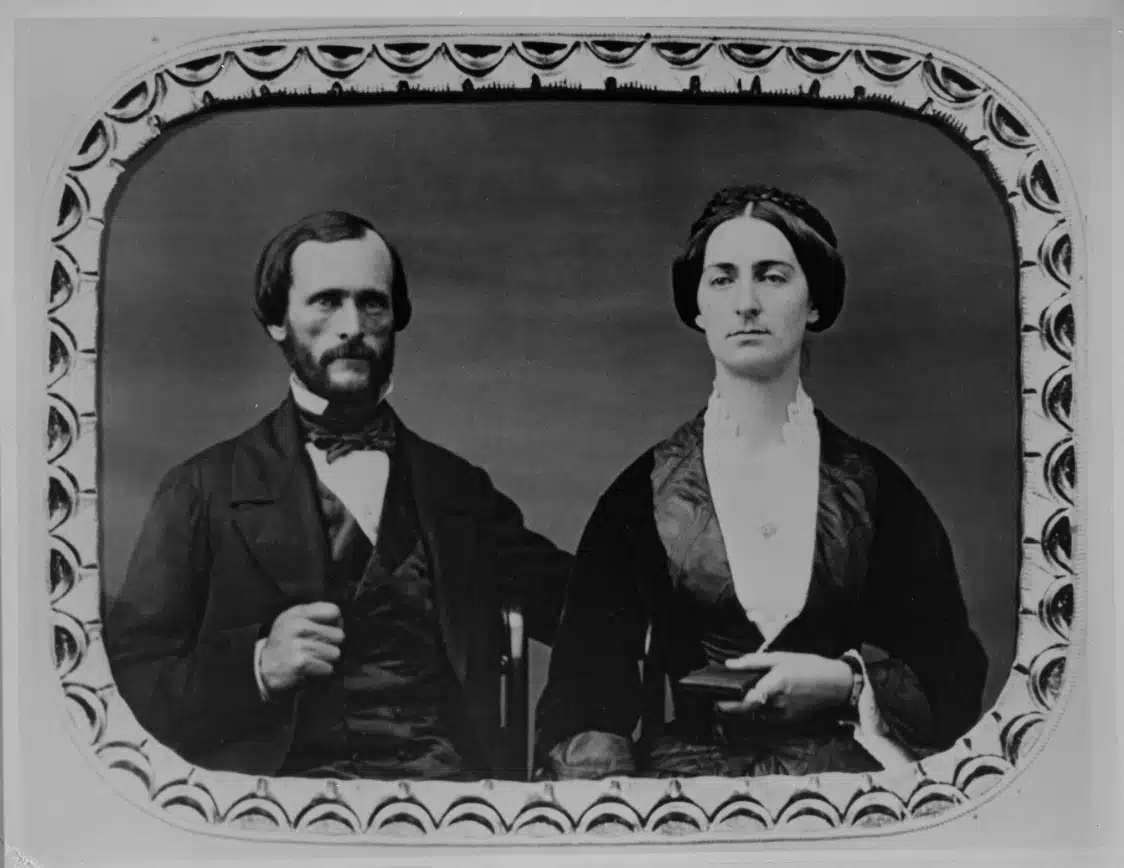
It was reading about his wife Jessie, though, that recently got me thinking again about Frémont. She was the subject of the first chapter in High-Spirited Women of the West, by Anne Seagraves, and she certainly was a woman with lots of spirit, resolve, insight, and ability. Through reading about her life with Frémont, I was struck by what a “power couple” they were in their day, as well as by the fact that Frémont and Lincoln shared some interesting parallels, while also butting heads on more than one occasion.
So, in my next couple posts, I want to explore those discoveries more fully. But first, here are some of the parallels between Frémont and Lincoln that I found interesting:
Both Frémont and Lincoln lost one of their parents in 1818 when they were very young, impacting both boys’ lives in significant ways: Fremont’s father died in December 1818 when he was just five; Lincoln’s mother died in October 1818 when he was nine.
Both grew up poor and with low social standing: Besides suffering from his father’s early death, Frémont was born out of wedlock, with his parents’ relationship viewed as scandalous (his mother was already married), and his mother was disinherited by her wealthy parents as a result. Lincoln was raised in poverty on the American frontier (Kentucky, Indiana, and Illinois), where he experienced a childhood of hard manual labor, minimal formal schooling, and frequent moves.
Both worked hard to overcome their circumstances: Frémont excelled in mathematics and natural science at the College of Charleston, developed practical skills in mapping and surveying, earned a commission in the U.S. Topographical Corps, served as a successful military officer and explorer, and eventually became a wealthy man during the California Gold Rush. Lincoln became a voracious reader, taught himself law and surveying, became a successful lawyer, and served in the Illinois State Legislature and U.S. House of Representatives.
Both met and fell in love with women who were significantly above them in social status and younger than them in age. Frémont married socialite Jessie Benton, daughter of the longstanding, influential U.S. Senator from Missouri, Thomas Hart Benton, who was raised in the elite circles of Washington, D.C. and was eleven years his junior (he was 28 when they married, she, 17). Lincoln married the refined socialite Mary Todd, who was from a wealthy, prominent Kentucky family with aristocratic connections and was ten years his junior (he was 33 when they married, she, 23).
Both were viewed as rough, rugged, physically commanding, and “men of the people,” earning nicknames that highlighted those characteristics: Frémont was called the “Pathfinder,” and Lincoln the “Rail Splitter.”
Both took a stand against slavery and issued Emancipation Proclamations, but with very different results: Frémont issued his Emancipation Proclamation in August 1861 while serving as commander of the Department of the West in Missouri, and in doing so earned Lincoln’s rebuke and disfavor. Lincoln issued his on January 1, 1863, while serving as president, and it is remembered as one of his greatest acts.
Both were nominated for president in 1864: Frémont by anti-Lincoln Republicans who briefly formed the Radical Democracy Party, made up of those who felt Lincoln was not taking a strong enough stand against slavery or conducting the war effectively; and Lincoln by the National Unity Party, made up of Republicans and pro-war Democrats who formed a temporary coalition to ensure victory in the Civil War. In September, Frémont withdrew his nomination to ensure Republicans would unite behind Lincoln so he could beat Democratic nominee George McClellan.
Both were celebrated in poetry during and after the Civil War. American Quaker poet and abolitionist John Greenleaf Whittier wrote several poems to celebrate Frémont’s abolitionist work (including “To John C. Fremont” and “All Hail to Fremont”); and Walt Whitman – well known for his poems about Lincoln (including “O Captain, My Captain” and “Hush’d Be the Camps To-Day”) – dedicated his 1856 version of Leaves of Grass to Frémont.
And the names of both came up during my recent visit to the city of Mariposa, which lies just outside Yosemite National Park in California: Frémont because “Las Mariposas” was the name he gave to the huge 44,386 estate he acquired in 1847, which generated millions of dollars in gold and of which the current city of Mariposa is a part (more on that later); and Lincoln because he – at the urging of Frémont’s wife Jessie and others – signed the Yosemite Grant Act on June 30, 1864, which protected the Yosemite Valley and the Mariposa Grove of Big Trees. This act “constituted the first time in history parkland was set aside by the federal government specifically for preservation and public use, creating a legacy for California and the nation,” and laying the groundwork for Yosemite to eventually become the third national park in 1890. [3]
I have to say, the more I read about Jessie Benton Frémont, the more impressed I am by this amazing woman. But, back to John C. Frémont. As I researched Missouri’s Civil War history a couple years ago for my book A State Divided: The Civil War Letters of James Calaway Hale and Benjamin Petree of Andrew County, Missouri, I was initially surprised when Frémont’s name began showing up. The first time I saw it, I did a double take and had to check to see if it was the same John Frémont I had learned about.
It was – but this Frémont was a controversial figure. This Frémont dared to defy Lincoln. This Frémont was forced out of his position as commander of the Department of the West for alleged corruption and incompetence. This Frémont is not often celebrated for his wartime efforts. So, I thought I’d share some excerpts from my book revealing actions that led to his “disfavor,” as well as share some of the ways Frémont continues to be remembered and celebrated on the West Coast.
So, check back in Part II to learn more about Frémont’s four months in Missouri in 1861.
End Notes:
- Baker & Godwin. “Col. Fremont Planting the American Standard on the Rocky Mountains (1856).” Wikipedia, https://en.wikipedia.org/wiki/John_C._Fr%C3%A9mont#/media/File:Election_poster_for_John_C._Fremont_(1856).jpg.
- “The Celebrity Power Couple Who Mapped the West and Helped Cause the Civil War.” History on the Net, 2000-2026, Salem Media, https://www.historyonthenet.com/celebrity-power-couple-mapped-west-helped-cause-civil-war.
- “Walking in the Footsteps of Presidents in California’s State Parks.” California State Parks, 14 Feb 2025, https://castateparks.wordpress.com/2025/02/14/walking-in-the-footsteps-of-presidents-in-californias-state-parks/.


Nice article, Tonya. The Fremont’s are indeed an interesting couple. For more you might check out Pamela Herr’s article titled “Permutations of a Marriage: John Charles and Jessie Benton Fremont’s Civil War Alliance,” in the book edited by Carol K. Bleser and Lesley J. Gordon titled “Intimate Strategies of the Civil War: Military Commanders and Their Wives.”
Thanks for the recommendations! I definitely have plans to continue my research on both of the Fremonts. Next month I’ll be making a visit to Sutter’s Fort – my first visit since I was a kid – and I’ll be anxious to see how the displays talk about John Fremont there.
“Is a half-truth still the Truth?”
Arguably the most effective hit piece ever directed against John Fremont appeared in Carl Sandburg’s “Abraham Lincoln: The War Years” published 1939. Excerpts from pages 338 – 351 appeared in Midwestern classrooms, portraying non-West Point trained “political General” Fremont as haughty, cartoonish, self-absorbed and incompetent. So complete was Sandburg’s destruction of Fremont’s reputation that few bothered to investigate The Pathfinder for themselves: it was more fashionable to pile on, perpetuate the slander.
Thank-you Tonya McQuade for having the courage to reveal the Truth of this American Patriot.
Yes, from what I read, a lot of the criticisms were due to him not being a West Point graduate and not giving special consideration to the people the Blair brothers wanted to see elevated or given special treatment.
Greetings from another (former) Bay Area native! (Is San Jose classified as the Bay Area?) I like Jesse’s poetic remark about her husband: “From the ashes of his campfires, cities arose-or were born or…. If anyone can help me get this right, I’d be grateful.
Yes, San Jose is considered the South Bay and the Capital of Silicon Valley. And yes- that is a great quote from Jessie Benton Fremont. There are several variations, but here’s a more complete version: “Roads followed the lines of his journeyings—a nation followed his maps to their resting place—and cities have risen on the ashes of his lonely campfires.”
Thank-you! Better than I thought.
Fremont is a complex, brilliant and tragic figure. CW geeks like me tend to concentrate on his perceived military ineptitude and the challenge he made to Lincoln. He is thus often viewed just as easy bait by the Lincoln hagiography school. But earlier, he had earned the trust and loyalty of one of the great “ordinary men” in our history, Kit Carson. And that was difficult to obtain.
Great point. I don’t think Kit Carson would have continued going on expeditions with him if he thought Fremont was inept. Without Fremont (and his wife!) writing about the places he surveyed and map, western history would have looked a lot different.