Framing History: ‘I could not die in a cause more sacred’
As an image collector (with limited means), I often find endearing photographs of Civil War nurses that tug at me for purchase. I’m touched by the will, determination, and sacrifice of so many of these women’s stories and holding their images feels like an honor. But the limited means part gets in the way! One nurse’s image that came up recently for purchase, however, holds a special connection for me, and I just had to have her photograph for my collection. Her name is Helen Gilson. The long and (way too) short of her story is remarkable.
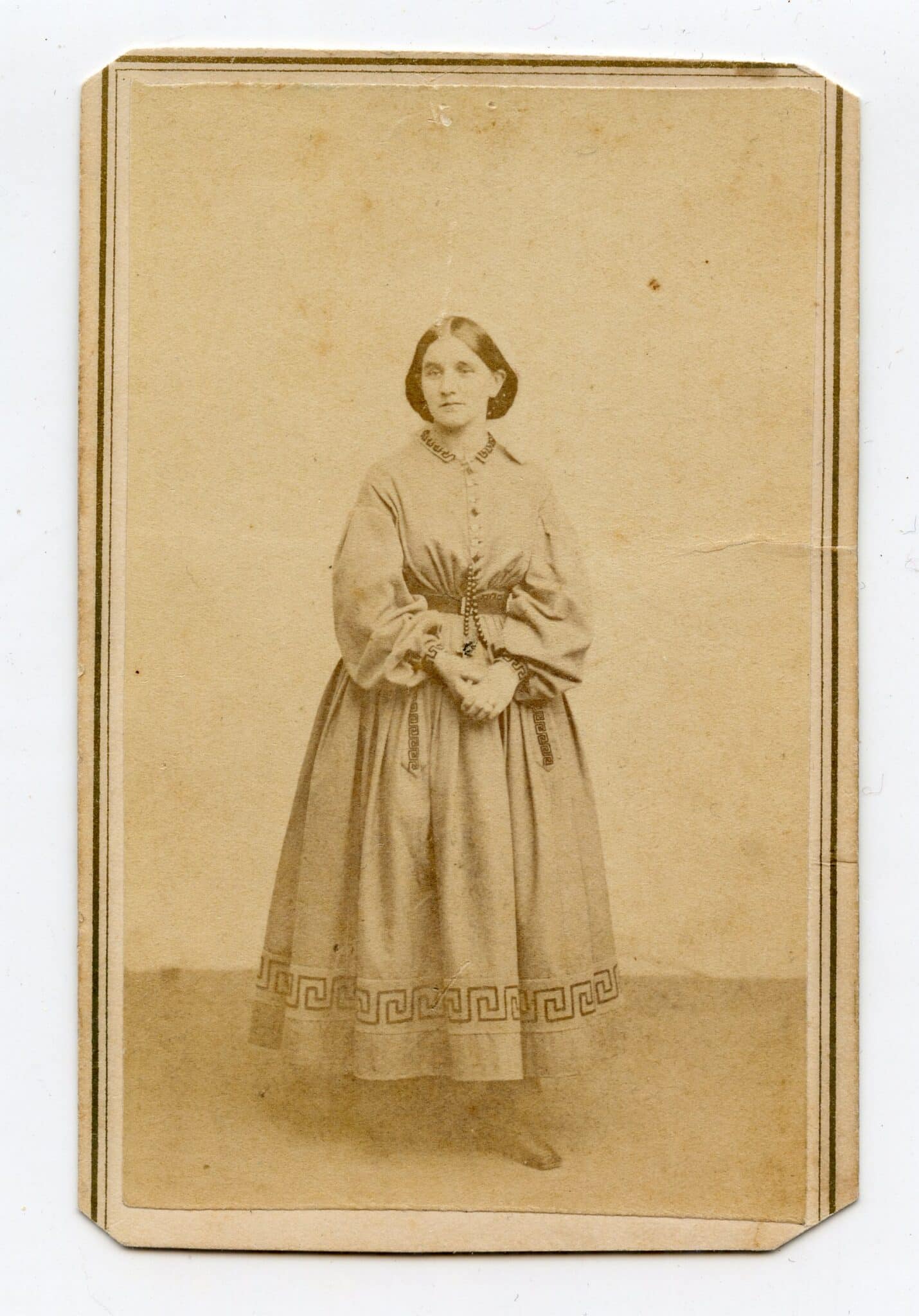
Like many other women who wished to serve as nurses during the war, she applied to Dorothea Dix, superintendent of Army nurses, but was rejected because she didn’t meet Dix’s strict standards, namely that the nurse be no younger than 35 years of age and also be plain-looking and dressed. Helen, at 28 years old, was too young.
Determined, however, to serve, she persisted and tended to the wounded at Antietam, Fredericksburg, Gettysburg, and elsewhere. Her most notable role came in June 1864, though, when thousands of wounded Union soldiers were brought for treatment to City Point, Virginia, casualties of the brutal fighting before Petersburg. Among them were hundreds of Black soldiers from the IX Corps. They were sent to a separate makeshift hospital with few supplies. Word of their suffering spread among the already overworked nurses, yet none volunteered to help these U.S. Colored Troops. None, except Helen. Other nurses warned her she would not survive the conditions. She answered that she “could not die in a cause more sacred” and went alone to care for the men.
After the war, Helen continued humanitarian work in the South, aiding freed people during Reconstruction. She married and became pregnant, but, having never fully recovered from illness contracted through her service, she didn’t survive the pregnancy. Her life was cut short in 1868 at just 32 years old, a casualty of the war. Her number doesn’t get recorded in any casualty counts, but she gave her life just the same in singular devotion to the cause.
When the National Museum of Civil War Medicine partnered with Military Images to develop the traveling exhibit Faces of Civil War Nurses, editor Ron Coddington created a prototype of one of the six-foot-tall photographic panels — and chose Helen for the trial run.
That is how she came to live, for a time, in my home office.
Propped beside my desk, this life-sized Civil War nurse both delighted and unsettled my three teenage children. They would slip quietly into the room to recount some detail of their day or request a routine act of motherly assistance, only to find a solemn, six-foot-tall Civil War nurse standing guard beside me.
She attended several Zoom meetings with me in background and was always a joy to explain to those who hadn’t expected her there, either.
Eventually, she made the journey from my home to the museum itself. Now she stands watch in our offices, greeting me and several coworkers each day from her post in front of my desk — a steady reminder of the courage, conviction, and transformative histories that shape the work we do.
When the 19th-century photograph of this image came up for sale a few months ago, I simply had to bring her home.


