Who Will Go?: Jefferson Buford and the Recruitment of Alabama Emigrants to Oppose Free State Settlement of Kansas – Part II
Buford contributed a long letter to the January 22 edition of the Spirit of the South. He explained that his plans had changed due to reports that ice clogged the Missouri and Kansas Rivers, so he moved his date to leave Eufaula to March 31. He would also make stops in Columbus, Georgia, on April 3, and Montgomery on April 5. Interested parties could meet him in any of those places. His regulations limited baggage to “six blankets, one gun, one knapsack and one frying pan to each emigrant.” Those wanting more supplies would have to pay their own freight. He also explained that he originally thought family members and their enslaved people could go also, but that now he was only accepting men “who are greatly needed in Kansas to preserve the pubic peace and enforce the laws.”[1]
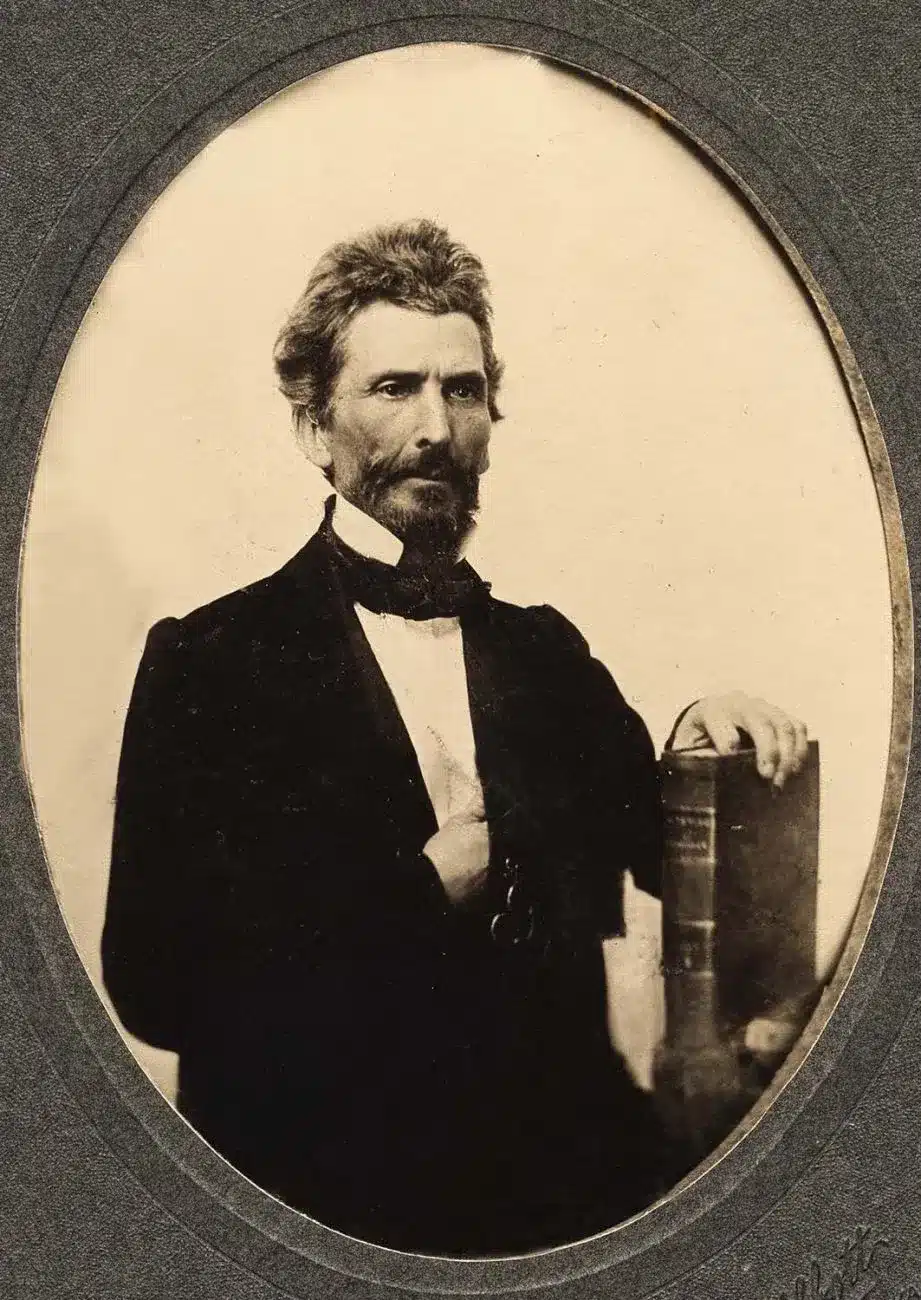
Chock-full of white supremacy messaging and incorporating various defenses of slavery, Buford’s view of the future for the South was a sharply descending slippery slope if the people did not do something immediately. Buford, borrowing Calhounian imagery, stated, “Without Kansas and slavery [in the South], free negrodom will soon crush out cattle, cotton, colleges, property and progress—drones will eat up the hive, railroads disappear, and wild beasts, briers, and brambles overrun the land. It is not a question of property, but of supremacy of the white race, in which rich and poor have equal interest. Kansas lost, and all west, nay! I say all east of the Mississippi must soon follow,” Buford argued. He blamed “impious intermeddlers” for imperiling the Union and questioned if republican equality can be continued without “sugar, cotton and cheap clothing,” and asked, “can civilization maintain its progress?” He added, “can these be supplied to the world without slavery?” No, said Buford. He then trudged up well-worn pro-slavery arguments. “Slavery is the only school in which the debased sons of Ham [Blacks], by attrition with a superior race, can be elevated. Slavery is not of chance, nor of man, but of God, and he has not yet worked out its mission; and will not have done so till the two races are fit for self-government,” Buford contended. [2]
Going yet further he asked, “Are we prepared to sink to the level of the Ethiopian, and clasp him in fond embrace of political and social equality and fraternity? For to this Abolition unslayed must come.” Sounding a bit like fellow Barbour Countian and future Alabama Governor George C. Wallace 100 years later, Buford railed: “Fanaticism must defend its beneficiaries; first by sending the federal army to protect them, and ultimately giving them the right to bear arms, to vote, to testify, make and administer laws—to eat out your subsistence, to pull you down to their level, to taint the blood of your posterity, and bring it to the degradation from which millions of ages cannot redeem it.”[3]
Buford asked readers if he was crazy for jeopardizing his wealth on such a project as Kansas emigration. Rather, he believed those who were unwilling to fight to make Kansas a slave state were unhinged due to what it would surely bring. He asked, “are you not mad who eagerly gather wealth , not for your posterity, but that free negro drones may waste and riot upon it in the halls where you have hoarded it?” Again, Buford called for immediate action, as so many southerners would in 1860-61: “Let us cease fiddling and dancing while Rome is burning: let every one man the engines, let all contribute according to his means.”[4]
In this same edition, Buford also placed a classified ad explaining that he and “several distinguished orators would address the people of Alabama on the duty and importance of aiding Southern immigration to Kansas,” and listed 24 locations and their dates. He hoped that “all who think the supremacy of the white race in the South is really endangered by the fierce war now being waged against it . . . will not only attend the above appointments, but that every neighborhood will hold meetings of their own. . . .”[5]
The Spirit of the South’s January 29 issue noted Buford’s departure on his recruiting and financial support tour and echoed his theories. The paper wrote that “One thing is certain, that without speedy and efficient Southern action, our peculiar institution will soon be driven from a land pre-eminently adapted to it, by the victorious hordes of eastern fanaticism.”[6]
On January 31, Buford spoke at Selma. The Spirit of the South copied a story in its February 12 edition taken from the Alabama State Sentinel. The story reported that the “arguments of the honorable speaker were convincing as to the great necessity of the settlement of [Kansas].” The reporter wrote that Buford “stated that the object of the expedition was not one of hostility to any one, but one of profit to any one who would join him. That while he wanted to raise an armed company, it was not intended to commit any depredations, but to be in a condition to maintain their rights and to sustain in said Territory the institution of slavery.” Apparently, Buford concluded with a strong and eloquent appeal to all who wanted to sustain law and order to come up with their money, if need be, to sustain and maintain the settlement of the Territory of Kansas as a slave state.”[7]
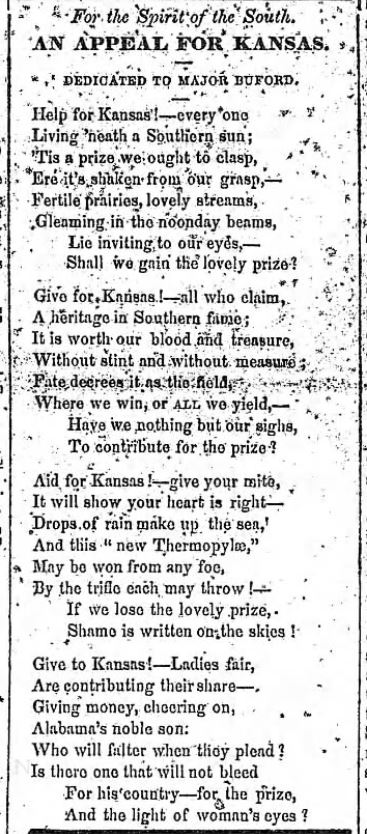
News of Kansas, emigration efforts in other southern states, and endorsements by politicians like South Carolina Congressman Lawrence Keitt continued to appear in the Spirit of the South and other Alabama newspapers as Buford’s departure date approached. A poem titled “An Appeal for Kansas” and dedicated to Buford was offered to readers in the March 11 issue of the Spirit of the South. Its third stanza reads:
“Give for Kansas!—give your mite,
It will show your heart is right—
And this ‘new Thermopylae,’
May be won from any foe,
By trifle each may throw!—
If we lose the lovely prize,
Shame is written on the skies![8]
Extant copies of the Spirit of the South end with the March 11 issue, but other papers in the state carried news of the Buford and the Alabamians’ efforts. Before departing Montgomery for Mobile, one of the capital city’s Baptist churches gave Bibles to the enlisted emigrants. The article also stated: “We observe that the emigrants, in their marchings carry two banners—one being inscribed on one side as follows: ‘THE SUPREMACY OF THE WHITE RACE;’ on the reverse ‘KANSAS, THE OUT POST.’ The other banner bears simply the inscription ‘KANSAS.’” Additionally, the participants wore a silk badge that was lettered, “ALABAMA FOR KANSAS—NORTH OF 36 30,” and “BIBLES—NOT RIFLES.”[9]
Before boarding their steamboat, they received some final remarks from Hon. Henry W. Hilliard, a former Alabama congressman. The reporter estimated that the crowed seeing them off counted about 5,000, “a large portion of them ladies.” The article concluded, “May we speedily see the happy effects of this glorious enterprize, and may fanaticism be compelled to stand aside when in the presence of sound, chivalric, and constitutional sentiment of our own ‘imperial South.’”[10]
Traveling on the steamboat Messenger, Buford’s emigration party set off down the Alabama River to Mobile. A stop in New Orleans picked up a few more recruits. From New Orleans they went up the mighty Mississippi River, arriving in St. Louis on April 23. They took the steamer Keystone to travel the Missouri River west to Kansas City and then by May 2 traveled into Kansas to begin the homesteading process.[11]
However, the timing of their arrival was bad. May 1856 witnessed a flurry of unfortunate events both inside and outside the territory that impacted Kansas. An escalation in tensions and actions between free-staters and slave-staters resulted in many of Buford’s migrants serving in the territorial militia. Some participated in the sacking of the free-state stronghold of Lawrence on May 21.[12]
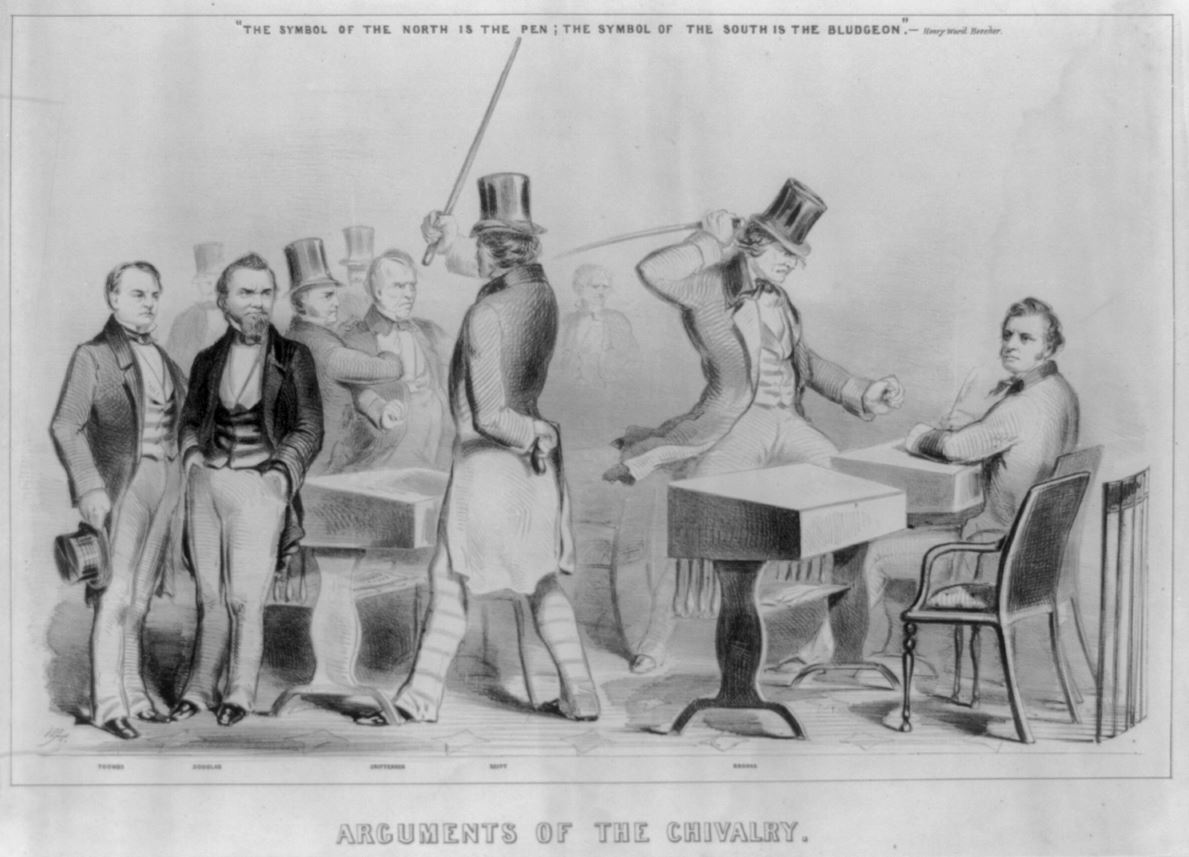
The following day, in faraway Washington DC, South Carolina Congressman Preston Brooks beat Massachusetts Senator Charles Sumner bloody with a cane on the Senate floor after Sumner made an extended fiery speech about Southerners “raping” a virgin Kansas. News of the Lawrence attack and Sumner’s caning spread fast and infuriated free-state settlers. One, John Brown, who along with some supporters, killed five pro-slavery settlers at the Pottawatomie Creek settlements on the night of May 24-25.
The territory’s many disturbances left little time to make a claim, survey a homestead, or put in a crop and build a livestock herd. Many of the Alabamaians became disgruntled and lost interest, some heading home. Buford’s absence during much of the summer of 1856 in order to return to the South and Washington to advocate and fundraise left a leadership vacuum that did not help the flagging morale of the Alabama migrants. By the spring of 1857, Buford had thrown in the towel on his effort, having estimated that he lost over $10,000 in the venture.[13]
However, it appears that despite his Kansas losses, Buford recovered quite well. In 1860, his real estate was valued at $29,000 and his personal property totaled $30,000, of which were four enslaved individuals. Buford died in Clayton, Alabama, on August 28, 1862, at age 55. He lived long enough to see Kansas become a free state on January 29, 1861. [14]
[1] Eufaula, Alabama, Spirit of the South, January 22, 1856.
[2] Ibid.
[3] Ibid.
[4] Ibid.
[5] Ibid. Future Confederate Gen. Cullen Battle also ran an ad in this edition offering his attorney services in Tuskegee.
[6] Spirit of the South, January 29, 1856.
[7] Spirit of the South, February 12, 1856.
[8] Spirit of the South, March 11, 1856.
[9] Prattville, Alabama, The Autaugan Citizen, April 10, 1856.
[10] Ibid,
[11] Walter L. Fleming, “The Buford Expedition to Kansas,” in American Historical Review, Vol. 6, No.1 (Oct. 1900), p. 43.
[12] Etcheson, Bleeding Kansas, 42-43.
[13] Ibid, 43; Fleming, “The Buford Expedition,” 47-48; Cahaba, Alabama, Dallas Gazette, January 23, 1857.
[14] 1860 US Census, accessed via Ancestry.com on March 3, 2026; Clayton, Alabama, Clayton Banner, September 4, 1862; Thomas Goodrich, War to the Knife: Bleeding Kansas, 1854-1861 (Mechanicsburg, PA, 1998), 251.


