Thoughts from a Confederate Surgeon
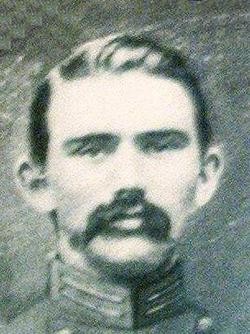
While doing some reading and research on the 3rd North Carolina Regiment, I came across a primary source titled Doctor to the Front: The Recollections of Confederate Surgeon Thomas Fanning Wood. Edited by one of his descendants, Donald B. Koonce, it chronicles Wood’s Civil War experience by combining his unpublished memoirs with letters from the front that he sent home to his family.
In October 1861, Thomas Fanning Wood joined the Confederate army as a private in the Eighteenth North Carolina Regiment and by April 1862 was appointed Assistant Surgeon. He was assigned in February 1863 to the 3rd North Carolina Infantry, a unit whose officer corps comprised men whom Wood had known and grown up with back home along the coast.
What made the memoir and letters interesting was that he offered insights and reflections on the conflict that were not always focused on the medical aspects of war. Although Wood, as a surgeon, did not go into much detail about the combat and fighting he experienced with the regiment, he served as a case study for examining themes of memory that some soldiers published after the war. The good doctor wrote down his memoirs in 1886 as he was bedridden due to an “acute aneurysm of the aorta.”[1]
During this recollection of his younger years, the most contradictory aspect of Wood’s Lost Cause was his position on secession and slavery. According to him, Wood considered himself an ardent secessionist. He placed quotations over the words “Peace Conference” that took place in February 1861, when Upper South and Border States delegates were sent to Washington, D.C., in an attempt to prevent war.[2] According to Thomas, the peace talks were in vain as he believed that “the North would not let slavery alone until we had a war, and the sooner begun the better.”[3] From Wood’s own, somewhat enthusiastic words, slavery would be the cause of a war between slave and free states, and he and his friends were willing to go to fight it out for the preservation of that institution.
What made this perplexing was that Wood believed that the war was fought not over state’s rights, but over protecting the slave labor work force that Wilmington and the rest of the South were dependent on. This was the polar opposite of the Lost Cause rhetoric of the same era, in which men like Jefferson Davis and Jubal Early had begun to change the narrative of the Secession Crisis more than twenty years after the surrender at Appomattox Court House.
Wood, however, was a member of the minority in Wilmington during the months leading to the firing on Fort Sumter. The port city had many ties, both financially and personally, to Northern states. Regardless of being wealthy slave owners and prominent businessmen, it was not until President Lincoln called for 75,000 troops that Wood’s Unionist neighbors allied themselves with each other and chose secession.[4]
Wood’s view of the slaves themselves during the war was also an interesting observation. Throughout the letters, notes, and memoir journals, he will refer to individual slaves by either their first name or as the “boy” of one of the regiment’s officers. In one such incident, he wrote home during the Gettysburg Campaign as the regiment marched near Mercersburg, Pennsylvania. While the army passed through, he recalled that some “abolitionist women” tried to persuade an enslaved man belonging to one of the officers.[5]
Another incident on the road was when an enslaved man went to purchase bread from a local woman, and she responded that she did not cook for “nasty n—.” As Wood witnessed those polar opposite views toward African-Americans as they marched with the Army of Northern Virginia, he wrote to his parents that “All of our negroes are not at all prepossessed with the Yankee brethren, and I don’t suppose one in the Regt. Could be induced to leave.”[6] Although these were individual wartime thoughts of a single Confederate surgeon, they did not reflect how other soldiers interacted and understood slavery while on the march.
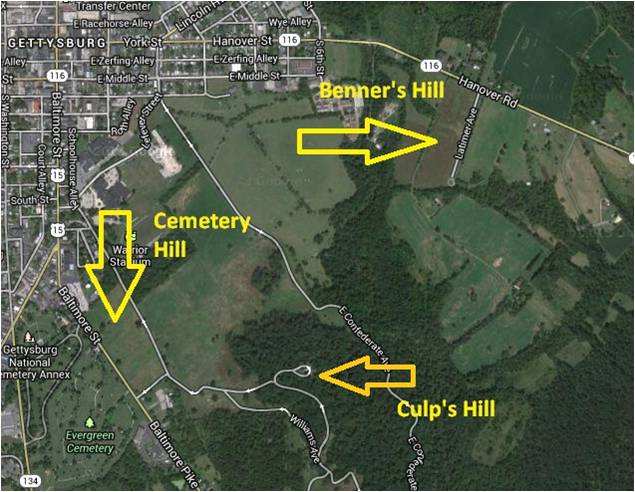
Recent scholarship has brought to light the connections between slavery and military campaigns. In the Gettysburg Campaign specifically, in the words of historian Kevin Levin, “the institution of slavery itself was on march.”[7] Along with those who were forced to join their masters when the war broke out, thousands of African Americans in Pennsylvania were at risk of being captured and forced to labor for the Confederate war effort. While many fled their homes to escape enslavement, both free and former enslaved persons were abducted when Confederate forces marched into town, their records and stories afterward for the most part lost to time. Thomas Wood’s decision to showcase both the loyal slave troupe and the racial prejudice of some Northern women gave the impression that even as an ardent secessionist, he leaned into Lost Cause beliefs of slavery while ignoring the harsh realities of free and enslaved persons during military campaigns.
Thomas Fanning Wood’s letters and memoirs serve as an interesting case study of varied opinions during and after the Civil War. He argued and promoted secession in a city that was primarily Unionist up until Lincoln’s call for troops. For Wood, slavery was the cause of secession and war to preserve the institution was, according to him, inevitable and necessary.
Simultaneously, he proudly stood by this rhetoric for more than two decades after the war broke out, and he wrote about how slaves marching with his regiment were treated kindly and that Northern civilians were the aggressors toward them. This interpretation should be seen as another example of the individual soldier’s complexity and capacity for a multitude of thoughts about the world around them, however confusing or even contradictory to modern readers they may be.
[1] Thomas Fanning Wood, Doctor to the Front: The Recollections of Confederate Surgeon Thomas Fanning Wood, 1861-1865, ed. Donald B. Koonce, 1st ed, Voices of the Civil War (Knoxville: University of Tennessee Press, 2000), xi.
[2] Ibid, 7.
[3] Ibid, 7.
[4] Margaret M. Mulrooney, Race, Place, and Memory: Deep Currents in Wilmington, North Carolina, Cultural Heritage Studies (Gainesville: University Press of Florida, 2018), 76-79.
[5] Wood, Doctor to the Front, 102.
[6] Ibid, 102.
[7] Kevin M. Levin, “When Slavery Came to Gettysburg,” Substack newsletter, Civil War Memory (blog), June 28, 2022, https://kevinmlevin.substack.com/p/when-slavery-came-to-gettysburg.


