R. E. Lee Visits Family Estates and Extended Relatives: How his character was influenced by both
Robert Lee grew up near relatives in the bustling town of Alexandria and stayed at the many family estates throughout the Virginia countryside. He was fortunate. He became close to all his relatives: the Carters, Hills, Lees, Fitzhughs, Randolphs, and Custis’. It’s a testament not only to their kinship but to their friendships and devotion.[1] Here are some of those family estates and relatives that shaped Lee’s character.
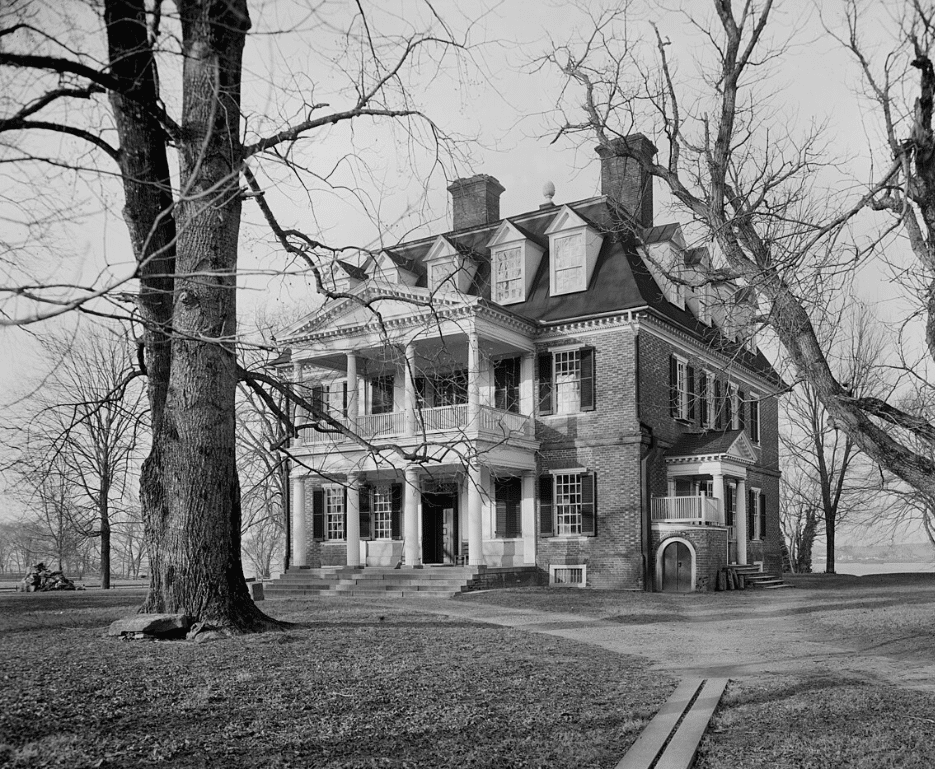
The Carter-Hill homestead known as the Shirley Plantation overlooks the James River about sixteen miles southeast of Richmond. It’s the oldest plantation in Virginia, established in 1613. It was a successful tobacco farm.[2] This was where Ann grew up, circa 1773-1793. Robert’s sisters, Anne Kinloch and Catherine Mildred, attended a girls’ school here. He and his brothers would stay there as well.[3]
War came to the Shirley Plantation several times. It served as a strategic supply and listening post for the Continentals in the War for Independence. Decades later, bluecoats returned in the “War of Northern Aggression.”[4] Federal troops transformed their property into a hospital in the 1862 Peninsula Campaign. The Carters provided food and bandages to the enemy’s wounded. The family and estate made it through the 1864 campaign as well. The Carters-Hills still own the property. It remains a private working farm and an integral part of national and state history.
Unfortunately, not all the family homes survived. Up in Fauquier County, Eastern View Plantation overlooked the peaceful countryside in the Casanova neighborhood about 5 miles southeast of Warrenton. It was owned by Robert’s aunt and uncle, Elizabeth Carter Randolph and Robert Randolph. Robert Lee attended elementary school there along with his Randolph male cousins.[5] When not studying, the Lee-Randolph pack let loose. The boys fished, hunted, chased the hounds on foot, competed in various jumping games, and laughed.[6] Most likely, there was a fair share of balls at the estate as well.
Eastern View was about 37 miles south of northern Virginia. It became a refuge for Lee’s daughters when Union troops marched into Arlington in 1861. Out of deference to the Randolph name, there’s a good chance the property was protected from harm by both sides as Eastern View survived the war. The mansion sadly was lost to a fire in 1920. The schoolhouse, or “academy”, where Lee and his cousins studied burned down in 1923.[7]
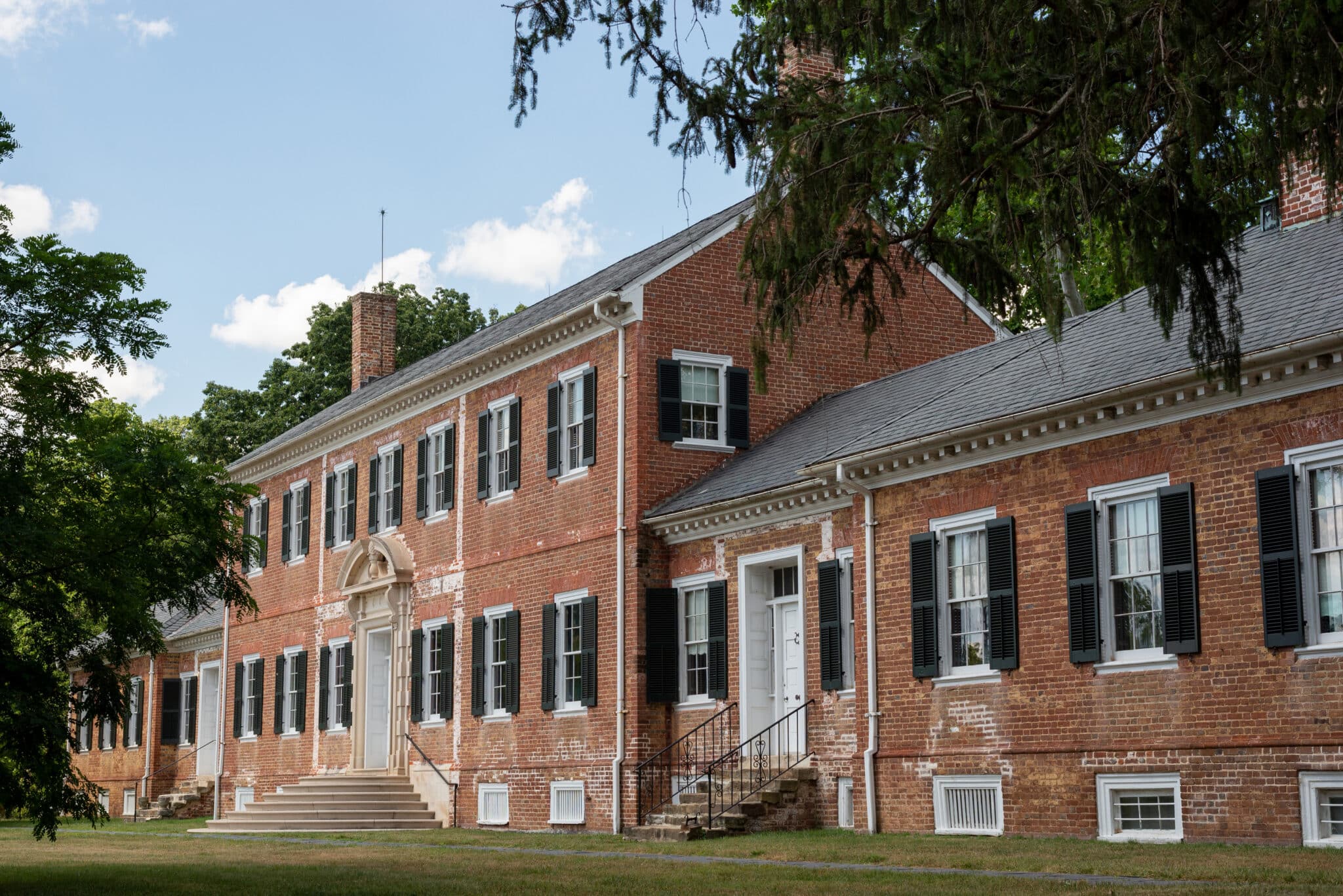
Between Richmond and Alexandria, the Fitzhugh cousins owned two large estates.[8] There was Chatham Manor on Stafford Heights in Fredericksburg. Chatham remains a part of the National Park Service. It’s grand halls and rooms are currently being renovated. Up in Annandale, Fairfax County, the Fitzhughs also built Ravensworth. It is mentioned several times as Ann with the children in tow called in on William Henry Fitzhugh and his wife, Anna Maria Sarah Goldsborough Fitzhugh.[9] Later, Mary Anna Randolph Custis Lee, General Lee’s wife, escaped to Ravensworth in 1861.[10] The Fitzhugh estates were protected by both sides. A testament to the respect the Fitzhugh name held in the North. Ravensworth mysteriously burned down in 1926.

Stratford Hall or the Great House fortunately still graces us with it’s beautiful landscape and architecture. It’s a significant Lee homestead in Westmoreland County. It was owned by Henry Lee, IV, Robert’s older half-brother. This was where Robert was born. Ann and her family traveled back to the 1,900 acre plantation a few times.
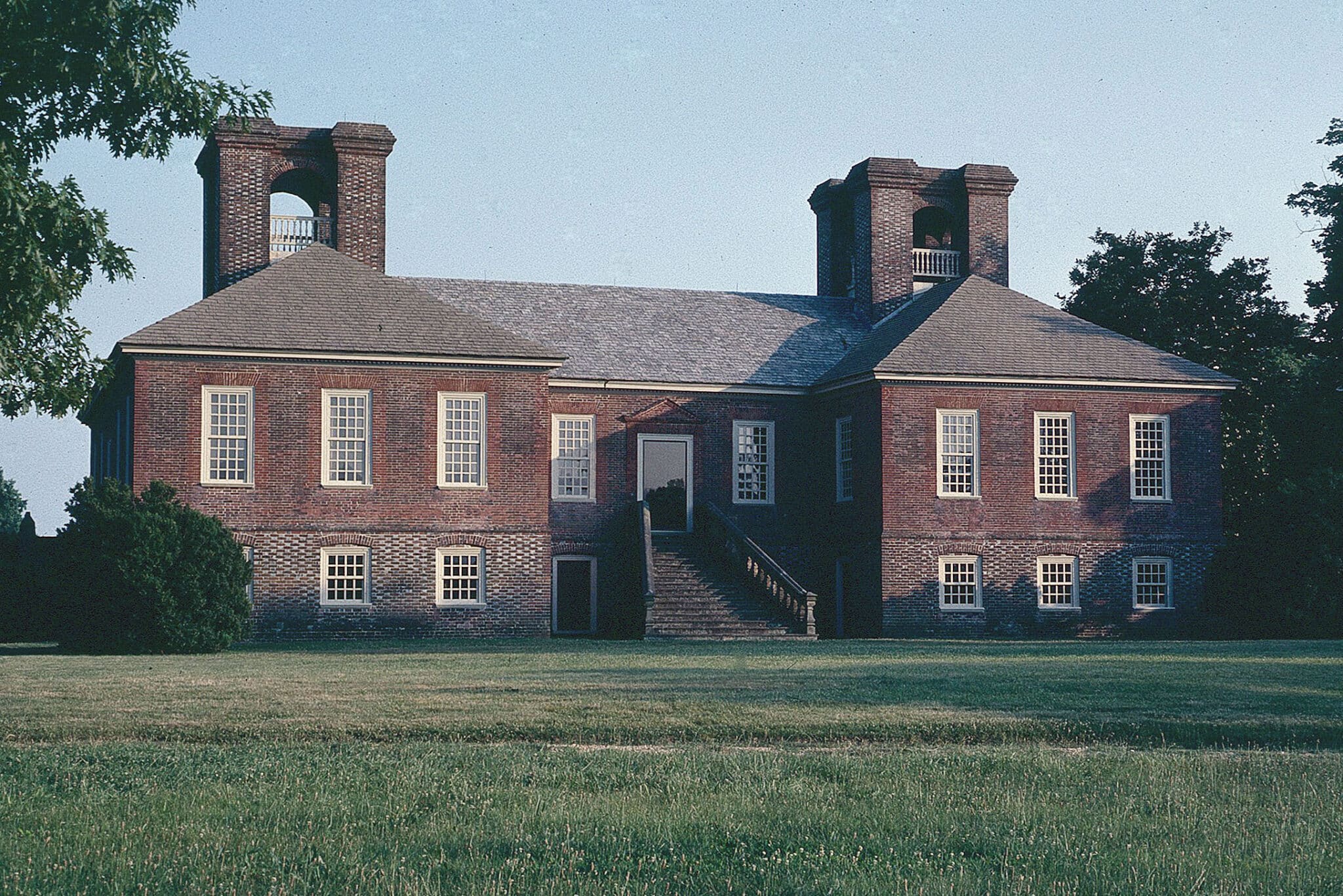
Robert stayed for the entire month of August in 1818 at Stratford Hall. The place was a vast mystery. He investigated every nook and cranny of the hall. He spent countless hours outside. He explored the stables. He ran in the fields and woods. He rode the horses.[11] It was a carefree time. He most likely attended a ball or two at the hall. Robert later recalled his excursions to Stratford held some of his “earliest recollections and happiest days.”[12] The Great House today overseen by the Robert E. Lee Memorial Association.
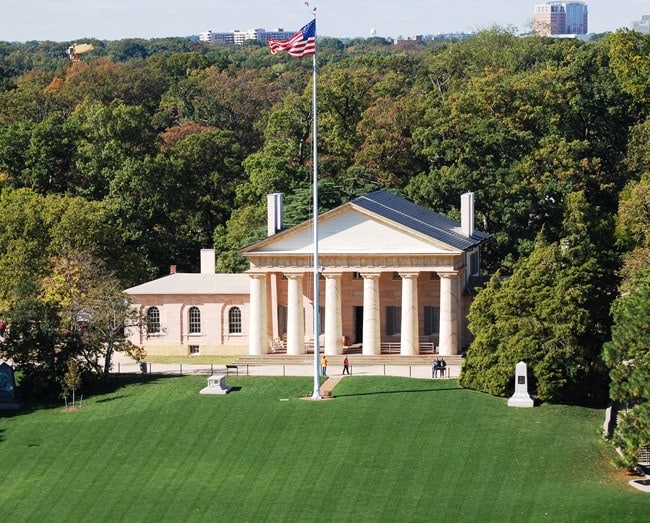
Last, but certainly not least, Ann’s family spent a lot of time with distant cousins, George Washington Parke Custis and his daughter Mary Anna Randolph Custis at their Arlington house.[13] Here the children played on the rolling hills while the adults had tea. Many years later, Robert and Mary married in 1831. Arlington became the Lee family home until the war. It became Arlington National Cemetery in 1864. After the conflict, the U.S. government paid Robert’s oldest son, Custis, for the property. Arlington National Cemetery is part of the National Park Service and the final resting place of thousands of servicemen and women.
Loosing Arlington was tough for Lee. All these excursions had tied him to the land and the quiet rural life, especially to that place. “My affections and attachments are more strongly placed [there] than at any other place in the world,” he said of the Arlington homestead in 1854. He was enchanted with country life. He wrote to his youngest daughter, Mildred, after the war: “I wish I had a little farm of my own, where we could live in peace to the end of our days. You girls could attend to the dairy and the cows and the sheep and wait on your mother and me . . . .”[14] No, he never bought his farm but his connection to the land remained throughout his life.
In addition to his love of the land, Robert’s visits with his family gave him a deep affection for his family. He was emotionally and physically bonded to his extended relatives and to the families’ historical significance. Looking through the Lee Family Digital Archives, you can see the many letters Lee wrote to his cousins, aunts, uncles. He cared about them as much as he did his mother and siblings. We might say today the Carters, Hills, Lees, Randolphs, Fitzhughs, and Custis were his tribe. He was a part of the first families of the Commonwealth, guardians of Virginia.
[1] Robert would’ve loved Facebook at least the connecting with his family and friends part.
[2]The property was patented to Edward Hill in 1660. “The main house, forecourt dependencies, formal brick farm buildings, and two demolished three-story bedroom houses were built ca. 1736 for Elizabeth Hill. In 1736, Hill, the heiress of Shirley, married John Carter, the son of Robert “King” Carter. Robert Carter was the wealthiest and most politically influential man in mid-1700s Virginia.” He owned the Carter’s Grove Plantation near Williamsburg, VA. This is my family’s favorite estate to visit. There’s no record that Lee visited Carter’s Grove. https://www.nps.gov/articles/shirley.htm.
[3] https://www.nps.gov/articles/shirley.htm. Robert Lee, Jr., Recollections and Letters, 404.
[4] I use the term “War of Northern Aggression” because the Carters-Hills would’ve seen and experienced the conflict as a war of northern aggression.
[5] Douglas Freeman, R. E. Lee, vol. 1, 30.
[6] Emily Virginia Mason, Popular Life of Gen. Robert Edward Lee, 23. See also for visits, A. L. Long, Memoirs, 16–7.
[7] Google, AI and Find a Grave, “Eastern View estate, Randolph, Virginia.” For Robert’s girls staying at Eastern View, see Recollections and Letters, 33.
[8] The Fitzhughs owned property in Alexandria and let Ann and the children stay in one of their homes.
[9] Ravensworth was 24,112 acres. https://ravensworthstory.org/.
[10] For Mary Lee staying at Ravensworth see Recollections and Letters, 32. Chatham, see Dabney H. Maury, Recollections of a Virginian in the Mexican, Indian, and Civil Wars, 1894, 3 and National Park Service website.
[11] Sanborn, 47. For exploring Stratford, see Douglas Freeman, R. E. Lee, vol. 1, 34–5.
[12] R. E. Lee to Miss Mattie Ward, May 28, 1866, in Jones, Life and Letters, 27.
[13] Cousin Mary Lee Fitzhugh had married George Washington Parke Custis. She passed away in 1853. Mary Lee Fitzhugh Custis mother was Ann Bolling Randolph. Therefore, the Lee children were related to Mary via the Fitzhughs and Randolphs.
[14] Recollections and Letters, 266.


An excellent piece! Ms. McDonald, I am doing intensive research on the Chatham Mansion. Could I correspond with you on some questions? My email is epsvn@yahoo.com. Much thanks…
Just a small correction to your second note. Although the property at what later became Carter’s Grove Plantation was part of the vast holdings of King Carter, the mansion was built in 1755 by his grandson Carter Burrell.
All are wonderful treasure troves of history and folklore. I’ve been fortunate to be able to visit three of these: Arlington House, Chatham, and Stratford Hall. Stratford is by far the most impressive, in my humble opinion.
RE Lee was a prodigious letter write, even by the standards of the day.
Tom