A Community of Freedpeople in Civil War Wisconsin
ECW welcomes back guest author James Marten.
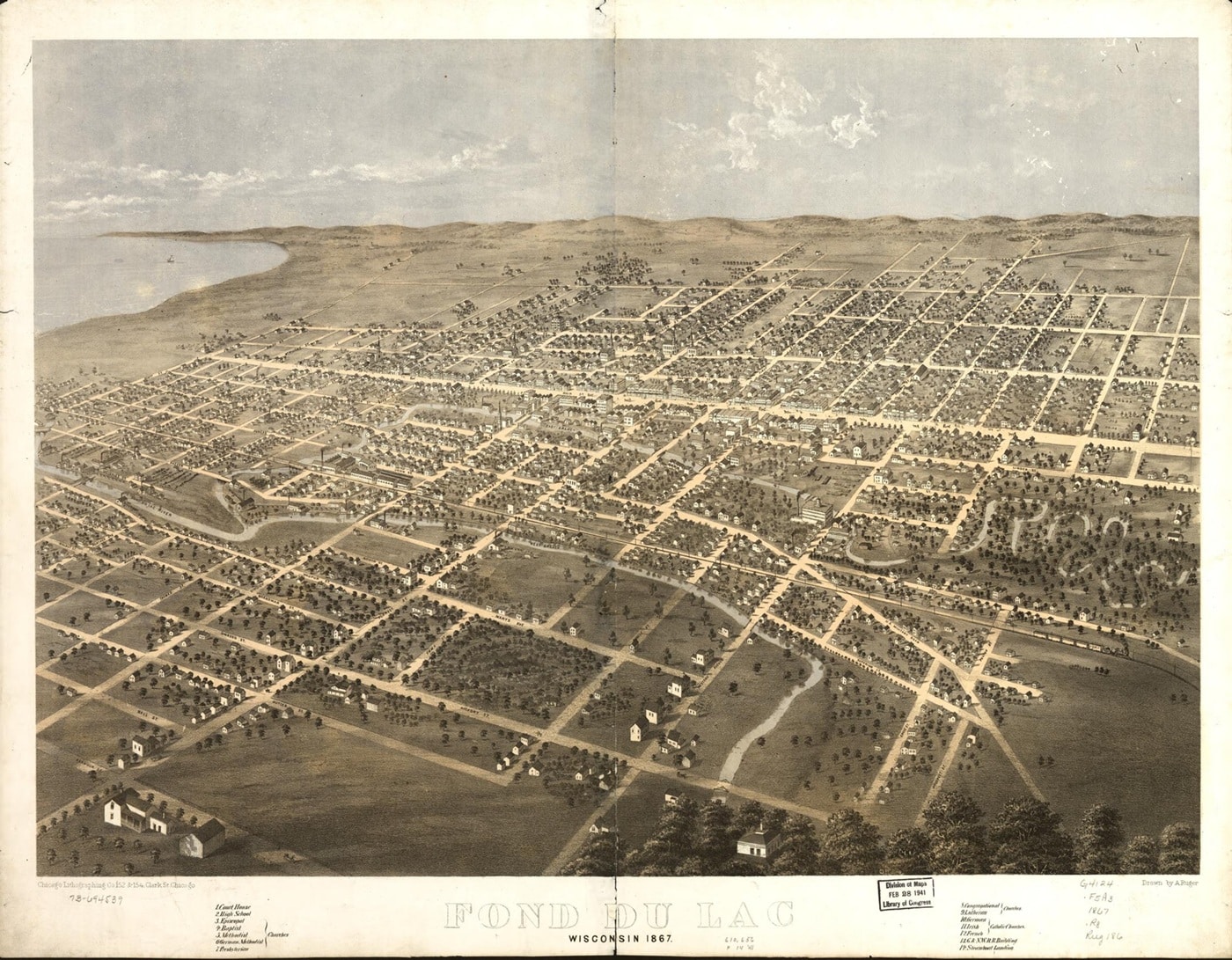
In 1870 the anonymous census takers in the small Wisconsin city of Fond du Lac carefully noted the race of every one of the city’s roughly six thousand residents: “W” for White, “B” for Black, “M” for Mulatto,” and “I” for Indian.[1] Only nineteen black residents had been recorded in 1860, but a decade later refugees from slavery and their children had swelled the African American population of Fond du Lac to about 180. A majority of those members of that small community consisted of seventy-five “contrabands,” as they were called, who came to Wisconsin in October 1862, and the children born to them in Wisconsin. Other African Americans arrived later in the war or shortly thereafter.[2]
One month before the three-score and fifteen refugees arrived in Fond du Lac, the Emancipation Proclamation had declared freedom to all slaves living in Confederate-occupied territory if the war had not ended by January 1, 1863. The proclamation thrust the issue of slavery into the center of wartime politics and military policy. But thousands of enslaved men, women, and children did not wait to be seek freedom. Instead, they “emancipated” themselves by running away; many spent at least some time in the so-called “contraband camps” that emerged wherever the Union army established a garrison. One was established at Cairo, the swampy crossroads in far southern Illinois where the Ohio and Mississippi Rivers meet.
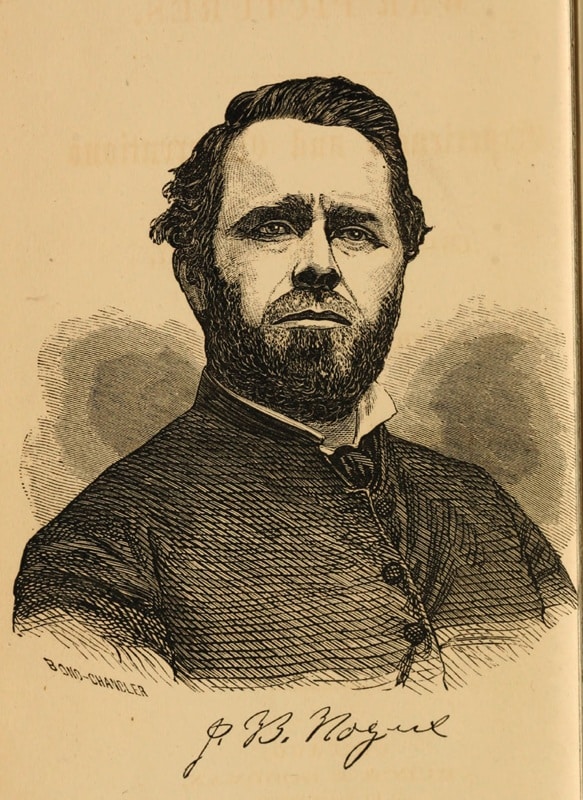
The man in charge at Cairo in the fall of 1862 was Rev. James B. Rogers. Rogers was pastor of Fond du Lac’s Baptist church when war broke out. He soon became chaplain of the Fourteenth Wisconsin Infantry. Always sympathetic to the plight of the enslaved, after a few months he accepted the post at Cairo.
Rogers published a memoir in 1863 that, although condescending, portrayed the men, women, and children with whom he had come in contact in an exceedingly positive light. For instance, he argued that “their capacities for education are equal to those of white children, and their thirst for learning rather greater.” Indeed, “some who have removed to the North . . . manifest singular industry and economy.”[3]
Although Rogers’ group was a tiny fraction of the half a million enslaved people who found a kind of freedom even as the war raged, they offer concrete examples of the transformation experienced by formerly enslaved people who journeyed north. Anecdotes of Union officers sending back home their former servants or cooks, or children cast adrift from overrun plantations, appeared in the occasional postwar memoir, but most eventually faded from the historical record. According to Amy Murrell Taylor, perhaps “tens of thousands” of formerly enslaved people were funneled through Virginia to New York and Philadelphia or through Cairo to Illinois or southeastern Iowa.[4]
The 1870 census of Fond du Lac, Wisconsin, captures one small community of refugees at a specific time and place. The details that emerge, however sparse, offer concrete examples of the lives that these pioneers experienced.
For instance, we learn that the new arrivals shared the common impulse among the freedpeople to form or maintain nuclear families. Although it is impossible to determine the precise relationships among people living in the same dwelling, common sense suggests that men and women close in age who were also old enough to have been the parents of children living in the household were, in fact, married. We don’t know if they wed while enslaved—slave codes did not, of course, recognize marriages—or if they met and married at the contraband camp or, perhaps, after they arrived in Fond du Lac.
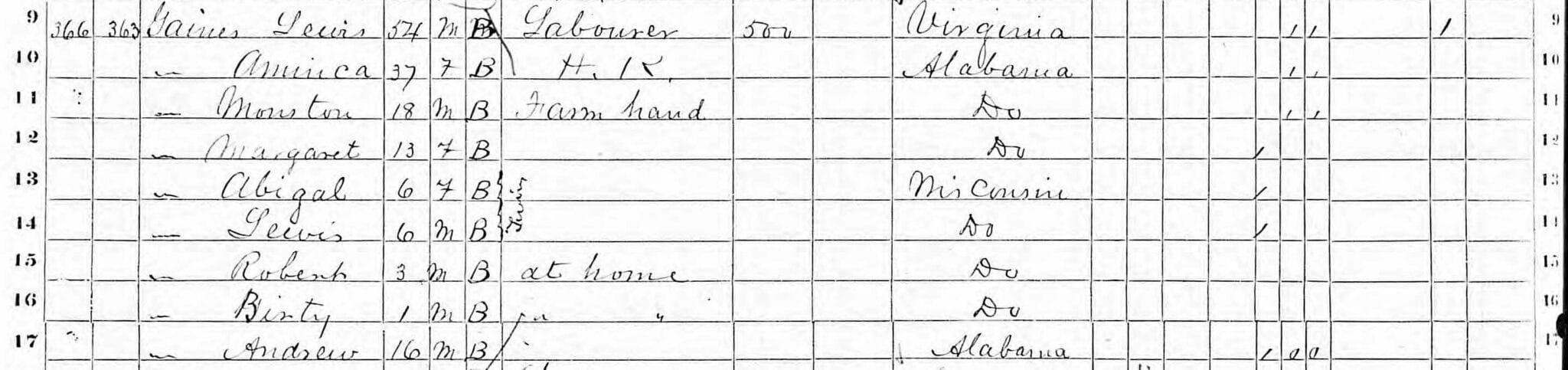
The Baggels were a fairly typical family; William, a mill hand, and Angeline had been in their twenties in 1862 with one child, two-year-old Alfred. By 1870 Alfred was in school in Fond du Lac and there were three more children between the ages of one and six. Eveline Harris, a single washer woman, headed a household that probably included a daughter and three grandchildren under the age of seven. Burk Lindsley had been born in Virginia, but somewhere along the way he had met Alabama-born Eliza. Four of their nine children were born in Alabama; the rest were born in Wisconsin—one every year from 1865 through 1869. The Gaines household, headed by Lewis, Sr., included seven children: three teenagers born in Alabama and four—including twin six-year-olds Lewis, Jr., and Abigal—born in Wisconsin. We can easily imagine the satisfaction Lewis and his wife Aminca took from being able to pass along his name to a son born in freedom.
These and other households were comprised of people who seemed to have been together before coming to Wisconsin; perhaps Rev. Rogers had even married them at Cairo. And perhaps that is how he selected these few dozen people from the hundreds he had encountered.
However they were chosen, or why they chose, to travel to the North, the Fond du Lac refugees confirm several of the dramatic changes—obvious, perhaps, but rarely tracked in precise terms—that freedom brought to them.
The original article announcing their arrival suggested that the migrants had been “taken” from plantations in Franklin County, Alabama, and the largest number—twenty-eight—did, indeed, report their state of birth as Alabama. Most of the rest claimed Tennessee, Virginia, and Mississippi as birth states.[5]
The members of the black community formed in Fond du Lac were extremely young. Nineteen were under the age of thirteen and another fifteen were older teenagers. Forty-one children were born to African American family groups in Wisconsin after 1862.
Of course, one of the biggest changes in their lives was that they were paid for their work. The nature of the work for the men who listed occupations in 1870 may not have changed much—among those forty-two men, half were laborers, while three worked in sawmills and six were farm laborers (another was a “farmer). Two were skilled laborers, including a whitewasher and a stone mason. Jerry Johnston was a “huckster,” or street peddler; his twenty-one-year-old son, William, born in Kentucky like his father Jerry and his likely mother Henrietta, was a law student.
The most striking facet of the occupational listing is that of the women who reported occupations—only three did not—just one, the aforementioned grandmother, had a job outside the home. Tabby Lindsley, still only eighteen, was simply “at home.” Twenty-two other women named their occupations as “Keeping house.” Enslaved women would never have been given the opportunity to simply “keep house,” and it is likely, however hardscrabble their Wisconsin lives might have been, that they relished the chance to work in their homes.
Most of the adults could not read or write. It was illegal, of course, to educate enslaved people and dangerous for the enslaved to be able to read. Yet, in the most profound difference in the free lives of refugees and their children, virtually all of the school-age children attended school in 1870. Most of the Wisconsin-born children were still under the age of five, but of the eight who were older, seven were in school. At least seven other children who apparently arrived in 1862 as “contraband” were also in school, as were four who seem to have arrived after 1862. One boy, thirteen-year-old Frank Patterson, was a farm laborer; seventeen-year-old Lizzy Burt was a servant.
The sudden growth of Fond du Lac’s black population did not last. After holding steady at nearly 180 in the 1870s, it declined rapidly to forty-seven in 1910, bottoming out at only five in 1940. An early history of Fond du Lac devoted a paragraph to Rogers and the arrival of the African Americans. Its dismissive ending suggested that the weather caused the decline: “the habitat of the negro is a warmer country than this and it is not healthful for him here and never will be.”[6]
Perhaps, but there might have been other factors at work; when the modern Ku Klux Klan flared up in the 1920s, a cross-burning drew three hundred people to a spot just a few miles north of Fond du Lac.[7]
Whatever the circumstances of this second phase of their diaspora, the generation or two of formerly enslaved people who lived in Fond du Lac show in unusually concrete ways the possibilities and actualities of freedom for the so-called “contraband” who seized the chance to build lives outside of slavery.
James Marten is professor emeritus of history at Marquette University and a former president of the Society of Civil War Historians. His most recent book is The Sixth Wisconsin and the Long Civil War: The Biography of a Regiment (Chapel Hill: University of North Carolina Press, 2025).
Endnotes:
[1] 1870 United States Federal Census for City of Fond du Lac, Fond du Lac County, Wisconsin, ancestry.com. Accessed April 7, 2026.
[2] “Fond du Lac, Wisconsin,” History & Social Justice, https://justice.tougaloo.edu/sundowntown/fond-du-lac-wi/, accessed April 7, 2026; Daily Milwaukee News, October 30, 1862.
[3] Rev. J. B. Rogers, War Pictures: Experiences and Observations of a Chaplain in the U. S. Army, in the War of the Southern Rebellion (Chicago: Church & Goodman, 1863), 5, 218-219.
[4] Amy Murrell Taylor, Embattled Freedom: Journeys through the Civil War’s Slave Refugee Camps (Chapel Hill: University of North Carolina Press, 2018), 95-96.
[5] Daily Milwaukee News, October 30, 1862.
[6] A. T. Glaze, Incidents and Anecdotes of Early Days and History of Business in the City and County of Fond du Lac From Early Times to the Present (Fond du Lac: Haber Printing, 1905), 219.
[7] Fond du Lac Daily Commonwealth, July 15, 1924.


Good to know this about my home state.