What If Lee Had Someone to “Strike Them a Blow” at the North Anna River?
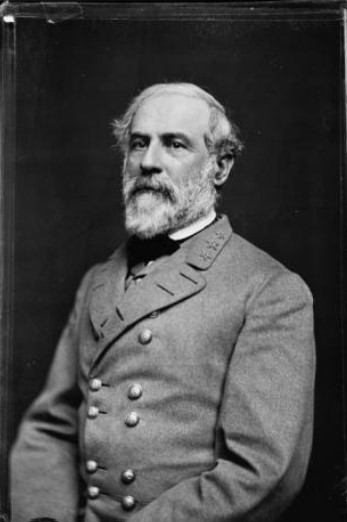
I’m in Virginia Beach, speaking to the Hampton Roads Civil War Roundtable about the North Anna River, and it’s the anniversary of the start of the North Anna phase of the campaign—May 21. In 1864, Confederate forces under Robert E. Lee and Federal forces under Ulysses S. Grant are disentangling from Spotsylvania and each other and slithering southward, blind to each other’s movements, wary, exhausted.
By May 24, Lee will be so worn down from dysentery and lack of sleep that he’ll be unable to spring the trap Grant has unwittingly entered. “We must strike them blow,” Lee mutters, confined to his cot, nearly delirious. But he has no one to strike the blow for him. For various reasons, he does not trust his three corps commanders to execute his plan, and so his best opportunity to strike a blow passes.
As I start the post-presentation Q&A, people seem curious about Lee’s options. What if Lee had someone who could strike a blow?
“What if Longstreet had been there?” someone asks, referring to Lee’s “Old Warhorse,” James Longstreet, knocked out of action on May 6 during the battle of the Wilderness. I’ve written about that here, and I share some of those observations with the audience.
But then two people pose scenarios I’ve never before been asked about—which delights me! I love having my brain picked because it’s a chance for me to see a story I’m familiar with in a new way. And I love what-if questions because they can help illuminate a moment—and this is certainly a scenario that benefits from illumination.
“Do you think Lee could have considered Jubal Early?” someone asks.

Lee certainly had a lot of faith in and respect for Old Jube. Ever since Early marched to the sound of the guns at Fredericksburg in December 1862, plugging a hole in Stonewall Jackson’s line that George Meade had punched through, Lee recognized Early’s talent and had given him increasing responsibilities. Most recently, Lee had tapped Early to temporarily lead the Third Corps during the battle of Spotsylvania, just days before the armies shifted to North Anna, and Early had handled the corps well. And just a few days after North Anna, Lee would tap Early to command the second corps permanently, a job he’d once capably executed in the fall of 1863.
So why not trust him with striking a blow on May 24?
Lee’s thoughts on the matter are unknowable to us today, but we do know Lee was deeply respectful of the chain of command. It would have been unlike him to direct Early to supersede Second Corps commander Richard Ewell, his own immediate supervisor. Lee had been looking for a way to remove Ewell from command since the previous fall, but no tactful way had presented itself, and Lee had chosen not to press the issue. At North Anna, the same dysentery that debilitated Lee at North Anna was even then striking Ewell, who would retire to Richmond after the battle to recuperate, finally providing Lee with the excuse he needed to make a change in commanders. Ewell would later petition to return to corps command, but Lee politely suggested that he needed someone of Ewell’s experience to oversee Richmond’s defenses, instead. But look at what Lee went through to contrive an opening that would allow Early’s ascension.
Similarly, when Lee tapped Richard Anderson to take over the First Corps in the wake of Longstreet’s wounding, he rearranged the command structure in the First Corps so that he would not violate anyone’s seniority.
Bottom line: I think Lee was a traditionalist at heart and would not violate the protocol of seniority. (And that’s even assuming he was coherent enough on May 24 to think about such things. Shaking up the command structure in such a major way with the top commander on shaky ground himself would’ve likely been a perilous idea.)
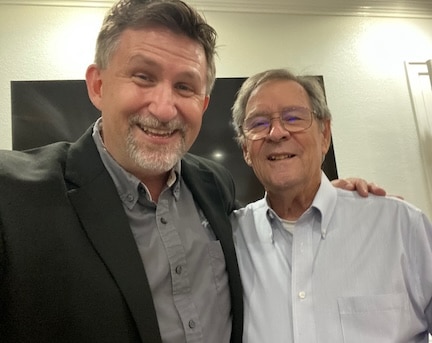
My friend Bill Miller, visiting from the Williamsburg Civil War Roundtable, offers the next suggestion. “Here’s a crazy one,” he announces. “Jefferson Davis. How about Davis taking command?”
“That is a crazy one!” I laugh. Everyone—me, Bill, and the entire room—chuckles.
“Doesn’t Davis think he’s in charge already?” I ask.
But Bill’s point is well taken. As he points out, Davis did have military experience, he’d served as a consequential secretary of war, and he had deeply steeped himself in battlefield strategy and operations. No doubt he would have felt qualified to command.
By that point in the war, I think, Davis had grown into his job as commander-in-chief a bit more successfully. Like Lincoln early in the war, who was a notorious meddler, Davis had a deeply ingrained, micro-managerial streak. He never really let that go, but by 1864, he had learned to trust Lee so completely that he had relinquished much of his need for control over the Army of Northern Virginia. As a consequence, I don’t think he would have seen it as his place to step in at that moment, had he even known Lee was in such low condition. (Lee never really let on to anyone in Richmond how sick he’d been.)
Something I don’t think of in the crucible of Q&A but do think of later: Davis at least once before had the opportunity to put himself in field command but did not. When Federals knocked Joe Johnston out of command during the Battle of Seven Pines in May 1862, Davis was on the battlefield at the time. He could have stepped in but didn’t.
“Is there anyone who could have stepped up?” someone asks.
If there’s a viable back up, it’s probably Beauregard, south of the James. But it would have taken Beauregard a couple days to get to the battlefield and, even then, someone would have still needed to step up to fill Beauregard’s position south of James.
I don’t think anyone is calling in Braxton Bragg, who was by that point serving as Davis’s military advisor in Richmond. As from Bragg’s challenging reputation at that point, a third of Lee’s army—the First Corps—had bad blood with Bragg because of the Knoxville campaign. While most of the First Corps’ leadership had been purged or fallen as casualties since then, the rank and file wouldn’t have forgotten so easily.
Perhaps D. H. Hill could get called up from North Carolina, either to replace Beaureguard or to even step in for Lee, but a switch like that would have taken time. Lee bounced back fairly quickly from his May 24 low, so any replacement who would have shown up on the scene would have become quickly superfluous.
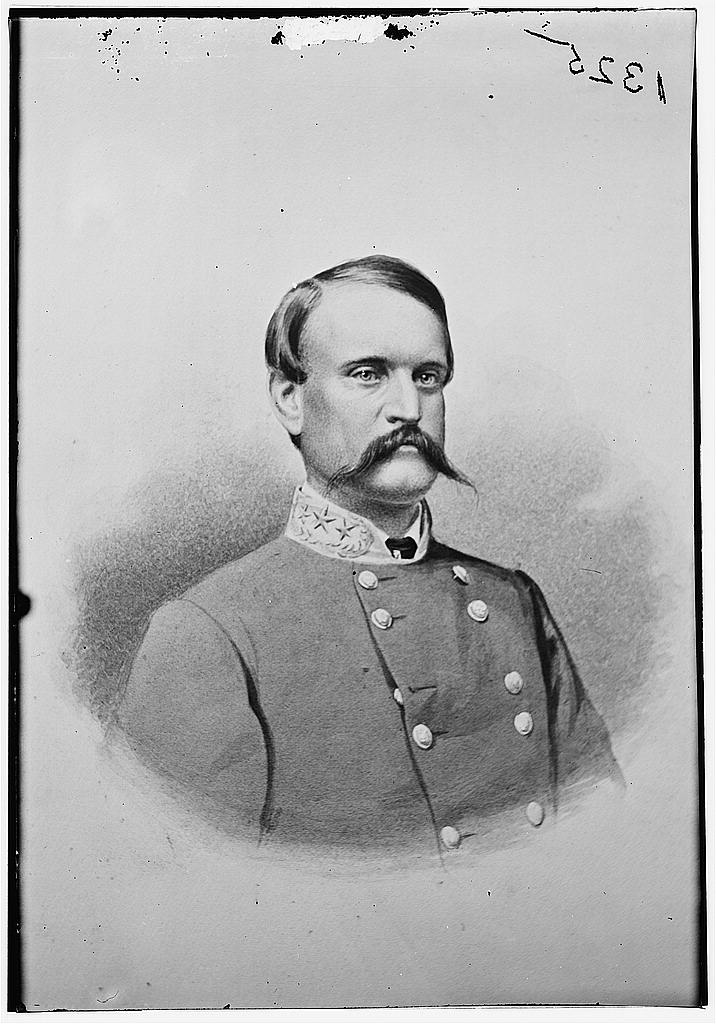
An on-scene possibility I haven’t thought through yet—but would like to—would be John C. Breckinridge. Just prior to May 24, Breckinridge had arrived as “fresh” reinforcements for Lee’s army. I put “fresh” in quotes because his division—functioning as a small army—had just earned a victory during the Battle of New Market on May 15. Then his men hopped a train on the Virginia Central RR and had come east to defend Hanover Junction, adjacent to the North Anna battlefield. If they were fresh, it was only as new reinforcements for Lee, but Breckinridge’s men were pretty tired at that moment.
We don’t typically think of Breckinridge as an army commander. As part of Lee’s forces, he credibly serves as a division commander, not a corps commander. But he’d been entrusted with a string of independent commands throughout the war—I tend to think of him as the “Where’s Waldo” of the Confederacy, showing up all over the place, from Baton Rouge to Stones River to Chickamauga to Saltville and more—and had served capably at all of them. He doesn’t get a lot of fanfare for his work, but the dude was a workhorse.
On the drive home, I mull over the ideas sparked by the Q&A. It’s what I love most about public history: being on the front lines, engaging in questions, thinking about my ideas in real-time, having the chance to reflect in the aftermath. It’s so enlivening.
I love the North Anna phase of the Overland Campaign particularly because of its lost opportunities and moments of contingency and “What-Ifs.” There’s so much to think about, so much to understand, so much that could have unfolded differently. I’m grateful to my Hampton Road friends for challenging me to continue thinking. . . .
————
For more on this, see my book Strike Them a Blow: Battles Along the North Anna River or my essay “What If Robert E. Lee had Struck a Blow at the North Anna River?” in Great What Ifs of the American Civil War, co-edited by Brian Matthew Jordan, both available from Savas Beatie.


The Commander should not be looking for a ‘graceful way’ to relieve a subordinate commander in combat who has and is failing him.
Relieve Ewell and “pick one”, Anderson or Early.
Time is critical and Lee has NONE to spare. He’s sick, makes NO decision on “next man up”, thus opportunity lost.
At North Anna, didn’t Lee order Ewell to take two divisions from Hill and attack Hancock, if practicable. Maybe I should have waited for April 1st to post that one.
I think this shows that a general is only as good as his subordinates. Without Jackson or Longstreet, Lee’s genius vanishes. Or, put another way, you can have the most brilliant plans but without the officers competent enough to carry them out, they’re pretty useless.
Lee’s illness at the North Anna is hugely overrated, not least because he was not comatose, but merely weak; had there been a battle he could easily have issued orders from his cot or even an ambulance.
What really happened there is Lee’s defenses – still taught to this day at West Point, Sandhurst, etc. – were so unique, revolutionary and absolute that even Grant was able to realize it, and deigned to attack. The way Lee laid them out, Grant’s only hope of success was to divide his army and cross the river in two spots – with Lee’s army between them; and if one or the other got into trouble and needed rescuing, the other would have to cross the river a second time, maneuver under fire, and then cross the river a third time just to try to reach their comrades, with no guarantee of success. No army likes to cross rivers, even today – and any General worth his rank would recoil in horror at having to cross a river three times in one day.
This was Lee’s genius worth of Sun Tzu, who, had he been there, would have memorialized with something like, “There is no need to waste men and arrows winning a battle when you can defeat your enemy without loosing a single arrow or losing a single man.” Grant, having been whipped soundly at the Wilderness and Spotsylvania, realized he’d be whipped again, said, “Ah, fuck it,” and left. He didn’t learn his lesson, however – at their next encounter, scant days later, on the old Gaines’ Mill battlefield, Lee again devised masterful defenses – and shot Grant to pieces when, this time, he chose to not make the right move and try to bull in head on, his usual strategy. And just like that, Richmond was saved again.