Gabriel’s Horn
As Capt. Lindley Miller sat in his camp in Goodrich’s Landing, Louisiana, in January 1864, he sought a way to capture the unique spirit of his regiment, the 1st Arkansas Infantry Regiment (African Descent). Martial tunes abounded in the army camp, with many being derivative from popular songs. In the case of the 1st Arkansas, the men had come up with their own words for the popular abolitionist tune “John Brown’s Body.” Seizing on this, Miller wrote down their words, noting in a January 20 letter to his mother that “I wrote a song for them to the tune of ‘John Brown’ the other day, which the whole Regiment sings.”[1]
The song that Miller wrote down, which became known as the “Marching Song of the First Arkansas Colored Regiment”[2] would be passed down from generation to generation of African Americans. The song captured the spirit of many of the African American troops who fought for the Union in the American Civil War, with the third verse in particular capturing the transformation that marched forward with them.:
We have done with hoeing cotton, we have done with hoeing corn,
We are colored Yankee soldiers, now, as sure as you are born;
When the masters hear us yelling, they’ll think it’s Gabriel’s horn,
As we go marching on.
The road was not simple for men of the 1st Arkansas, but it began on January 1, 1863 with the Emancipation Proclamation going into formal effect. Beyond freeing the “slaves within any State or designated part of a State, the people whereof shall then be in rebellion against the United States,” it also allowed for the Union Army to formally begin enlisting African-Americans. This coincided with the efforts of Ulysses S. Grant to move into the heart of Mississippi to capture the crucial town of Vicksburg. This campaign put into practice the promises of the Proclamation, but it also opened a new opportunity for newly freed slaves to advance themselves.
With such a complicated campaign, there were many positions along the Mississippi River that the Union Army needed to garrison. Grant, however, had only a limited number of men to not only hold those posts, but also fight the campaign. The need to utilize African American enlistment became clear. To oversee this, Adjutant General Lorenzo Thomas traveled from Washington to, as he put it, “make ample provision for the negro.”
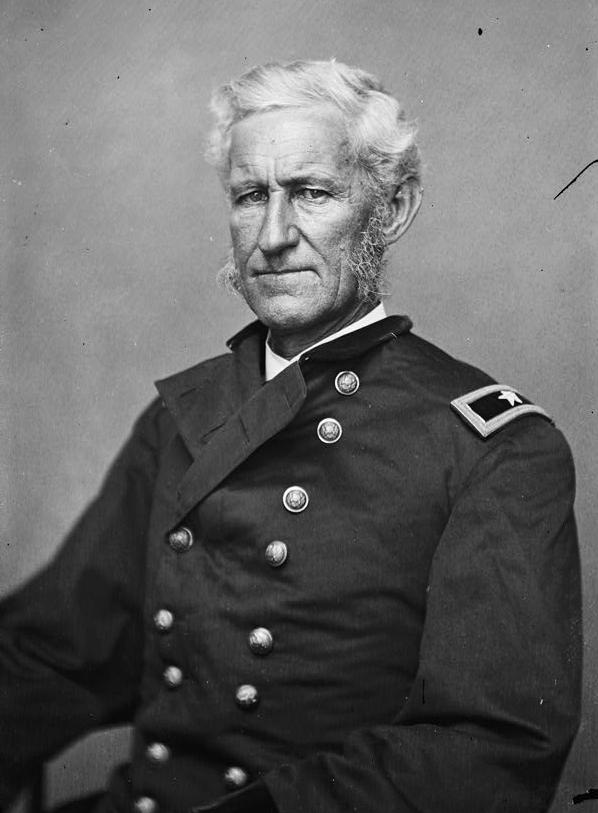
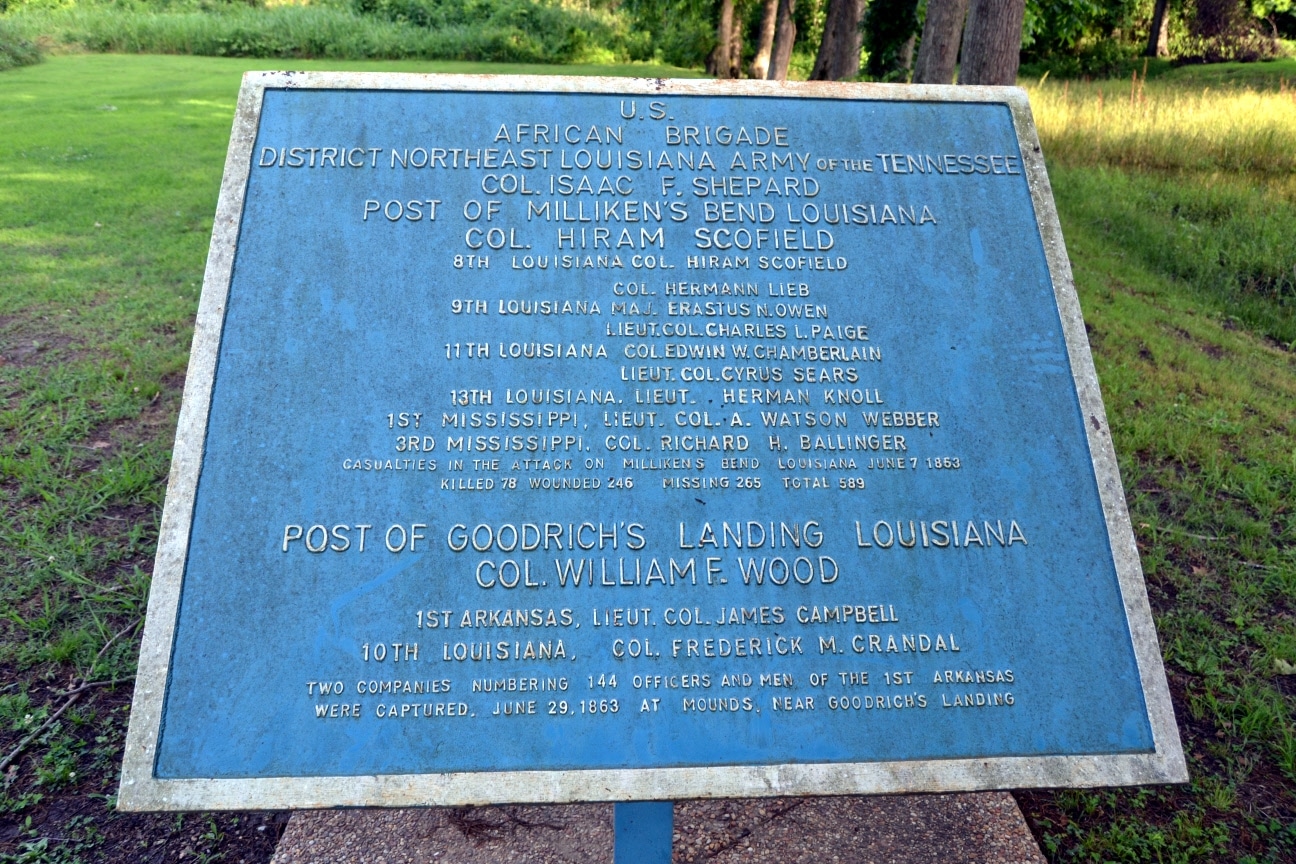
Under his leadership, ex-slaves were organized into regiments, including the 1st Arkansas on May 1, 1863.[3] This was met with some support in the North, but the quality of the soldiers was questioned. One paper quipped that at least “it would cost the Government less to organize them into regiments under white officers, and supply them with regular rations, than to have them visiting the camps of the whites, annoying them in every way, besides stealing their rations.”[4] Colonel William F. Wood received command of the 1st Arkansas, and they were stationed in Louisiana. Most were assigned garrison duty at Goodrich’s Landing, while two companies were sent to nearby Mound Plantation.[5]
Soon thereafter, the regiment would be given its baptism of fire. As Grant’s constriction of Vicksburg grew tighter and tighter, rebel forces in the region tried with increasing ferocity to disrupt Union operations. For Colonel William Henry Parsons and his brigade of Confederate cavalry and artillery, this meant raiding Mound Plantation.[6]
This raid had a dual purpose. Beyond simply causing mayhem for the Union, the Confederates also were outraged by the presence of African American Union troops. Thus, as the Confederates arrived on June 24, 1863, the terms of combat were dire. As one Confederate soldier made clear, “I think those with uniforms and arms should share the fate ordered by Col. Parsons … kill them take none with uniforms on.”[7]
The two companies of the 1st Arkansas stationed at Mound Plantation had made it a formidable position. The soldiers fortified the eponymous mound well. Although they did not have artillery pieces, they had brought up large logs to roll down at an advancing enemy.[8] With so formidable a position, the 1st Arkansas easily repulsed the Confederate assault on June 24.
Parsons, however, refused to be bested by those he considered to be his inferiors. On June 29, he brought forward reinforcements and again prepared to assault the Union position.[9] The enlisted men of the 1st stood ready to bear another attack, well aware that enslavement or even execution awaited black soldiers who fell into Confederate hands. Their white officers, however, gave way to fear. When they were presented with the opportunity to surrender by Parsons, they seized it. As one Confederate soldier recalled, they “surrendered on the terms that the white officers [emphasis original] should be treated as prisoners of war. For the negro soldiers no reservation was made.”[10]
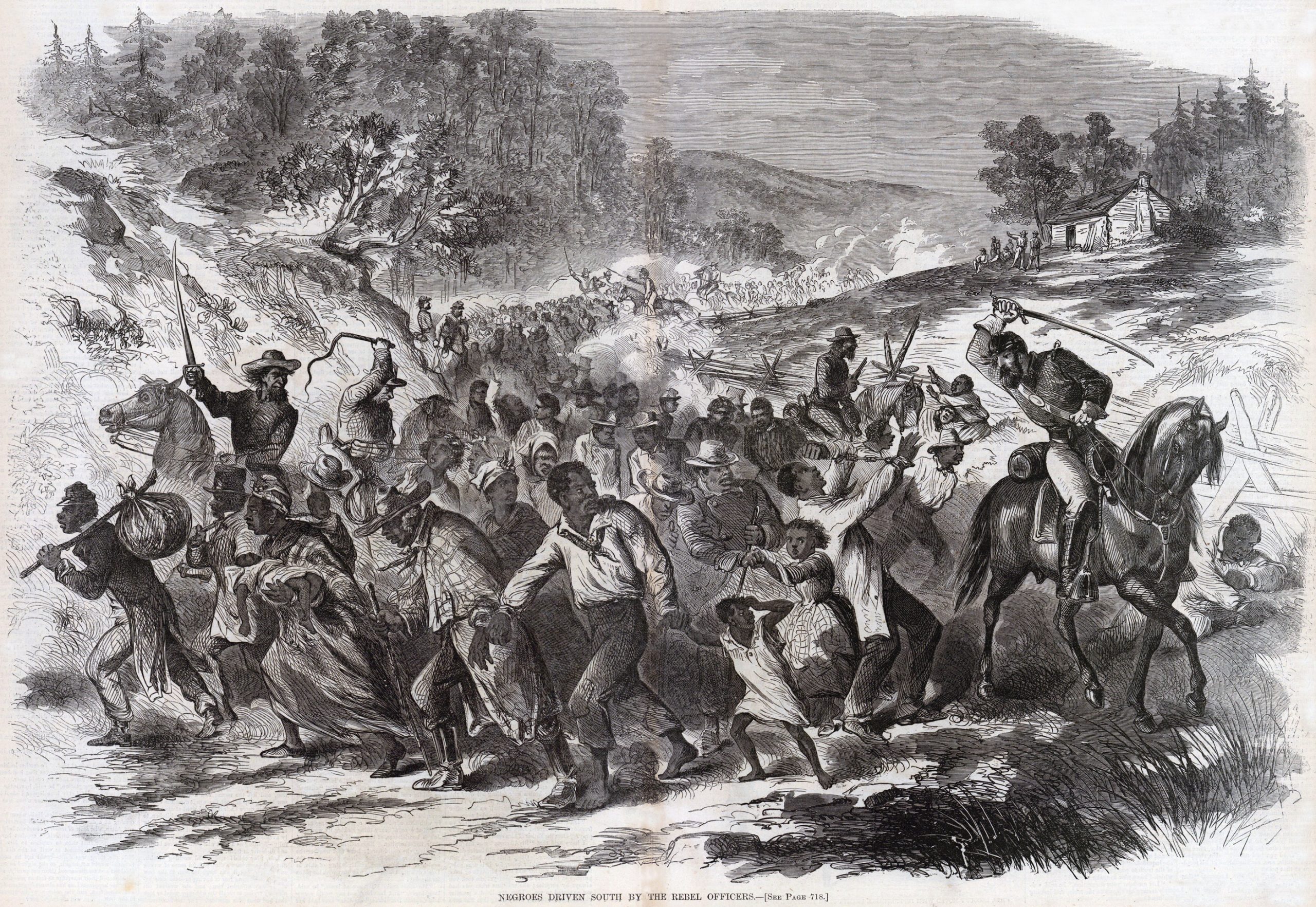
What followed was great hardship for the captured companies. Beyond the 113 African American soldiers who had been surrendered, an estimated two thousand other blacks who had been previously liberated were brought back into slavery. Before this horror, however, came the peril of the march. During this march back to slavery, a Confederate private noted euphemistically, “some 12 or 15 of the Negroes died.” Considering the reports and reminiscences of brutality on the march, it seems likely that the Confederate forces were involved in achieving that total.[11] Private Lewis Brogan, one of the captured men, recalled “we were threatened with hanging & killing every minute” and that the guards unceremoniously shot one of his comrades who collapsed from exhaustion. Eventually, they were brought to a POW pen in Delhi, Louisiana, where they were scattered across the Trans-Mississippi to serve as slaves.[12]
The loss of two companies of the 1st Arkansas would not go unavenged. Parsons’s raid and his capture of Mound Plantation had provoked a strong Union response. Two Union brigades under Brig. Gen. Hugh T. Reid and Alfred W. Ellet went out to drive them back. Among Reid’s command was the 1st Arkansas. Faced with such overwhelming force, Parsons mounted a hasty retreat.[13]
The battles for Mound Plantation would be the sole engagement fought by the 1st Arkansas over the course of the war. The regiment would return to their position at Goodrich’s Landing, where they remained until January, 1864.
Their next position was Milliken’s Bend, Louisiana, which was also in the now quiet Vicksburg District. The principal development from this period was the regiment receiving a new designation. As part of the Union Army’s efforts to standardize their African American units, the 1st Arkansas was rechristened the 46th Regiment, United States Colored Infantry on May 11, 1864. With their new title, the old garrison duties continued. January 1865 saw them sent to Memphis, Tennessee.[14]
By this time, the monotony of camp life set in. Lieutenant Samuel B. Ferguson from division headquarters wrote a letter to the regiment’s new commander, Colonel J.E. Bryant, ranging in topic from the appointment of new junior officers to an inquiry about the delay of newspaper delivery.[15] What would have been a revolutionary regiment mere years before had become settled into the accepted machinery of the Union.
February saw them sent to New Orleans. It was in that city that they received word of the passage of the 13th Amendment through Congress as well as Union victory in the war. In May, they were sent to garrison Texas. In 1863, the state had marked a return into the abyss of slavery for some of their captured comrades. Now, it lay subject to their garrison. After almost two years in the state, the regiment was finally disbanded on January 31, 1866.[16]
The 1st Arkansas Infantry Regiment (African Descent) did not gain the distinguished record of service that marked some of the war’s other African American units, such as the 54th Massachusetts Infantry or the 1st Louisiana Native Guard. For the most part, with one exception, they were a garrison unit.
Nevertheless, their battle song became their permanent claim to the war’s memory. Indeed, the regiment’s experiences reflected many of the most common themes for black units of the era, including the transformation from slaves to soldiers, the threat posed by capture by the Confederates, and the gradual acceptance of African Americans into the apparatuses of the Union Army. Perhaps they were not the loudest trumpeter in the band, but they certainly sounded Gabriel’s horn.
Endnotes:
[1] David Walls, “Marching Song of the First Arkansas Colored Regiment: A Contested Attribution,” The Arkansas Historical Quarterly 66, no. 4 (2007): 401–21, http://www.jstor.org/stable/40031121.
[2] Pete Seeger and Tennessee Ernie Ford have given more modern performances of the song, both of which can be found on YouTube.
[3] Noah Andre Trudeau, Like Men of War: Black Troops in the Civil War, 1862-1865, (Edison: Castle Books, 2002), 98.; “46th Regiment, United States Colored Infantry,” National Park Service, Accessed April 28, 2026, https://www.nps.gov/civilwar/search-battle-units-detail.htm?battleUnitCode=UUS0046RI00C.
[4] The Daily Evansville Journal, April 20, 1863.
[5] U.S. War Department, The War of the Rebellion: A Compilation of the Official Records of the Union and Confederate Armies, Series 1, 53 vols. (Washington D.C.: Government Printing Office, 1889), Series 1, vol. 24, part 2, 158.
Trudeau, Like Men of War, 99.
[6] Trudeau, Like Men of War, 99.
[7] George S. Burkhardt, Confederate Rage, Yankee Wrath: No Quarter in the Civil War, (Carbondale: Southern Illinois University Press, 2007), 63-64.
[8] Trudeau, Like Men of War, 100.
[9] Burkhardt, Confederate Rage, Yankee Wrath, 64.
[10] Trudeau, Like Men of War, 100.
[11] Trudeau, Like Men of War, 100-101.; Burkhardt, Confederate Rage, Yankee Wrath, 64.
[12] Trudeau, Like Men of War, 101-102.
[13] U.S. War Department, The War of the Rebellion: A Compilation of the Official Records of the Union and Confederate Armies, Series 1, 53 vols. (Washington D.C.: Government Printing Office, 1889), Series 1, vol. 24, part 2, 450.
[14] “46th Regiment, United States Colored Infantry,” National Park Service, Accessed April 28, 2026, https://www.nps.gov/civilwar/search-battle-units-detail.htm?battleUnitCode=UUS0046RI00C.
[15] Ferguson, Samuel B. to J.E. Bryant, January 21, 1865, 46th United States Colored Infantry Collection, Central Arkansas Library System.
[16] “46th Regiment, United States Colored Infantry,” National Park Service, Accessed April 28, 2026, https://www.nps.gov/civilwar/search-battle-units-detail.htm?battleUnitCode=UUS0046RI00C.


