Pickett’s Charge Reconsidered
The neat rows advanced like a gray tide crashing against the Union line on Cemetery Ridge, Armistead’s hat raised high on his sword. Then came the desperate struggle at the stone wall, a moment when the fate of the Civil War itself seemed to hang in the balance, before the shattered tide finally broke and receded before a triumphant foe.
Pickett’s Charge, or, as some call it, the Pickett-Pettigrew-Trimble Charge, the “high-water mark of the Confederacy,” has assumed an almost mythical place in Civil War history. The grand assault on July 3, 1863, the third day of the Battle of Gettysburg, has been immortalized in film, literature, and popular memory.
But much of what is commonly believed about the charge, or assumed to be true, has been disputed by historians for decades.
The film Gettysburg (1993), along with Michael Shaara’s novel The Killer Angels (1974) on which it was based, and the art of Mort Künstler, centers Pickett’s Charge as the climactic moment of the battle, while sidelining everything else that happened on July 3 (including the hours long brutal struggle on Culp’s Hill).
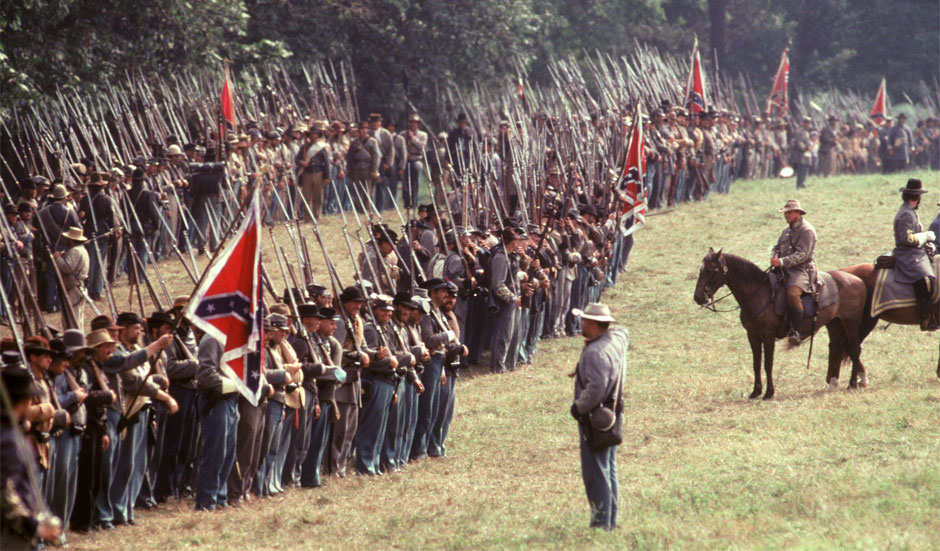
Many popular misconceptions about the assault can be traced to those portrayals. Admittedly, when I first watched Gettysburg and read the novel, I was captivated as well. It is an undeniably dramatic moment, one that seemed to place the fate of the war itself in the balance.
But Pickett’s Charge wasn’t a glorious “march to immortality” or anything of the sort. It was another of the Civil War’s tragically common frontal assaults, one that accomplished nothing beyond swelling the casualty rolls.
After two days of fighting, Confederate Gen. Robert E. Lee sought a decisive breakthrough against Union Gen. George G. Meade, whose army occupied strong defensive ground along the hills and ridges south of Gettysburg, Pennsylvania. Lee entrusted his First Corps commander, Lt. Gen. James Longstreet, with planning an assault against the center of the Union line on Cemetery Ridge, assigning him two full divisions and parts of two others.
Maj. Gen. George E. Pickett’s three-brigade division was the only division from Longstreet’s Corps that had not already been engaged. The remainder came from A. P. Hill’s Third Corps. Heth’s Division, commanded by Brig. Gen. J. Johnston Pettigrew, fielded four brigades and formed on Pickett’s left. Maj. Gen. Isaac Trimble temporarily commanded two brigades from Pender’s Division, positioned behind Pettigrew in support. Two brigades from Anderson’s Division supported Pickett’s right flank, though they did not advance until the main assault had already failed.

Estimates of the attacking force vary, generally ranging from 10,500 to 13,000 men, depending on whether Anderson’s two brigades are included. Opposing them across nearly a mile of open ground on Cemetery Ridge were Maj. Gen. Winfield Scott Hancock’s II Corps and elements of the I Corps, numbering roughly 5,750 men.[1]
A full summary of the July 3 assault is beyond the scope of this article, but suffice to say, the advance began with impressive spectacle but started to unravel almost the moment the Confederates emerged from the shelter of Seminary Ridge. Union artillery from up and down the lines blasted holes in the Confederate ranks, and as they drifted toward the center, Union infantry flanked them from both sides.
The first unit to fall back was Col. John M. Brockenbrough’s small brigade. Already badly reduced in the fighting on July 1, it was inexplicably placed on the left flank of Pettigrew’s Division, where it came under heavy artillery and flanking fire. “We stood there to be shot at, and that was about all that we did,” Col. William S. Christian of the 55th Virginia later recalled.[2]
Trimble’s two brigades, led by Brig. Gen. James H. Lane and Col. William Lowrance, moved up in support of Pettigrew’s Division and bunched along the Emmitsburg Road. From there, they took opportunistic shots at the Federals and watched as the remainder of Pettigrew’s command came under murderous fire near the stone wall.
“Seeing it was useless to sacrifice my brave men, I ordered my brigade back,” Lane later recalled. Lowrance’s men soon retreated without orders, and realizing nothing more could be accomplished, Trimble ordered a general withdrawal. During the retreat, he was wounded in the leg.[3]
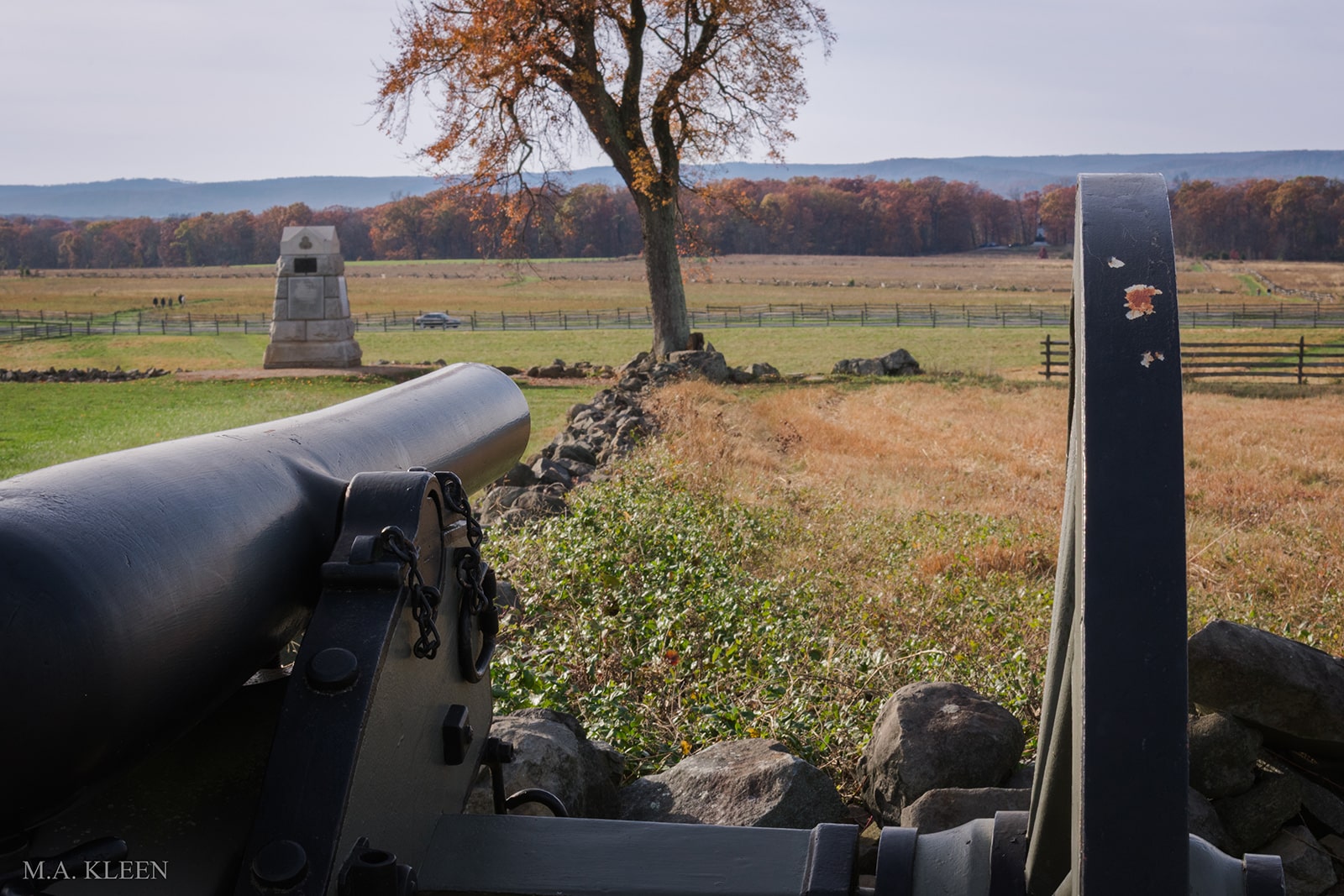
A few hundred men from Pickett’s Division penetrated the Union line at an angle in the stone wall but were quickly overwhelmed. With most of their senior officers down, those who could retreated. The rest threw up their hands and surrendered.
There is no question that Confederate casualties were severe. Pickett’s Division (including Dearing’s artillery) sustained losses of 50.6 percent. Nearly 31 percent of those casualties, however, fell into the missing or captured category. By comparison, 21 percent of the casualties in McLaws’ Division, heavily engaged on July 2, were listed as missing or captured. If Pickett’s Division suffered a similar rate of missing or captured, its total casualty percentage would drop to roughly 42 percent.[4]
Stephen W. Sears estimates that of the 13,000 men who participated in the charge, 3,350 were captured. Undoubtedly, some were wounded, but that still accounts for roughly 26 percent of the attacking force.[5] Historian Earl J. Hess estimated 3,750 captured out of 11,830 men engaged, for an even higher 31.7 percent.[6] Clearly, many Confederates recognized the futility of the assault and either surrendered at the first opportunity or drifted to the rear.
None of this is meant to disparage the courage of the men who made the charge. I’ve always believed that “discretion is the better part of valor.” Lee’s veterans understood what was possible and what was not.
One of the biggest myths surrounding Pickett’s Charge is the idea, popularized by early Gettysburg historian John B. Bachelder, that it marked the “High Water Mark of the Confederacy,” a decisive moment when the fate of the war, and Southern independence itself, supposedly hung in the balance.
William Faulkner famously wrote, “that moment doesn’t need even a fourteen-year-old boy to think This time. Maybe this time with all this much to lose than all this much to gain: Pennsylvania, Maryland, the world, the golden dome of Washington itself to crown with desperate and unbelievable victory the desperate gamble, the cast made two years ago.”[7]
In other words, had the charge succeeded, Gettysburg supposedly would have become a decisive Confederate victory, allowing Lee to march on Harrisburg, Baltimore, or even Washington and end the war in 1863.
This is fanciful thinking. Even if the assault had broken the Union line on Cemetery Ridge, it is highly debatable whether that alone would have won the battle, much less the war. The Army of the Potomac still possessed substantial reserves, while the Confederates were exhausted and operating far from their supply lines.
It’s not my intention to relitigate Longstreet’s postwar reflections on the attack, which some historians have dismissed as self-serving, but I do find his estimate that 30,000 men were the minimum necessary to carry Cemetery Ridge highly credible.[8] The Confederate force assembled for the assault was simply inadequate to the task, and nothing short of a miracle was likely to change the outcome.
General Robert E. Lee himself appeared to attach no special significance to the failed assault, telling Col. Arthur Fremantle, “This has been a sad day for us … but we can’t expect always to gain victories.” In contrast to the shocked, penitent Lee portrayed by Martin Sheen in Gettysburg, Fremantle later described Lee’s demeanor after the attack as not showing the “slightest disappointment, care, or annoyance.” Historian Noah Andre Trudeau argued that the image of a remorseful Lee should be “docketed alongside Gettysburg’s other myths.”[9]
If the fate of the Confederacy truly rested on the success or failure of the charge, no one at the time seemed to know it. In reality, Pickett’s Charge was just one of the Civil War’s many disastrous frontal assaults, no more decisive than Malvern Hill, Fredericksburg, Franklin, or Cold Harbor. Seen in its proper context, Pickett’s Charge is less a turning point of history and more a sobering reminder of the limits of traditional offensive tactics in the age of rifled muskets and massed artillery.
[1] George R. Stewart estimated 10,500, or 11,900 including Anderson’s two brigades. George R. Stewart, Pickett’s Charge: A Microhistory of the Final Attack at Gettysburg, July 3, 1863 (Houghton Mifflin, 1959), 173-74.
[2] Richard Rollins, ed., Pickett’s Charge: Eyewitness Accounts at the Battle of Gettysburg (Stackpole Books, 2005), 271.
[3] Rollins, Pickett’s Charge, 267.
[4] J. David Petruzzi and Steven A. Stanley, The Gettysburg Campaign in Numbers and Losses (Savas Beatie LLC, 2012), 121-23.
[5] Stephen W. Sears, Gettysburg (Houghton Mifflin, 2003), 467.
[6] Earl J. Hess, Pickett’s Charge: The Last Attack at Gettysburg (The University of North Carolina Press, 2010), 335.
[7] William Van O’Connor, The Tangled Fire of William Faulkner (Gordian Press, 1968), 140.
[8] James Longstreet, From Manassas to Appomattox, The Great Commanders (J.B. Lippincott, 1895; Reprint, 1994) 260-61.
[9] Noah Andre Trudeau, Gettysburg: A Testing of Courage (HarperCollins, 2002), 520-21.


Meade’s replacement of Hooker was the only change in roster at G’Burg. Meade was operating with virtually all of Hooker’s army, including the BMI . So here we see Lee’s 27 mile ambulance train as the fulfilled prophecy of Hooker prior to C’Ville. The AOP wiped the ANV twice. CVille and G’Burg.
How in the world can you conclude the AOP “wiped” the ANV at Chancellorsville? It’s widely considered Lee’s greatest victory.
My thought here is that if Jackson had been allowed to continue in his forward march, there were a sufficient amount of Federal troops ahead of him that would have ended the ANV then and there, Kris White in the ABT YouTube vid talks about it—Jackson did NOT know where he was —-like no where near the rivers fords —looking closely at the 18th NC —they probably saved the day and the ANV–from total destruction —remember that the ANV was exhausted from Jackson’s day long fiasco flank march —-and they would be facing fresh Federal troops already dug in ——
Study some more about the flank march and its many recon mistakes —–also about the 3 hours to place his men in position ——–Michael Kleen —–Jackson’s brilliant endeavor will come to be known as a Klusterluck–my hero of the day was James Lane—the only sane man on the field —got his men to lay down during artillery barage —-just one more thing here If it were not for Lane refusing orders to attack it could have been a lot worse —
Lee’s two top field commanders get shot by their own troops –YES HILL WAS SHOT in the calf by the 18th that night –he may have also suffered a concussion from hostile artillery–
Again Kris White has doubts about Hill’s sincerity because of previous statements to Longstreet???? That no matter how wrong Jackson is Hill will get the blame
Kris White of ABT says it quite succinctly it was —100% Jackson’s own fault —because of trust issues and events earlier in his life he has to do the recon personally and ends up with his own butcher’s bill for the night
Michael Kleen —thank you for your comments, C’ville is my favorite battle
The “High Water Mark” was the issuance of the Emancipation Proclamation in January 1863. Going back to Stoneman’s Raid at Chancellorsville in May of 1863, he freed $32,000 of “contraband”. Grant at Vicksburg told Pemperton that his “property” was staying in V’Burg. That ended up with 20, 000 freed slaves at $800 each., drawing from a large area. Even Jefferson Davis’ Brierfield Plantation made a fine contribution. Of course it was not about states rights, it was about money.
I can see how Pickett’s Charge fits the narrative of a “turning point.” Lee’s army was at a peak, coming off of a year of victories, while the Army of the Potomac was at a nadir with an untried commander. The ANV was in the North, having taken the offensive. Lee’s ordering the charge on July 3rd is a classical act of hubris. The attack was, as Ambrose Bierce put it in another context, the usual triumph of lead over steel. In the aftermath, the Confederates were certainly more defensive minded.
While the author effectively argues that materially and psychologically it wasn’t the case, its difficult to move people minds the tropes of rising action, cathartic act of violence and heroism, descending action.
Believe me, I understand. It’s hard to separate my emotional “attachment” to the event from the cold, hard reality. After a while, the fiction becomes reality in your mind. That’s why we constantly have to go back to the primary sources.